Search
All search results for "r15 tdi"
(126)
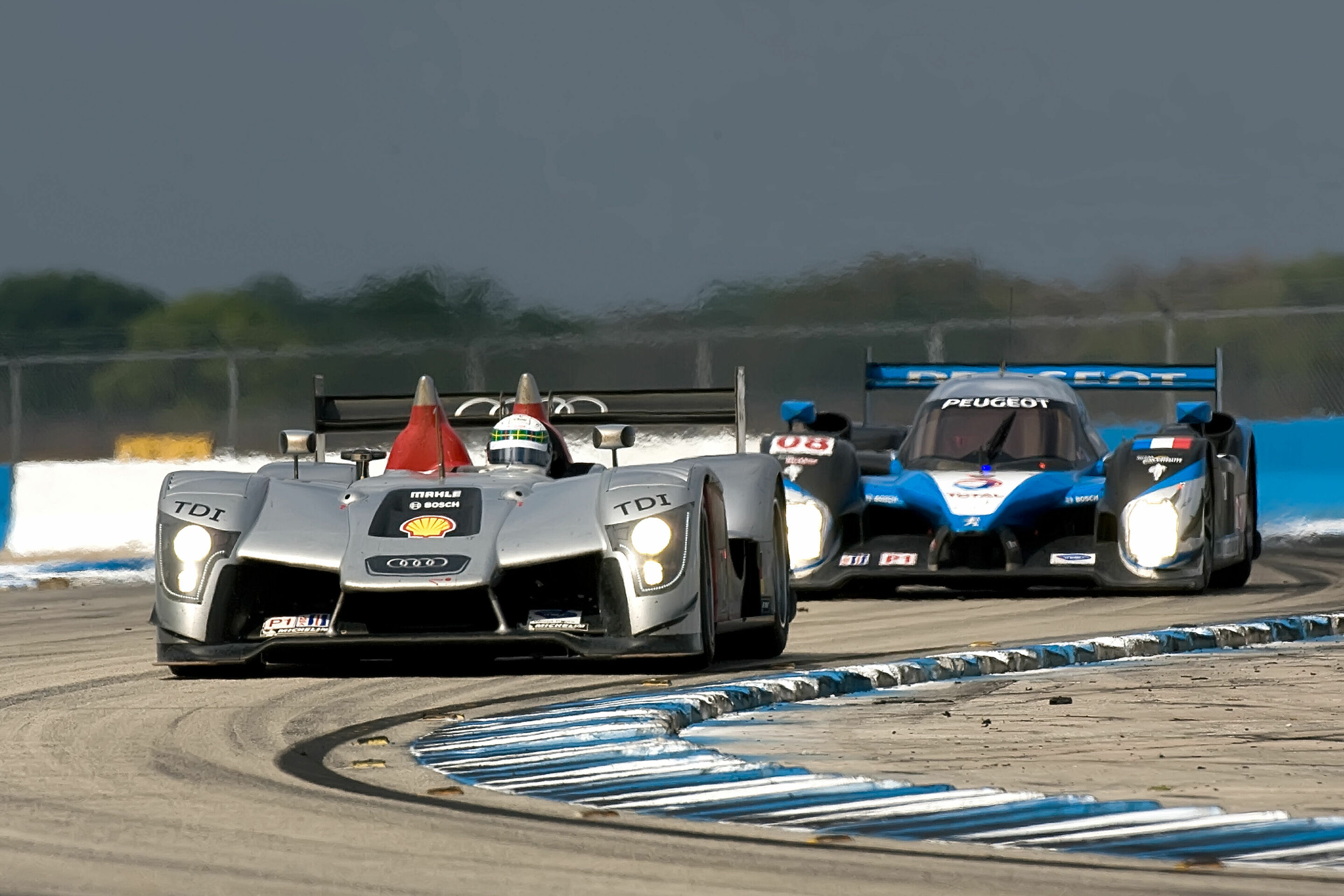 Perfect debut for the Audi R15 TDI
New Audi wins 12 Hours of Sebring (USA) Fastest Sebring race ever Audi also wins efficiency award
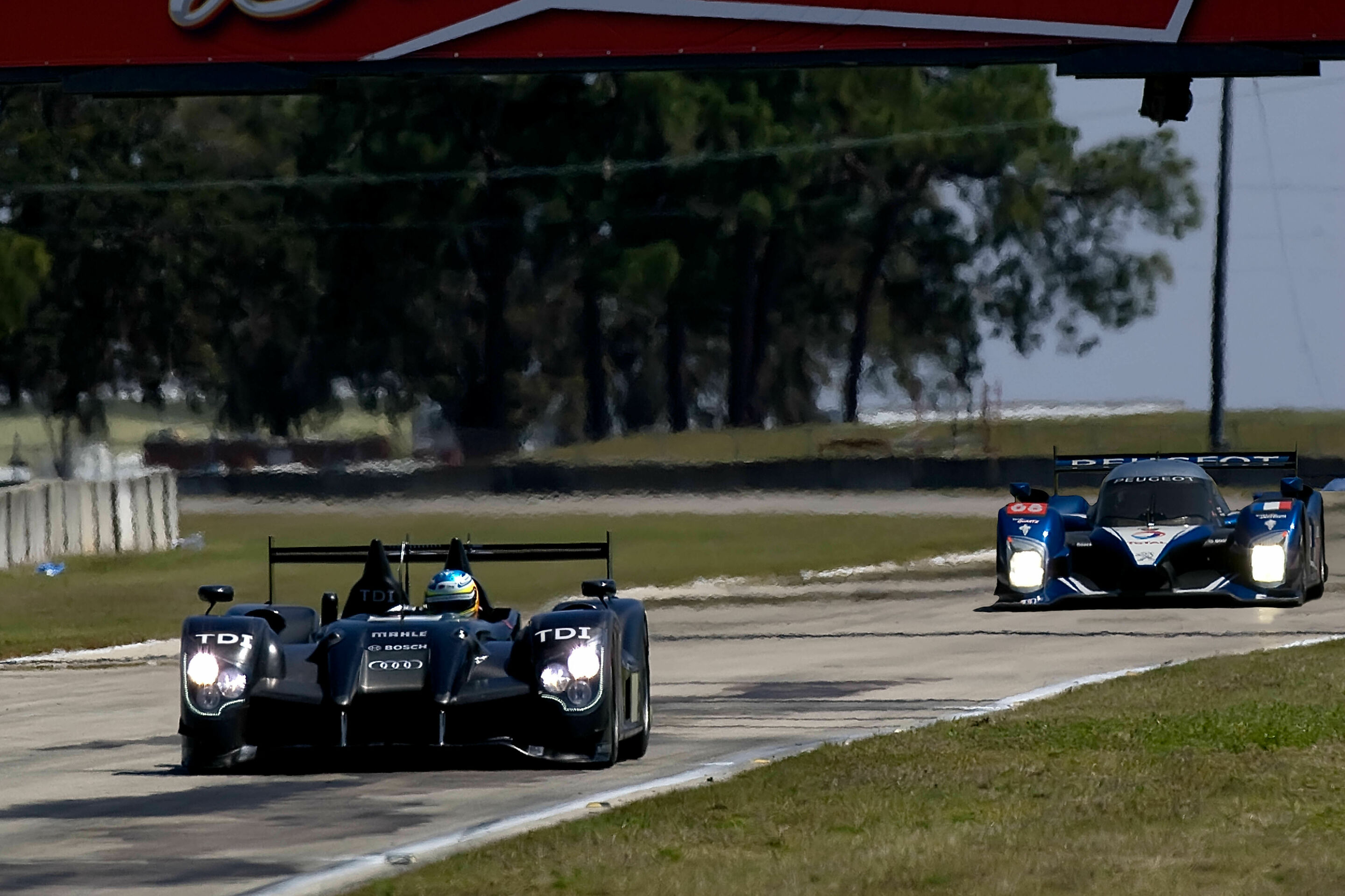
The Audi R15 TDI has defeated its competition in its debut race: Dindo Capello (Italy), Tom Kristensen (Denmark) and Allan McNish (Scotland) achieved a historic victory in the 12 Hours of Sebring (US state of Florida) with the new diesel-powered sports car of AUDI AG. The Audi drivers completed 383 laps – beating the previous distance record by an impressive 13 laps.
In the fastest ever Sebring race, Audi Sport Team Joest’s pair of Audi R15 TDI prototypes ran the entire distance without technical problems despite the innovative Le Mans prototype having only completed its maiden run in December. Bad weather had hampered Audi Sport’s test program and temperatures never exceeded 15 degrees during the tests in Europe. At Sebring, the Audi crew faced ambient temperatures almost double that and worked day and night to learn more about the new diesel sports car and to adapt it to the extremely bumpy race track in the center of Florida. They were able to solve all minor teething troubles which arose just in time for race day. In the race the new Audi R15 TDI proved fast from the very beginning: Allan McNish outpaced the pole sitting Acura/Honda at the start completing the first lap with more than five seconds advantage. Later, however, it was not the Acura/Hondas which were the cars to beat but the two Peugeot 908s. The lead swapped no fewer than 22 times among the diesel-powered prototypes from Audi and Peugeot. Over long periods of the race, the four leading prototypes were covered by just a few tenths of a second. In the exciting final stages of the race Allan McNish was able to fully exploit the optimized weight distribution and the sophisticated aerodynamics of the new R15 TDI compared to its predecessor, the R10 TDI. He was able to open such a big lead that he was able to stop for a ‘splash-and-dash’ just before the end of the race without losing the lead.
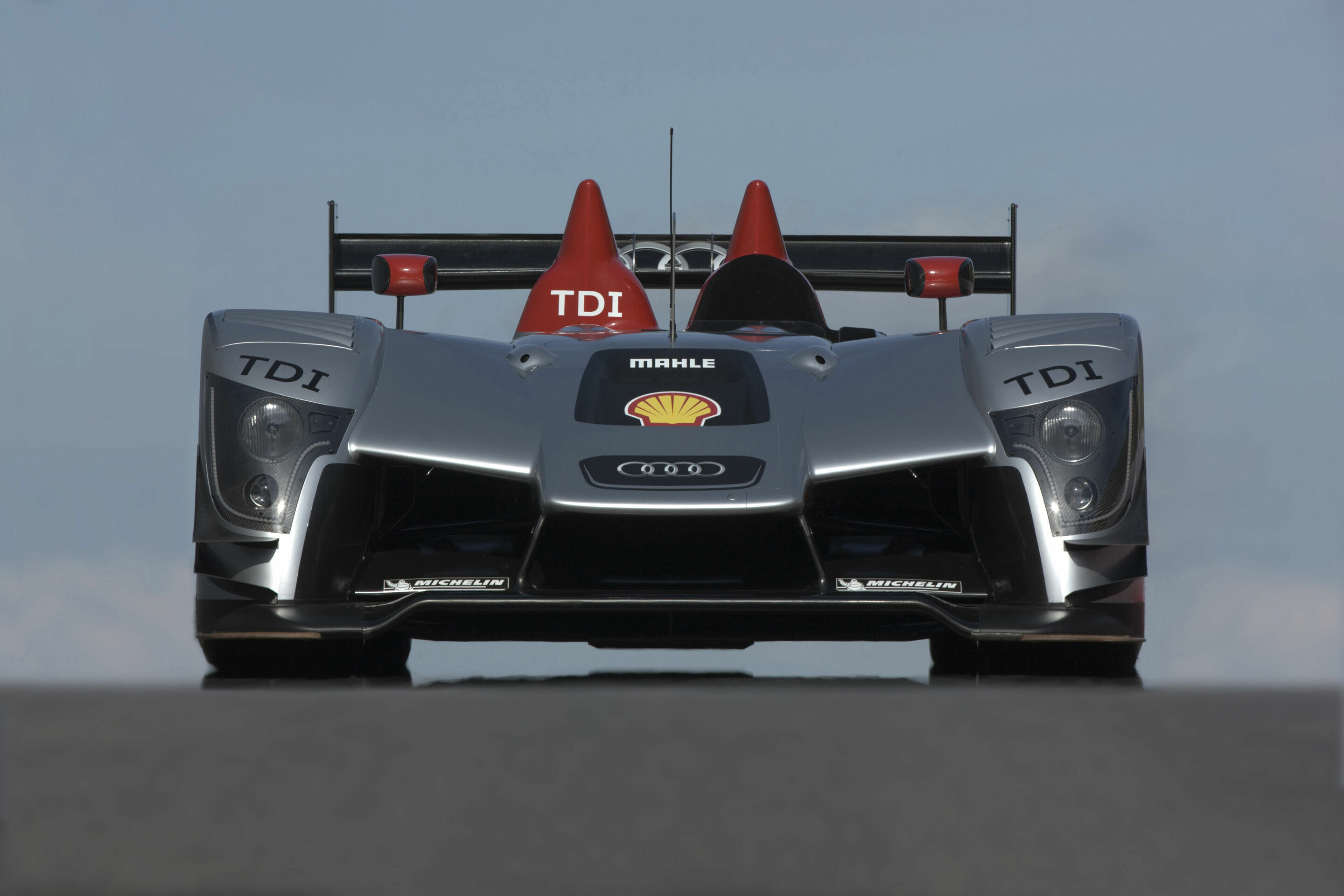 Audi R15 TDI: first “second” generation diesel racing sports car
Audi launches new LMP1 racing sports car New TDI engine and many innovative approaches Race debut on March 21 at Sebring (USA)
AUDI AG is the world’s first automobile manufacturer to develop a “second” generation diesel racing sports car. Audi aims to underline its supremacy and consolidate its expertise in car technology once more at the legendary 24 Hours of Le Mans with the all-new Audi R15 TDI.
The 24 Hours of Le Mans is particularly suited for this: Efficient and economical cars are especially required for the French endurance classic. Lightweight construction, environmentally friendly drive concepts and well-thought out aerodynamics are the focus of attention at Le Mans just as they are during the development of production cars. For this purpose the regulations intentionally give the engineers plenty of freedom. Audi Sport fully exploited this creative freedom and put a new LMP1 race car on the track that differs significantly from all previous Le Mans sports cars. “The R15 TDI has many detailed technical solutions never seen before on a sports prototype,” explains Head of Audi Motorsport Dr. Wolfgang Ullrich. “To a certain extent we followed entirely new routes.” Highly efficient TDI engine The heart of the R15 TDI is a newly developed V10 TDI engine producing more than 600 hp, with a maximum torque output in excess of 1,050 Newton meters and which reflects the latest version of the TDI Technology invented by Audi. The power unit is more compact and lighter than the twelve-cylinder engine used in the preceding R10 TDI model. The specific fuel consumption and associated CO2 emissions could also be reduced. Innovations in the turbo-charging and fuel injection areas simultaneously ensure improved engine response. The R15 TDI is also equipped with a new generation of even lighter diesel particle filters. The new sports car’s aerodynamics, which play a particularly important role at Le Mans, are extremely refined.
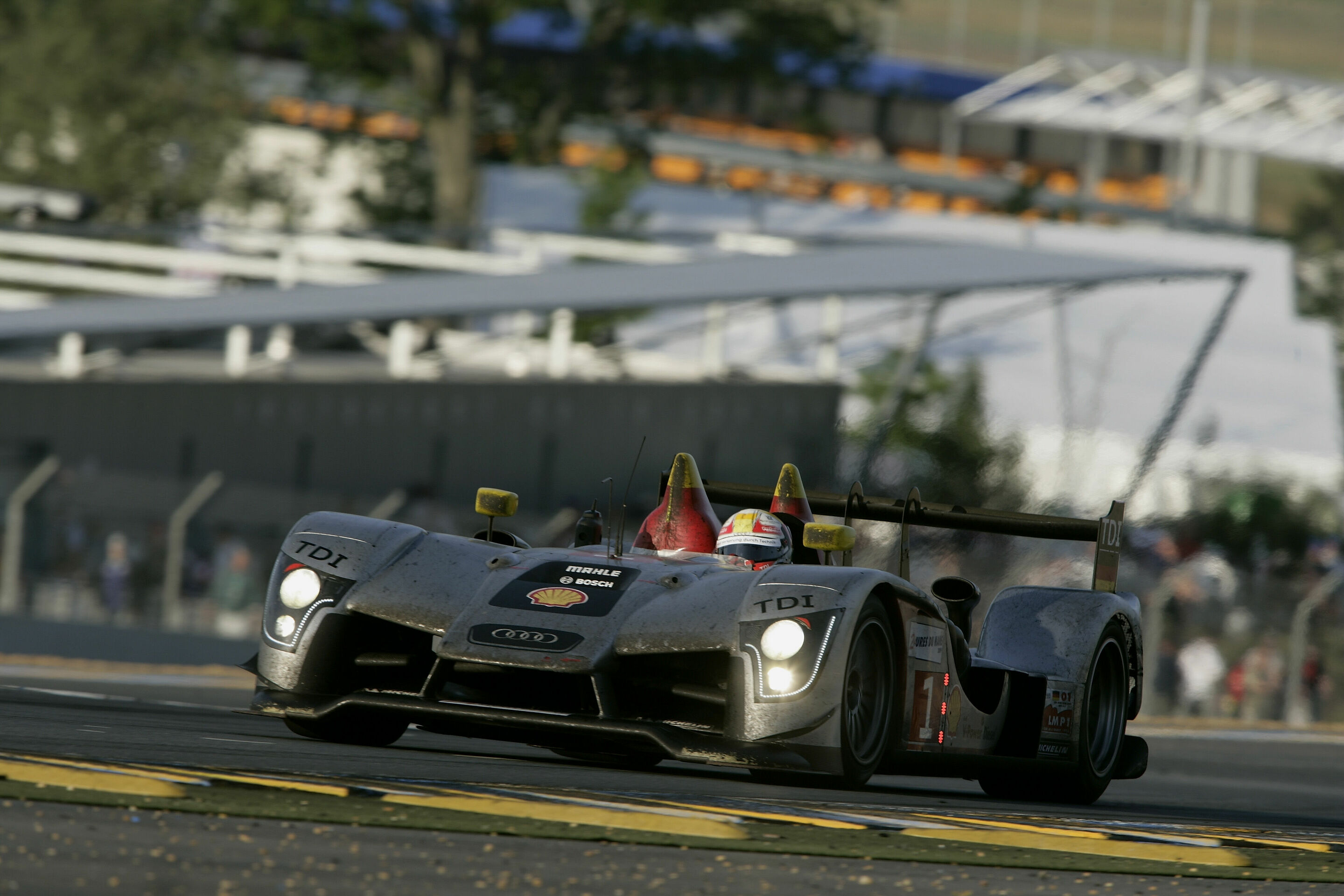 Facts on the 24 Hours of Le Mans 2009
The Audi R10 TDI remained unbeaten three times in a row. In 2009 Audi was the first manufacturer to compete with a second-generation diesel prototype. From 1999 to 2009 Audi and the brand’s customer teams covered a total of 158,936.832 race kilometers with all of the sports prototypes ever fielded at Le Mans, which amounts to a distance of almost exactly four times around the earth at the level of the equator. In this period 30 of the 37 factory-fielded or privately entered Audi vehicles finished the races and were classified, which equates to a rate of 81 percent. In 2009 the Audi R15 TDI cars ran with a racing version of Shell V-Power Diesel which had undergone further optimization. In addition to the well-known GTL component, a small amount of BTL (biomass-to-liquid) – second-generation bio fuel – was added to the mixture. In May of 2009 the so-called IRT technology (Instant Response Technology) was introduced on the market for the first time in Italy. This technology was developed for even better energy conversion and successfully tested at Le Mans in recent years. It shows how consumers can benefit from the technology partnership with Audi Sport. Dindo Capello, Allan McNish and Tom Kristensen covered 5,124.504 racing kilometers (376 laps) in the Audi R15 TDI (chassis number 104). Allan McNish managed posting the fastest race lap of an Audi R15 TDI on Sunday morning on lap 316 at 3m 26.632s (average: 237.448 km/h). In qualifying McNish – setting a time of 3m 23.650s – had achieved an average of 240.925 km/h. The Audi R15 TDI competing as car number 1 achieved an average speed of 212.734 km/h – all pit stops included. The top speed of the Audi R15 TDI designated as car number 1 was 325 km/h at Le Mans. The Audi R15 TDI driven by Dindo Capello/Tom Kristensen/Allan McNish pitted 32 times during the course of the 24 Hours before crossing the finish line and spent 1h 01m 50.469s in the pits. The tires were changed 17 times.
 R15 plus wins its race début
Audi Sport Team Joest wins Le Mans Series opener Clear victory for Dindo Capello and Allan McNish Important findings for the 24 Hours of Le Mans
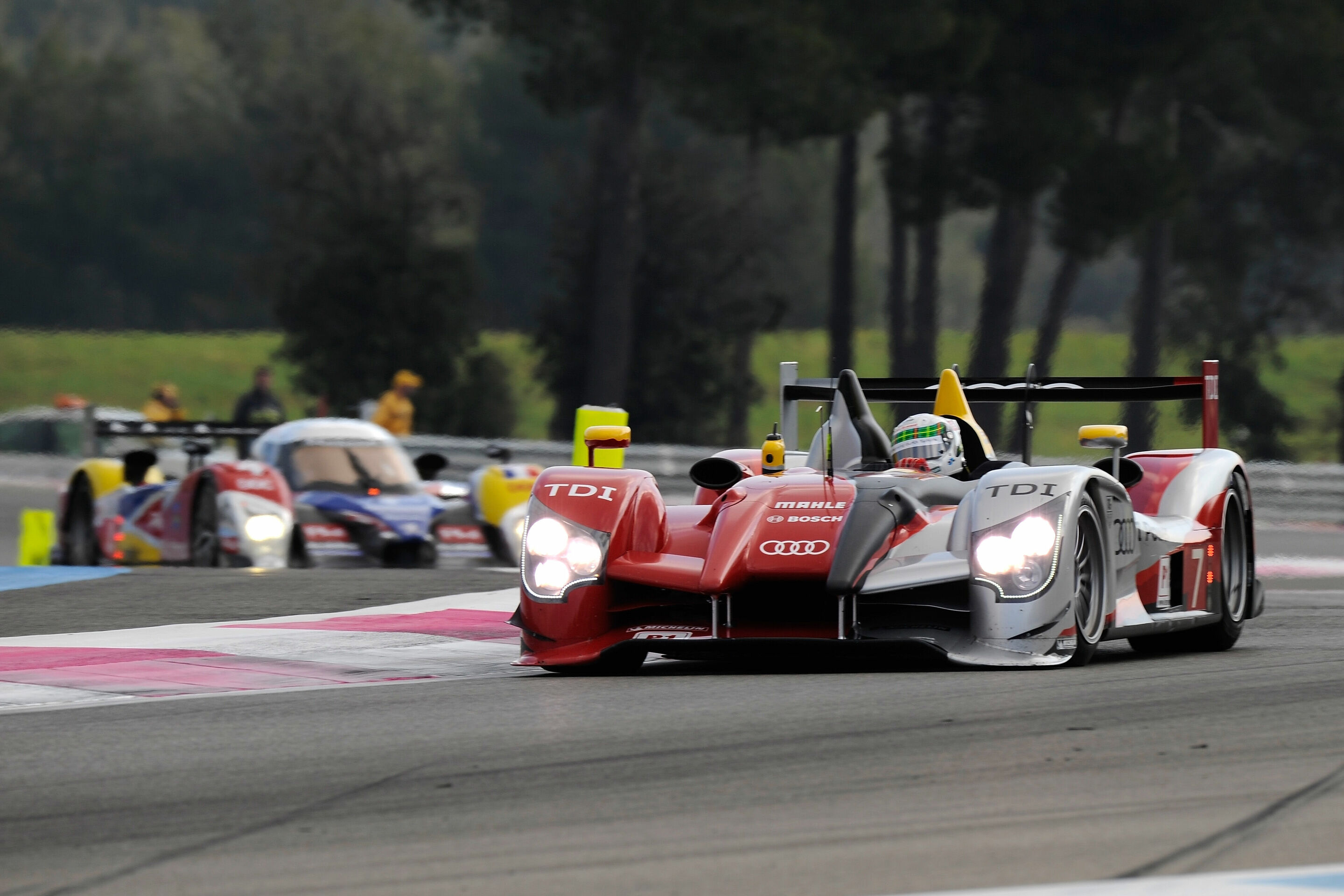
The Audi R15 TDI, model year 2010 (internally labeled “R15 plus”) has won its race début at Le Castellet (France) and in doing so left a strong impression.
The technically further developed diesel racing sports car ran the entire distance without the smallest problem during the test race. On the opening lap of the 8-hour race Allan McNish overtook the Peugeot which had started from pole position in the hands of Frenchman Stéphane Sarrazin and on the third lap the Lola-Aston Martin of Stefan Mücke. From then on Allan McNish and teammate Dindo Capello did not relinquish the lead. At the checkered flag after 266 laps the two Audi drivers held a five-lap lead from the Lola-Aston Martin of defending champion Stefan Mücke, Harold Primat and Adrian Fernandez. The Oreca team Peugeot finished fourth after succumbing to a technical problem during the opening stages of the race. The only unscheduled pit stop was made just seven minutes before the end of the race, when Audi Sport Team Joest switched to rain tires for safety reasons as rain began to fall. Audi Sport Team Joest used the Le Mans Series 2010 season opener as preparation for the 24-hour race at Le Mans on 12/13 June. In the practice sessions on Friday and Saturday as well as Sunday morning’s warm-up the team compared different set-up configurations before selecting a version which allowed Dindo Capello and Allan McNish to record constantly fast laps in the relatively low temperatures. The Audi R15 TDI was almost always the fastest car in the field throughout the eight hours and also set the fastest race lap. Audi Sport Team Joest gained important knowledge for Le Mans during the victorious race at Le Castellet, which will now be evaluated by Audi Sport in Ingolstadt and which go into further fine tuning of the R15 plus.
 Facts on Audi’s record victory at Le Mans
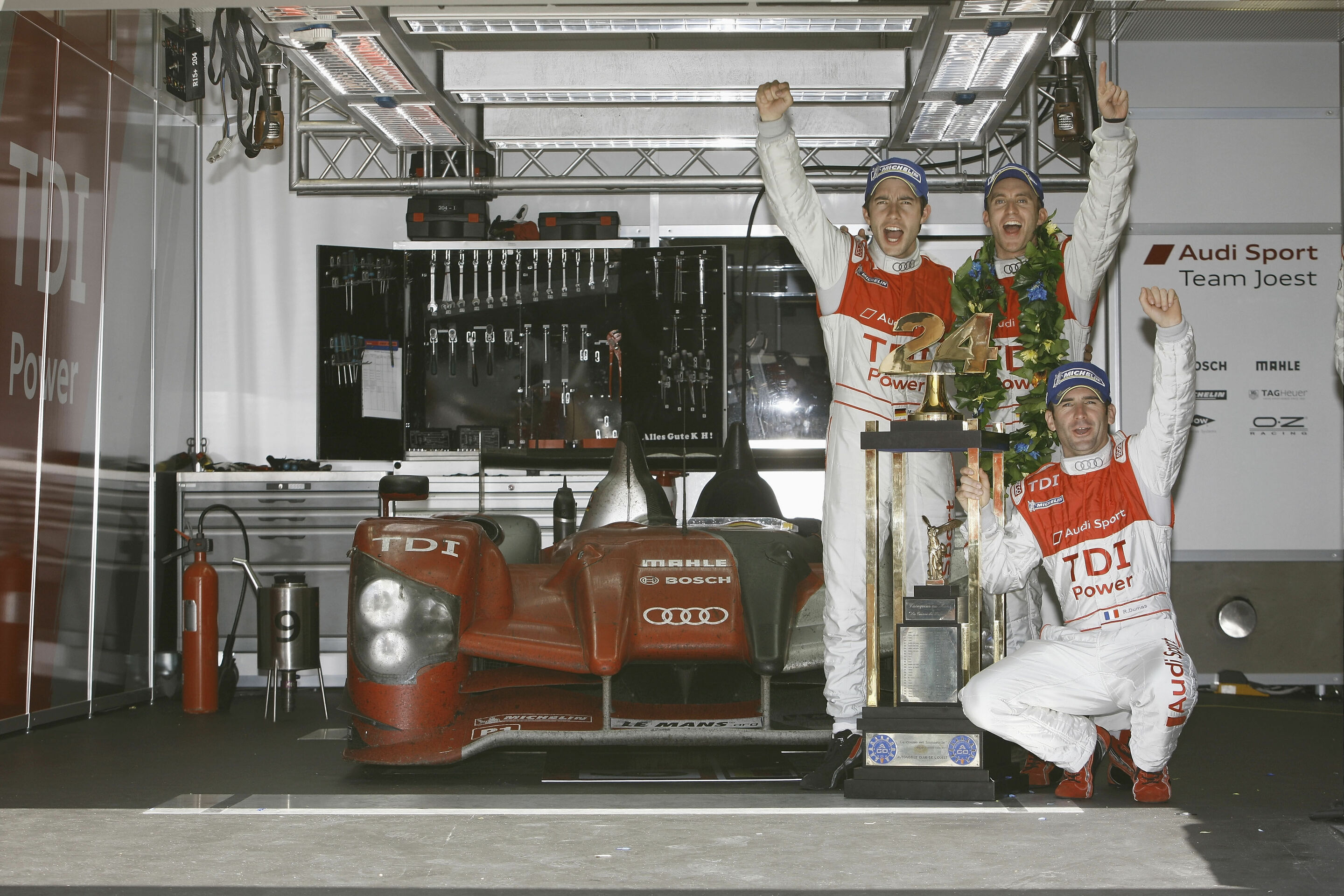
Four diesel victories are credited to Audi’s TDI technology (2006 to 2008 and 2010). After 2001 (TFSI) and 2006 (TDI) Audi won at Le Mans with new technology for the third time: in 2010 turbo-chargers with VTG (Variable Turbine Geometry) were used. With an average speed of 225.228 km/h the 78th edition was the fastest in the history of the race. The other two Audi R15 TDI cars, as well, surpassed the so far best mark from the year 1971 (222.304 km/h) with 224.659 km/h and 223.524 km/h. The victorious Audi R15 TDI designated as car number “9” completed a total of 397 laps. Having covered a distance of 5,410.713 kilometers, it broke the 1971 record set by Dr. Helmut Marko and Gijs van Lennep in the Porsche 917 (5,335.313 km). At that time, the Le Mans circuit had no chicanes. Despite the extremely high average speed the winning car consumed just 43.43 liters per 100 kilometers of diesel fuel on average – more than 10 percent less as at Audi’s first Le Mans victory in 2000 when the average was just 208.660 km/h. The winning car completed the entire distance with only eleven sets of Michelin tires (including an additional set required due to a slow puncture shortly before the end of the race). This meant that on average 491.9 kilometers were driven on a single set of tires. In 2009 the tires had to been changed about every 330 kilometers – a clear sign for the high efficency of the “R15 plus.” In total, the victorious Audi R15 TDI pitted 33 times. The pit stop time was just barely 20 minutes. The replacement of the right-hand outside mirror (approx. 20 seconds) was the only unscheduled work, plus an additional tire change as a result of a slow puncture just before the end of the race. The victorious Audi R15 TDI (chassis number R15-204) was the leading car on 133 of the 397 laps. The fastest lap of an Audi R15 TDI in the race was driven by André Lotterer at 3m 21.541s on lap 334.
 Audi R18 TDI: Advantage through LED technology
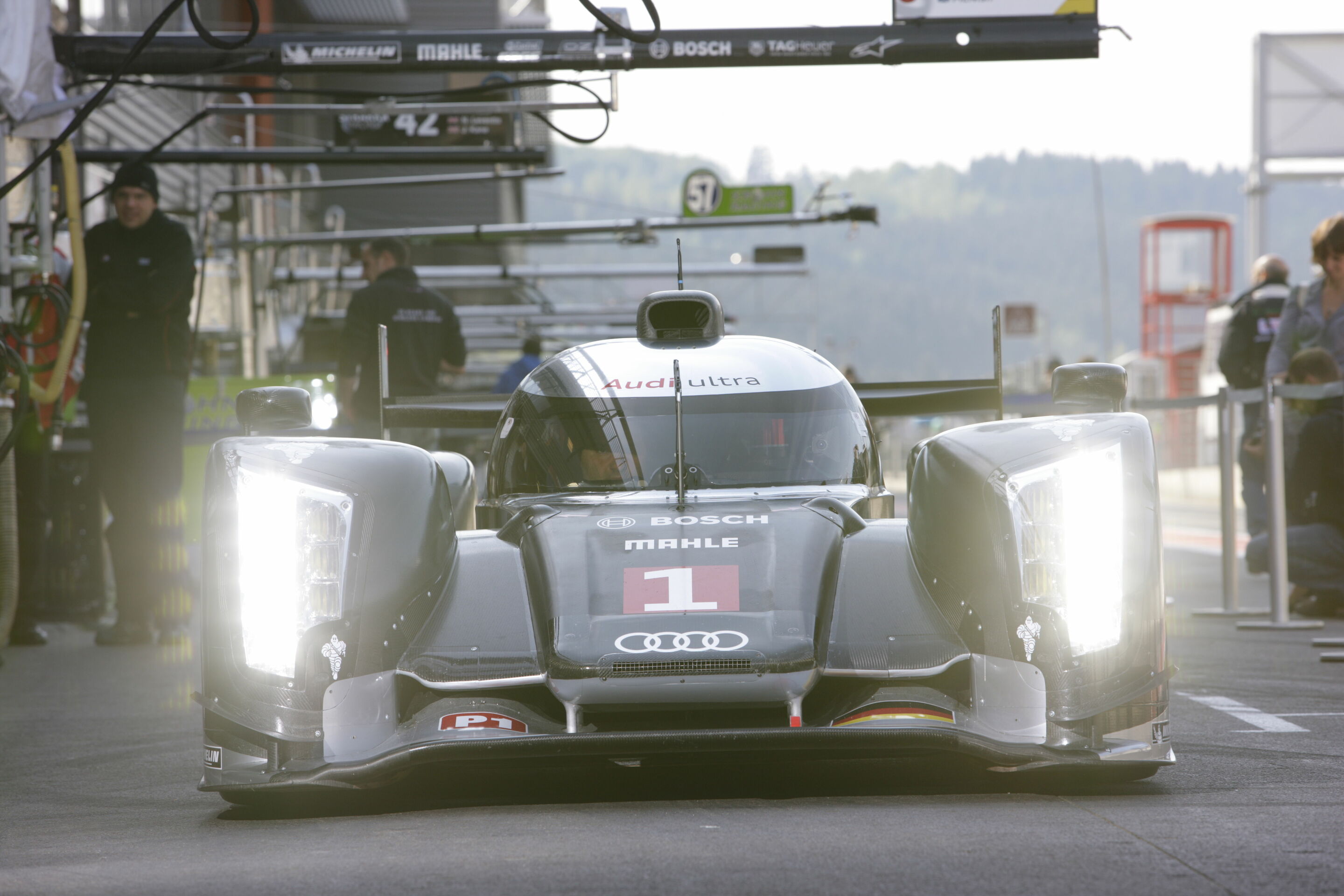
This is exactly how the Four Rings brand presented the Audi R18 TDI – the first Le Mans sports car featuring headlights comprising entirely of light emitting diodes. As a result, the Audi drivers have a significant advantage at night during the 24 Hours of Le Mans.
Audi is regarded as a pioneer in the development of LED technology and leads the competition by a large margin in this field. The twelve-cylinder Audi A8 was the first car in the world to go into production with LED daytime driving lights. The Audi R8 is credited with having the first full LED headlights worldwide. Slowly but surely an increasing number of Audi models are offered with full LEDs as an option, as is the new Audi A6. Audi also forces the new headlight technology in motorsport. The Audi R10 TDI was the first race car with LED daytime driving lights in 2006. The Audi R15 TDI, which broke the 39 year old distance record at the 24 Hours of Le Mans last year, was equipped with a combination of Xenon headlights and LEDs. Audi goes a step further with the innovative Audi R18 TDI: the new LMP1 is the first Le Mans sports car with full LED headlights. Combined with sophisticated reflector-lens modules, eight high-power light emitting diodes per side provide unique illumination of the race track at night. “When you’ve driven once with full LED headlights you don’t want to have anything else,” raves Le Mans record winner Tom Kristensen. “The light is stronger and vibrates less than a normal headlight – this is a clear advantage and particularly at Le Mans, a track that has many dark braking points in the night.” However, not only the greater illumination is an advantage of LED technology. Light emitting diodes are maintenance free and extremely reliable. “The vulnerability to failures is extremely low,” explains Dr. Martin Mühlmeier, Head of Technology at Audi Sport. “To date, we haven’t had a single LED failure.”
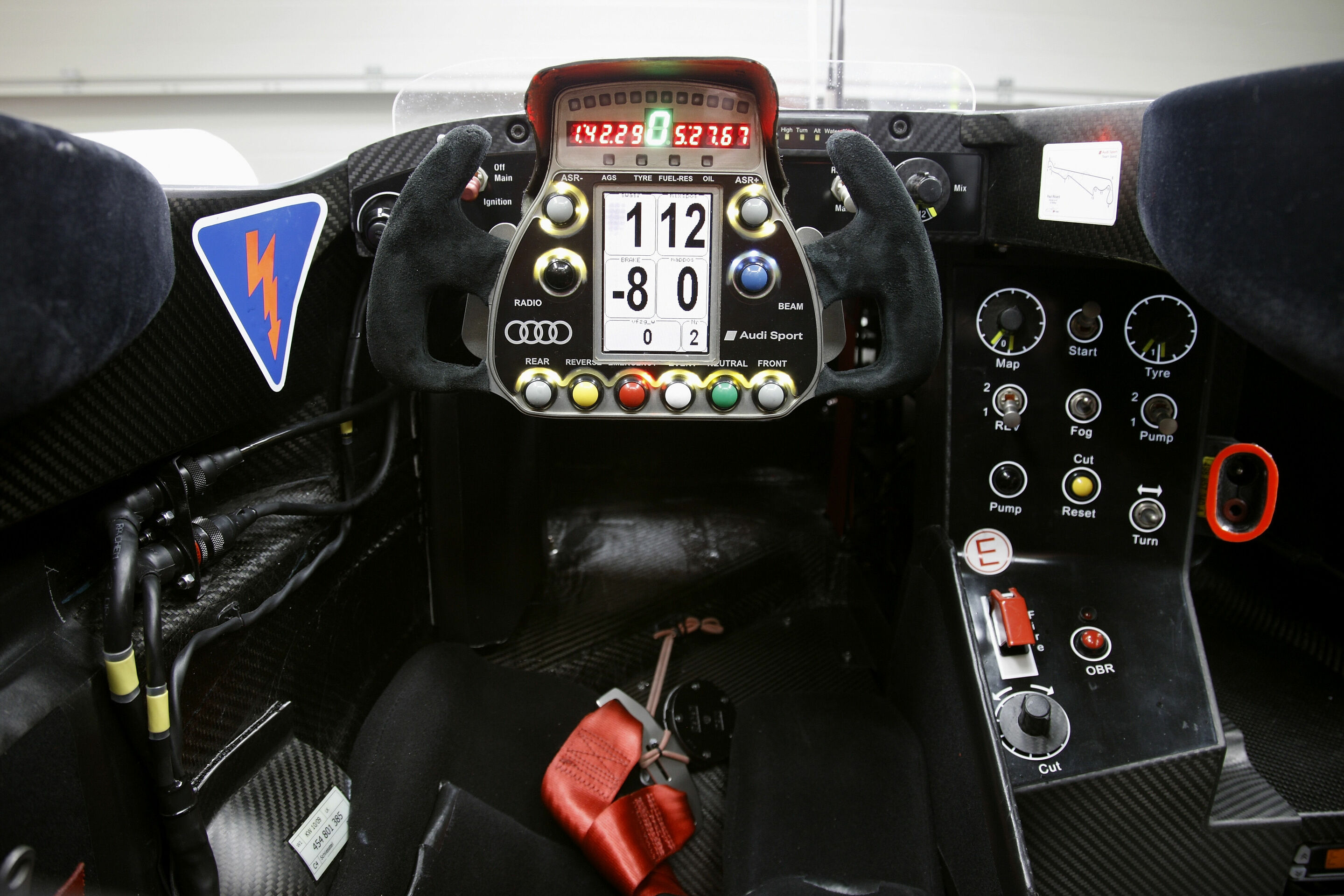
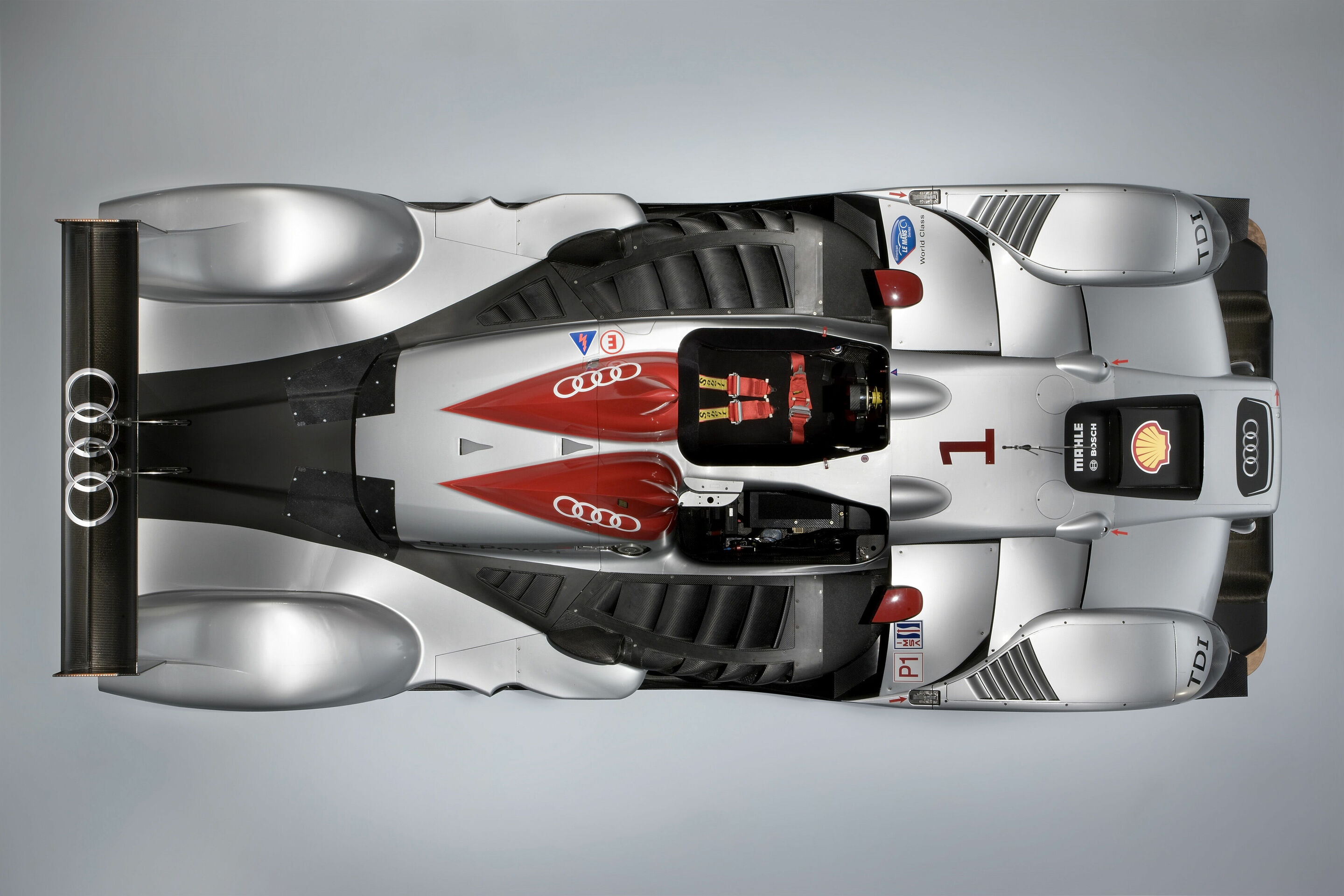
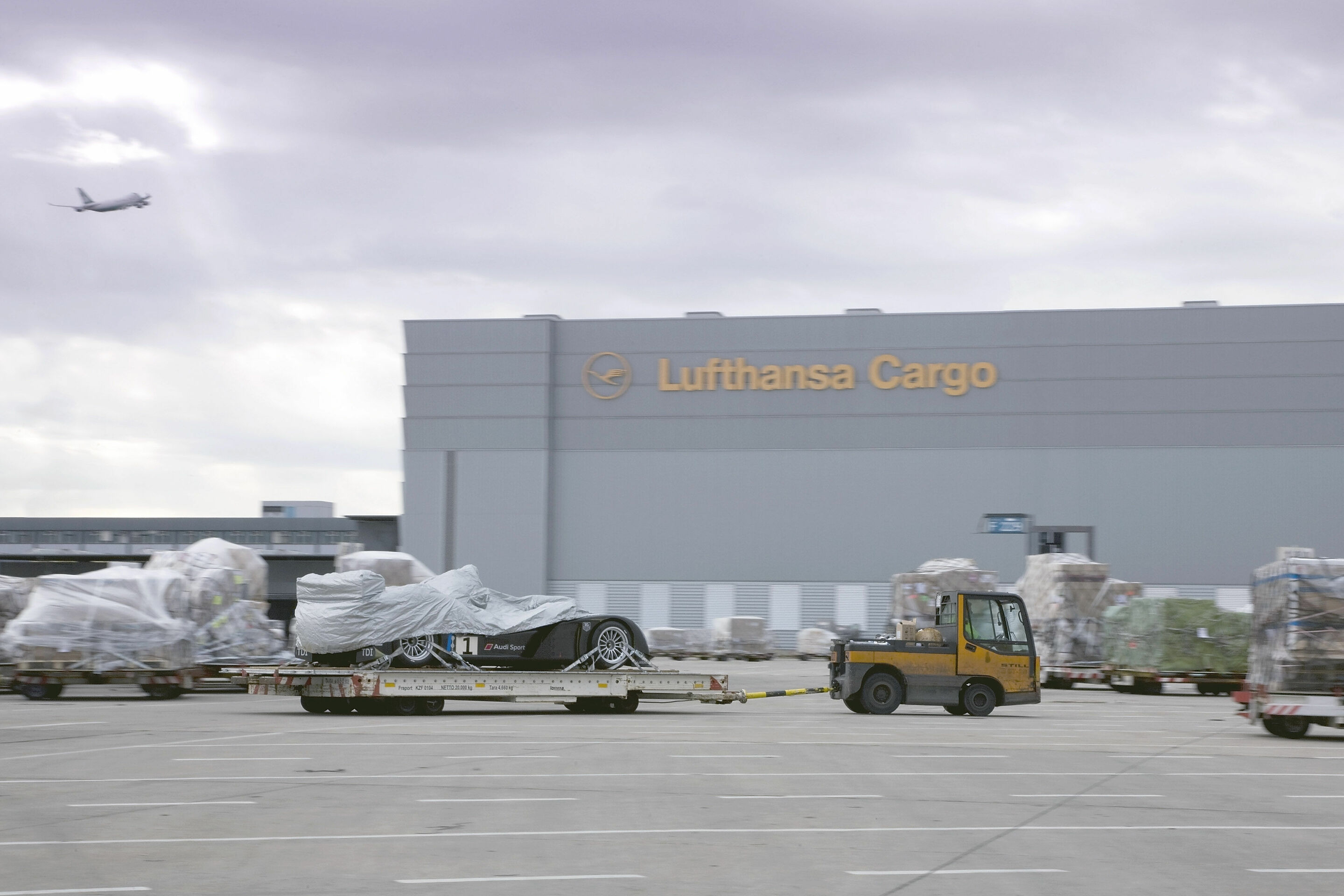
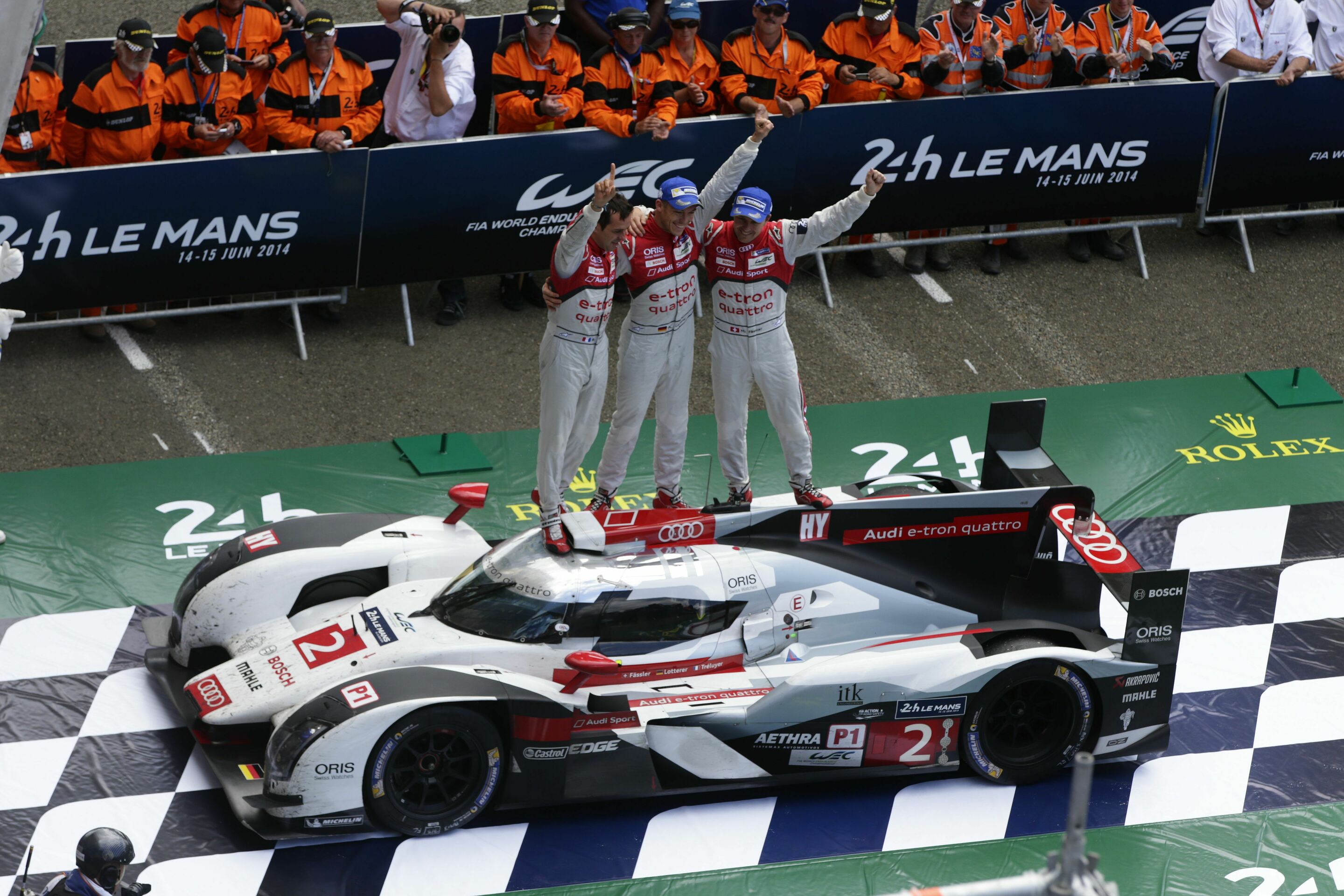
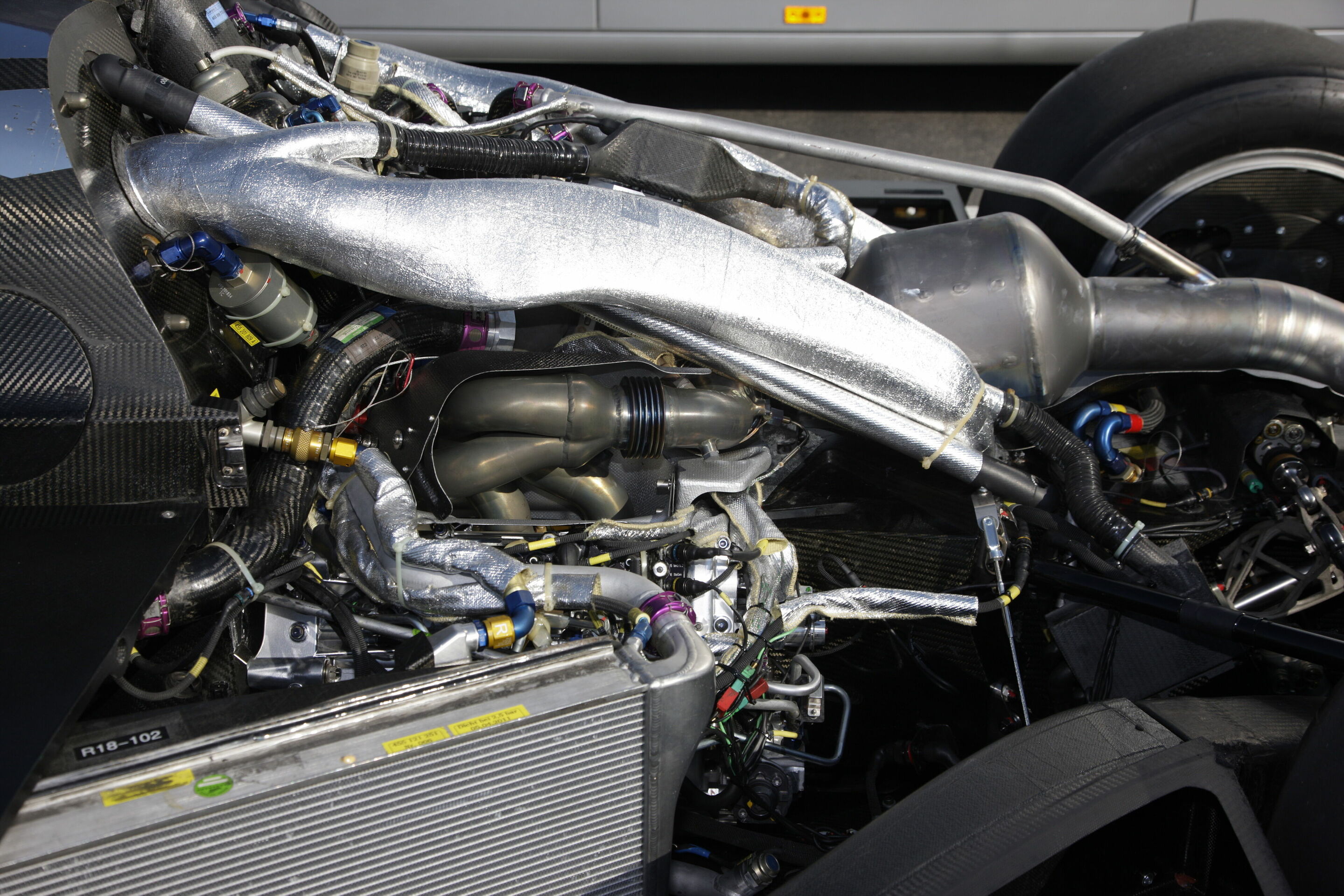 Unique TDI engine for the Audi R18 TDI
Only six weeks to go before the 24 Hours of Le Mans Compact V6 TDI power unit with single turbocharger Exhaust manifold and VTG sit between cylinder banks
The new Audi R18 TDI with which Audi targets its tenth victory in the famous 24 Hours of Le Mans on June 11/12 is ready today with “tomorrow’s” technology. During development of the new LMP1 sports car the integration and future electrification of the powertrain and various possible concepts for energy recuperation have been taken into account.
“We are very conscious of such systems,” explains Head of Audi Motorsport Dr. Wolfgang Ullrich. “In our opinion, just as soon as this technology proves to be the most efficient we will use it at Le Mans.” Although diesel engines have been repeatedly restricted by the regulations since their victorious introduction in 2006, Audi relies on TDI power once again for its new LMP1. “Audi invented the TDI engine and is convinced that this technology remains one of the most efficient and modern forms to power a car – especially at Le Mans where engines with high specific power, low fuel consumption and low emissions are a necessity.” New regulations devised by the Automobile Club de L’Ouest (ACO) and introduced this year dictate significantly smaller engines. Audi has chosen a particularly compact 3.7 liter V6 TDI engine, which is about 25 per cent lighter than the V10 TDI power plant previously fitted to the older R15 TDI, and which leaves all options open for the technicians with regard to electrification and energy recuperation. “This would not be the case with a V8, for example, which is also permitted by the regulations,” explains Ulrich Baretzky, Head of Engine Development at Audi Sport. However, Audi does not only surprise with its extremely compact engine. The concept is also innovative for an LMP1 sports car.
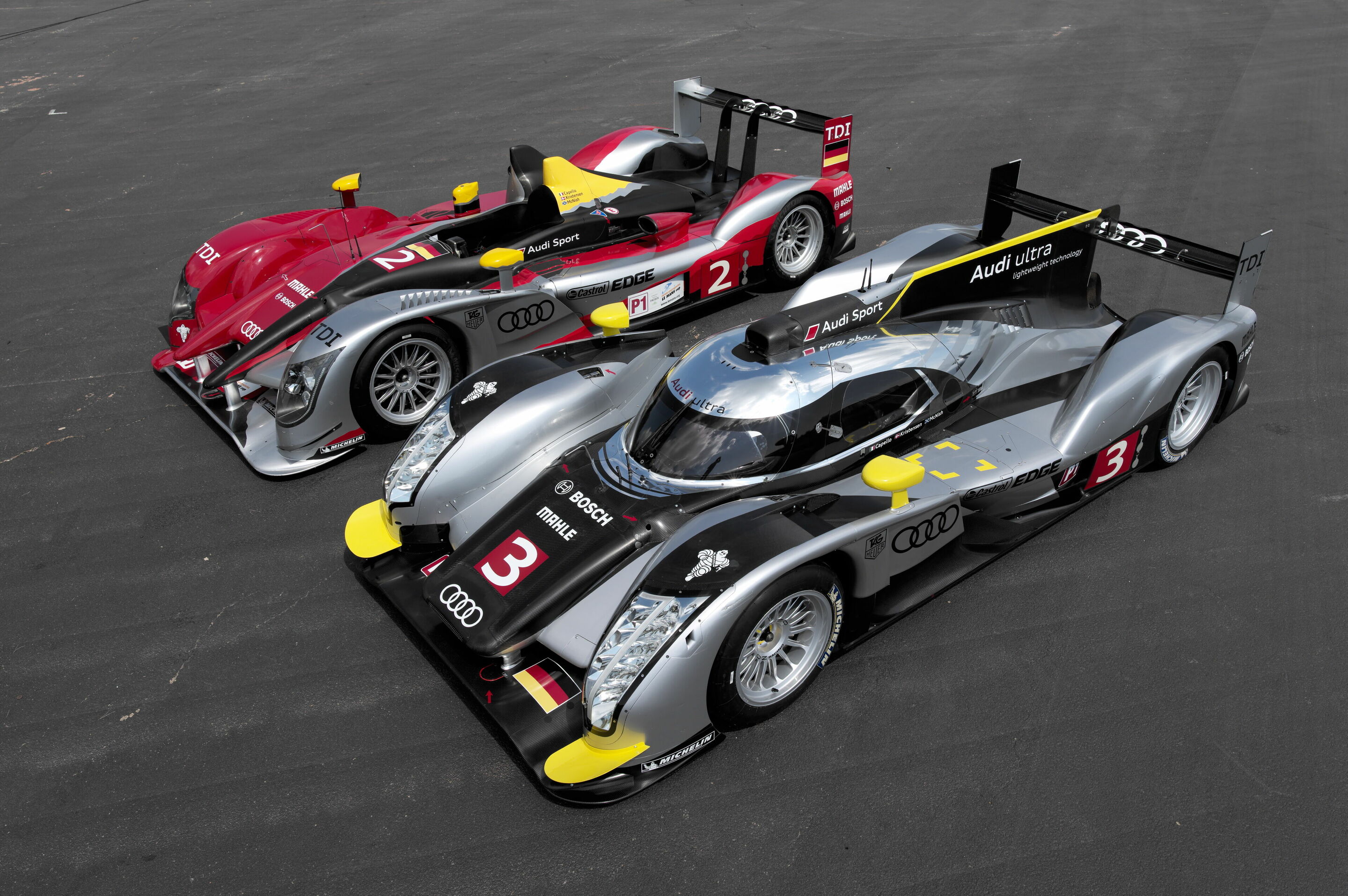 Audi R18 TDI with efficient aerodynamics
Aerodynamic efficiency was the focus of attentions during development of the new Audi R18 TDI because it plays an even larger role at Le Mans than in the past.
“A closed car is not necessarily more efficient,” stresses Dr. Martin Mühlmeier, Head of Technology at Audi Sport. “Race cars designed to generate very high downforce levels, in Formula 1 for example, are also very efficient ‘open’ designs. If you want to go in the direction of low drag or must, like now at Le Mans with the engine power being reduced and the circuit characteristics still dominated by long straights and high speed, then a ‘closed’ car is more efficient than an ‘open’ one.” For this reason, Audi Sport has dropped the ‘roadster’ concept with which the four Rings brand recorded nine Le Mans victories between 2000 and 2010. Head of Audi Motorsport Dr. Wolfgang Ullrich has mixed feelings: “I really liked the ‘open’ cars but there are beautiful ‘closed’ sports prototypes as well – and I think that the R18 TDI is a typical Audi making a very good visual impression.” It is, however, not only aerodynamic efficiency that plays a role in the decision for or against a ‘closed’ car. The sporting regulations developed in such a way over the years that one of the roadster’s decisive advantages – namely fast driver changes – was eradicated: changing tires at Le Mans now takes considerably longer due to the fewer number of mechanics allowed to work simultaneously on the car. Therefore a fast driver change is no longer a decisive factor. Turbulence in the cockpit area is the greatest disadvantage ‘open’ race cars have with regard to a good cd value. Airflow around a closed car like the R18 TDI is significantly more uniform. The resulting increase in aerodynamic efficiency can be transformed into either more downforce or greater top speed. The wind tunnel continues to play a major role during the development of a Le Mans sports car.