Search
All search results for "cylinder on demand"
(98)
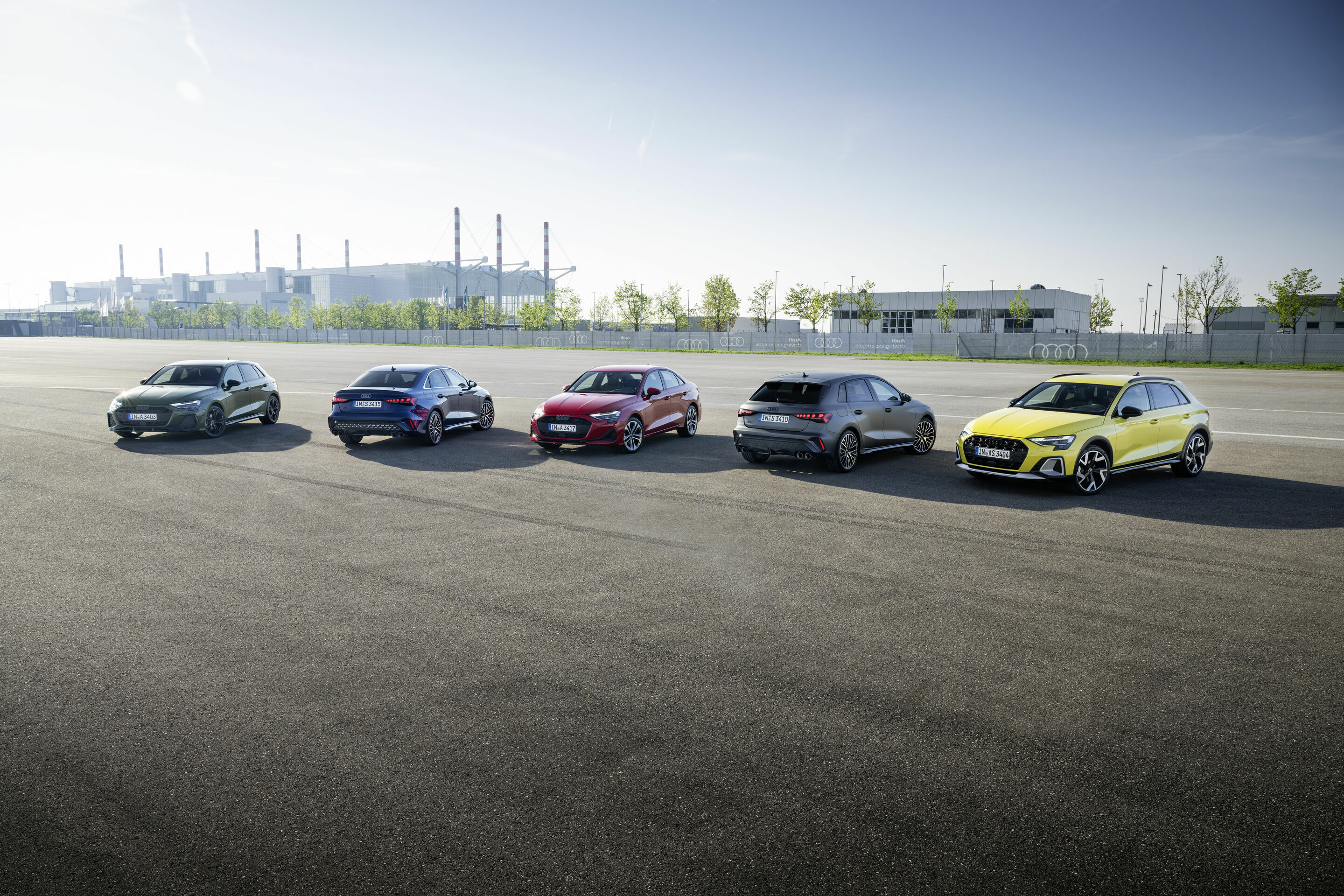
Significantly expanded standard equipment increases comfort, selectable daytime running light signatures and flexible subscriptions for functions on demand ensure a high degree of individualization. With a higher battery capacity, DC charging at fast-charging stations and an electric range of up to 143 kilometers (88.9 miles), the Audi A3 Sportback TFSI e combines dynamic driving performance with increased comfort. The A3 allstreet, the A3 family’s distinctive crossover, complements the portfolio. With its characteristic off-road look, three centimeters more ground clearance than the A3 Sportback and the raised seating position, it offers an SUV-like driving experience and a high level of functionality. The Audi S3 is displaying a new level of driving dynamics: Its more powerful turbocharged four-cylinder engine with 333 PS and 420 Nm combines with the torque splitter, new steering knuckles, and optimized steering for strong performance and agile handling. What’s more, the Audi RS 3, the series' five-cylinder-powered top model and pinnacle of performance is even sportier since the upgrade. Limited to 750 units, the special model Audi RS 3 competition limited demonstrates its uniqueness with exclusive features such as a coilover suspension, neodymium gold interior, and special paint in Malachite green.
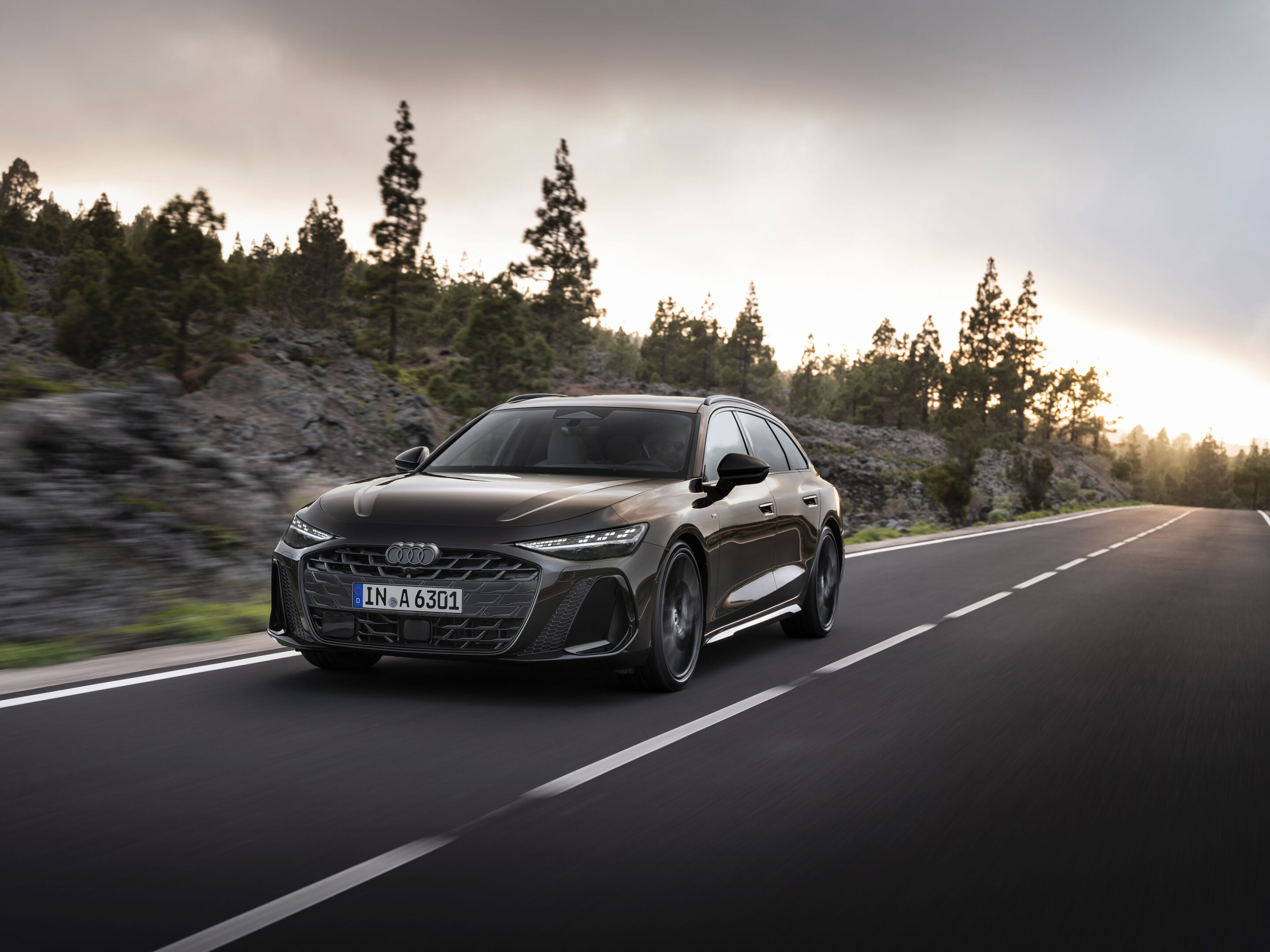 Audi A6 Avant
It impresses with a cleverly designed body concept and lots of variability, offering plenty of space for everyday life as well as for demanding recreational activities. Whether on long trips or city driving, the adaptive air suspension and all-wheel steering ensure a smooth ride and sporty handling in equal measure. Additional highlights include intuitive operating and infotainment concepts, new digital lighting technology, and intelligent driver assistance systems.
 Audi Tradition to commemorate numerous anniversaries in 2026
Twenty-five years ago, the Audi A8 6.0 debuted as the world’s most powerful twelve-cylinder luxury sedan at the time; under its hood was the first twelve-cylinder engine from Audi – a 6-liter W-configuration unit. Fifty years ago, the Four Rings introduced the company’s first five-cylinder engine in the new Audi 100 (C2); its distinctive firing order 1-2-4-5-3 created an unmistakable sound, and legendary rally victories soon earned the engine cult status. One hundred years ago, the Zwickau-based Horchwerke unveiled the Horch 8 at the Berlin Motor Show – the first German production car with an eight-cylinder engine. A full 125 years ago, August Horch designed his first automobile: the Vis-à-Vis model, featuring a seating arrangement where driver and passengers faced each other. February 3, 2026, will mark the 75th anniversary of his death. Company founder Horch was determined to “build only strong and good cars under all circumstances” – and to prove their performance, he sent his vehicles into competitive motorsport at an early stage. Just five years after automotive pioneer Horch built his first car, the Horch 18-22 PS claimed overall victory in 1906 at the Herkomer Trial, one of the most demanding long-distance events of its time. The publication “Anniversary Dates 2026” also honors further sporting achievements by Audi and its heritage brands. One hundred years ago, NSU scored a remarkable quadruple victory in the 1.5-liter class with the NSU 6/60 PS at the first “German Grand Prix” on the AVUS circuit in 1926. Ninety years ago, the Auto Union Type C dominated the 1936 racing season, winning three of five Grand Prix events, half of the circuit races, and every hill climb entered by Auto Union AG.
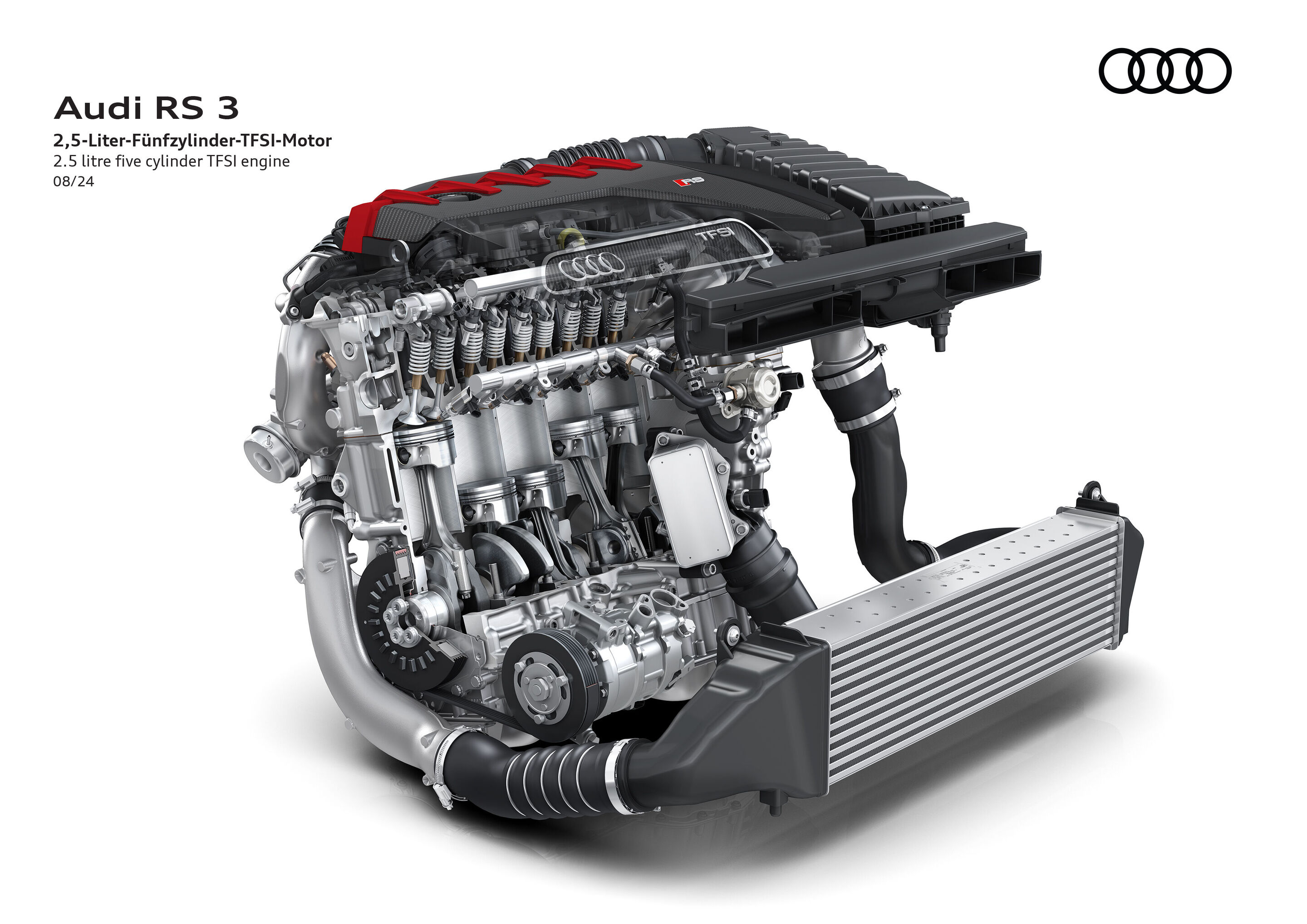 50 years of the Audi five-cylinder
The five-cylinder engine debuted in 1976 in the Audi 100 with 136 PS Successful engine concept for production models and rally sport Signature sound from its unique 1-2-4-5-3 firing order Audi RS 3 2.5 TFSI with 400 PS and 500 Nm torque Hand-assembled at the Bock plant in Győr, Hungary
Audi will celebrate a very special anniversary in 2026: 50 years of the five-cylinder engine. The brand with the four rings first introduced this engine in 1976 in the second-generation Audi 100. This was followed by upgrades and new developments with turbocharging, exhaust gas purification, and four-valve technology, rally engines, and five-cylinder diesel engines. Currently, the 2.5 TFSI in the Audi RS 3 continues the great tradition of five-cylinder engines
Audi’s five-cylinder engines have cult status and are deeply rooted in the Audi DNA. They have played a decisive role in shaping “Vorsprung durch Technik” – on the one hand with numerous successes in motorsport, and on the other, by virtue of their outstanding performance in series production. To this day, the 2.5 TFSI provides a highly evocative driving experience, not least because of its characteristic sound. The HISTORY: 50 years of success in series production and motorsport The first five-cylinder engine powered the Audi 100 (C2) in 1976. Known internally as Type 43, the model was intended to be positioned higher in the market than its predecessor. The four-cylinder engines of the time were not sufficient for the developers’ plans. Audi engineers therefore discussed using inline five-cylinder and six-cylinder engines in the early 1970s. The latter were ruled out due to space constraints and the unfavorable weight distribution. As a result, those responsible opted for the inline five-cylinder engine, which was based on the EA 827 engine concept, still in its infancy at the time. This inline four-cylinder engine was used throughout the Volkswagen Group in the 1970s, including in the Audi 80 and Audi 100.
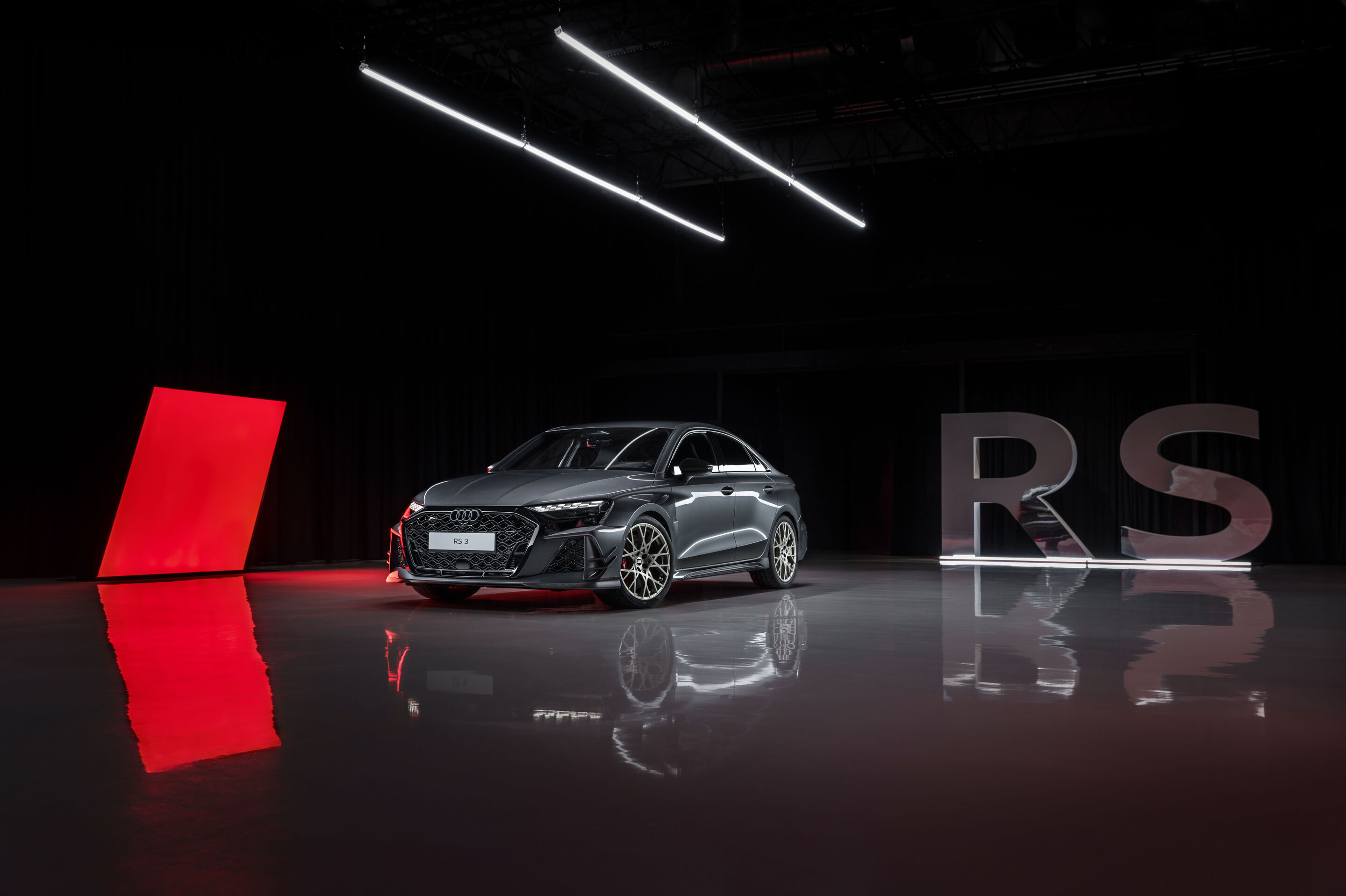
Exclusive: limited edition to celebrate “50 years of five cylinders” Essential: the legendary 2.5 TFSI engine and its evocative throaty sound Exciting: adjustable coilover suspension with new rear stabilizer Expressive: exterior with carbon elements and special malachite green paint Extraordinary: interior in Neodymium gold and consecutive numbering
To celebrate the 50-year anniversary of the legendary five cylinder engine, Audi Sport is unveiling an exclusive special-edition model: the RS 3 competition limited. With 750 examples to be built, it stands for a five-decade-long success story from the brand with four rings. Its inline five makes the brawny compact unique in its segment, combining extraordinary performance with an unmistakable sound. When driven, the RS 3 competition limited lives up to its sporting pedigree thanks to a coilover suspension and a stiffer rear stabilizer. Visually, extra carbon elements leave no doubt about its credentials. Combined with the exclusive interior, the special edition evokes pure emotion.
A legacy that began in 1976 with the second-generation Audi 100 is now reaching new heights with the Audi RS 3 competition limited. To mark “50 years of five cylinders,” Audi Sport is endowing the RS 3 with numerous upgrades that will make the special edition highly sought after by collectors. Limited to 750 examples, the RS 3 competition limited exudes exclusivity from every detail. Exterior: sharpened front, plenty of carbon, and subtle details Sportiness informs all visual features of the Audi RS 3 – starting with the voluminous Singleframe that appears to form a unit with the air intakes at either side, and the striking front lip. This area has been sharpened even further on the RS 3 competition limited. Together with badges boasting heritage colors at front and rear, it stands for maximal individuality. The special edition combines expressive design with matte carbon elements.
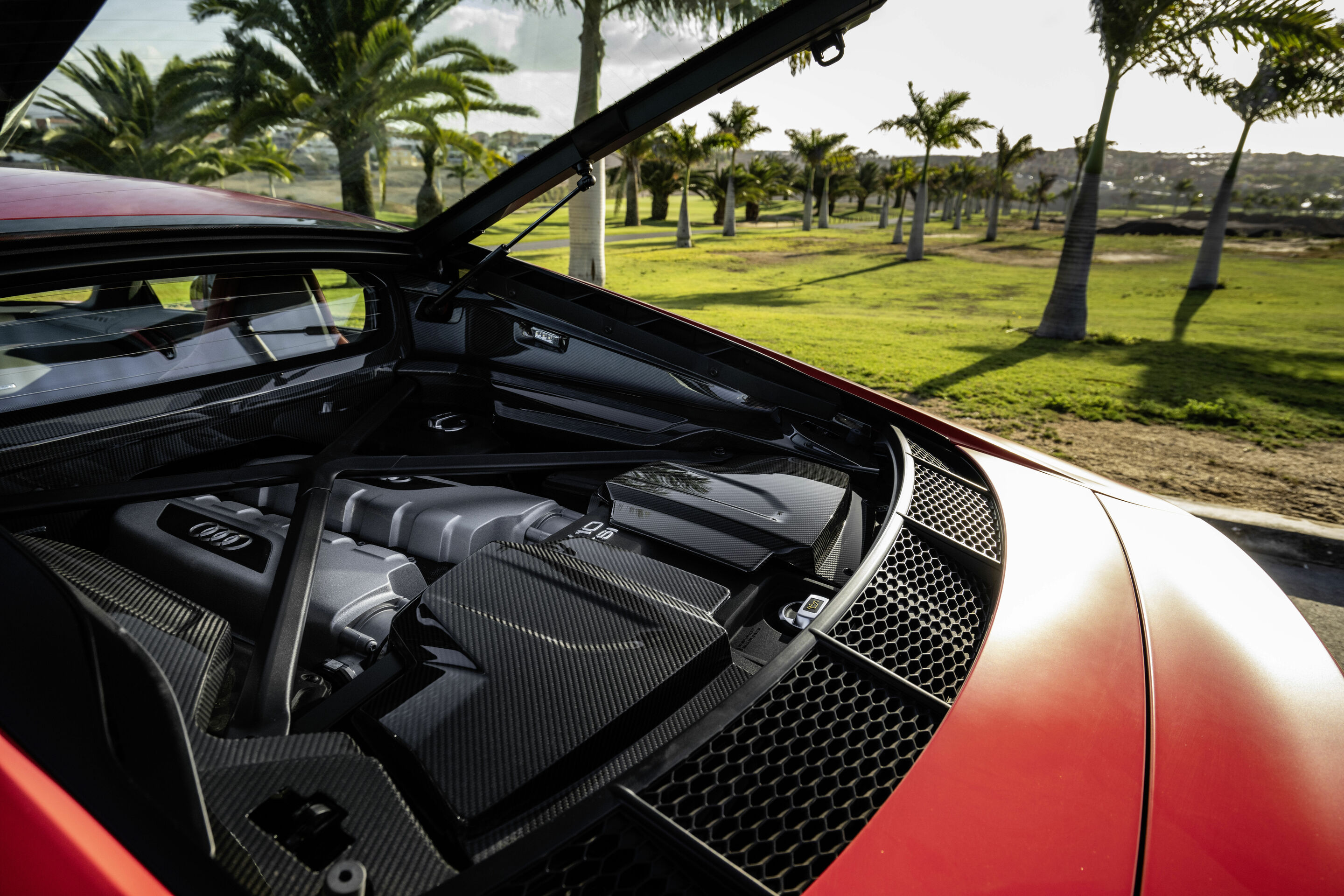
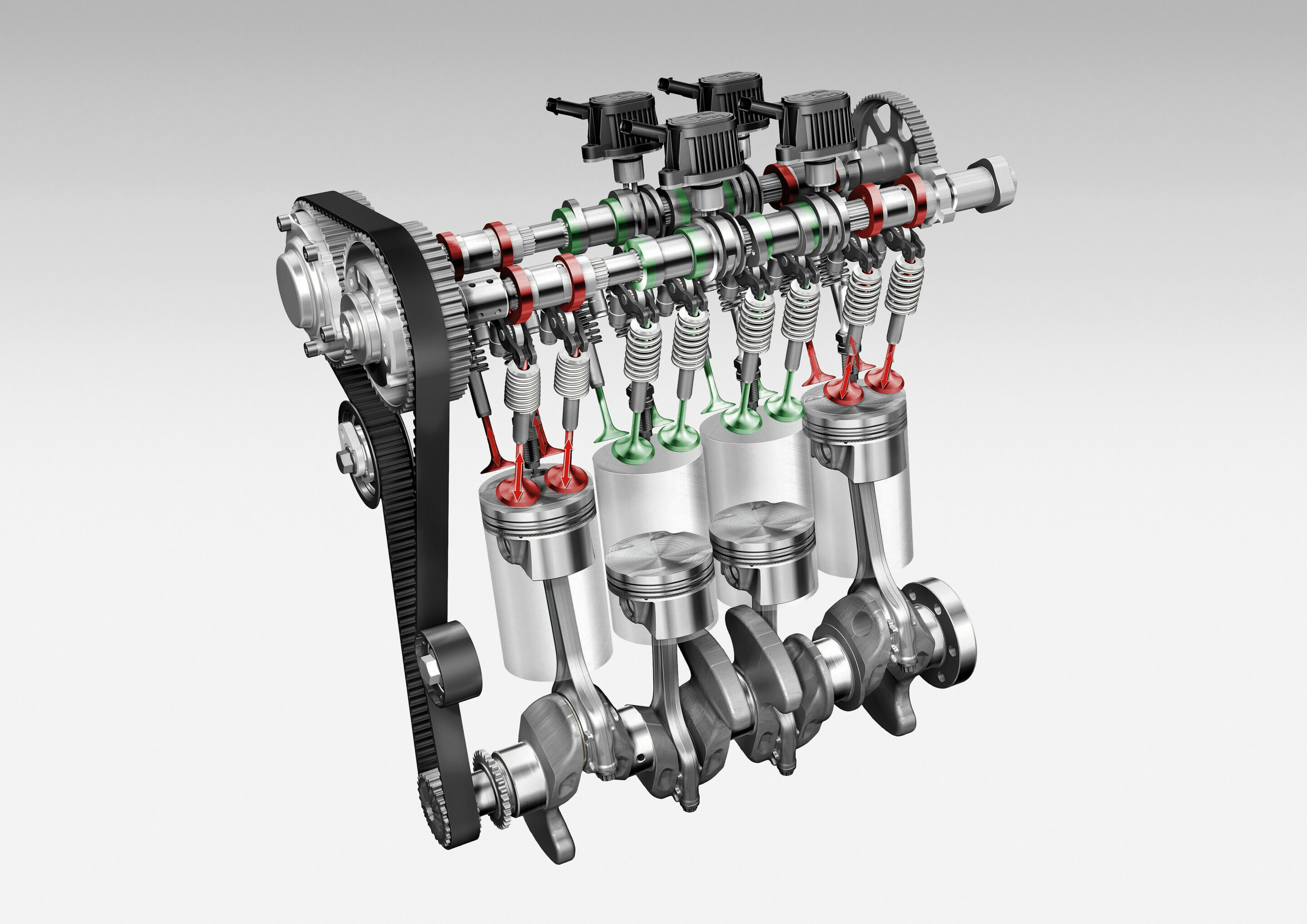
The Audi R8’s ten-cylinder engine has long since achieved cult status and is one of the last naturally aspirated engines in its segment. Countless racing victories and strong performance in day-to-day use speak for themselves. The 5.2 FSI brings the car’s racing genes to life and has been given a further 30 PS boost in the R8 V10 performance RWD and now generates an additional 10 Nm of torque at 550 Nm. The high-performance engine made its debut on the race track in GT3 racing in the Audi R8 LMS in 2009. The R8 LMS ultra followed in 2012. Finally, the second-generation R8 LMS came on the market in 2015 and received a comprehensive upgrade in the fall of 2018. The R8 LMS GT4 has expanded Audi Sport’s customer racing lineup since the beginning of 2018. In both GT categories, the 5.2 FSI only differs slightly from the standard engine. It forgoes dual injection, the intake system features an air restrictor, and the control unit’s maps and bearing shells have been modified. With a service interval of 10,000 kilometers and a mileage of 20,000 kilometers until the first inspection, the 5.2 FSI sets standards in racing.
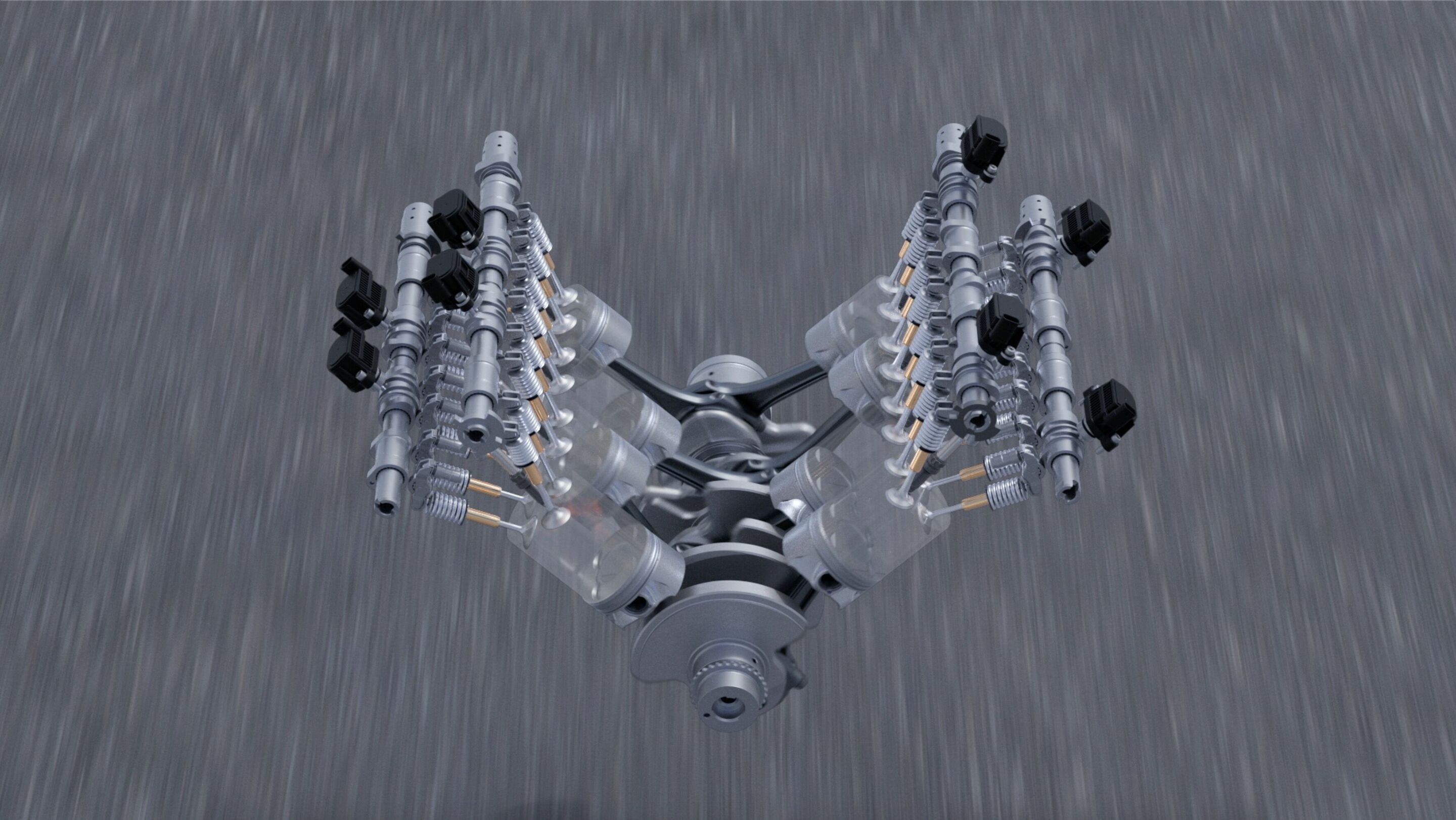
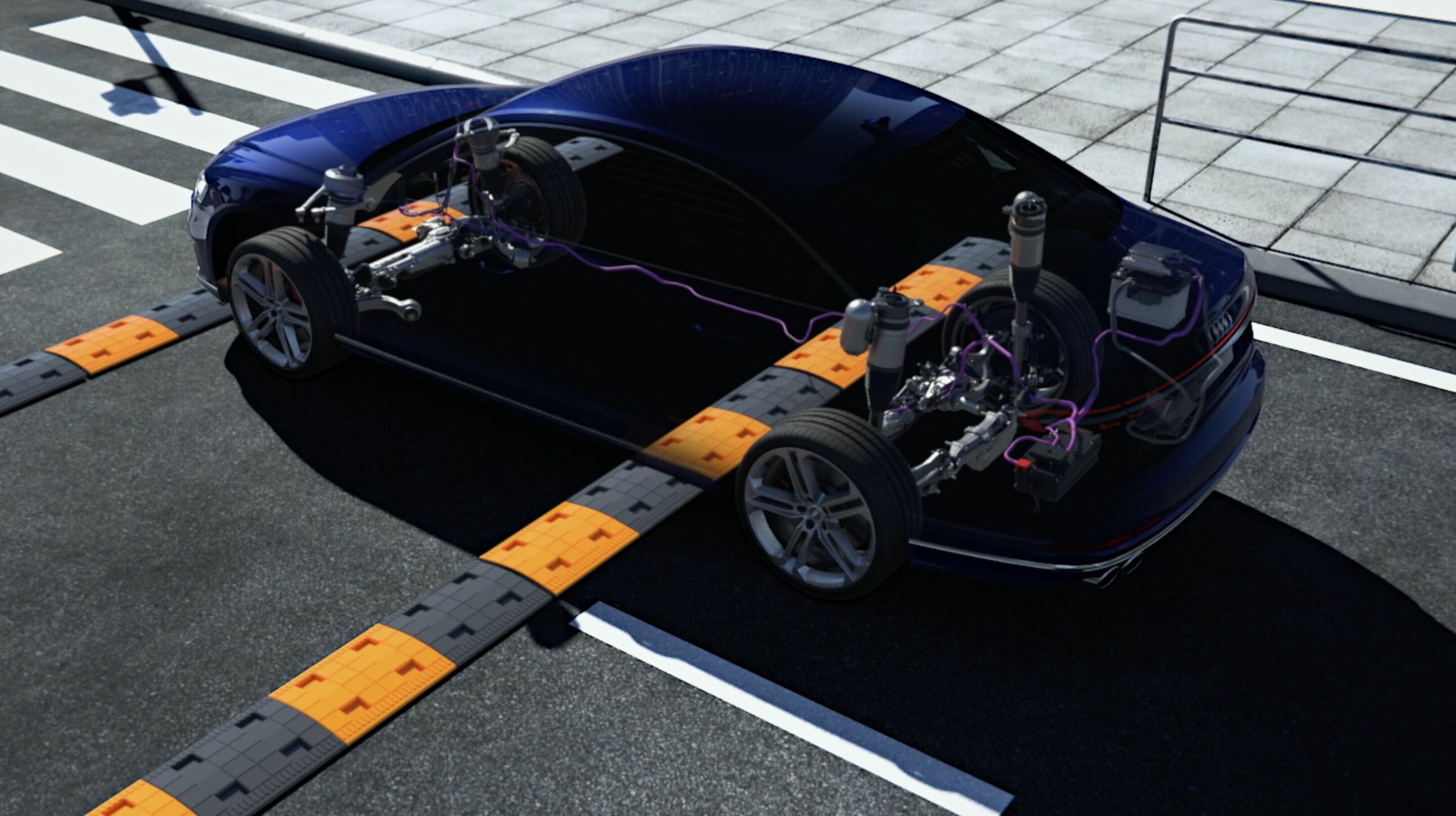
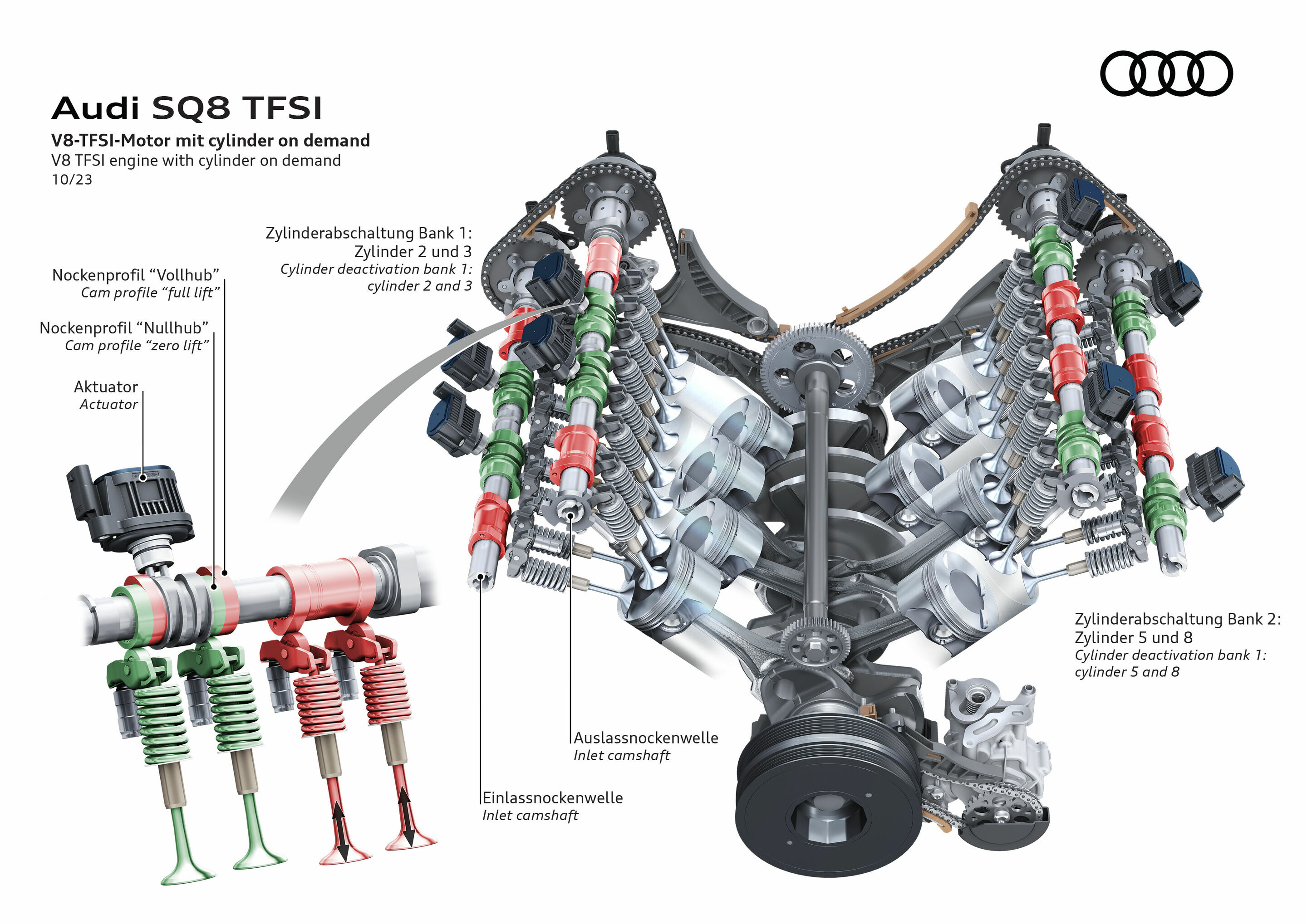
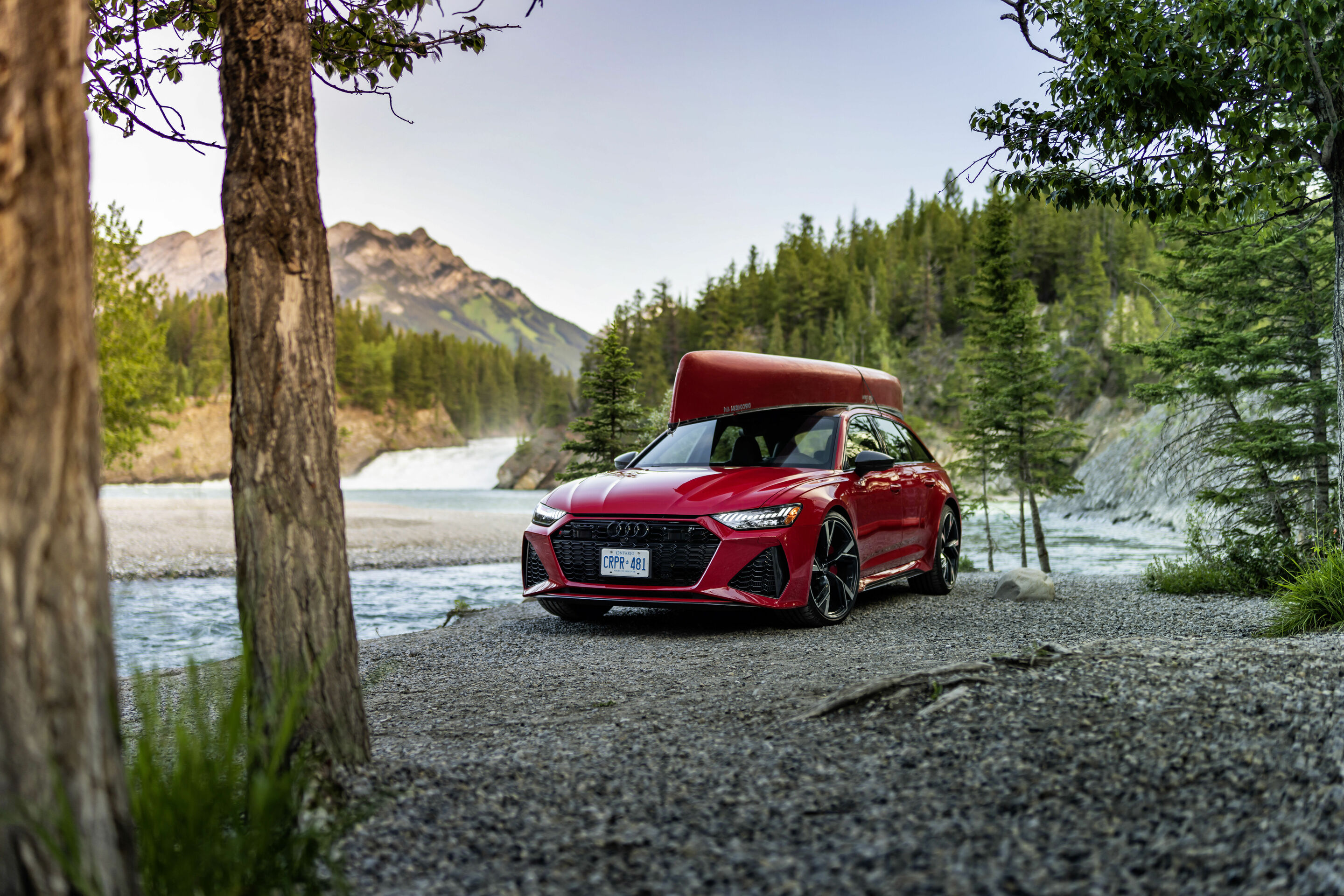
Combination of pioneering performance and outstanding everyday usability have always been trademark features of an RS 6 The current RS 6 Avant – now available in the US for the first time – is the global market leader in its segment with a uniquely wide body From the C5 to the C8, Dynamic Ride Control suspension ensures first class driving dynamics
One car has been exciting Audi Sport GmbH and a worldwide fanbase like no other for 20 years: across four generations, the Audi RS 6 has set the tone for high-performance station wagons with impressive performance and outstanding everyday usability. It owes the success of its underlying concept from 2002 to its double-charged engine and all-wheel drive. The basic concept has been the same across every generation of the RS 6. Again and again, it sets new standards in its competitive environment as well. Technical Vorsprung also turns up in other places, such as Dynamic Ride Control suspension. It has been used in other RS models from Audi for a long time.
The C5: a desire for performance in the upper mid-range Shortly after the start of the new millennium, what was then quattro GmbH (now Audi Sport GmbH) was faced with the question of which car the staff would give a sporty renovation to after the RS 4. It was an opportune moment for the Audi A6. The first generation (C5) underwent a product enhancement in 2001 and Audi also wanted to add more power under the hood in its upper mid-range. The brand was self-aware and motorsports were in high demand. Audi drove its way to the winners stand on the first try at its premiere in the legendary 24-hour Le Mans in 1999. The company with the four rings made history again in 2000, 2001, and 2002.
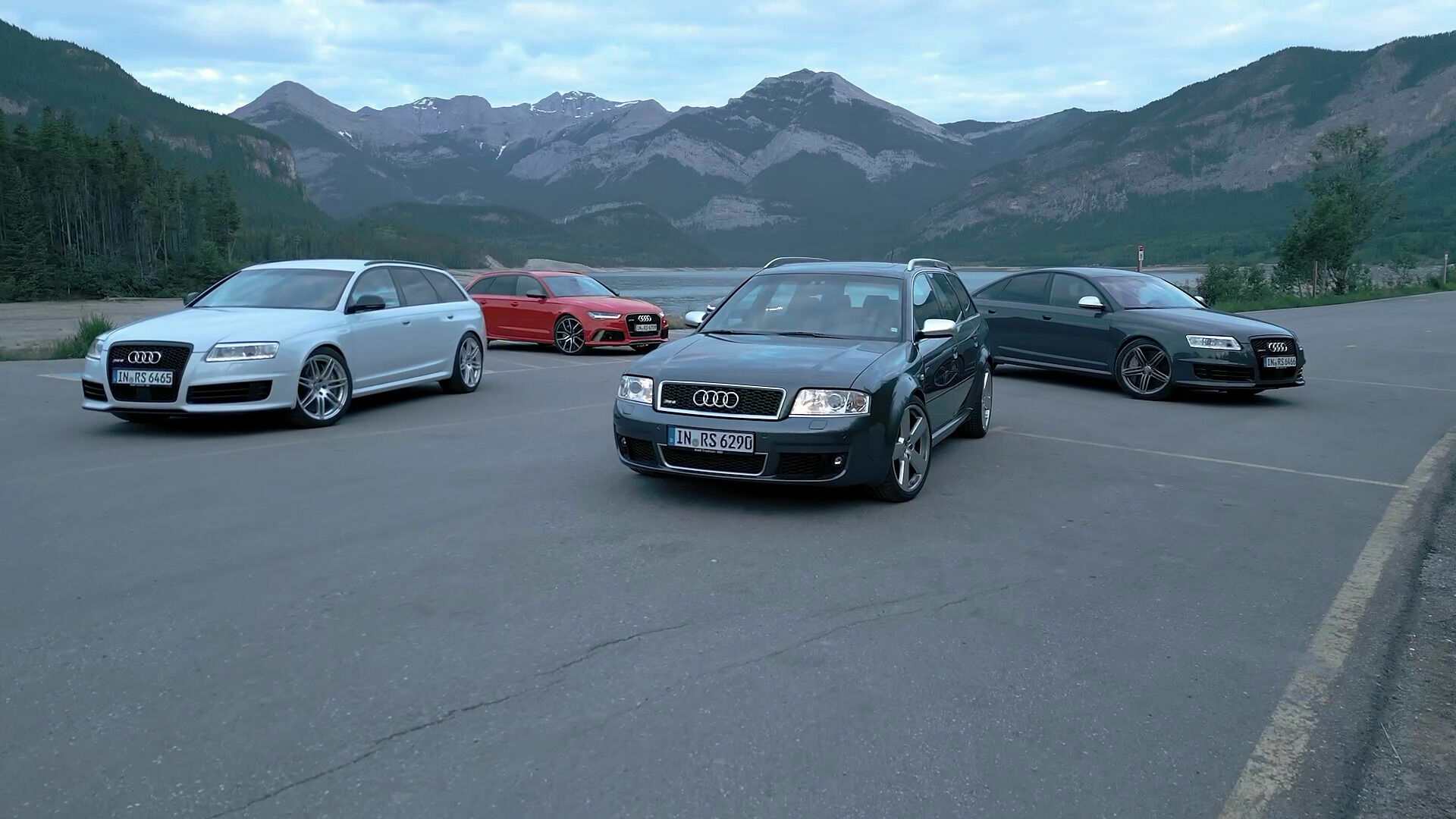
Combination of pioneering performance and outstanding everyday usability have always been trademark features of an RS 6 The current RS 6 Avant – now available in the US for the first time – is the global market leader in its segment with a uniquely wide body From the C5 to the C8, Dynamic Ride Control suspension ensures first class driving dynamics
One car has been exciting Audi Sport GmbH and a worldwide fanbase like no other for 20 years: across four generations, the Audi RS 6 has set the tone for high-performance station wagons with impressive performance and outstanding everyday usability. It owes the success of its underlying concept from 2002 to its double-charged engine and all-wheel drive. The basic concept has been the same across every generation of the RS 6. Again and again, it sets new standards in its competitive environment as well. Technical Vorsprung also turns up in other places, such as Dynamic Ride Control suspension. It has been used in other RS models from Audi for a long time.
The C5: a desire for performance in the upper mid-range Shortly after the start of the new millennium, what was then quattro GmbH (now Audi Sport GmbH) was faced with the question of which car the staff would give a sporty renovation to after the RS 4. It was an opportune moment for the Audi A6. The first generation (C5) underwent a product enhancement in 2001 and Audi also wanted to add more power under the hood in its upper mid-range. The brand was self-aware and motorsports were in high demand. Audi drove its way to the winners stand on the first try at its premiere in the legendary 24-hour Le Mans in 1999. The company with the four rings made history again in 2000, 2001, and 2002.