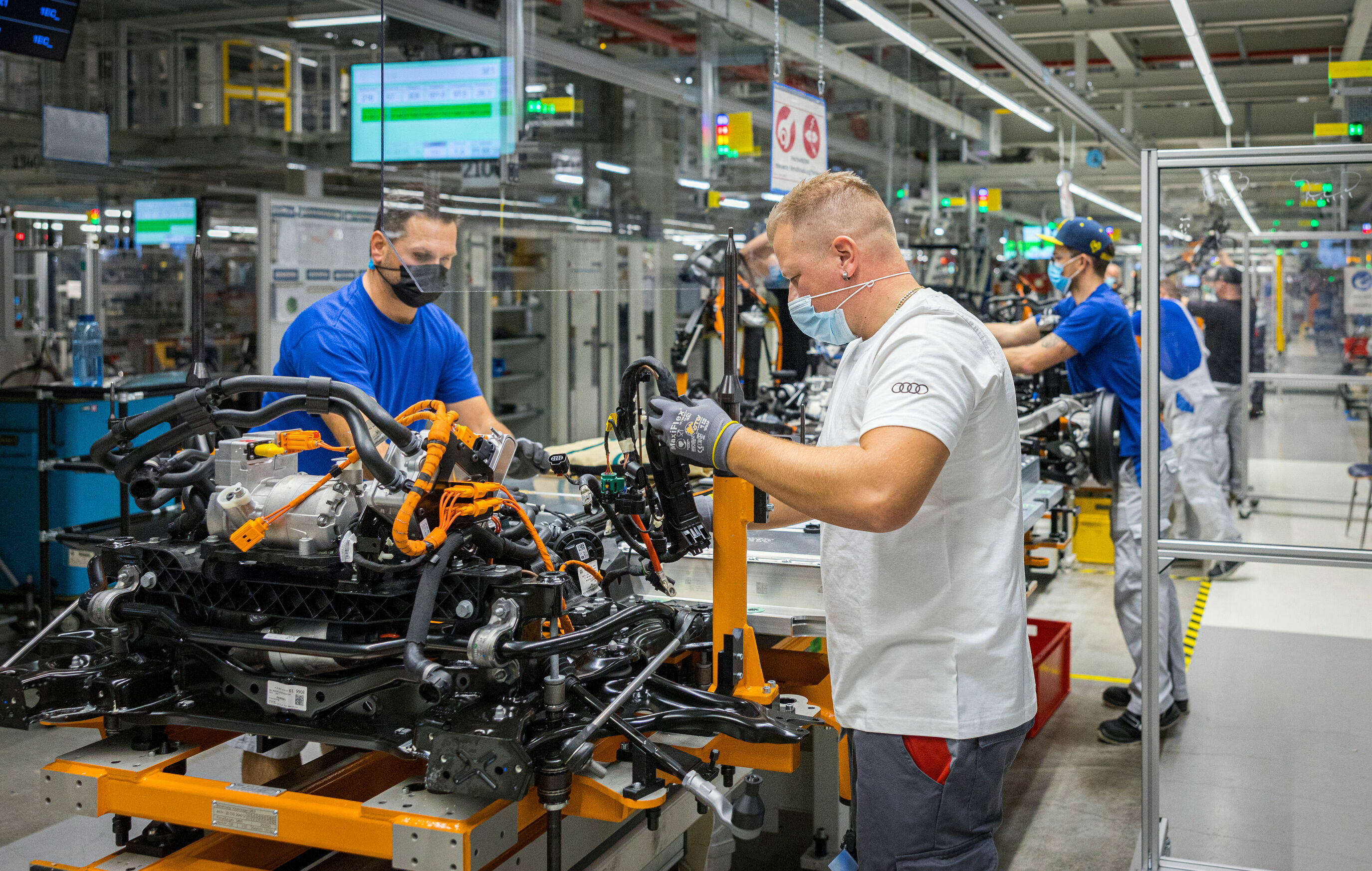
Various VW models have been built at Volkswagen Sachsen in Zwickau since 1990. In recent years, the site was converted for the production of electric vehicles. The Audi Q4 Sportback e-tron derivative has been produced here since summer 2021.
For the Four Rings, production in Zwickau is also a return to its roots, which lie in Saxony: to expand his business, company founder August Horch moved to Zwickau, where he had "A. Horch Motorenwagenwerke AG" entered into the commercial register in 1904. This laid the foundation stone for automobile manufacturing in Saxony.
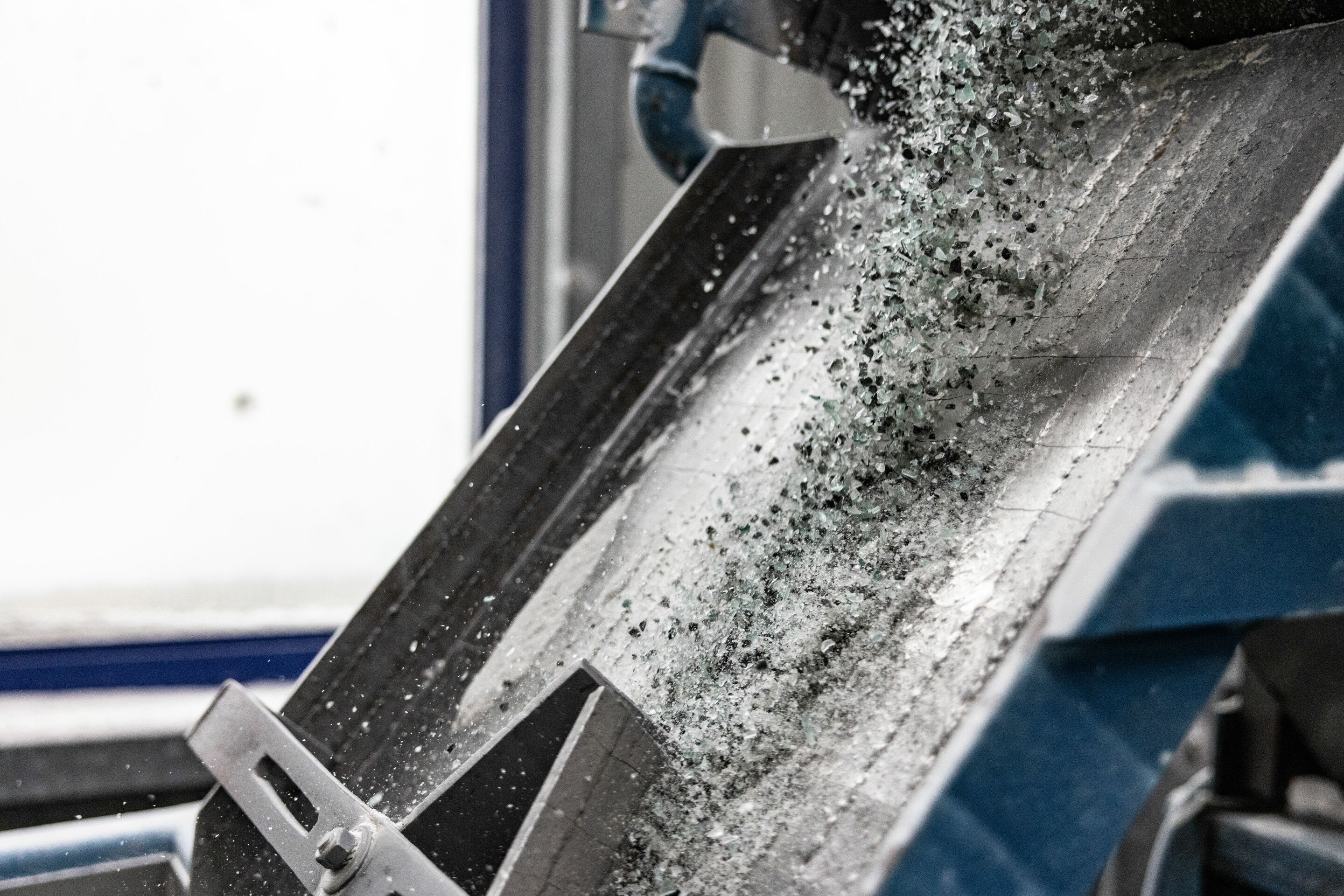
Glass recycling in the Audi Q4 e-tron
In 2022, Audi and its partner companies launched a pilot project for recycling old car windows. The project aims to recover valuable material from damaged car glass for series production. The car windshield is first shredded in a multi-stage process using an innovative recycling process. The partner companies then sort out all non-glass impurities, such as adhesive residue. The resulting glass granulate is then melted down and processed into new flat glass with the primary material. This is used to make new car windows.
Since September 2023, the Four Rings has been using glass with a recycled content of up to 30 percent from car windows that can no longer be repaired for the Audi Q4 e-tron windscreen. Audi is thus successfully transferring the "GlassLoop" pilot project to series production. Audi is the first premium manufacturer to establish such a glass loop in the automotive industry together with partner companies.
With this project, Audi and its partner companies are taking up the challenge of establishing a closed material loop for automotive glass. The project is part of Audi's circular economy strategy. Audi has set itself the goal of increasingly using secondary materials, especially from post-consumer sources, to save resources, energy, and CO2 - precisely where it is technically feasible, ecologically sensible, and economically viable.