Search
All search results for "Pre sense side system "
(45)

Eye-catching, masculine design with taut lines Infotainment concepts from the Audi full-size class New driver assistance systems for more safety and comfort
In 2010, a brand-new Audi model line made its debut in the shape of the A1. And now the second generation of the successful compact car is rolling to the starting line. Its dynamic design characterizes the new Audi A1 Sportback. It is the ideal companion in the urban environment and is also very well suited for longer journeys. With its infotainment and driver assistance systems on a par with the full-size class, the A1 Sportback is firmly networked with the digital world. New trim lines provide ample opportunity for customization.
Exterior design: Striking, masculine with genes of the sporty Ur-quattro The A1 Sportback has grown significantly in length – with an additional 56 millimeters (2.2 in), it now measures 4.03 meters (13.2 ft). At the same time, the width has remained almost the same at 1.74 (5.7 ft) meters. The new-generation model is only 1.41 meters (4.6 ft) in height – including aerial, the car is 1.43 meters (4.7 ft) tall. The wide track and short overhangs provide for a taut, sporty look. The wide, low-placed Singleframe grille and the implied side air inlets dominate the distinctive front. Below the edge of the hood are three flat slits – an homage to the Sport quattro, the brand’s rally icon from 1984. The new A1 Sportback also emphasizes a resemblance to the Audi Ur-quattro and Sport quattro when viewed from the side: The wide, flat sloping C-pillar seems to push the car forward even while standing still. The roof contrast line, which is available in two dark colors, ends above the C-pillar. This gives the impression that the roof is flatter and the complete car is even lower-slung. All lines on the flanks, from the window edge to the sill, slope upward toward the rear in a wedge shape.
 Sharpened design and innovative technologies for the flagship: the enhanced Audi A8
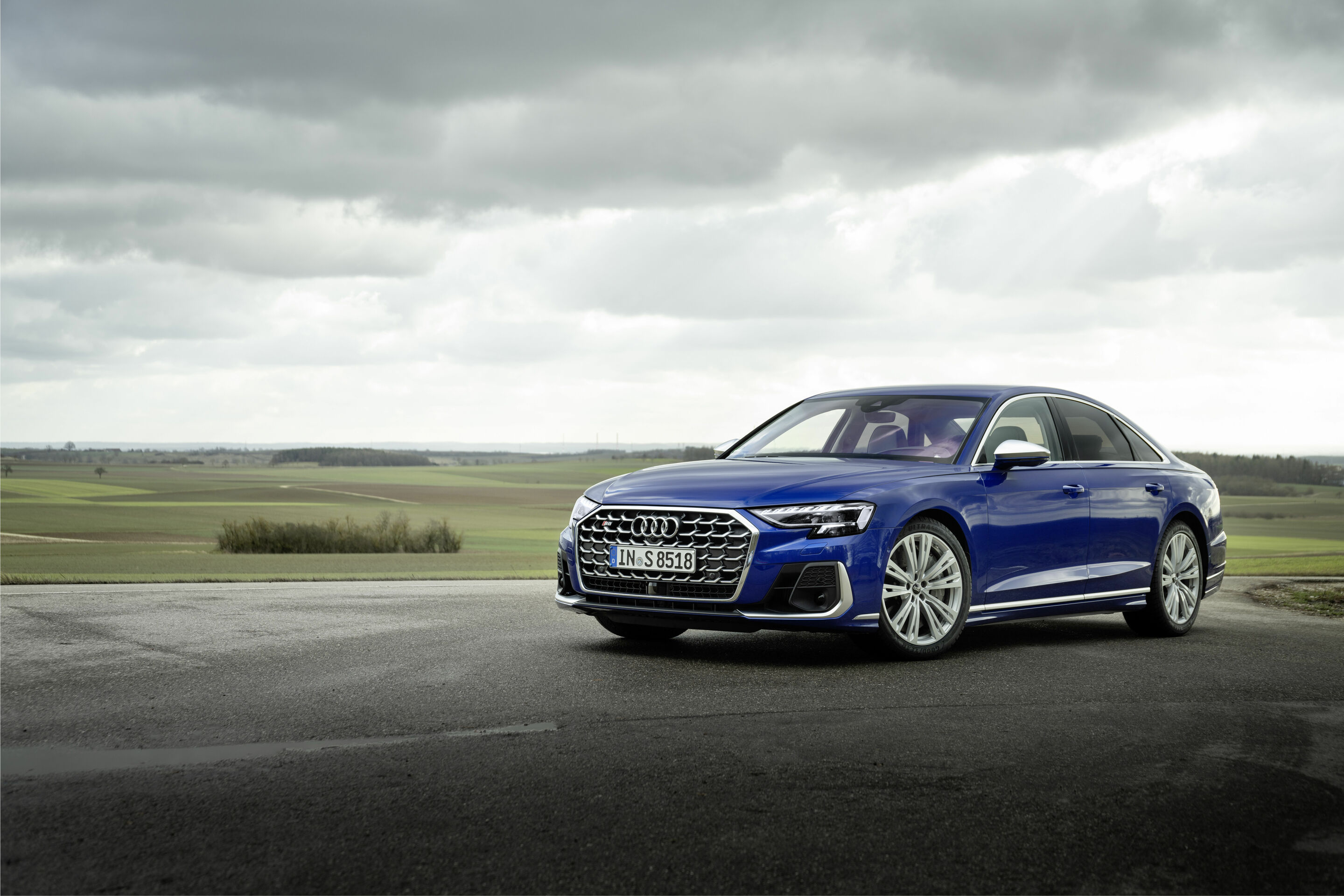
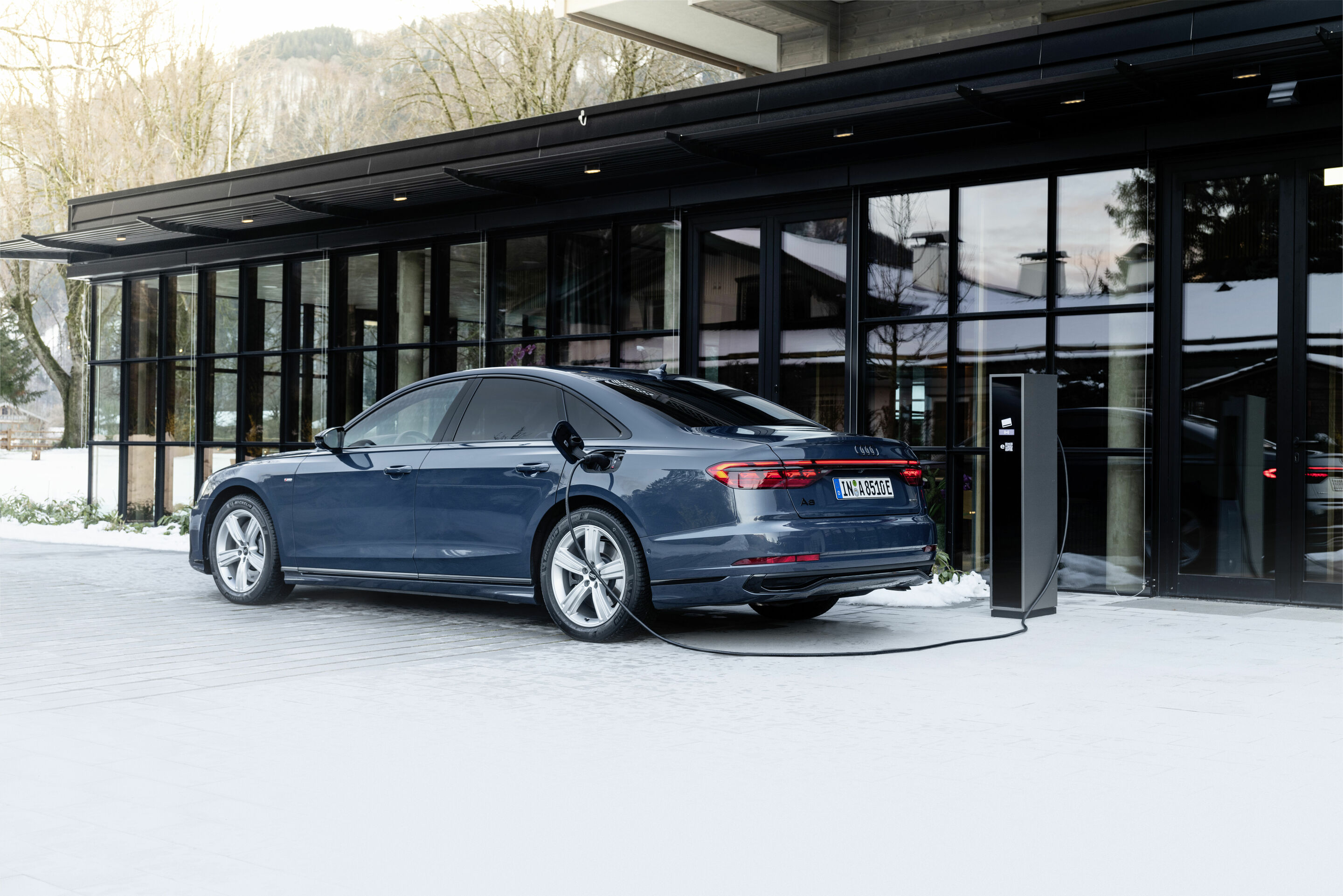
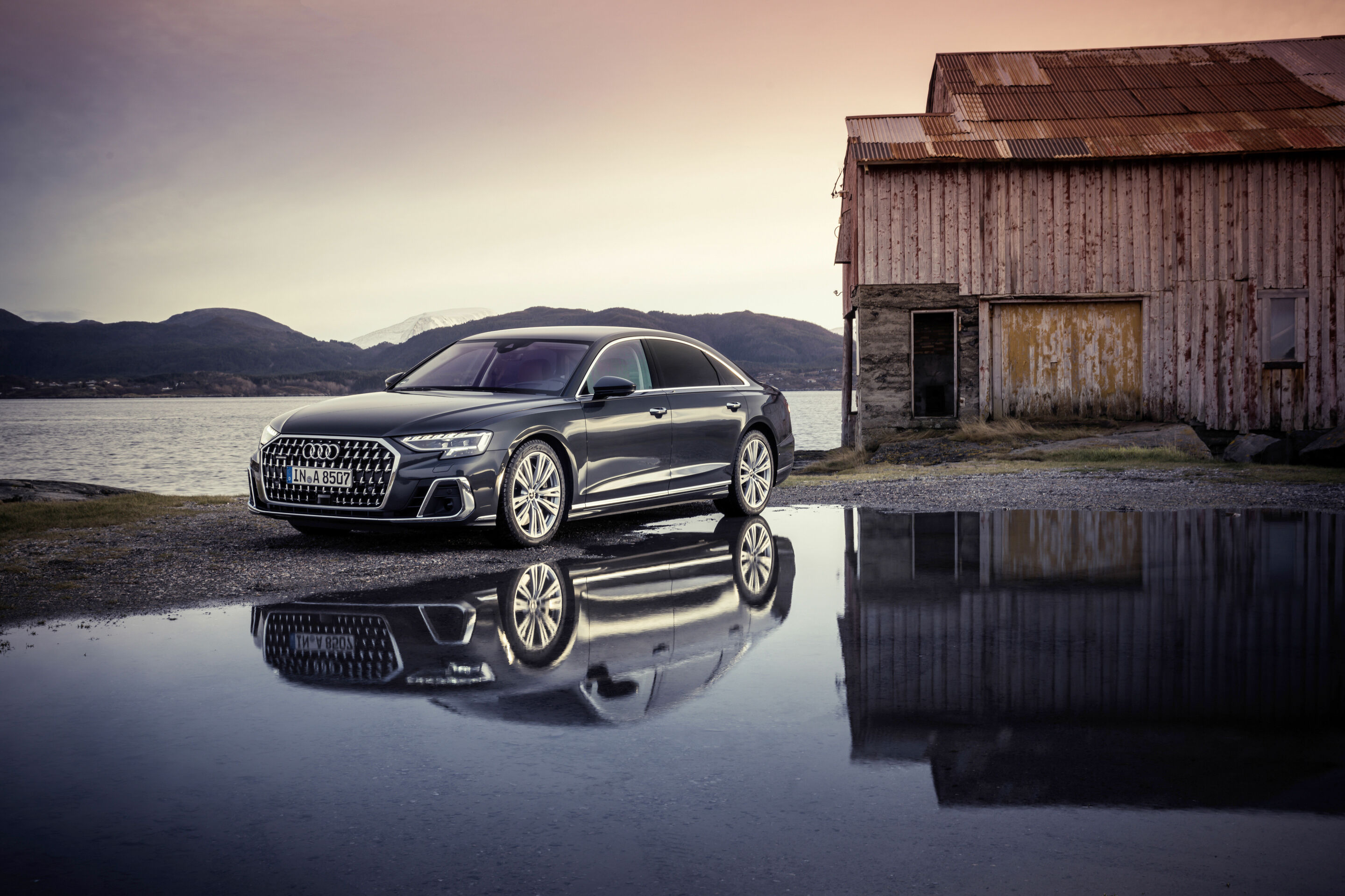
The side air intakes are more upright and just as freshly styled as the headlights, whose lower edge on the outside creates a distinctive contour. To summarize, the newly designed and precisely orchestrated design elements in the front area significantly increase the A8’s presence and authority and sharpen the profile of the brand’s top model. From a side view, the luxury sedan’s progressive character is particularly eyecatching. The roof dome runs flat. Stretched lines in the body of the car emphasize its length, wide wheel arches hint at the standard quattro drive system. In all model variants, the rocker panel area has a concave shape and ends in a blade pointing toward the road. The rear is dominated by wide chrome clasps, a customizable taillight signature with Digital OLEDs, and a continuous, segmented light strip. The diffusor insert in the bumper is delicately accentuated and redesigned with horizontal bars. The Audi A8 presents four flow-optimized pipes under a circumferential contour – typical of the Audi S model. They are one of its characteristic sporty design details. Beyond the basic exterior, Audi is offering its customers the chrome exterior package and, for the first time in the A8, the new S line exterior package. The latter gives the front a dynamic touch and differentiates even more from the basic model: a distinctive blade in the area of the side air intakes augments the frontal view – very similar to the S8. The look is even more defined with the additional black appearance package. The color swatch for the A8 includes eleven colors, among them the new metallic district green, firmament blue, Manhattan gray, and ultra blue. Also new in the Audi A8 are five matte colors – Daytona gray, florette silver, district green, terra grey and glacier white.
 In heightened form: the new Audi A3 allstreet
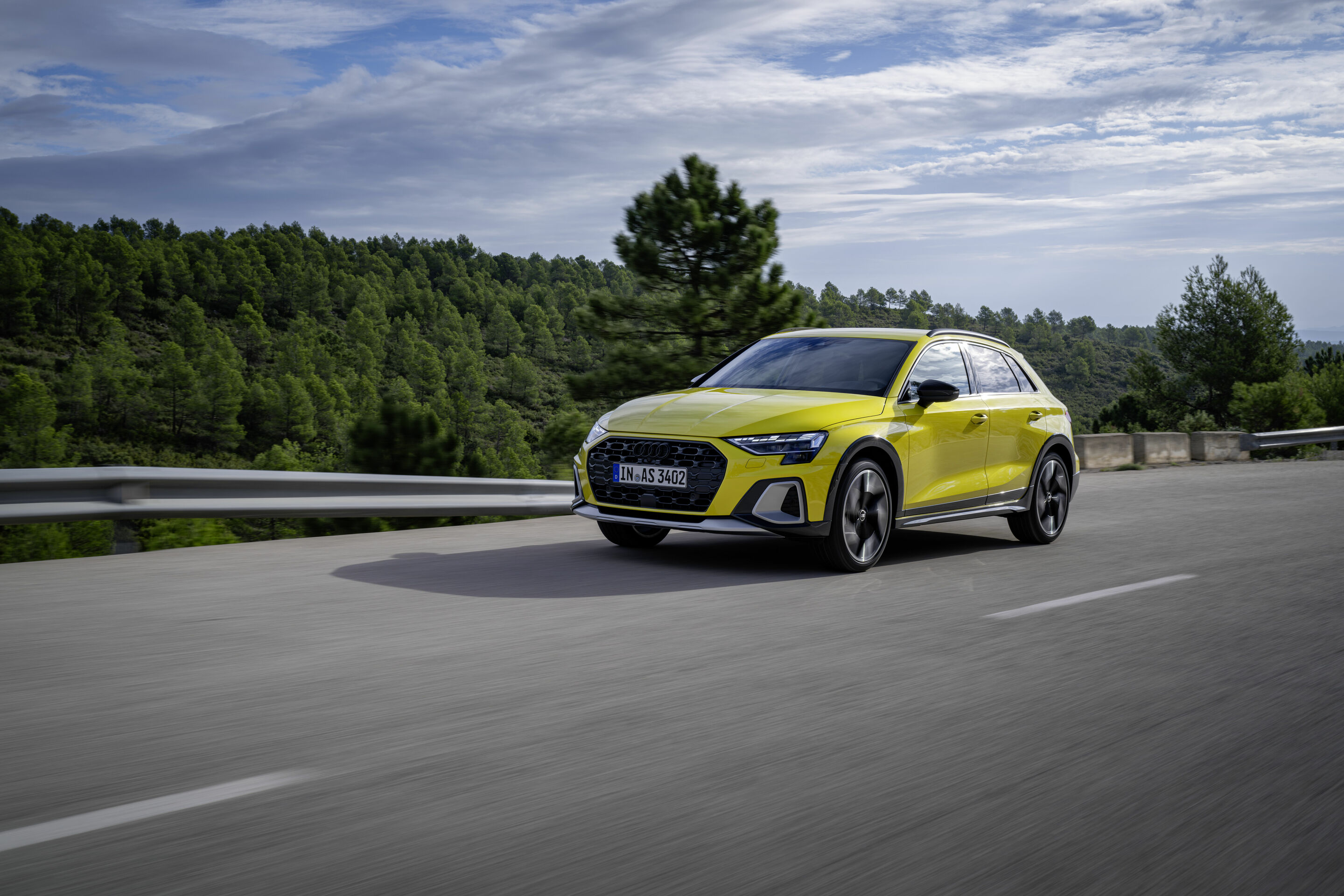
Thanks to the seamless integration of apps into the infotainment system, the ability to flexibly add vehicle functions, as well as a comprehensive range of connect services, the A3 allstreet is digitally connected.
“At very first glance, the Audi A3 allstreet stands out from the rest of the A3 family,” says Stephan Fahr-Becker, Team Leader of Exterior Design at AUDI AG. “As a crossover in the premium compact class, it has a completely unique look. The aim was to use specific design elements to emphasize the vehicle’s higher ground clearance even more.” Off-road character for a confident look This goal was achieved, among other things, through a vertical emphasis of the matte black Singleframe. The large octagonal radiator grille with its honeycomb structure sits higher than on the A3 Sportback, bringing the crossover closer to the Q models. Unique to the allstreet, three grooves at the front and rear enhance the off-road character. At the front, the beading is integrated into the distinctive spoiler lip, which are reminiscent of a skid plate, and at the rear into the diffuser as part of the robustly designed rear bumper. The rear also echoes the design of the trapezoidal air intakes: Their high-contrast double frame in Selenite Silver and Manhattan Gray creates a strong contrast, lending the A3 allstreet a powerful appearance. The same applies to the dark rocker panel trims and the trim in the lower door areas. They visualize the increased ground clearance and also emphasize the vehicle’s length. The standard roof rails further tighten the roofline. At the same time, the wide wheel arch trims in Manhattan Gray visually shorten the overhangs. This gives the A3 allstreet a sporty, robust look. Series-standard 17-inch wheels are housed in the wheel arches, making them one dimension larger than on the A3 Sportback. Wheels in 18- and 19-inch diameter are available as an option.
 High efficiency and outstanding driving pleasure: The Audi Q3 as a plug-in hybrid
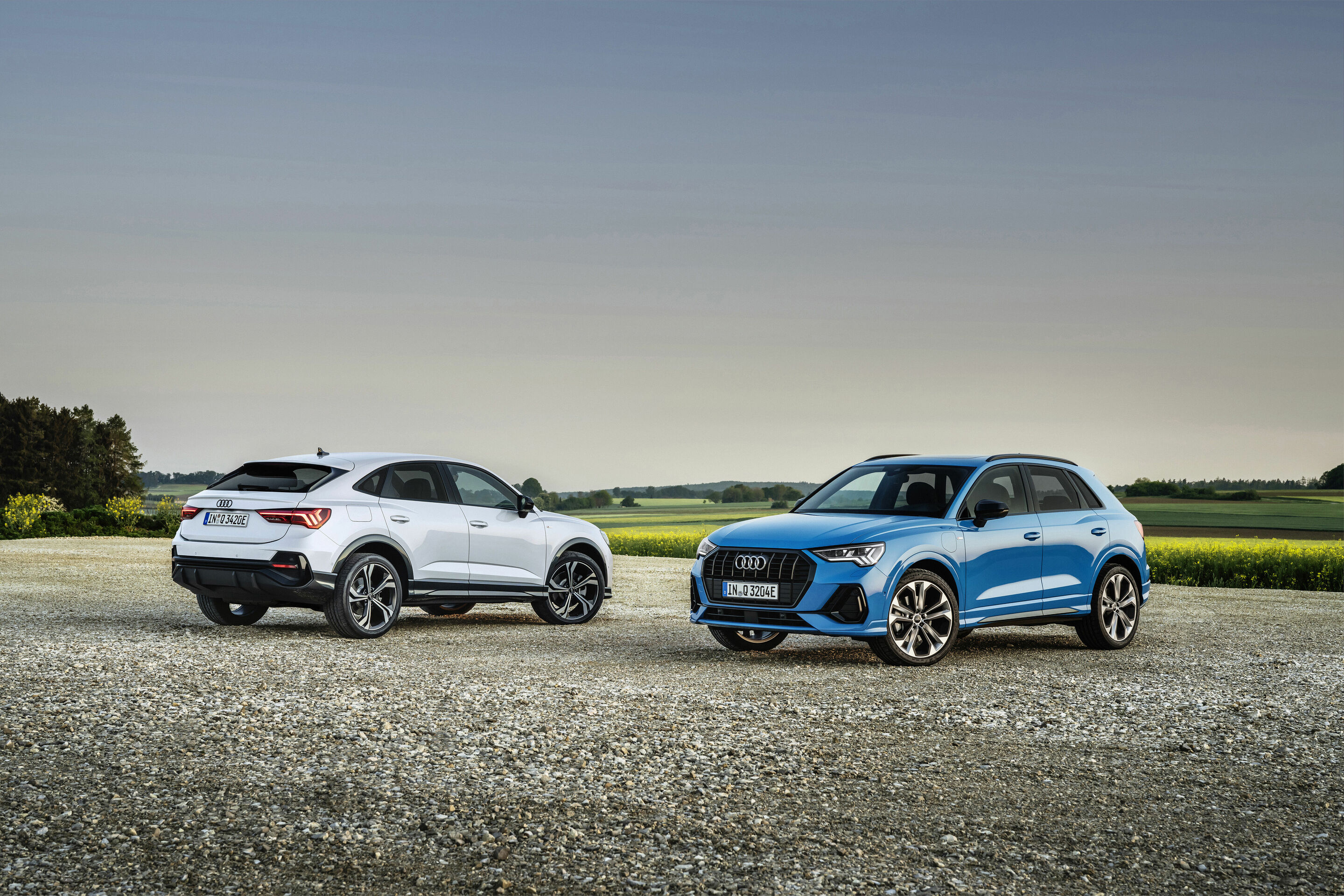
The plug-in hybrid drive installed in both models delivers a system output of 180 kW (245 PS), and both compact SUVs can cover a distance of up to 61 km (37.9 mi) in the NEDC powered purely by electricity. In the WLTP, the distance is 51 km (31.7 mi) for the Q3 45 TFSI e and 50 km (31.07 mi) for the Q3 Sportback 45 TFSI e. The Q3 45 TFSI e costs EUR 46,000 (including 19 percent VAT), the Q3 Sportback 45 TFSI e EUR 1,400 more. Customers can claim a subsidy of EUR 6,750 in both cases.
The combination of an electric driving experience, simple charging, and high level of suitability for everyday use makes Audi’s plug-in hybrid models especially appealing. The Q3 45 TFSI e and the Q3 Sportback 45 TFSI e complete the range of plug-in hybrids that Audi has brought onto the market since the middle of 2019. At the same time, these two compact SUVs mark the first step into the world of electrified Q models. 245 PS of system output, 13 kWh of energy capacity: the drive and the battery The two Q3 models both include a 1.4 TFSI as the combustion engine. This four-cylinder delivers 110 kW (150 PS). The drive is completed by a permanently excited synchronous machine (PSM), which provides 85 KW of power. The PSM is integrated in the housing of the six-speed S tronic together with the separating clutch. This dual-clutch transmission, which transfers the power to the front wheels, integrates an electric oil pump.
 Sharpened favorite: upgrade for the Audi A3
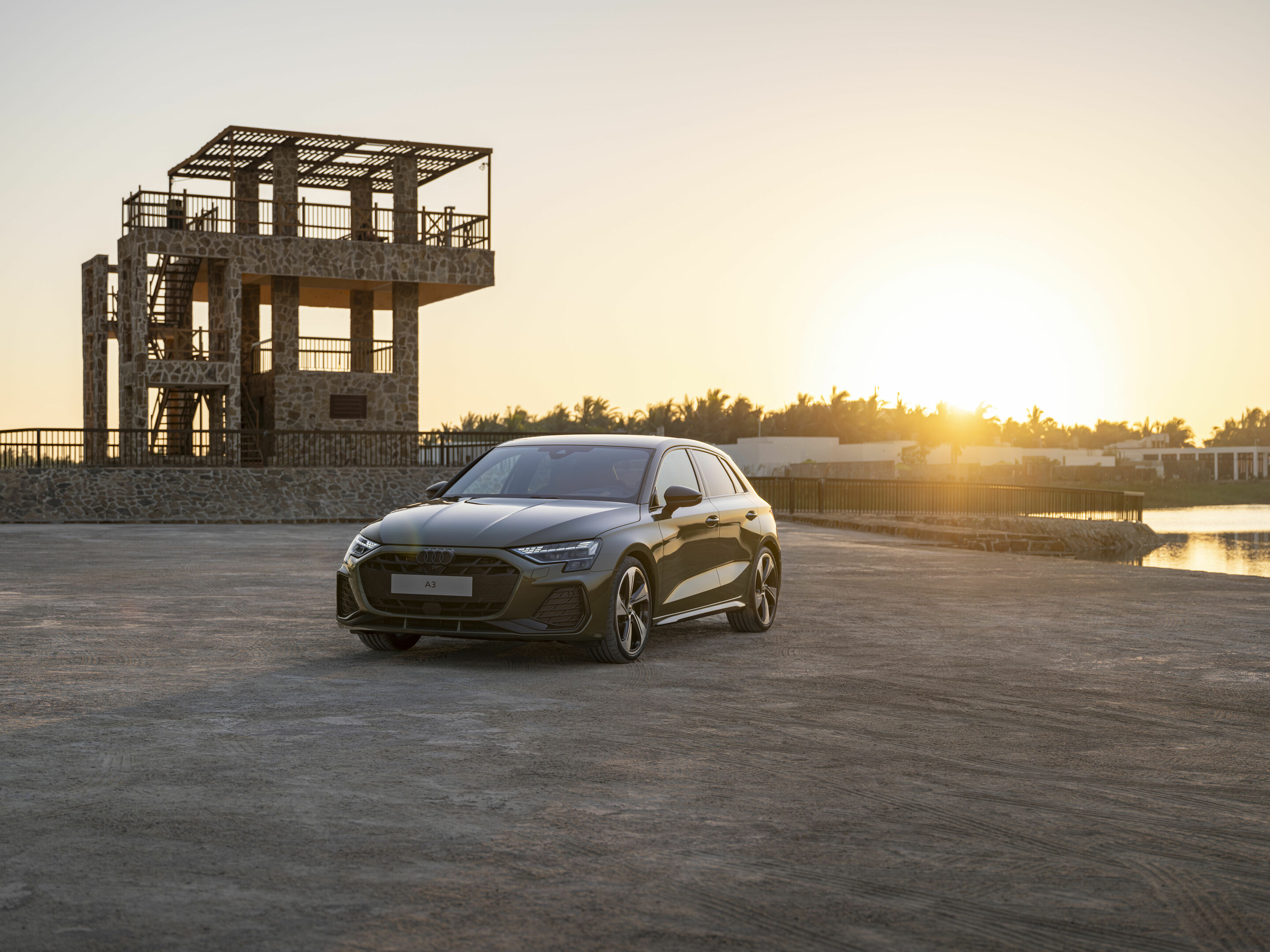
It dominates the front end and, in addition to the large angular side air intakes, clearly symbolizes the compact models’ sporty character. The striking front spoiler connects the two and makes the Audi A3 appear lower. The same is true of the rear, which is sportier than ever with a new bumper and distinctive diffuser. The progressive design elements are particularly effective with the S line exterior, as they are partly inspired by the RS models.The expressive exterior colors District Green, Ascari Blue, and Progressive Red further strengthen the sporty look. Selectable: up to four different daytime running light signatures Like the redesigned Singleframe, the lighting design is significantly thinner, emphasizing the width of the Audi A3 series. The 24-pixel elements that make up the digital daytime running lights in the LED and Matrix LED headlights are now arranged in three rows on the upper edge of the housing. It is now possible to select and switch between up to four different digital daytime running light signatures via the MMI – the first time the models of the A3 series. “This offers our customers a higher degree of personalization. They can change the expression of their model at any time. The signatures interpret self-confidence and agility in different ways,” says Cesar Muntada, Head of Design Light Experience at AUDI AG. “This is also true for the coming home home/leaving home scenarios, which were designed individually for each signature.” The tail lamps also feature a progressive rear light design and new staging of the coming home/leaving home function. Significantly sharpened: the interior To match the more expressive exterior, the interior also presents itself in a significantly sharpened form. There are quite a few alterations here – from the shifter design and air vents to the decorative fabric inlays and new interior lighting. All these elements are precise and detailed and emphasize the vehicle’s progressive and technical look.
The side air intakes are more upright and just as freshly styled as the headlights, whose lower edge on the outside creates a distinctive contour. To summarize, the newly designed and precisely orchestrated design elements in the front area significantly increase the A8’s presence and authority and sharpen the profile of the brand’s top model. From a side view, the luxury sedan’s progressive character is particularly eyecatching. The roof dome runs flat. Stretched lines in the body of the car emphasize its length, wide wheel arches hint at the standard quattro drive system. In all model variants, the rocker panel area has a concave shape and ends in a blade pointing toward the road. The rear is dominated by wide chrome clasps, a customizable taillight signature with digital OLEDs, and a continuous, segmented light strip. The diffusor insert in the bumper is delicately accentuated and redesigned with horizontal bars. The Audi S8 presents four flow-optimized pipes under a circumferential contour – typical of the Audi S model. They are one of its characteristic sporty design details. Beyond the basic exterior, Audi is offering its customers the chrome exterior package and, for the first time in the A8, the new S line exterior package. The latter gives the front a dynamic touch and differentiates even more from the basic model: distinctive blades in the area near the side air intakes complementing the front view – in a very similar fashion to the S8. The look is even more defined with the additional black appearance package.
The side air intakes are more upright and just as freshly styled as the headlights, whose lower edge on the outside creates a distinctive contour. To summarize, the newly designed and precisely orchestrated design elements in the front area significantly increase the A8’s presence and authority and sharpen the profile of the brand’s top model. From a side view, the luxury sedan’s progressive character is particularly eyecatching. The roof dome runs flat. Stretched lines in the body of the car emphasize its length, wide wheel arches hint at the standard quattro drive system. In all model variants, the rocker panel area has a concave shape and ends in a blade pointing toward the road. The rear is dominated by wide chrome clasps, a customizable taillight signature with digital OLEDs, and a continuous, segmented light strip. The diffusor insert in the bumper is delicately accentuated and redesigned with horizontal bars. The Audi S8 presents four flow-optimized pipes under a circumferential contour – typical of the Audi S model. They are one of its characteristic sporty design details. Beyond the basic exterior, Audi is offering its customers the chrome exterior package and, for the first time in the A8, the new S line exterior package. The latter gives the front a dynamic touch and differentiates even more from the basic model: distinctive blades in the area near the side air intakes complementing the front view – in a very similar fashion to the S8. The look is even more defined with the additional black appearance package.
The side air intakes are more upright and just as freshly styled as the headlights, whose lower edge on the outside creates a distinctive contour. To summarize, the newly designed and precisely orchestrated design elements in the front area significantly increase the A8’s presence and authority and sharpen the profile of the brand’s top model. From a side view, the luxury sedan’s progressive character is particularly eyecatching. The roof dome runs flat. Stretched lines in the body of the car emphasize its length, wide wheel arches hint at the standard quattro drive system. In all model variants, the rocker panel area has a concave shape and ends in a blade pointing toward the road. The rear is dominated by wide chrome clasps, a customizable taillight signature with digital OLEDs, and a continuous, segmented light strip. The diffusor insert in the bumper is delicately accentuated and redesigned with horizontal bars. The Audi S8 presents four flow-optimized pipes under a circumferential contour – typical of the Audi S model. They are one of its characteristic sporty design details. Beyond the basic exterior, Audi is offering its customers the chrome exterior package and, for the first time in the A8, the new S line exterior package. The latter gives the front a dynamic touch and differentiates even more from the basic model: distinctive blades in the area near the side air intakes complementing the front view – in a very similar fashion to the S8. The look is even more defined with the additional black appearance package.