Search
All search results for "Audi driving experience"
(438)
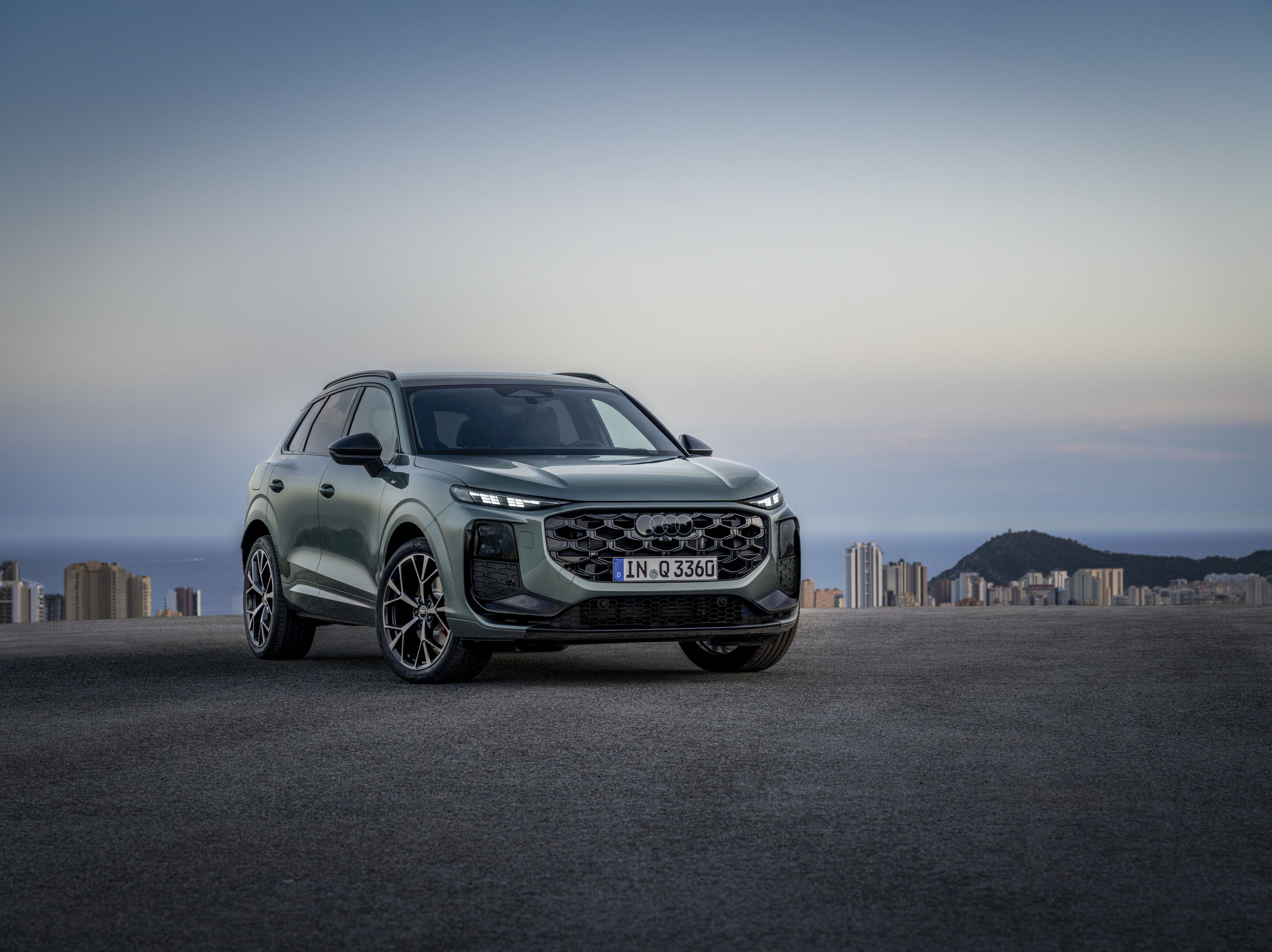 Audi Q3
Audi Q3
The new Audi Q3 is our impressive all-rounder in the compact segment. Now in its third generation, the SUV stands out with its dynamic, muscular look. As a digital companion for everyday life, the Q3 is ideally equipped to deliver an inspiring driving experience thanks to its modern driver assistance systems and lighting technology from the full-size class. On the inside, the modern steering wheel control unit enables a new operating experience and creates even more storage space and a more spacious feel.
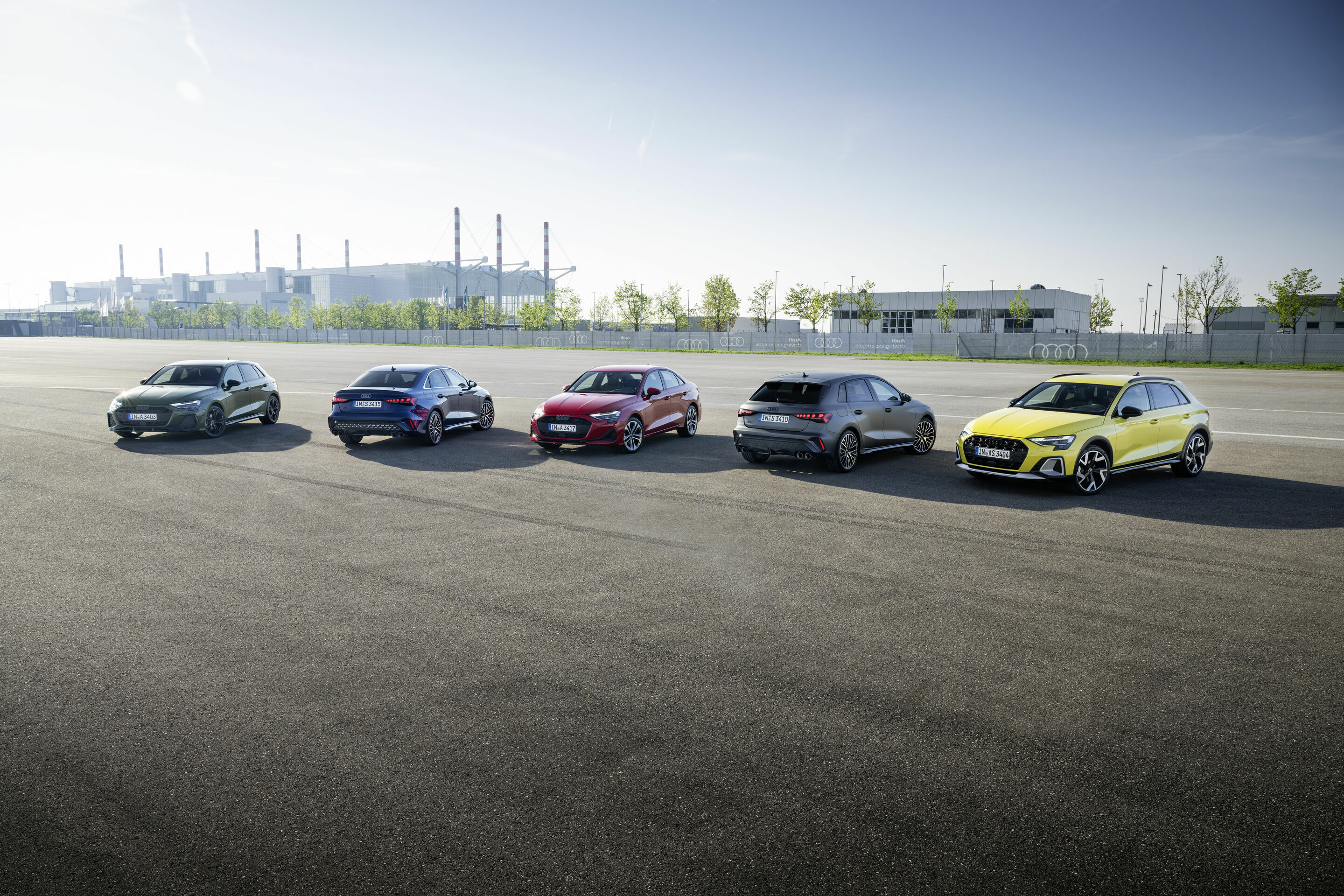
Audi A3
Audi established the premium compact segment with the A3 in 1996. With the 2024 upgrade, the fourth generation of this successful model is more dynamic, digital, and progressive than ever before—with a sportier look, optimized handling, and a wide range of digital offers. Significantly expanded standard equipment increases comfort, selectable daytime running light signatures and flexible subscriptions for functions on demand ensure a high degree of individualization. With a higher battery capacity, DC charging at fast-charging stations and an electric range of up to 143 kilometers (88.9 miles), the Audi A3 Sportback TFSI e combines dynamic driving performance with increased comfort. The A3 allstreet, the A3 family’s distinctive crossover, complements the portfolio. With its characteristic off-road look, three centimeters more ground clearance than the A3 Sportback and the raised seating position, it offers an SUV-like driving experience and a high level of functionality. The Audi S3 is displaying a new level of driving dynamics: Its more powerful turbocharged four-cylinder engine with 333 PS and 420 Nm combines with the torque splitter, new steering knuckles, and optimized steering for strong performance and agile handling. What’s more, the Audi RS 3, the series' five-cylinder-powered top model and pinnacle of performance is even sportier since the upgrade. Limited to 750 units, the special model Audi RS 3 competition limited demonstrates its uniqueness with exclusive features such as a coilover suspension, neodymium gold interior, and special paint in Malachite green.
Audi RS 5 Sedan
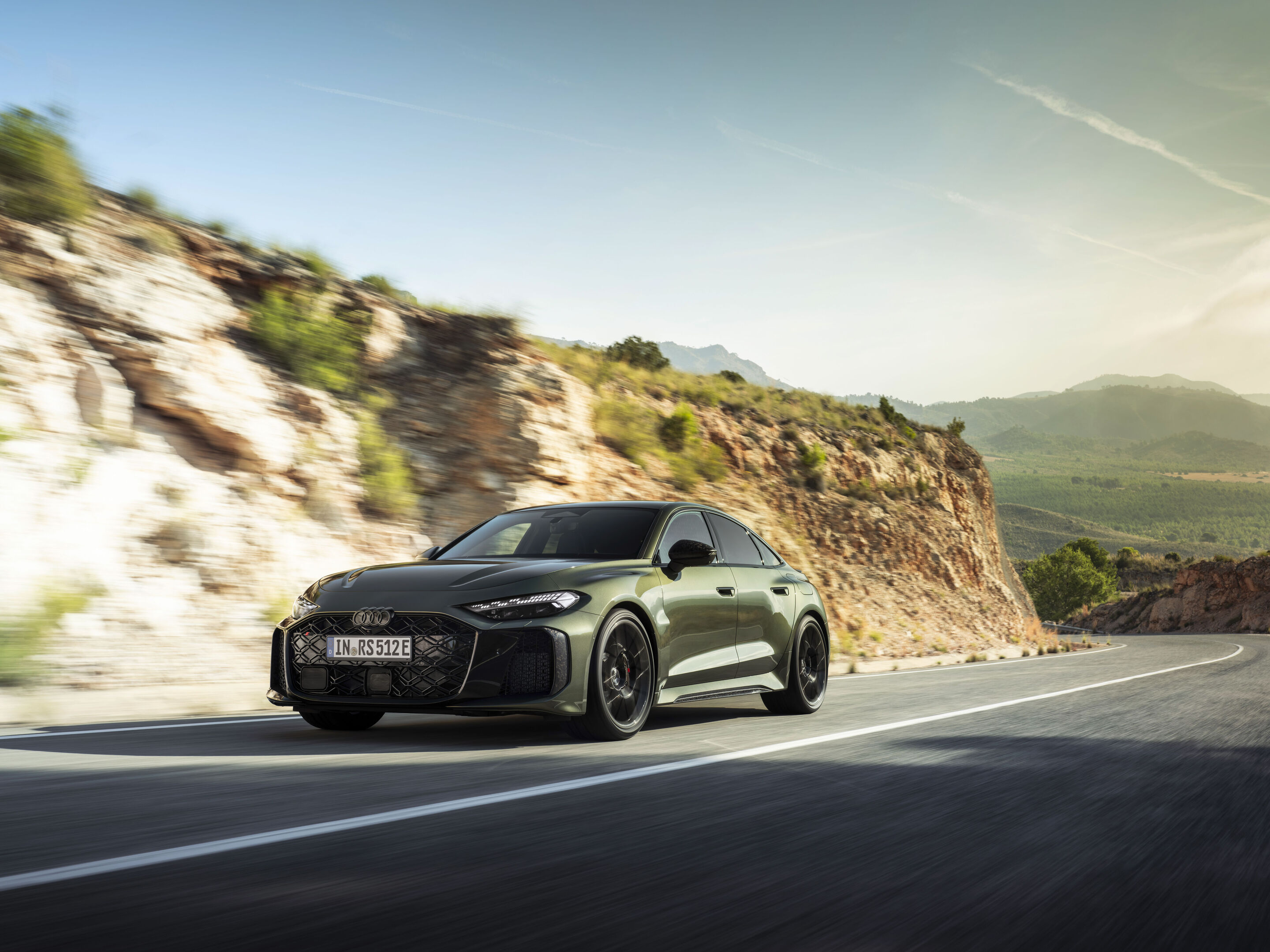
The new Audi RS 5 Sedan impresses with sporty elegance and electrifying power. Its coupé-like profile and dynamic contours give it a striking presence. The combination of a 2.9-liter V6 twin turbo engine and a powerful electric motor makes the high-performance plug-in hybrid the perfect companion – both for enduring performance and for comfortable, electric everyday driving. The rear transaxle, featuring the world-first large-scale introduction of electro-mechanical torque vectoring, guarantees a sublime driving experience.
Images
Videos
Engine type V6 engine
Displacement in cc / bore x stroke in mm / compression 2894 / 84.5 x 86.0 / 10.9
Max. power output in kW (PS) / at rpm 375 (510) / 6300 – 6800
Max. torque in Nm (lb-ft) / at rpm 600 (442.5) / 2000 – 5000
Top speed / electrical in km/h (mph) 250 (155.3) / 140 (87.0)
System acceleration, 0-100 km/h (0-62.1 mph) 3.6
Electrical range, City (EAER) in km (mi) 82 – 87 (51.0 – 54.1) (preliminary values)
Electrical range, combined (EAER) in km (mi) 78 – 84 (48.5 – 52.2) (preliminary values)
Fuel consumption, weighted combined in l/100 km (US mpg) 4.3 – 3.8
Electric power consumption, weighted combined in kWh/100 km (62.1 mi) 18.4 – 17.7
CO2 emissions, weighted combined, in g/km (g/mi) 98 – 86
CO2 class, weighted combined C – B
Fuel consumption with discharged battery, combined, in l/100 km (US mpg) 10.0 – 9.5 (23.5 – 24.8)
CO2 class with discharged battery G
Unladen weight without driver / with driver / gross weight limit in kg (lb) 2355 / 2430 / 2905 (5191.9 / 5357.2 / 6404.4)
Audi RS 5 Avant
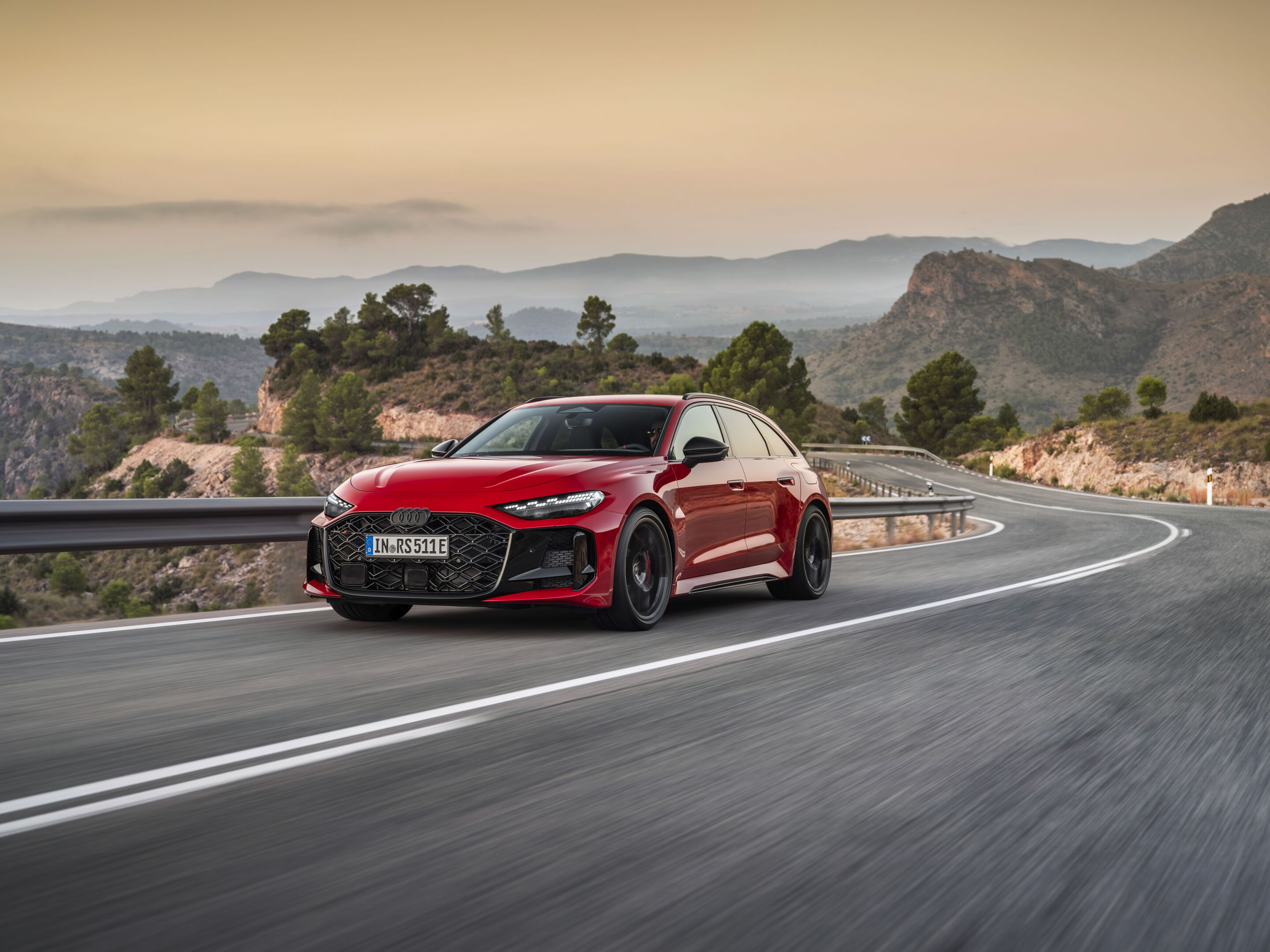
The new Audi RS 5 Avant delivers an exceptionally sporty driving experience combined with maximum everyday usability. Along with its RS qualities, this high-performance plug-in hybrid offers generous space and exclusive equipment options. The powerful 2.9-liter V6 twin turbo engine and strong electric motor enable both enduring performance on long journeys as well as smooth, electric city driving. The rear transaxle, featuring the world-first large-scale introduction of electro-mechanical torque vectoring, takes handling to a new level.
Images
Videos
Engine type V6 engine
Displacement in cc / bore x stroke in mm / compression 2894 / 84.5 x 86.0 / 10.9
Max. power output in kW (PS) / at rpm 375 (510) / 6300 – 6800
Max. torque in Nm (lb-ft) / at rpm 600 (442.5) / 2000 – 5000
Top speed / electrical in km/h (mph) 250 (155.3) / 140 (87.0)
System acceleration, 0-100 km/h (0-62.1 mph) 3.6
Electrical range, City (EAER) in km (mi) 81 – 86 (50.3 – 53.4) (preliminary values)
Electrical range, combined (EAER) in km (mi) 75 – 83 (46.6 – 51.6) (preliminary values)
Fuel consumption, weighted combined in l/100 km (US mpg) 4.4 – 3.9 (53.5 – 60.3)
Electric power consumption, weighted combined in kWh/100 km (62.1 mi) 18.6 – 17.8
CO2 emissions, weighted combined, in g/km (g/mi) 100 – 88 (160.9 – 141.6)
CO2 class, weighted combined C – B
Fuel consumption with discharged battery, combined, in l/100 km (US mpg) 10.1 – 9.6 (23.3 – 24.5)
CO2 class with discharged battery G (preliminary values)
Unladen weight without driver / with driver / gross weight limit in kg (lb) 2370 / 2445 / 2925 (5225.0 / 5390.3 / 6448.5)
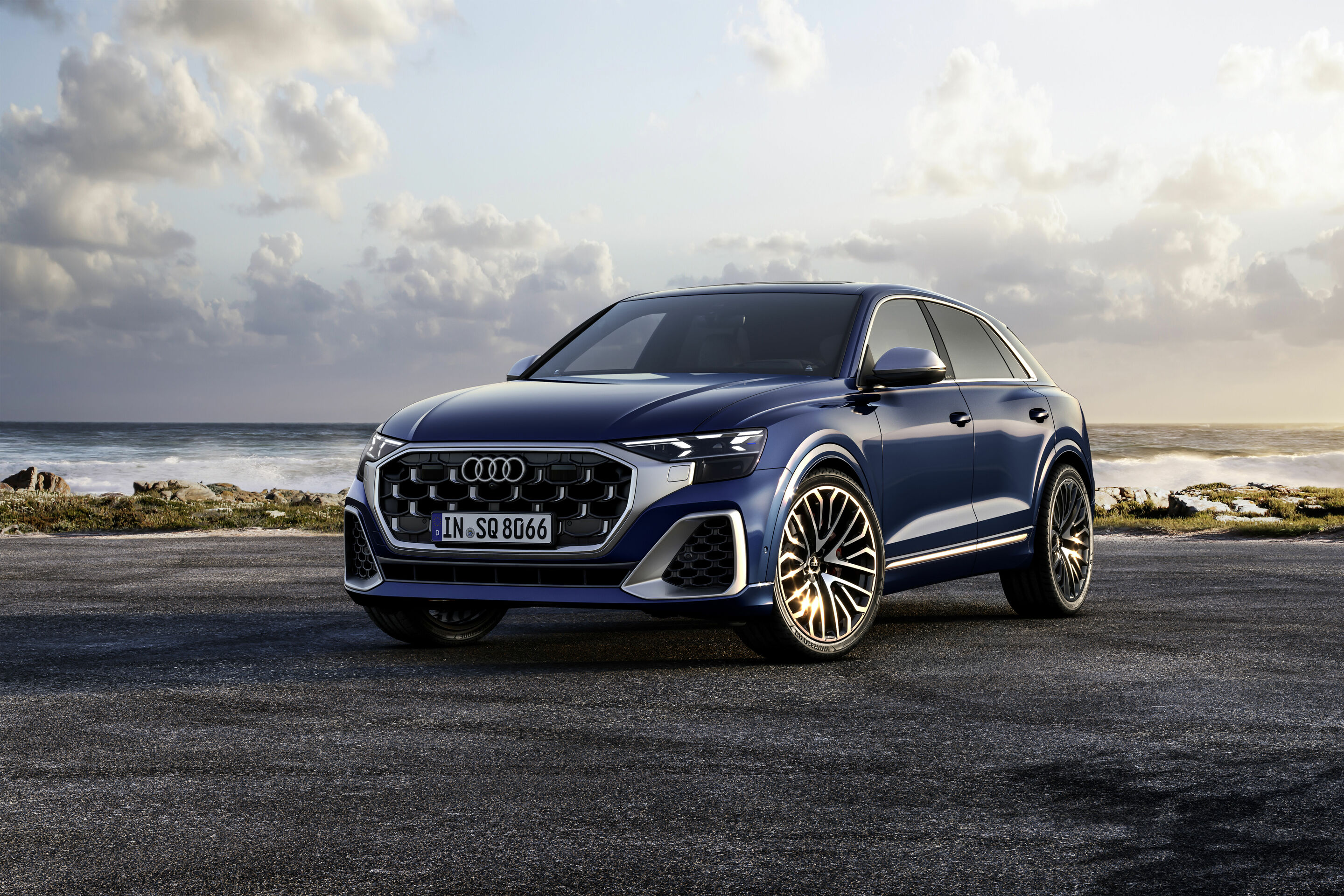
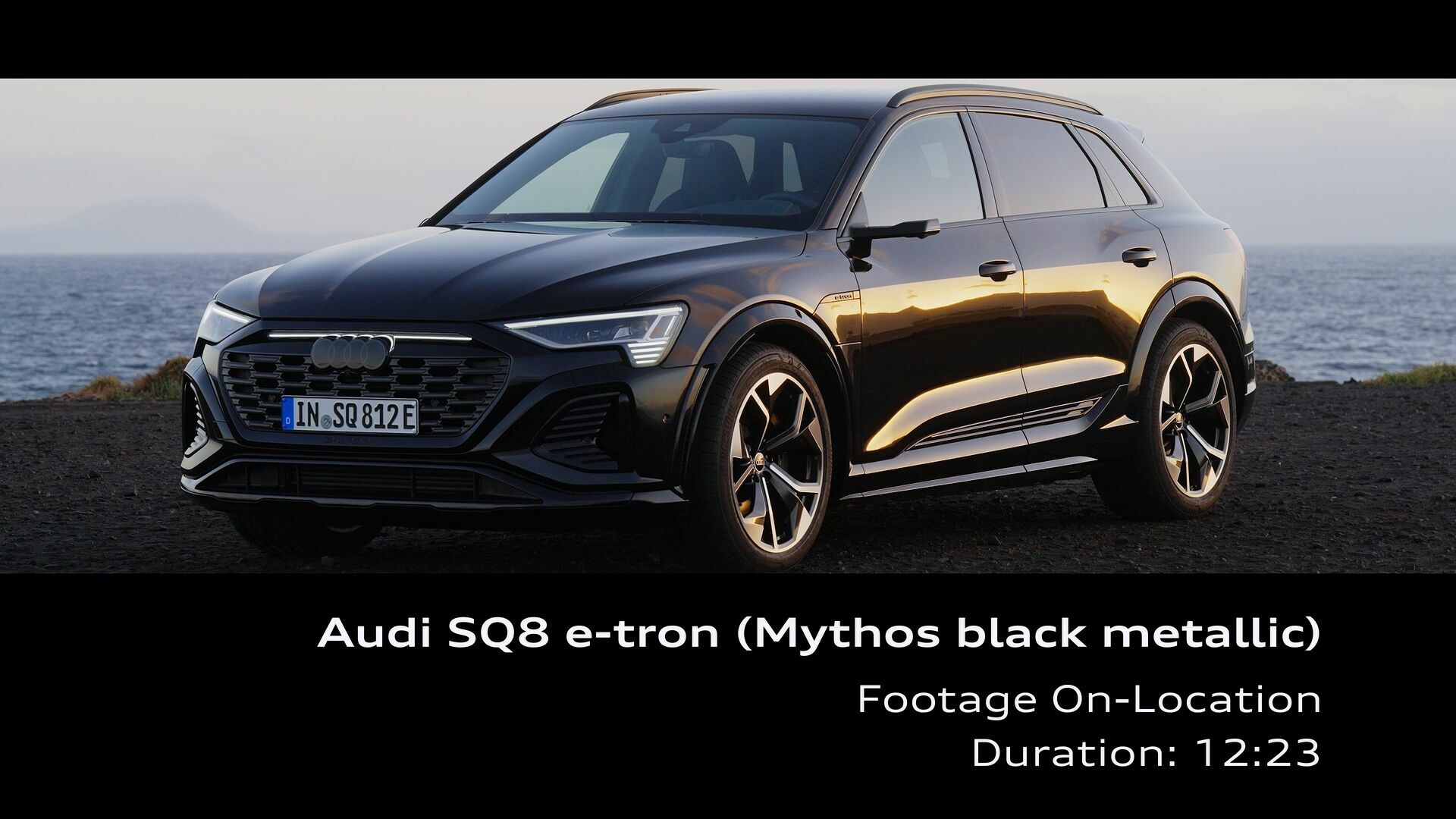
Audi SQ8 SUV TFSI
Superior performance: As part of the product upgrade, the SQ8 TFSI now runs on the established 4.0 TFSI with 507 PS and 770 Nm of torque with fast-shifting eight-speed tiptronic and quattro permanent all-wheel drive. For an ideal driving experience, a vehicle requires not only first-class engines, but also outstanding suspension components. Adaptive air suspension sport and all-wheel-steering are standard equipment on the SQ8. In the optional advanced suspension package, customers also benefit from the sport differential and an electromechanical active roll stabilization (eAWS).
Images
Videos
Engine type V8 engine
Displacement in cc / bore x stroke in mm / compression 3996 / 86.0 x 86.0 / 10.1
Max. power output in kW (PS) / at rpm 373 (507) / 5500
Max. torque in Nm (lb-ft) / at rpm 770 (567.9) / 2000 - 4000
Top speed in km/h (mph) 250 (155.3) (governed)
Acceleration, 0-100 km/h (0-62.1 mph) 4.1
Fuel consumption, combined in l/100 km (US mpg) 12.8 - 11.9 (18.4 - 19.8)
CO2 emissions, combined in g/km (g/mi) 291 - 271 (468.3 - 436.1)
CO2 class G
Unladen weight without driver / with driver / gross weight limit in kg (lb) 2240 (4938.4) / 2315 (5103.7) / 2960 (6525.7)

The Audi A7 Sportback impresses with even more dynamic driving on the one hand and increased comfort on the other. Thanks to numerous chassis innovations, the Gran Turismo from Audi offers a new range between comfort and dynamics. The mild-hybrid technology, which is also new, makes the drive system even more efficient and at the same time more comfortable. Furthermore, the A7 will be hitting the road with updated engines. Chassis New chassis components enable the four-door Gran Turismo to perfect its synthesis of sportiness and long-distance comfort. The new Audi A7 Sportback handles more agilely and spontaneously yet is also safer and more comfortable. This has been achieved using innovative technologies such as dynamic all-wheel steering, damper control and controlled power distribution by the quattro sport differential. The central control of these system via the electronic chassis platform (ECP) make this synthesis of sportiness and comfort possible. With the standard progressive steering and the optional dynamic all-wheel steering and sport differential, the A7 achieves the handling characteristics of a compact sports car. The dynamic all-wheel steering combines the dynamic steering at the front axle, which works with strain wave gearing, with a separate rear axle steering system with a spindle drive. This makes it possible to independently adjust the steering angles at the front and rear axles. The dynamic all-wheel steering ends the conflict of aims between agile response and stability. At speeds up to 60 km/h (37.3 mph), the rear wheels are turned as much as five degrees in the opposite direction. This reduces the turning circle by up to 1.1 meters (3.6 ft), and the car becomes more agile in city traffic, when maneuvering and in tight switchbacks. At 60 km/h (37.3 mph) and above the rear wheels turn in the same direction as the front wheels.
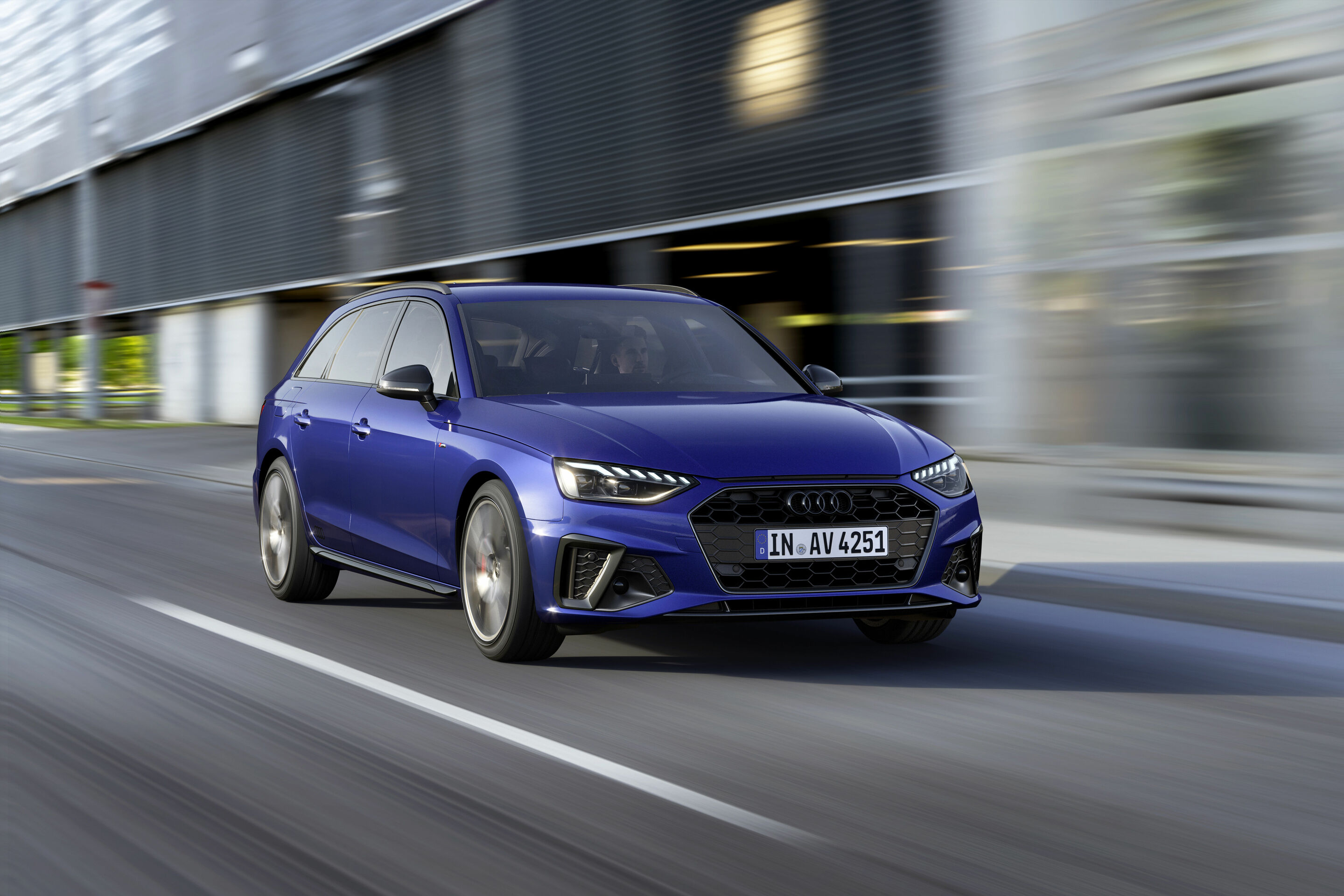
The Audi A4 Sedan 35 TFSI accelerates from 0 to 100 km/h (62.1 mph) in 8.9 seconds and reaches a top speed of 225 km/h (139.8 mph). The Audi A4 Sedan 40 TFSI boasts acceleration from 0 to 100 km/h (62.1 mph) in 7.3 seconds and a top speed of 241 km/h (149.8 mph). The A4 Sedan 45 TFSI completes the standard sprint in only 5.8 seconds and achieves a top speed of 250 km/h (155.3 mph). The two-liter gasoline engine exhibits many examples of technical finesse. In the versions with power outputs of 110 kW (150 metric hp) and 140 kW (190 metric hp), these include an additional intake manifold injection, which complements the FSI direct injection in part load operation and reduces particulate emissions. The Audi valvelift system (AVS) adjusts exhaust valve lift over two stages to optimize gas exchange. A compact rotary valve module for thermal management and the exhaust manifold integrated in the cylinder head both make a contribution to efficiency. A gasoline particulate filter ensures a further significant reduction in emissions. The TFSI variants that produce 110 kW (150 metric hp) and 140 kW (190 metric hp) utilize an additional technology that makes them particularly efficient. The B-cycle combustion process with a shortened compression stroke and a long power stroke has been specially designed for part load operation, by far the most common operating mode. With a moderate style of driving, it allows drivers to experience the efficiency of a small displacement engine; while driving in a sporty style, on the other hand, they benefit from the dynamism and performance of a large engine.
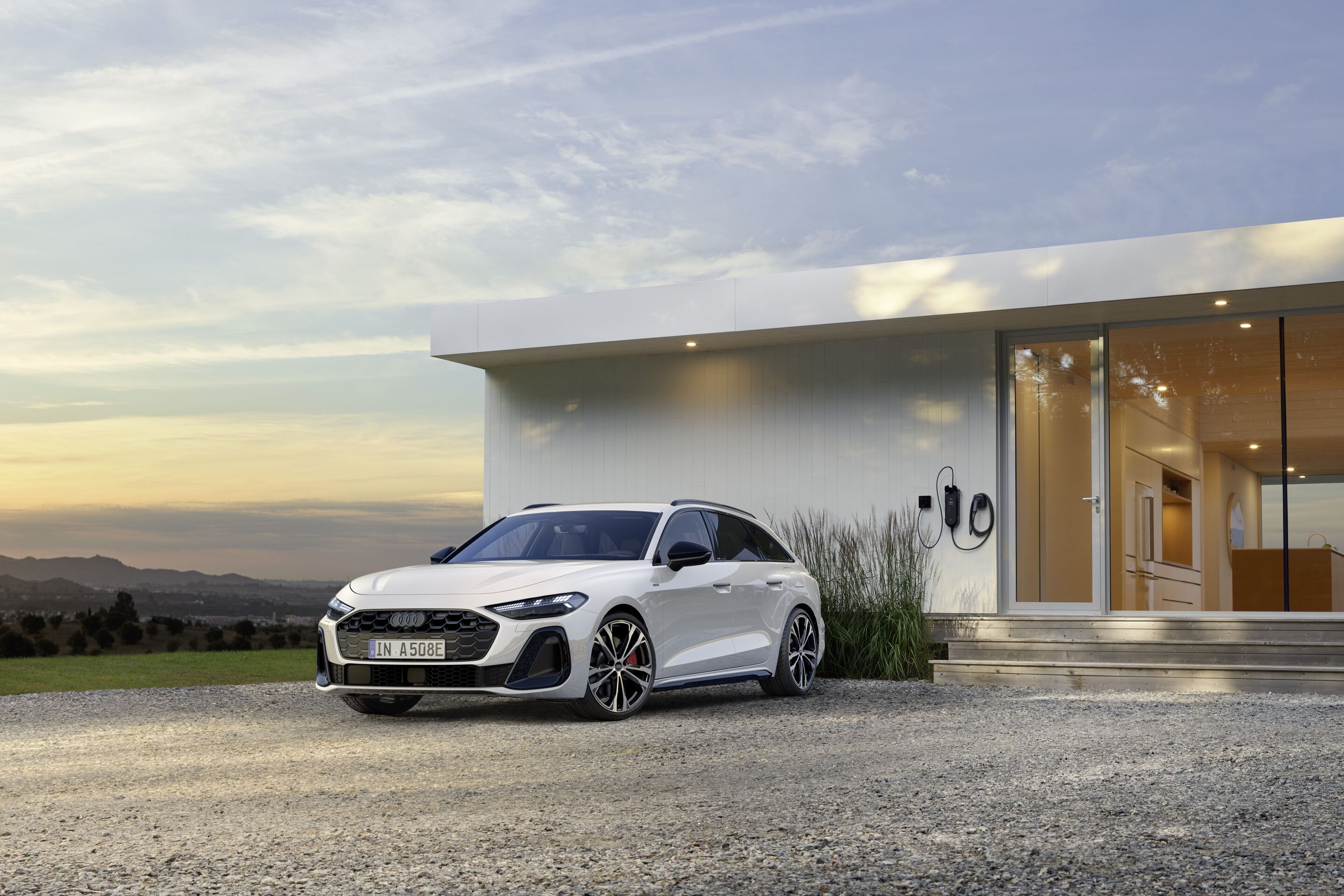 Audi A5 Avant e-hybrid quattro
Audi A5 Avant e-hybrid quattro
With a system output of up to 270 kW, the Audi A5 Avant e-hybrid quattro offers a sporty and comfortable driving experience as well as plenty of space for everyday flexibility and a high level of standard equipment. The modified proportions with a long wheelbase, large wheels and the sleek, sporty body embody progressive dynamics and premium appeal.