Search
All search results for "avus"
(58)
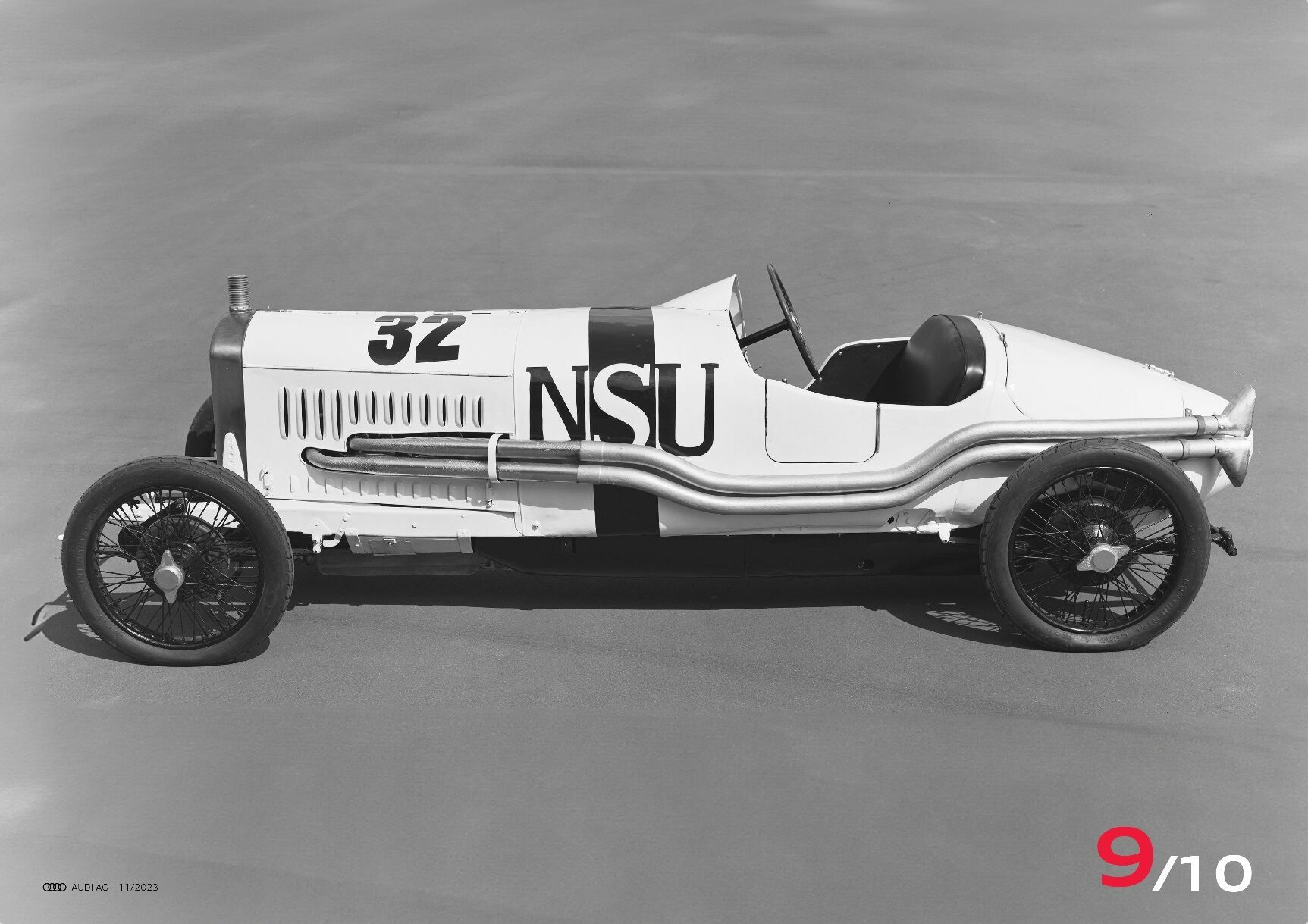
Quadruple victory for NSU Type 6/60 PS racing car at the German Grand Prix on the AVUS circuit
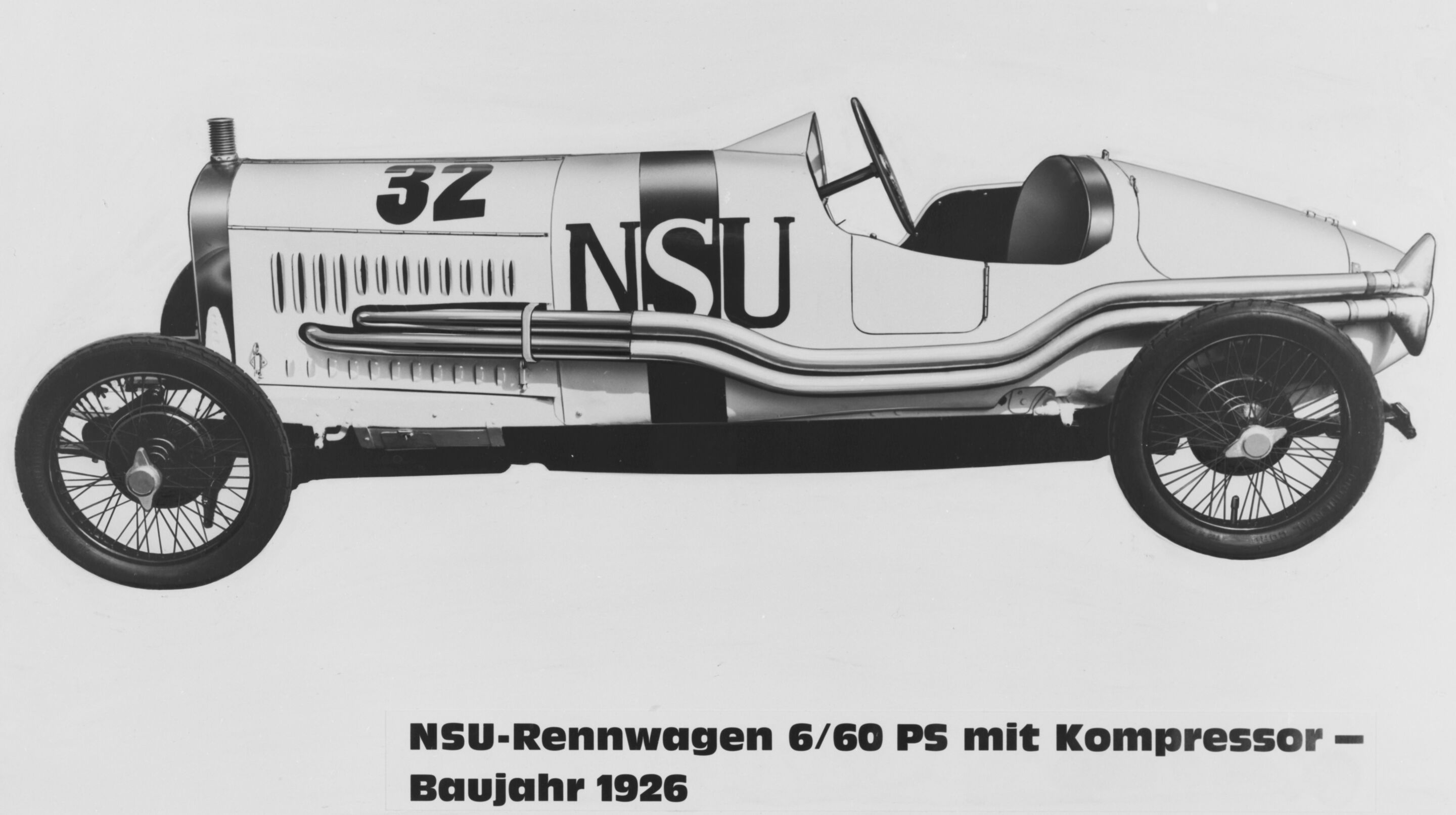
A quadruple victory by the white supercharged six-cylinder cars in their class at the first German Grand Prix on the AVUS circuit in Berlin in 1926 stands out in the story of NSU racing between the two world wars. In this ninth episode on the history of NSU to mark the brand’s 150th anniversary, Audi Tradition presents the pre-war NSU Type 6/60 PS racing car.
NSU participated in international automobile races as early as 1908. The company’s participation in the 1909 Prince Henry Tour — and numerous endurance and reliability races — was a great success. After World War I, the Automobil-Verkehrs- und Übungsstraße (AVUS) opened in Berlin in 1921. The circuit, which was closed to public traffic until 1940, served as the first race and test track in Germany to demonstrate the competitiveness of the country’s automotive industry. A “small” NSU, the NSU 8/24 PS, won its class at the first AVUS race in September 1921. The basic design of the racing version was the same as the production model; all the Neckarsulm-based company had to do was modify the car slightly to create an open-top racing two-seater. The company, then known as Neckarsulmer Fahrzeugwerke Aktiengesellschaft, returned to the drawing board and developed the NSU Type 6/60 PS specifically for racing. This racing car was NSU’s first six-cylinder model. The “6” designated its “tax horsepower”, which was necessary for classification in its tax class. The open two-seater had an output of 60 PS and weighed 830 kilograms (1,830 lb) with a top speed of 175 km/h (109 mph). It was built in 1925 and 1926 – regulations of the time meant it came only in white, the designated color for German racing. In 1925, the Neckarsulm-based company entered one of the new six-cylinder supercharged racing cars in the 450-kilometer International Taunus Race – and won.
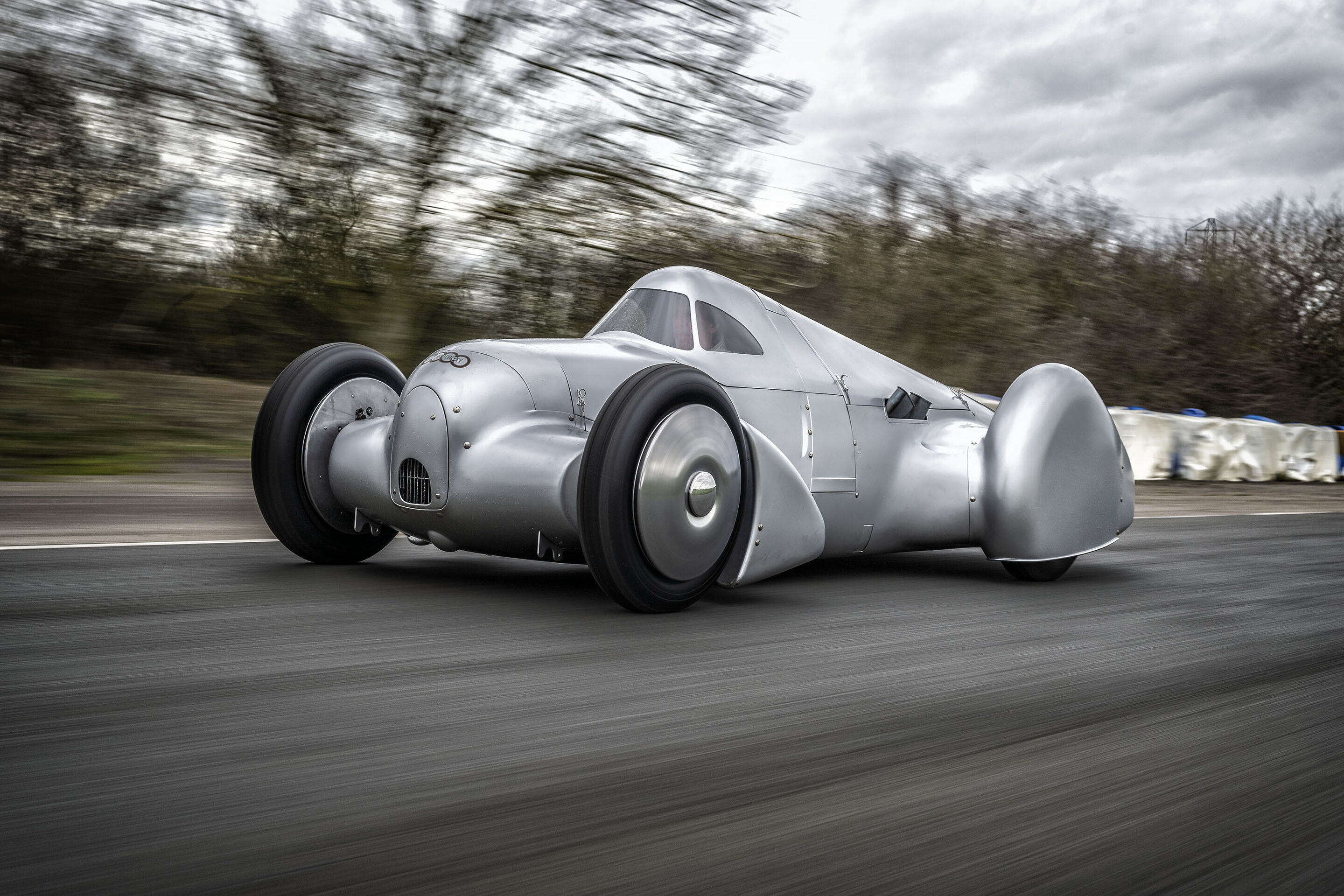
Audi Tradition unveils record-breaking car in Italy: Auto Union Lucca joins the Silver Arrow family
It is test-driven for the first time on Berlin’s Avus circuit on December 17, and at the end of January 1935, the decision is made: the record attempt will take place in Hungary – on the very same track near Gyón where Caracciola set the class record for a flying-start mile in a Mercedes the previous year. Auto Union makes all the necessary arrangements with the Hungarian Automobile Club; the high-performance record contender arrives in Budapest on February 4, 1935. The next day, the team sets off for the route about 40 kilometers further south; the weather is rapidly deteriorating. Nevertheless, two test runs are carried out on February 5. On the second run, the exhaust pipe burns through, and the tests have to be suspended. Due to the unpredictable weather, the race organizers decide to continue the record attempts south of Milan. But conditions are not ideal there either: the planned route is covered in snow, so Auto Union heads even further south. A suitable stretch is finally found on the Florence-Viareggio road between Pescia and Altopascio, near the city of Lucca. This section of the autostrada is ideal for record attempts – level, with a high-grip surface, eight meters wide, and virtually straight as an arrow for around five kilometers. The first test drives begin on February 14, 1935. Various vehicle configurations are trialed, details such as the radiator grille and wheel covers are adjusted, data is analyzed. The next morning at 9 a.m., the car takes to the track near Lucca once again – with Hans Stuck at the wheel. Word has gotten around that something big might be in the works. “Automobilrevue” writes: “Auto Union’s new single-seater racing car, with its streamlined body made entirely of light metal, caused quite a stir among the many prominent figures from the world of Italian sports who had traveled to Lucca for the event. (…) Thousands of spectators watched the test runs.”
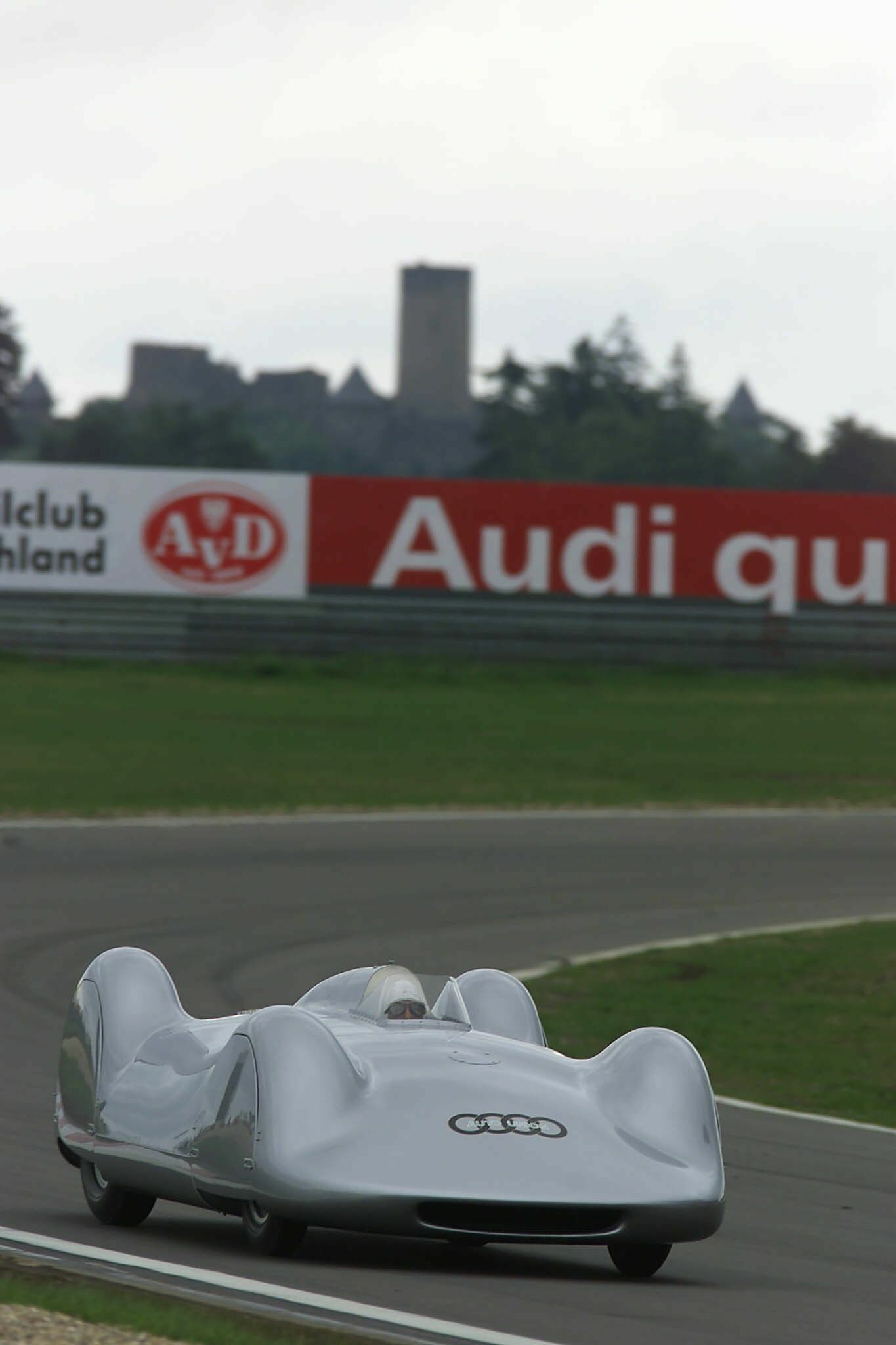
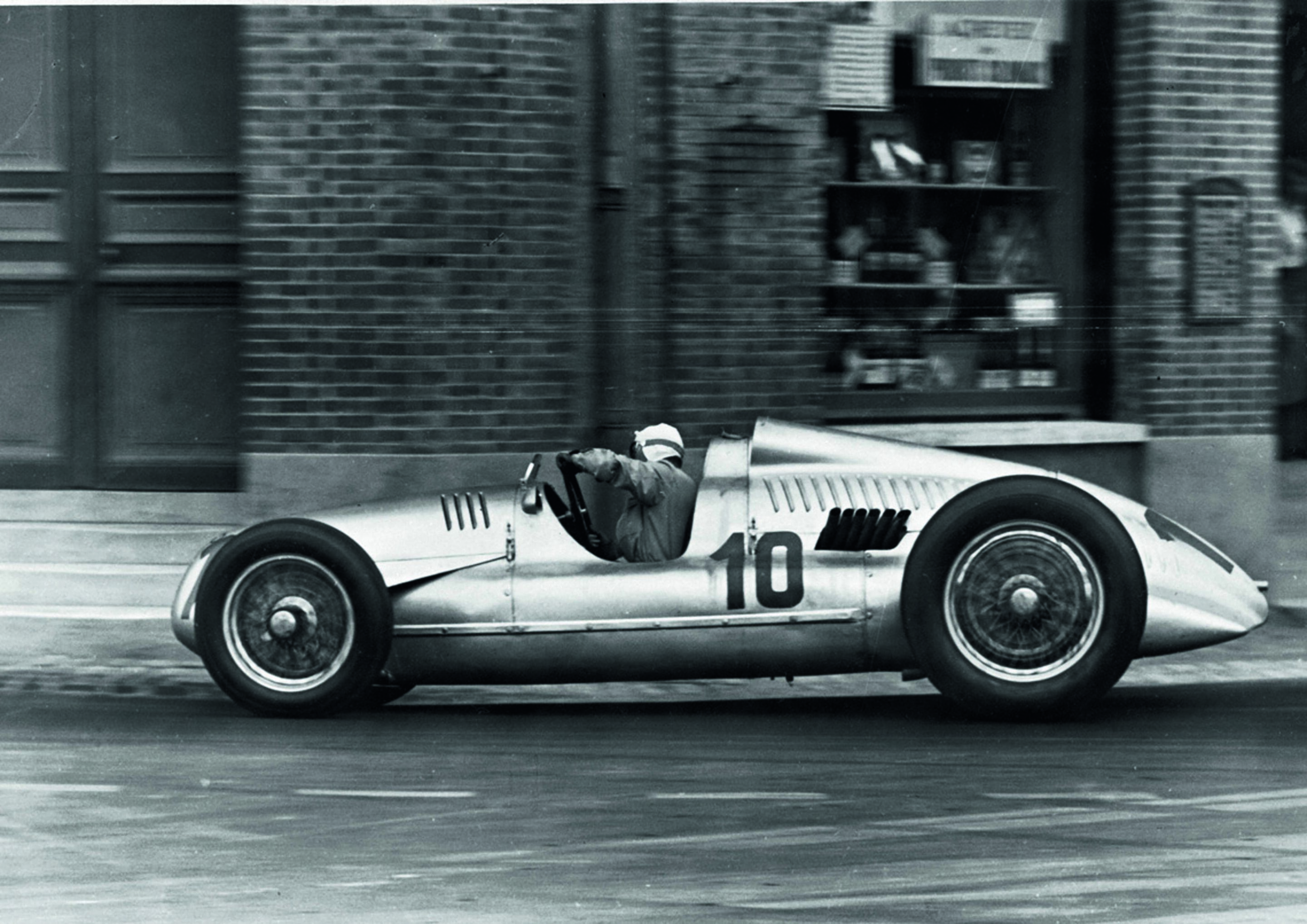
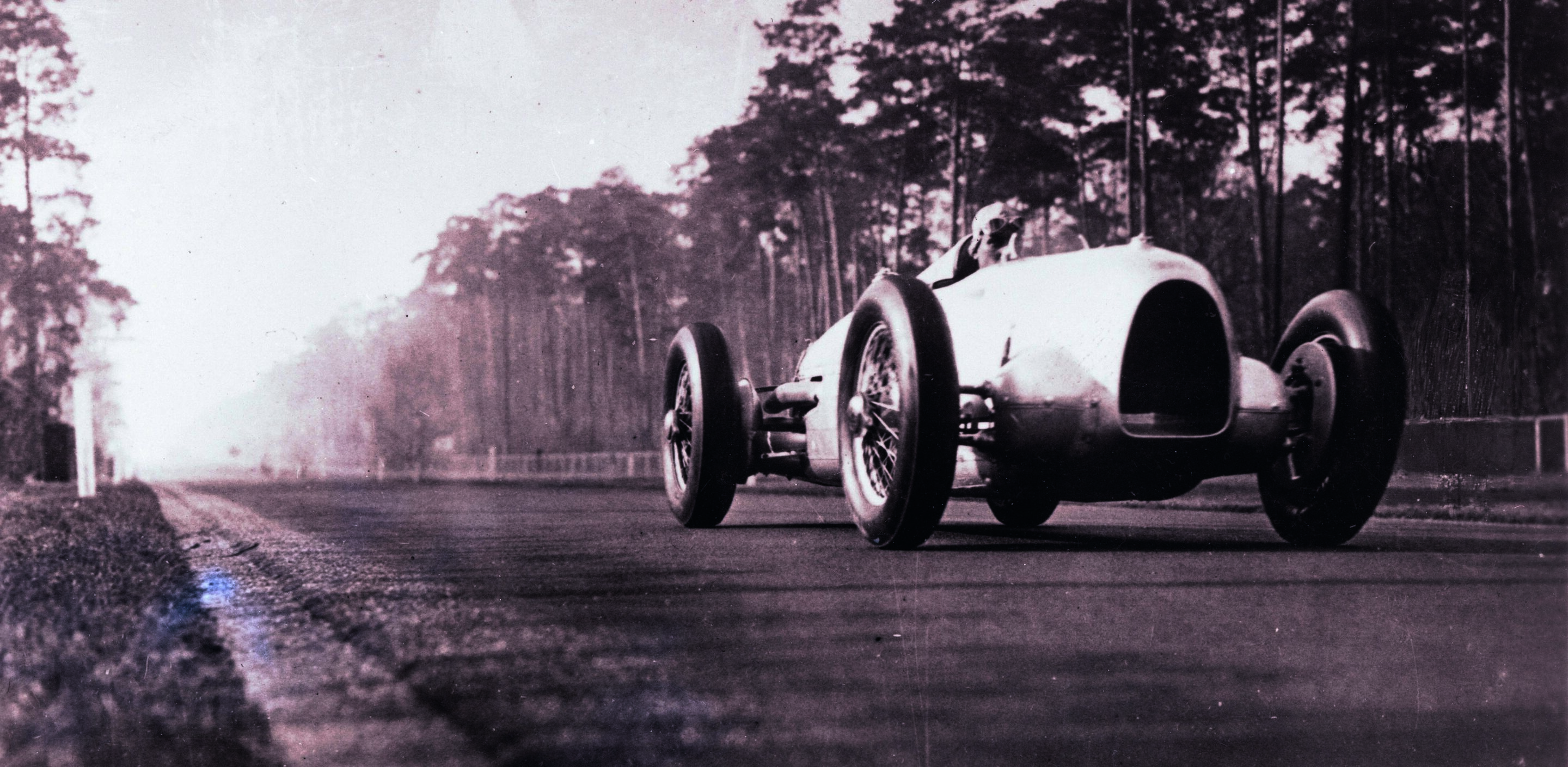
How the “Silver Arrow” legend was born
75 years ago, the Auto Union Silver Arrows went to the starting grid for the first time on the Avus circuit in Berlin Auto Union and Mercedes Benz dominated international motor racing between 1934 and 1939
75 years ago, one of the most dramatic chapters in the whole of motor sport history began. On May 27, 1934 the German racing cars that were soon to acquire the nickname “Silver Arrow” were entered for their first race, on the Avus racetrack in Berlin. Although neither Auto Union, the company from which Audi in its present-day form developed later, nor Mercedes Benz won that event, it was not long before these two manufacturers began to dominate international Grand Prix racing, a situation that prevailed until the outbreak of the Second World War in 1939. It seems almost incredible today, but by 1936 the Auto Union racing cars were reaching speeds of up to 380 kilometres an hour on the long straights of the Avus circuit – truly, the birth of a legend.
The racing cars bearing the four-ring emblem were entered for the race to be held on Berlin’s Avus circuit on May 27, 1934. Driven by Hans Stuck, August Momberger and Hermann Prince zu Leiningen, this was their first appearance in competition. They were given a striking silver paint finish, but possibly their most remarkable feature was that the engine was located behind the driver. 1934 was the first motor racing season in which the designers had to comply with a new formula: the cars were limited to a total dry weight of 750 kilograms, but the engines could be of any size and there was no restriction on the type of fuel. Ferdinand Porsche was the brain behind the Auto Union racing cars, so to speak. He designed them for the new motor-vehicle manufacturing group of that name that had been created in 1932 by a merger of the Audi, DKW, Horch and Wanderer brands, and supervised their construction and testing from March 1933 onwards at Auto Union’s racing department, which was located at the Horch factory in Zwickau.
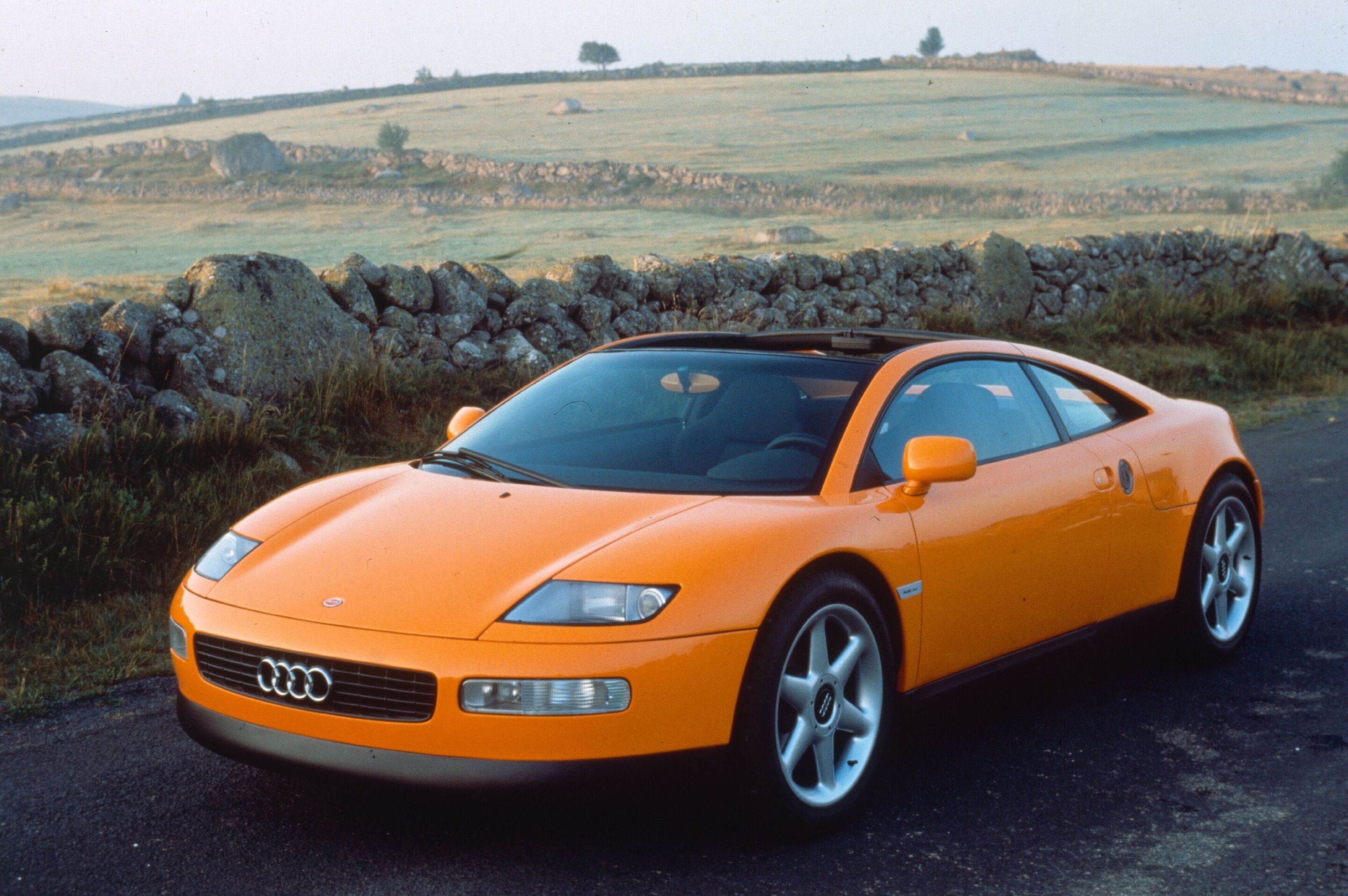
Audi museum mobile displays “Design Legends”
Concept cars like the Audi quattro Spyder and Audi Avus quattro have returned to our museum, joined by a few studies we’ve never hosted before, such as the Audi e-tron Spyder and the Aztec.” Beyond the concept cars themselves, the exhibition also features special pieces from Audi’s model workshop, offering insights into the creative process behind the designs. Sketches, renderings, and clay models provide a glimpse inside Audi’s creative studio – “showcasing the designers’ ideas, methods, and the journey from vision to form,” says Felber. Exhibits in the new special exhibition: Aztec from 1988 Audi quattro Spyder from 1991 Audi Avus quattro from 1991 Audi TT show car from 1995 Audi A8 Coupé concept car from 1997 Audi Steppenwolf from 2000 Audi Nuvolari quattro from 2003 Audi Shooting Brake concept from 2005 Audi e-tron Spyder from 2010 Audi quattro concept from 2010 Audi PB 18 e-tron from 2018 Take the museum home with the Audi Tradition app With the Audi Tradition app, you can take a piece of the Audi museum mobile home with you. Serving as a digital companion at the museum, the app offers in-depth content about the featured vehicles – through text, audio guides for selected models, and even 360-degree panoramic views. Visitors to the museum aren’t allowed to get into the cars and explore their interiors, but the app makes this possible on your smartphone screen. In some cases, even engine sounds can be heard as part of the exhibit description. The app provides information on the exhibits of both the special and permanent exhibitions. It also connects users to the Audi Tradition website, the Audi Tradition online shop for accessories, literature, and spare parts for Audi’s modern classics, and Audi Tradition’s Instagram and TikTok channels.
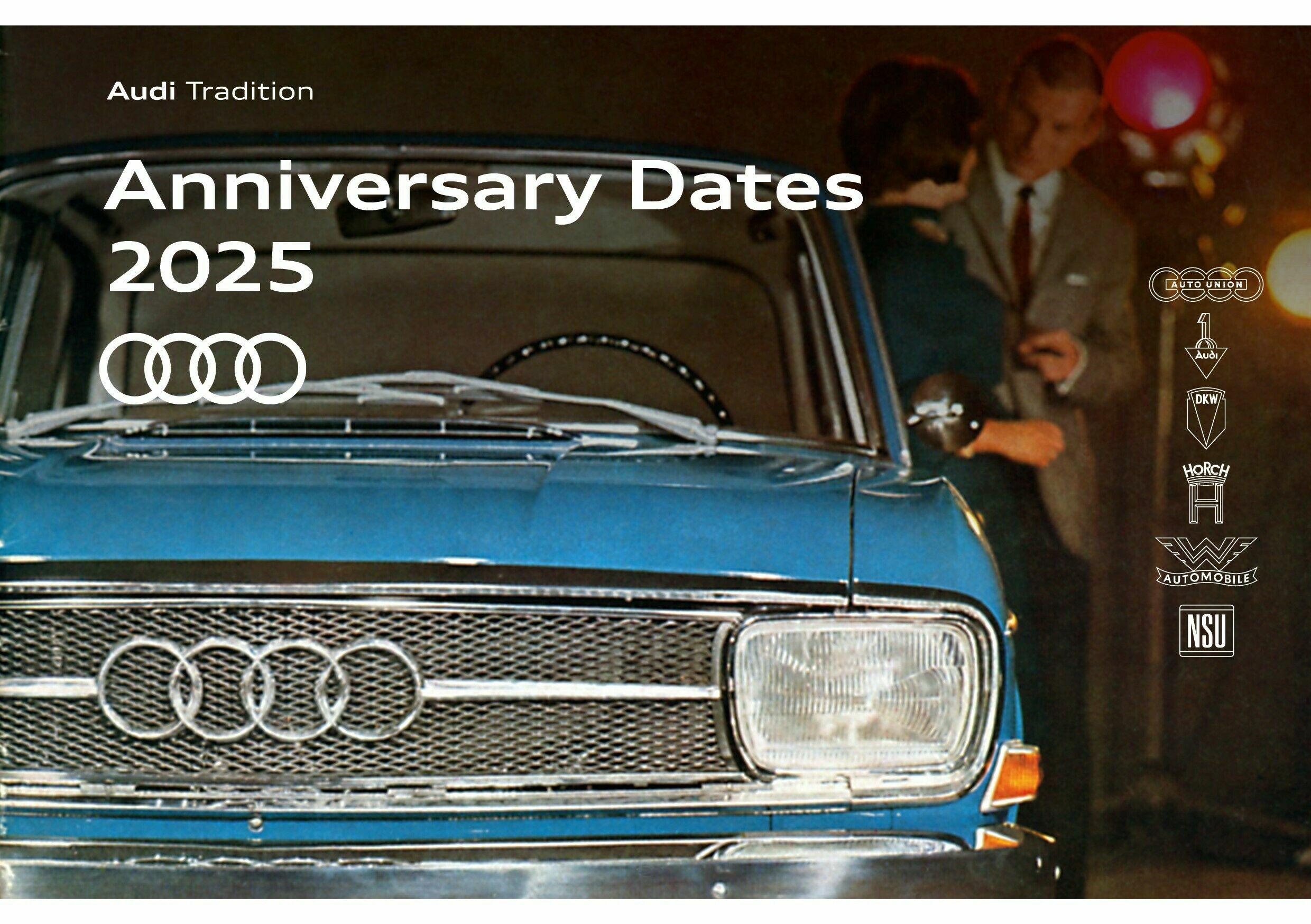
Audi Tradition to commemorate numerous anniversaries in 2025
After test drives in October 1934 with the Grand Prix racing car on the AVUS in Berlin, the Auto Union racing department started developing the vehicle that would later be known as the “Lucca” car. Just a few weeks later, in December 1934, it was presented during initial test drives on the AVUS. The record attempts were planned in Hungary but were moved to Italy at the last minute due to bad weather. The one-kilometer and one-mile records were targeted to be broken with a flying start on a five-kilometer stretch between Pescia and Altopascio. Test drives took place on February 14, 1935, and the next day, on February 15, the car piloted by Hans Stuck performed as planned and was heralded the “world’s fastest road-going car.” With a speed of 326.975 km/h reached near Lucca, the vehicle broke 26 world records and 13 international class records. The “Anniversary Dates 2025” booklet contains several additional anniversaries to discover, including 25 years of the first Audi victory at Le Mans and 25 years of Audi allroad quattro, 35 years of Audi duo hybrid vehicles, 40 years of fully galvanized bodies in large-scale automotive engineering, 50 years of the Audi 80 GTE, 55 years of the Audi 100 Coupé S, 60 years of the NSU Prinz 1000 TT and NSU Type 110, 75 years of the first post-war DKW passenger car, and 90 years of the Horch 850 series. A complete overview of the anniversary booklet is available in the Audi MediaCenter.
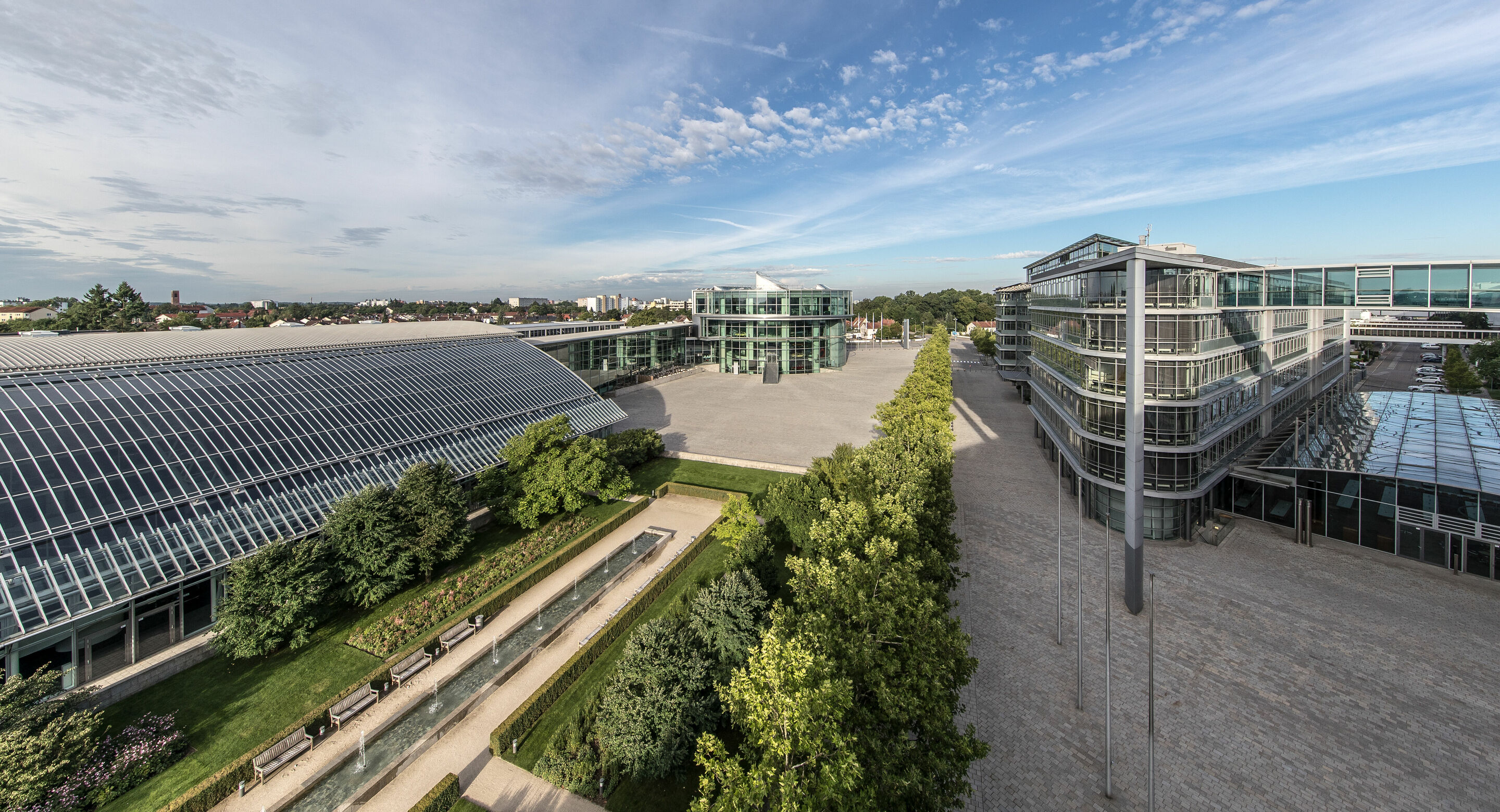
Audi Forum Ingolstadt
The gastronomical experience comprises the live cooking market restaurant, the AVUS fine dining restaurant and the Bar & Lounge. Companies from across Germany value the conference area with conference rooms of various capacities.
AudiStream - experience the world of Audi
With AudiStream, interested parties can get an online glimpse into the world of Audi. In a variety of interactive streams, tour guides lead them through the production sites in Ingolstadt and Neckarsulm, for example.
Pictures

Audi Tradition to commemorate numerous anniversaries in 2026
One hundred years ago, NSU scored a remarkable quadruple victory in the 1.5-liter class with the NSU 6/60 PS at the first “German Grand Prix” on the AVUS circuit in 1926. Ninety years ago, the Auto Union Type C dominated the 1936 racing season, winning three of five Grand Prix events, half of the circuit races, and every hill climb entered by Auto Union AG. Six decades later – in 1996 – Audi achieved seven wins in seven countries: at touring car championships in Germany, Italy, Great Britain, Belgium, Spain, Australia, and South Africa, the 285 PS Audi A4 quattro STW impressively demonstrated the superiority of quattro all-wheel drive. Further anniversaries compiled by Audi Tradition historians include: 30 years of the Audi A3, 35 years of the Audi Cabriolet, 45 years of the Audi research car, 50 years of the second-generation Audi 100, 70 years since the DKW 3=6 Monza record run, 70 years of the DKW Munga off-road vehicle, and 70 years of NSU speed records. A comprehensive overview of these milestones is provided in “Anniversary Dates 2026,” available in the Audi MediaCenter.
Recommendations
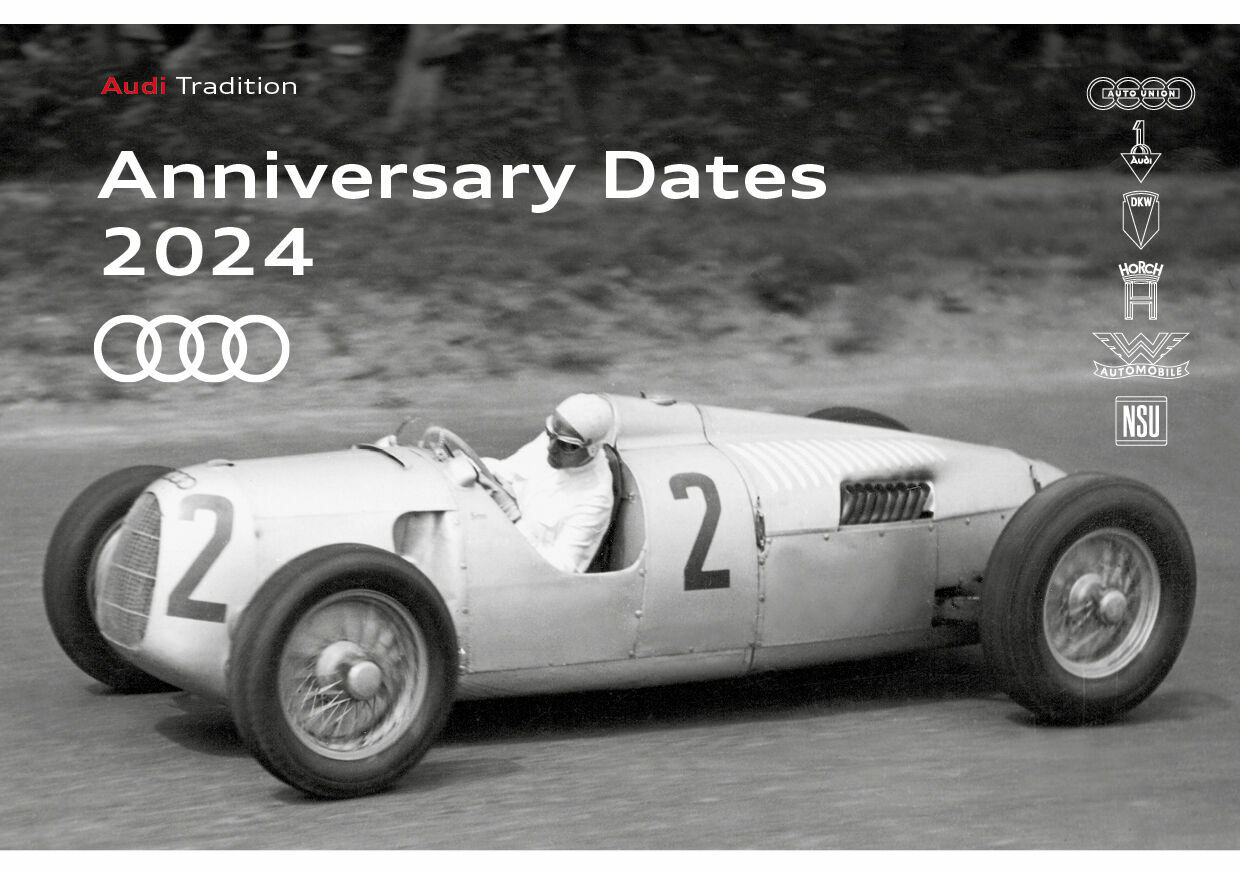
Audi Tradition to celebrate multiple anniversaries in 2024
The Auto Union racecar made its first official appearance at the AVUS in Berlin on March 6, 1934, with Hans Stuck at the wheel. A few weeks later, on May 27, 1934, the Auto Union Type A, as it was called internally, made its debut on the international racing scene, ushering in the booming era of the Auto Union Silver Arrows.