Suspension
Back to overview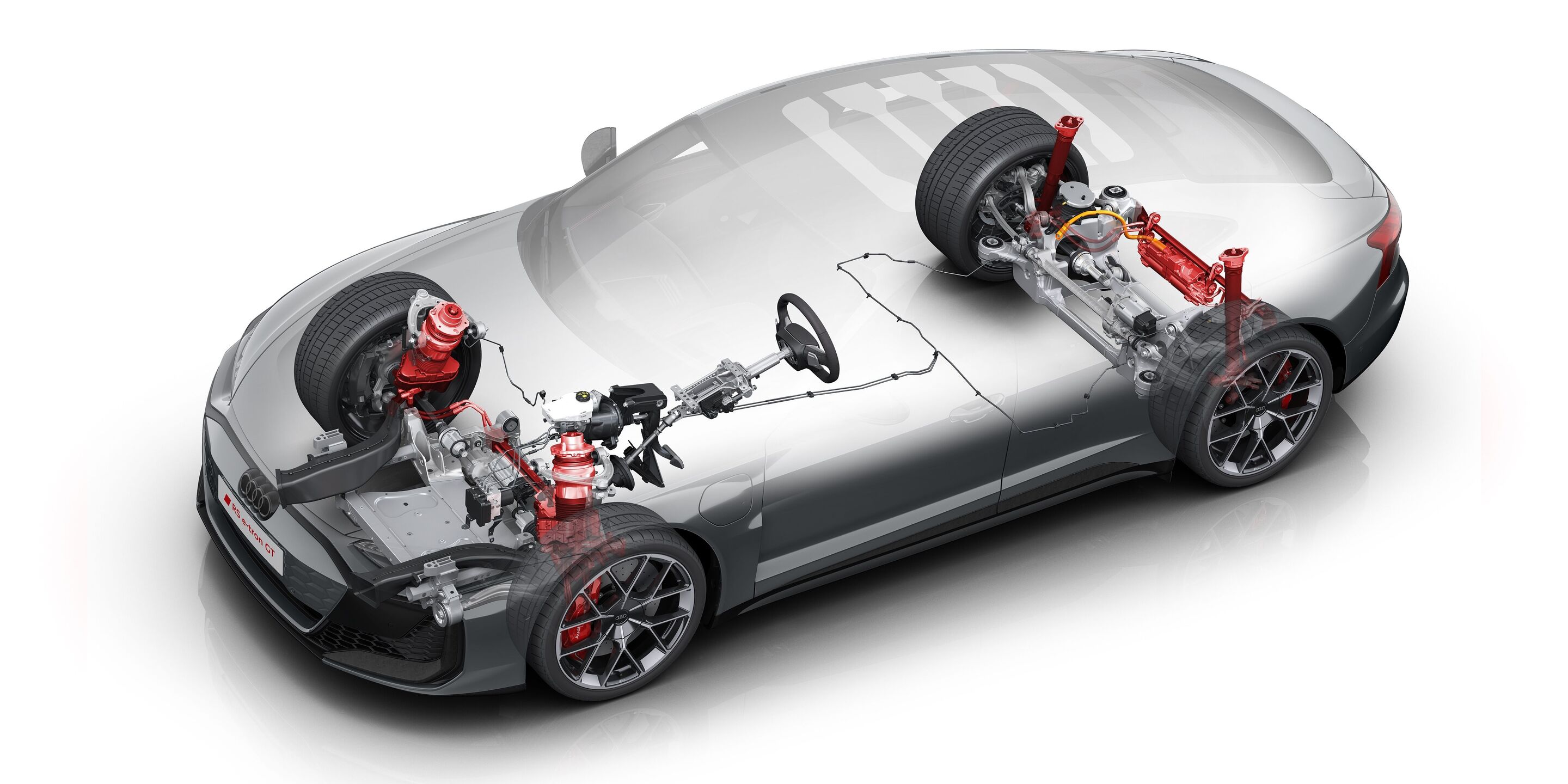
A high level of comfort and exciting dynamics – Audi combines these traits in its models using intelligent and extremely complex chassis technologies. In many cases, drivers can individually control the tuning of their cars.
Note: The technologies described here reflect the state of development at Audi, either as it currently stands or as it has been in the past. Not all systems mentioned are available in the current model range.
Contents
Audi drive select
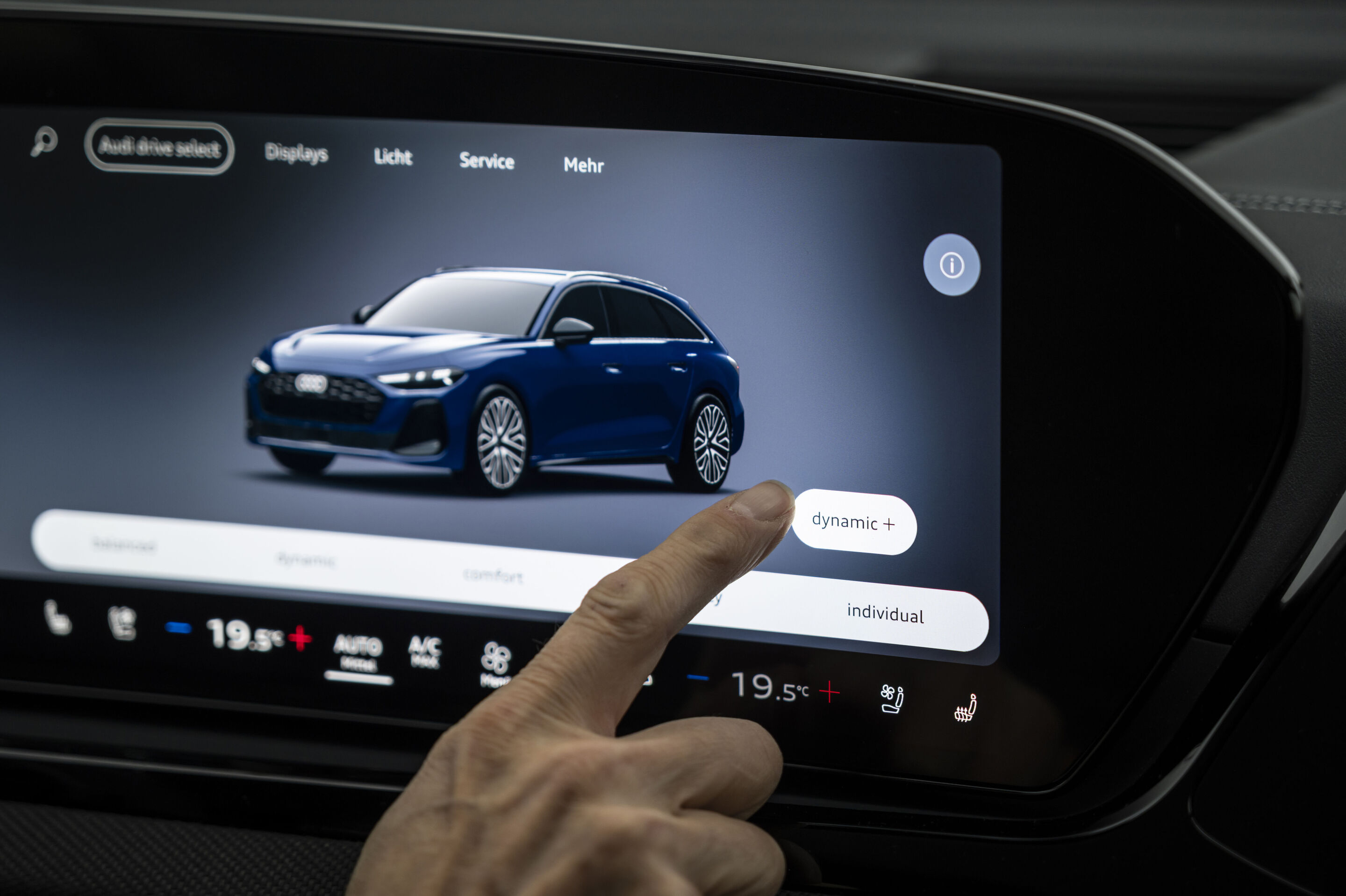
With the Audi drive select dynamic handling system, the vehicle can be adapted to provide different driving experiences and is thus tailored to different needs. Drivers can choose between the following modes: auto, comfort, dynamic, efficiency, and individual. RS-specific modes are also available for RS models. Selecting a particular mode changes the character of the relevant drive and suspension components: the result can range from comfort-oriented to distinctly dynamic to very fuel-efficient driving. In individual mode, the setup can be configured according to personal preferences. The Q and allroad models also have the allroad and offroad modes, which, in combination with the adaptive air suspension, adjust the car for off-road driving.
Audi drive select influences the characteristics of the engine and steering in all models. Optional components (depending on the model) complete the range.
On some particularly sporty models, Audi drive select also affects the exhaust flap control. Audi drive select is operated via the MMI system and, depending on the model, via buttons in the center console.
Adaptive dampers / Suspension with damper control
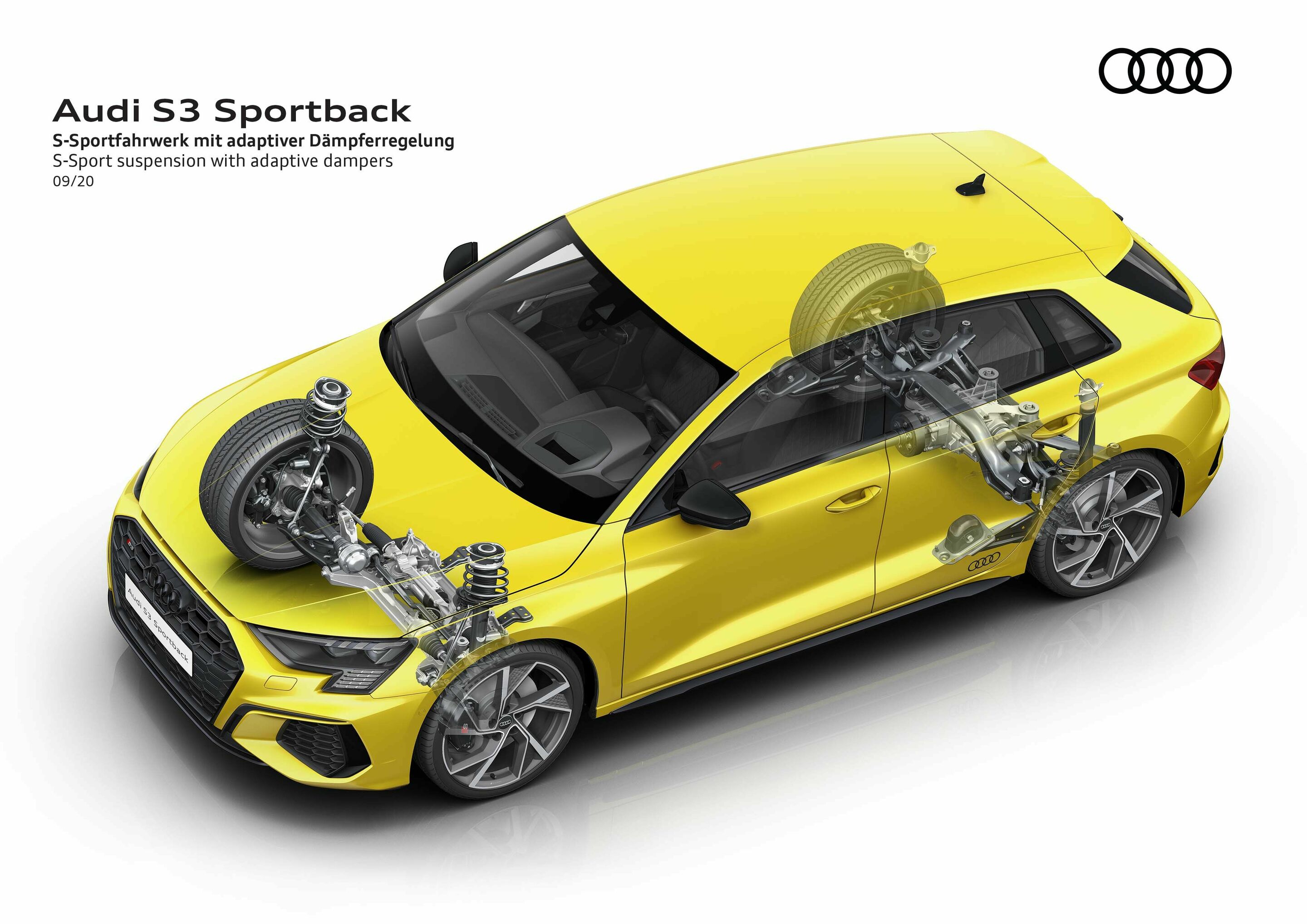
The suspension with damper control impresses with its high level of driving comfort and outstanding dynamics. Drivers can adjust the shock absorbers to different driving situations at the touch of a button, depending on their preferences.
Sensors measure the movement of all four wheels as well as longitudinal and lateral acceleration. The characteristics of the dampers are adapted accordingly to the road conditions and driving situation. At the touch of a button, drivers can select different modes in Audi drive select to always call up the desired driving characteristics.
All controlled suspensions – that is, both steel spring and adaptive air suspension systems – work with dampers using CDC (continuous damping control) technology. The damper pistons contain electromagnetically operated valves that can be controlled in a very energy-efficient way. They allow the hydraulic fluid to flow more or less freely as required. The central suspension control unit, the electronic chassis platform, processes all sensor signals in milliseconds and controls each damper individually. Together with the wide spread of the damper valves, this ensures a wide range between comfortable cruising and firm handling.
All-wheel steering / Dynamic all-wheel steering
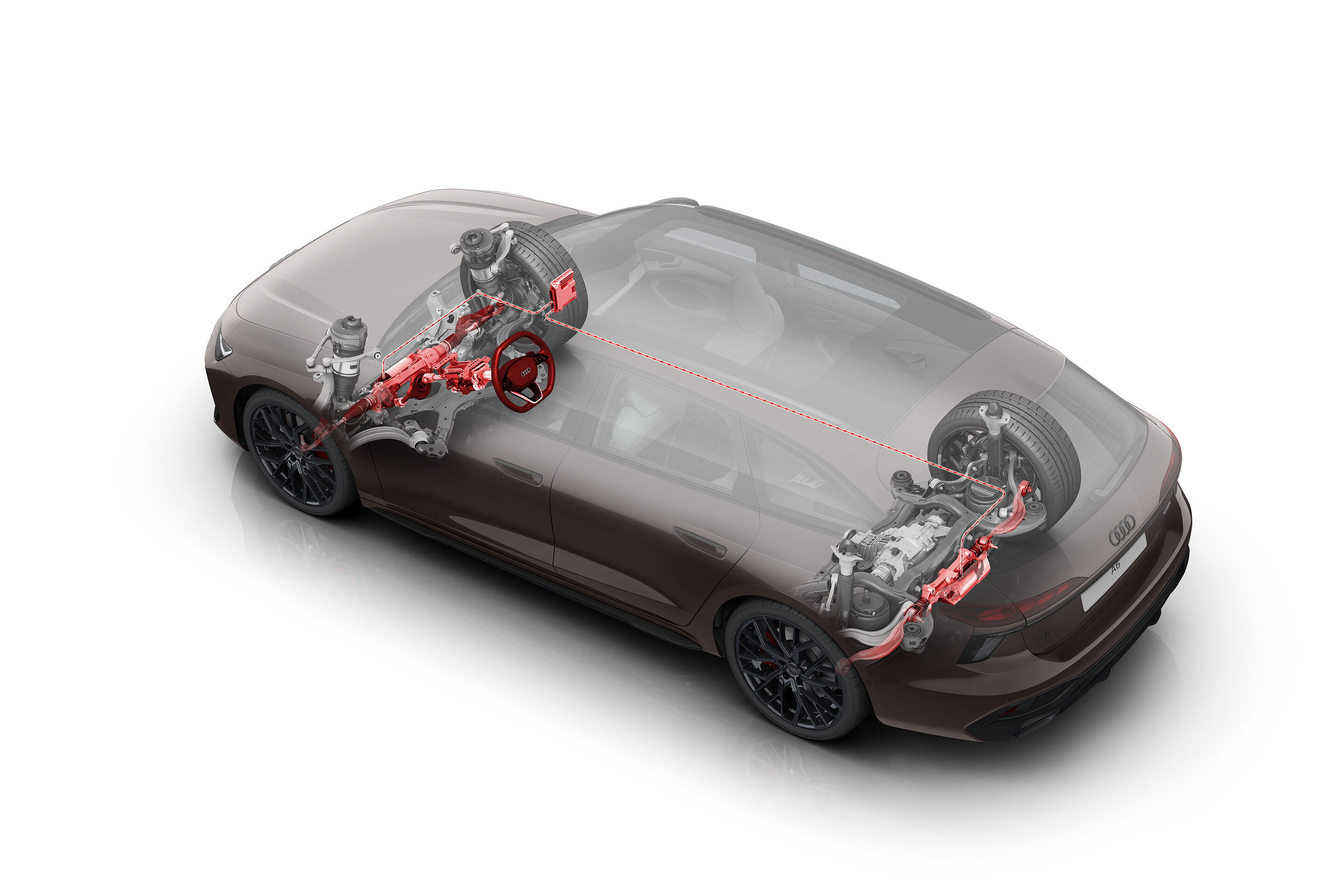
The all-wheel steering gives the vehicle great maneuverability with maximum stability. The rear axle features a steering system with an electric spindle drive and two tie rods, which turns the wheels a few degrees in the same or opposite direction as the front wheels, depending on the driving speed. At low speeds, the rear wheels steer in the opposite direction. This makes the car significantly more agile and maneuverable, reducing its turning circle by around one meter – something the driver will notice when maneuvering and parking. At higher speeds, the rear wheels follow the movement of the front wheels. The same-direction steering angle improves steering response and further increases stability in evasive situations.
Dynamic all-wheel steering is a further development of the system. It pushes the boundaries of what is physically possible because it allows the steering angles on the front and rear axles to be adjusted independently of each other. It combines a direct, sporty steering response with superior driving stability, thus resolving an old conflict of objectives. A dynamic steering system operates on the front axle, whose strain wave gearing changes its ratio depending on the driving situation. The combination of dynamic steering and rear-axle steering changes the overall steering ratio over a range of 9.5 to 17.0 – direct at low speeds, stable at high speeds.
Like the all-wheel steering, the dynamic all-wheel steering is integrated into the Audi drive select dynamic handling system. The dynamic all-wheel steering receives its commands from the electronic chassis platform (ECP). At the limits of driving dynamics – during understeer, oversteer, and load changes – or on roads that are slippery on one side, it stabilizes the car with the help of steering interventions on the front and rear axles.
Predictive active suspension
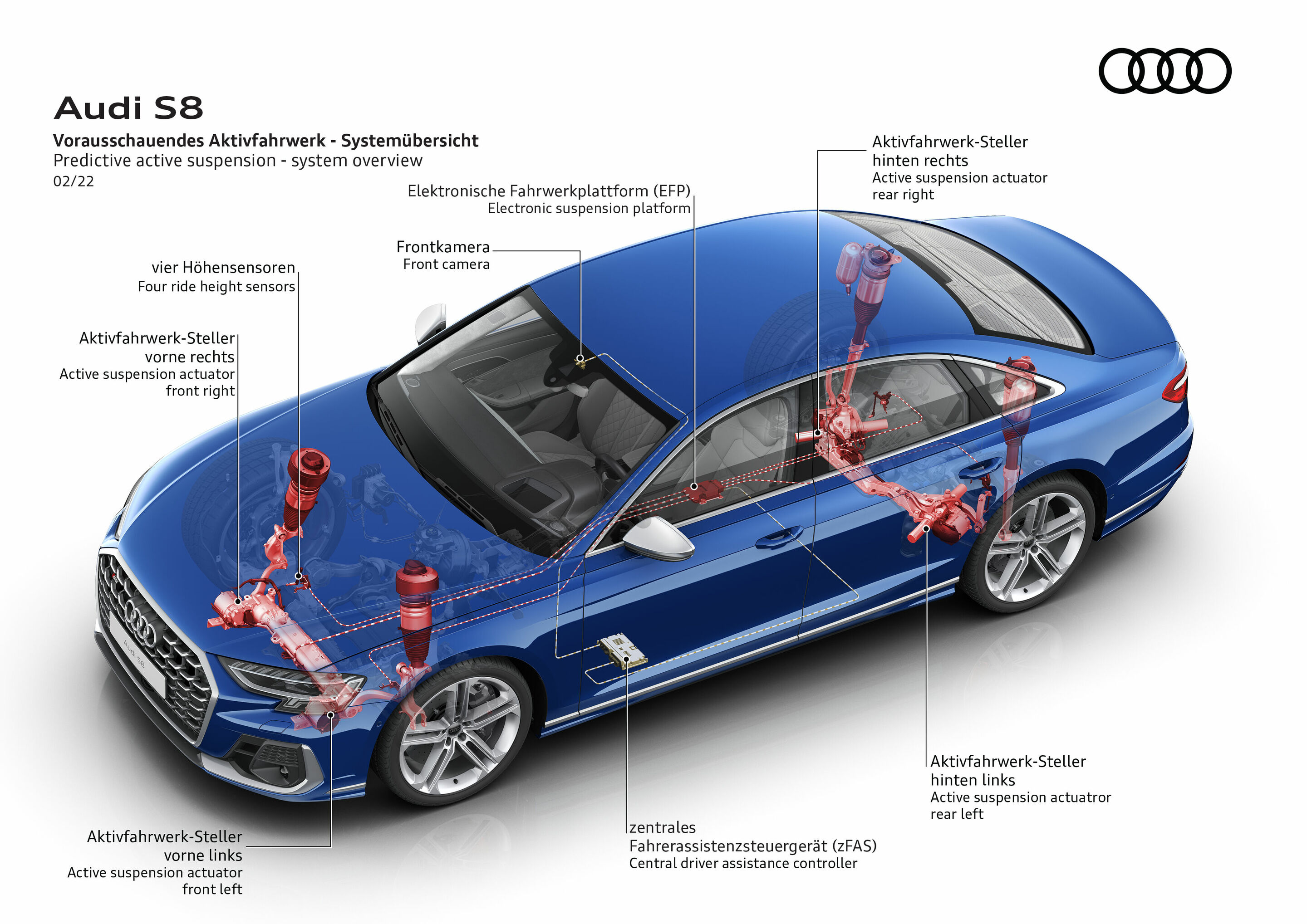
The predictive active suspension is a fully active, electromechanically operated suspension system that specifically compensates for roll, pitch, and heave. The entire system, consisting of electromechanical actuators and adaptive dampers, actively stabilizes the vehicle body across a wide frequency spectrum, thus offering excellent driving comfort.
Each wheel has an electric motor that is powered by the 48-volt main electrical system. The control signals for the active suspension are sent every five milliseconds from the electronic chassis platform (ECP). One power electronics unit per axle prepares them for the electric motors. A belt drive and compact strain wave gearing convert the torque of the electric motor to 1,100 Nm and transmit it to a steel torsion tube. The tube is firmly connected to a preloaded titanium torsion bar, which is located inside it. It is more than 40 centimeters long, approximately 22 millimeters thick, and can be twisted by more than 20 degrees despite its high strength. From the end of the torsion bar, the force is transmitted to the suspension via a lever and a coupling rod. On the front axle, it acts on the air spring strut of the adaptive air suspension, and on the rear axle, it acts on the control arm.
The flexibility of the active suspension gives the vehicle a whole new range of driving characteristics. The integrated curve tilt function reduces the lateral acceleration acting on the occupants of the vehicle. The comfort entry function raises the vehicle when the doors are opened, making it easier to get in and out. The predictive function uses the front camera to detect road surface irregularities in front of the vehicle within the limits of the system.
The basic configuration of the suspension can be selected via Audi drive select. When drivers select dynamic mode in the Audi drive select system, the car becomes a sports car: it steers tightly into corners, the roll angles are only about half as large as with the standard suspension, and the body hardly dips at all when braking. In comfort+ mode, on the other hand, the vehicle floats smoothly over bumps of all kinds and reduces the lateral acceleration acting on the occupants, for example when cornering. When driving straight ahead, the predictive active suspension compensates for pitching movements. To stabilize the vehicle body, the active suspension continuously adds or removes energy from the body, depending on the driving situation. This can significantly reduce the system’s energy consumption. Its average power consumption is between 10 and 200 watts.
In conjunction with the Audi pre sense 360˚ safety system, the active suspension also increases passive safety. The system uses the sensors connected in the central driver assistance control unit to detect collision hazards around the car. In the event of an imminent side impact at speeds of more than 25 km/h, the suspension actuators raise the body on the endangered side by up to 80 millimeters within half a second. This concentrates the collision on the more resistant areas of the vehicle, such as the side sills and floor structure. The load on the occupants is reduced by up to 50 percent compared to a side crash without body raising.
Audi magnetic ride
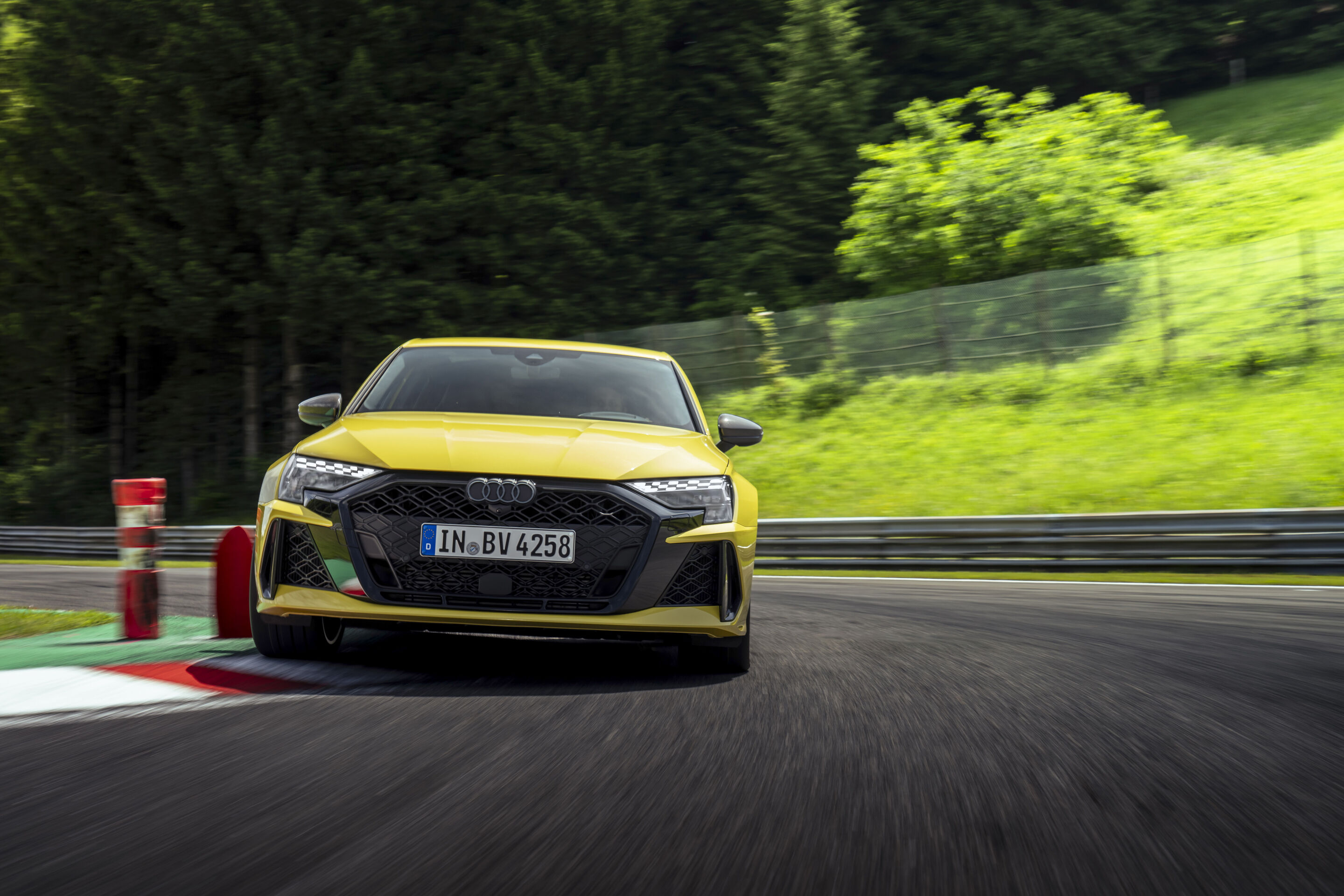
Audi magnetic ride improves driving dynamics and driving comfort by adjusting the damper forces depending on the driving situation. The adaptive damping system offers three basic suspension settings: the modes “auto,” “comfort,” and “dynamic” can be set via Audi drive select.
Audi magnetic ride continuously adapts the shock absorbers to the road surface and the driver's style. A synthetic hydrocarbon oil circulates in the pistons of the shock absorbers. This oil contains microscopic magnetic particles measuring 3 to 10 thousandths of a millimeter in size – a human hair is ten times thicker. As soon as voltage is applied to the coil integrated into the damper, a magnetic field is created in which the particles realign themselves. They are positioned crosswise to the direction of the oil flow in the piston channels, thus inhibiting its flow. This process takes place in a few milliseconds.
Using precise sensor data, a control unit continuously calculates the optimum values for each individual wheel and adaptively adjusts the damper settings. The wheels are specifically supported in corners, and roll movements are largely suppressed. When braking, Audi magnetic ride helps counteract nosedive. The damper control performs these functions regardless of the driving mode chosen in Audi drive select. However, the driver can vary the basic shock absorption settings in three stages: comfort, auto, and dynamic. In normal mode (auto) – with low oil viscosity and a high flow rate – the car rolls in a balanced manner. In sport mode (dynamic) – when the flow is inhibited – the vehicle is uncompromisingly firm on the road and enables more agile handling. In both modes, the focus is on lateral and longitudinal dynamics. If the driver has selected comfort mode, the wheels are damped with a focus on minimizing vertical body movement. This allows for a smooth ride over poor road surfaces.
Speed-controlled traction control
The traction control system significantly increases traction and driving stability. Electronic stabilization control (ESC) and the power electronics have been connected based on the engine speed. Due to the relocation of function modules to the power electronics, wheel slip is controlled at one-millisecond intervals – 50 times faster than before. This makes it possible to adjust slip more precisely to the driving situation; this is particularly noticeable in combination with the four-stage function modes of the ESC – ON, OFF, Sport, and Offroad. In conjunction with the ESC’s electronic differential lock and the all-wheel drive controller, the new traction control system ensures optimum traction between the tires and the road surface. This results in the high traction and driving stability typical of Audi in all conditions. Electronic stabilization control (ESC) and the traction control system can be activated and deactivated using a switch.
Dynamic ride control
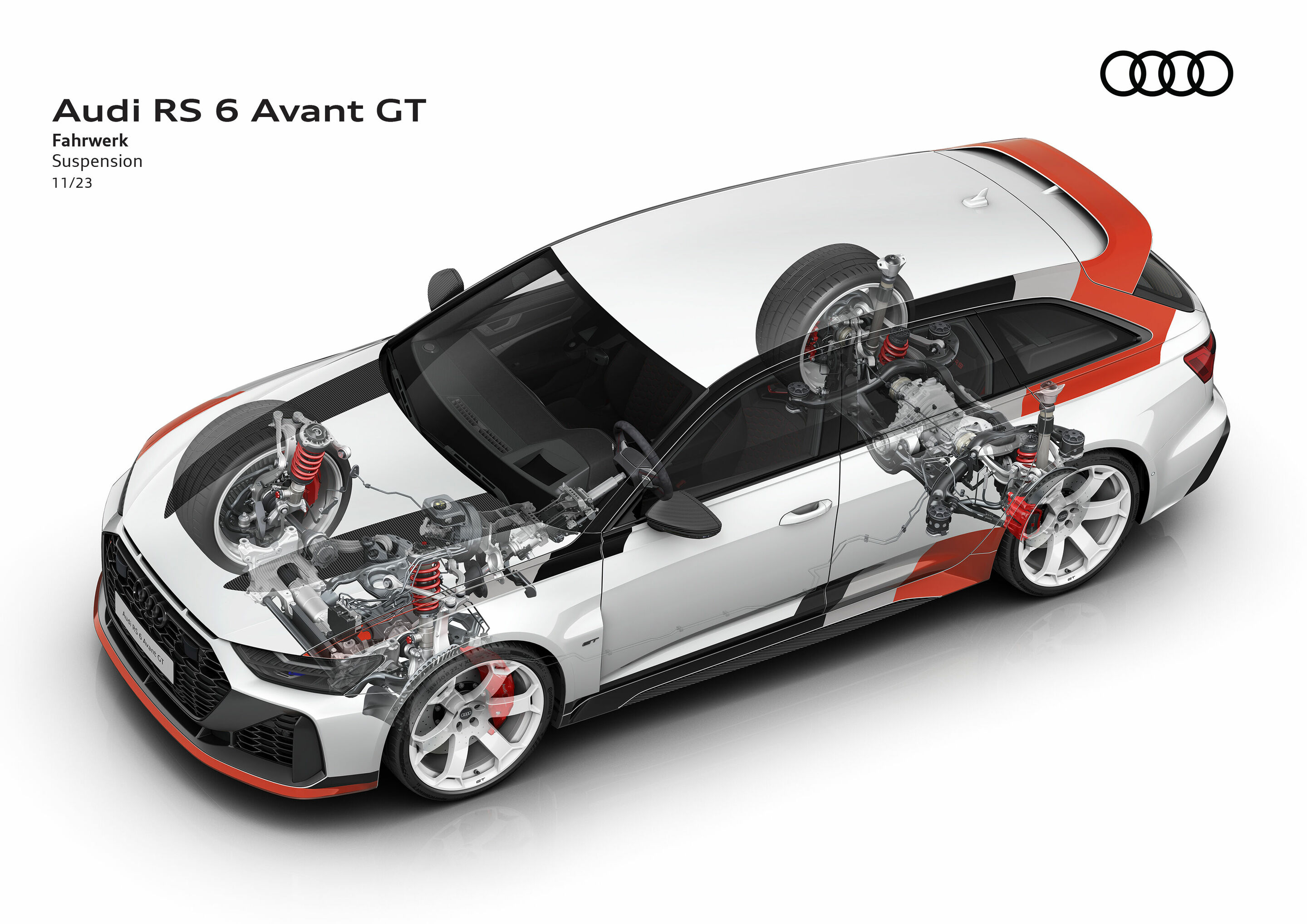
For even better vehicle handling in Audi RS models, dynamic ride control (DRC) counteracts the vehicle’s pitching and rolling movements around the transverse and longitudinal axes. Driving dynamics are enhanced by reducing body roll through increased support of the compressing wheel, for example during fast cornering.
The single-tube dampers feature a variable characteristic that can be adjusted in three stages. Two shock absorbers diagonally opposite each other (front right/rear left and front left/rear right) are connected to each other via oil lines and a central valve. When cornering at speed, the valves adjust the oil flow in the damper of the compressed outer front wheel. They reinforce the support and reduce pitching and rolling movements – and thus increase both perceived and actual driving dynamics.
Dynamic steering
Dynamic steering is used in Audi RS models. It varies its ratio by up to 100 percent, depending on the driving speed, the steering angle, and the mode selected in the dynamic handling system Audi drive select. There are five profiles to choose from: comfort, auto, dynamic, and the RS-specific modes that can be individually configured in numerous Audi RS models. The central component is a superimposed gearbox in the steering column, which is driven by an electric motor. The so-called strain wave gearing is compact, lightweight, and torsionally rigid. It operates with zero backlash, high precision, and low friction. The gearbox can transmit high torque in an instant and achieves a high level of efficiency.
The strain wave gearing consists of only three key components. An electric motor rotates an elliptical inner rotor, which, via a ball bearing, deforms a thin-walled helical gear connected to the steering input shaft. It engages with a ring gear on the high axes of the ellipse, which carries a gear rim and acts on the steering output shaft. As the inner rotor turns, the major axis of the ellipse shifts, and with it the tooth engagement area. Because the sun gear has fewer teeth than the ring gear, the two perform a relative movement to each other – they overlap. The high gear ratio of the fast-running electric motor makes it possible to build up this overlap quickly and precisely.
At low speeds – in city traffic and when maneuvering – the dynamic steering works very directly; all it takes is two full turns of the steering wheel to travel from end stop to end stop. The power steering boost is also high; parking maneuvers become effortless. On country roads, the directness of the steering response and steering power assist are reduced progressively. At fast highway speeds, an indirect transmission ratio and low power assist smooth out erratic steering inputs to support stable straight-line tracking.
When it comes to sporty driving and driving safety, dynamic steering works closely with electronic stabilization control (ESC). If necessary, it countersteers slightly – its small, usually unnoticed interventions reduce understeer and oversteer caused by load changes in most situations. When braking on surfaces with different friction values, the system helps with stabilizing steering inputs.
Dynamic steering corrects faster than the brake system can build up pressure at the wheels. In many situations, it does most of the work – brake interventions become unnecessary or serve only to dampen and reduce speed. This added driving safety and sportiness is particularly effective at higher speeds and on slippery surfaces, such as snow.
Electrohydraulically integrated brake control system
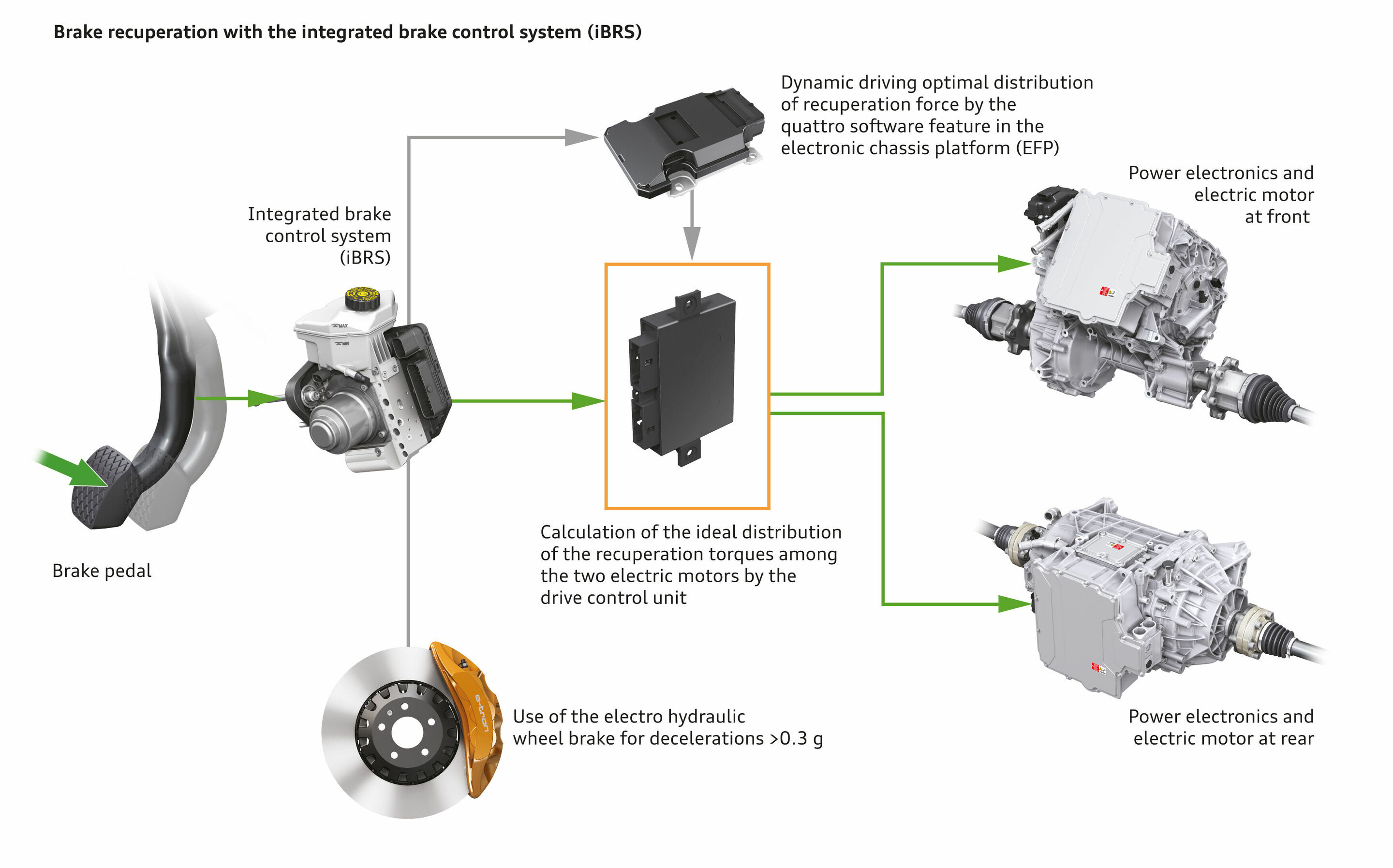
In the electrohydraulically integrated brake control system, the wheel brakes are actuated hydraulically, the brake boost is provided electrically, and the control is electronic. The control unit detects how hard the driver presses on the brake pedal and calculates within milliseconds how much braking torque is required. If the regenerative braking torque in hybrid or electric vehicles is insufficient, additional hydraulic pressure is generated for the conventional friction brake. An electric spindle drive moves the displacement piston, which presses brake fluid into the brake lines. The transition from generator operation of the electric motors to pure friction braking is smooth and imperceptible.
The familiar pedal feel is generated by a second piston using a pressure-elastic element. This brake pedal simulator means that the driver is not affected by what is happening in the hydraulic system. During ABS braking, pressure buildup and release in the pedal is not noticeable in the form of hard pulsations. The electrohydraulic brake system is activated when the driver presses the brake pedal hard enough to exceed a deceleration of 0.3 g. Otherwise, the car uses regenerative braking through its two electric motors. The brake control system builds up brake pressure for the wheel brakes very precisely and about twice as fast as a conventional system. In the event of automated emergency braking, only 150 milliseconds elapse between the initiation of braking and the application of maximum brake pressure between the pads and discs. This is just a little more than the blink of an eye and ensures impressively short braking distances. (Even at very low speeds, such as during maneuvering, the car uses its wheel brakes, as this is more efficient than electric braking in these situations. Otherwise, the electric motor would have to draw valuable energy from the battery to actively decelerate at low speeds.)
Thanks to the brake-by-wire technology of the electrohydraulically integrated brake control system, it is possible to set a greater air gap, that is, a larger distance between the brake pad and the disc. This minimizes potential friction and heat generation, thereby actively contributing to the car’s long range.
Audi was the first manufacturer worldwide to use this electrohydraulically integrated brake control system in an electrically powered production car when it launched the e-tron series.
Electromechanical active roll stabilization

The electromechanical active roll stabilization (EARS) enables a wide spread between excellent body stability and sporty handling. On the front and rear axles, a compact electric motor with a three-stage planetary gear set is located between the two halves of the stabilizer. When driving straight ahead, the suspension control system ensures that the two stabilizer halves operate largely independently of each other. This reduces body movements on uneven roads and thereby increases driving comfort. For sporty driving, on the other hand, optimum roll compensation is the priority. The stabilizer halves work as a unit and are twisted against each other by the electric motor’s gearbox – lateral tilt when cornering is significantly reduced, making the vehicle’s handling even tighter and more dynamic.
The EARS system draws its energy from a powerful 48-volt electrical system and acts as a regenerative system: when the wheels on one axle compress differently on uneven surfaces, they activate the stabilizer – the EARS’ motor then converts the impulse into electrical energy. This energy is stored in the onboard electrical system’s lithium-ion battery, ensuring that the overall energy usage of the EARS system is significantly lower than that of a hydraulic system. The energy storage unit supplies the two electric motors with a maximum power output of 1.5 kilowatts each. Furthermore, the roll stabilization system is maintenance-free because it does not require oil.
Electronic chassis platform
The electronic chassis platform (ECP), which is used in many Audi models with longitudinally mounted engines, is the central control unit for the suspension. To perform its purpose, it takes a number of factors into account, including speed, yaw rate, lateral acceleration, the roll and pitching movements of the car, steering angle, road surface friction (grip), the current driving state (such as understeer or oversteer), and the data from the suspension systems involved. Based on that information, it calculates the optimum settings for those components. The driver benefits from precise handling in curves, increased driving dynamics, and a high level of driving comfort. This means that drivers can accelerate earlier at the apex of a curve with minimal correction.
Thanks to its integration into Audi drive select, the system can be adjusted to suit individual preferences – for example, by selecting a sportier basic setting for the ECP in dynamic mode.
Adaptive air suspension
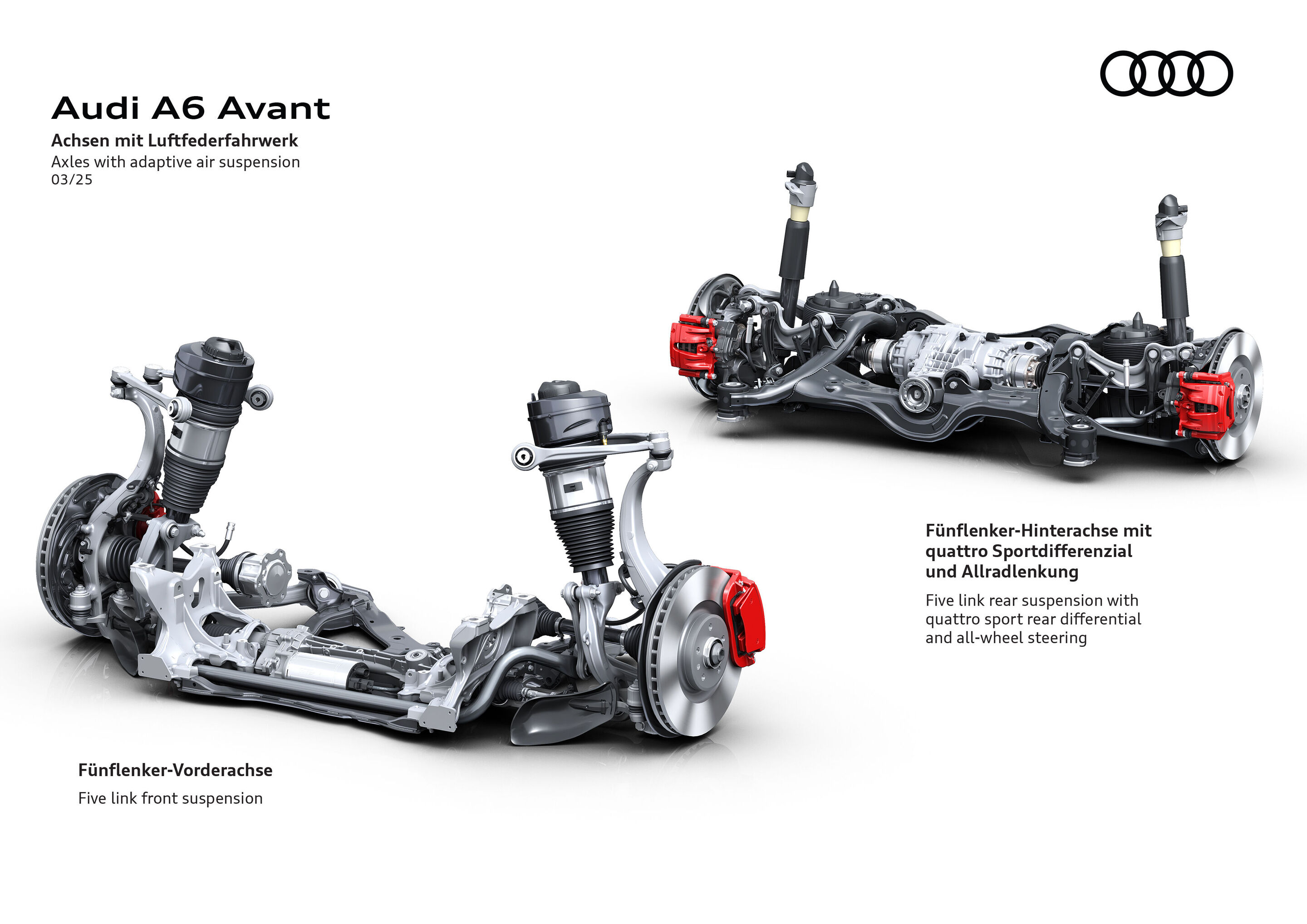
The adaptive air suspension – air suspension with controlled damping – offers a wide range between smooth suspension (long-distance comfort) and sporty handling (maximum performance). Depending on speed and driver preferences, adaptive air suspension adapts individually to road conditions and adjusts the body height at different levels. The air suspension can be configured via Audi drive select. It also automatically adjusts the level to compensate for different loads.
The system is designed differently in each model series. On the front axle, the air springs surround the shock absorbers within the struts, whereas on the rear axle, in most models, the two components are mounted separately. In the Audi A8, however, air suspension struts are also used on the rear axle. Depending on the model, the installation position of the compressor and the number of pressure reservoirs to be filled also vary.
The central suspension control unit, the electronic chassis platform (ECP), regulates the damping behavior for each wheel individually in millisecond intervals – depending on the road conditions, driving style, and the mode set in the Audi drive select dynamic handling system. Electromagnetic damper valves vary the volumetric flow rate of the hydraulic fluid.
Progressive steering

Electromechanical progressive steering enhances driving dynamics and driving comfort. Its specially toothed rack adjusts the gear ratio depending on the steering angle. As the steering angle increases, the gear ratio becomes smaller and the steering more direct. This reduces the amount of steering effort required in city traffic and when maneuvering, and makes the car even more agile in tight corners. The progressive steering enables sporty handling. It also adapts its power steering assistance to the speed at which the car is traveling. At low speeds, it is increased for easier maneuverability. The steering characteristics can be modified in several modes (auto, comfort, dynamic) using the Audi drive select dynamic handling system.
Wheel-selective torque control
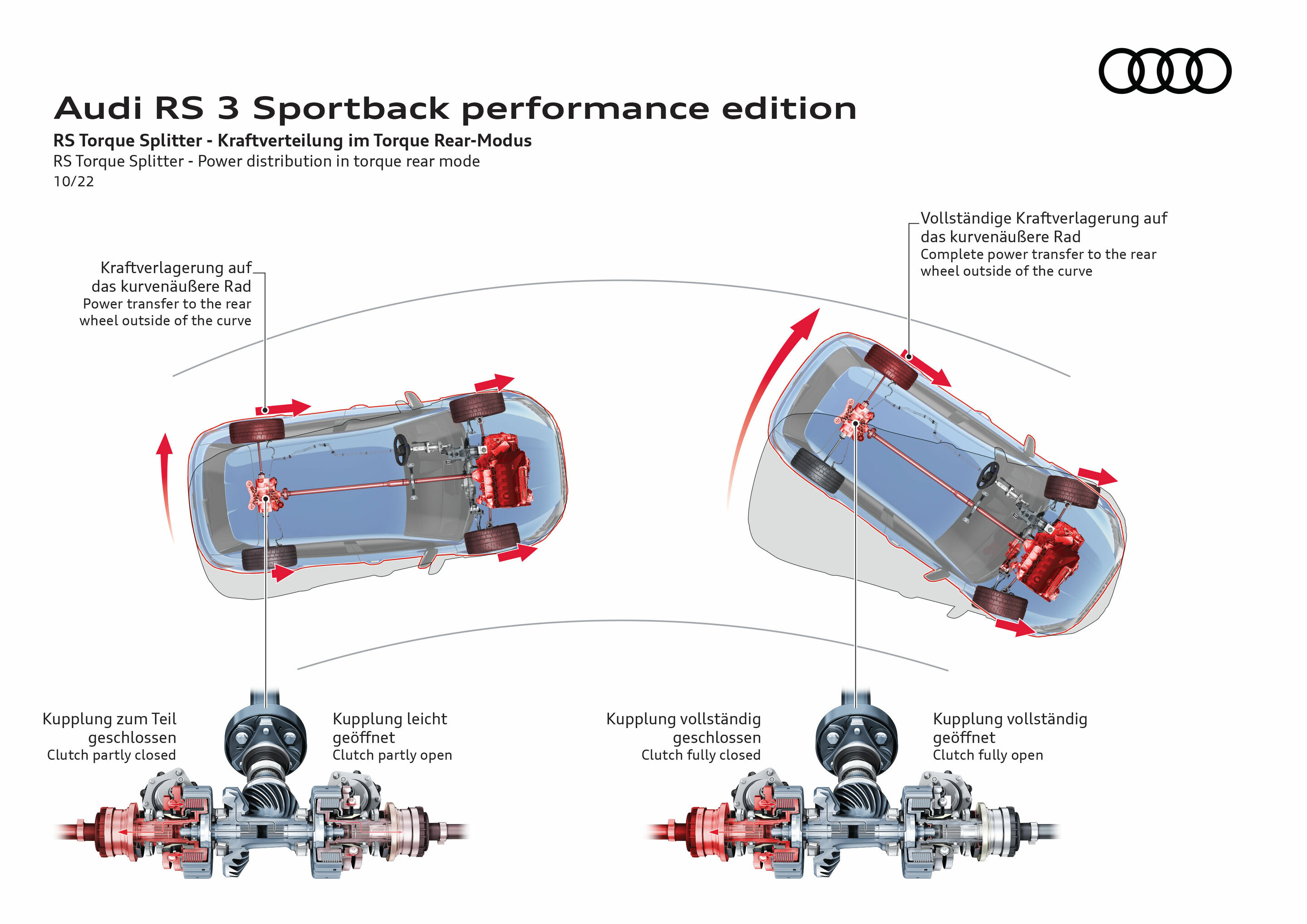
Wheel-selective torque control is a software function of the electronic stabilization control (ESC) system. In both quattro and front-wheel drive vehicles, wheel-selective torque control complements the handling characteristics through electronic intervention. It is active on all types of road surfaces. During sporty driving when cornering, wheel-selective torque control minimally brakes the inside front wheel (in front-wheel drive) or both inside wheels (in quattro drive), which increases the drive torque to the outside wheels with the higher wheel load. Due to the difference in propulsive forces, the car steers into the curve and follows the steering angle precisely. The result is precise, agile, and neutral handling.
Sport differential
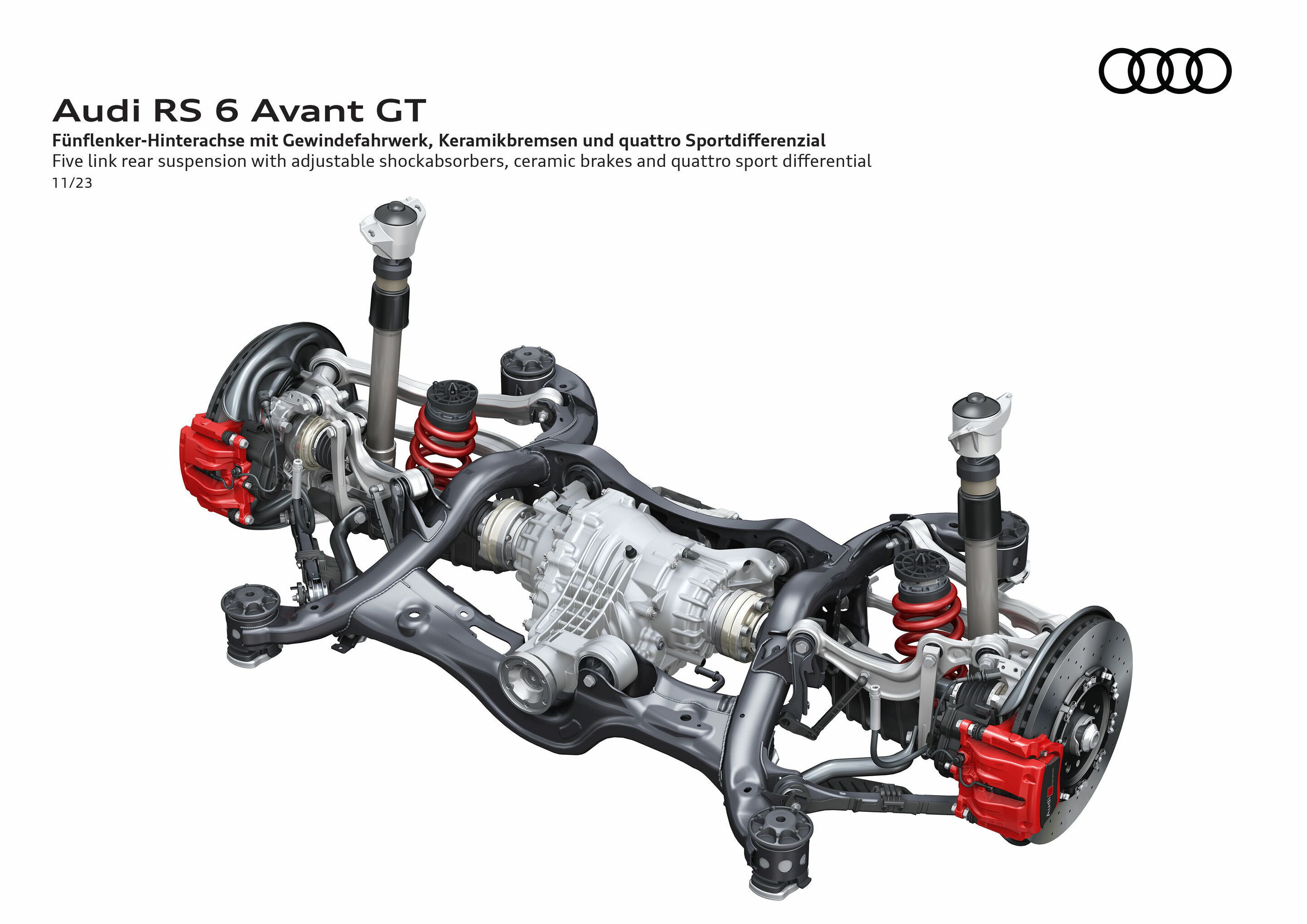
The sport differential provides enhanced driving dynamics, traction, and stability. It actively distributes drive torque between the rear wheels, thereby augmenting the quattro drive with the self-locking center differential.
In addition to the features of a conventional differential, the sport differential integrates a gear stage and an electrohydraulically actuated multi-plate clutch on each side. The clutches are operated by the hydraulic control unit. An electric motor drives a high-performance oil pump that provides the necessary hydraulic pressure. When the clutch engages, it continuously forces the wheel to adopt the higher rotational speed of the gear stage. The forced increase in speed means that the additional torque required for this is taken from the opposite wheel on the inside of the curve via the differential. This enables almost the entire torque to flow to one wheel.
The sport differential can distribute torque between the left and right wheels in all operating conditions, including overrun. When steering into a corner or accelerating through it, torque is directed primarily to the outer wheel – the car is virtually pushed into the bend, eliminating any tendency to understeer. In the event of oversteer, the sport differential stabilizes the vehicle by shifting the torque to the inside wheel.
On many Audi models, the sport differential is controlled by the electronic chassis platform. The sport differential software continuously calculates the ideal torque distribution for the rear axle in terms of driving dynamics. To do that, it takes into account factors such as steering angle, yaw rate, lateral acceleration, and speed. Through the connection with Audi drive select, the driver can influence the way the system works. In some models, the driver can view a graphic of the drive torque distribution in the center display. The graphic shows both the distribution of torque between the front and rear axles as well as the distribution between the wheels on the rear axle.