“I like it” – and the winner is: Audi quattro
Special exhibition in the Audi museum mobile from April 4 to May 24 Eleven favourites chosen by more than 15,000 “Likes”
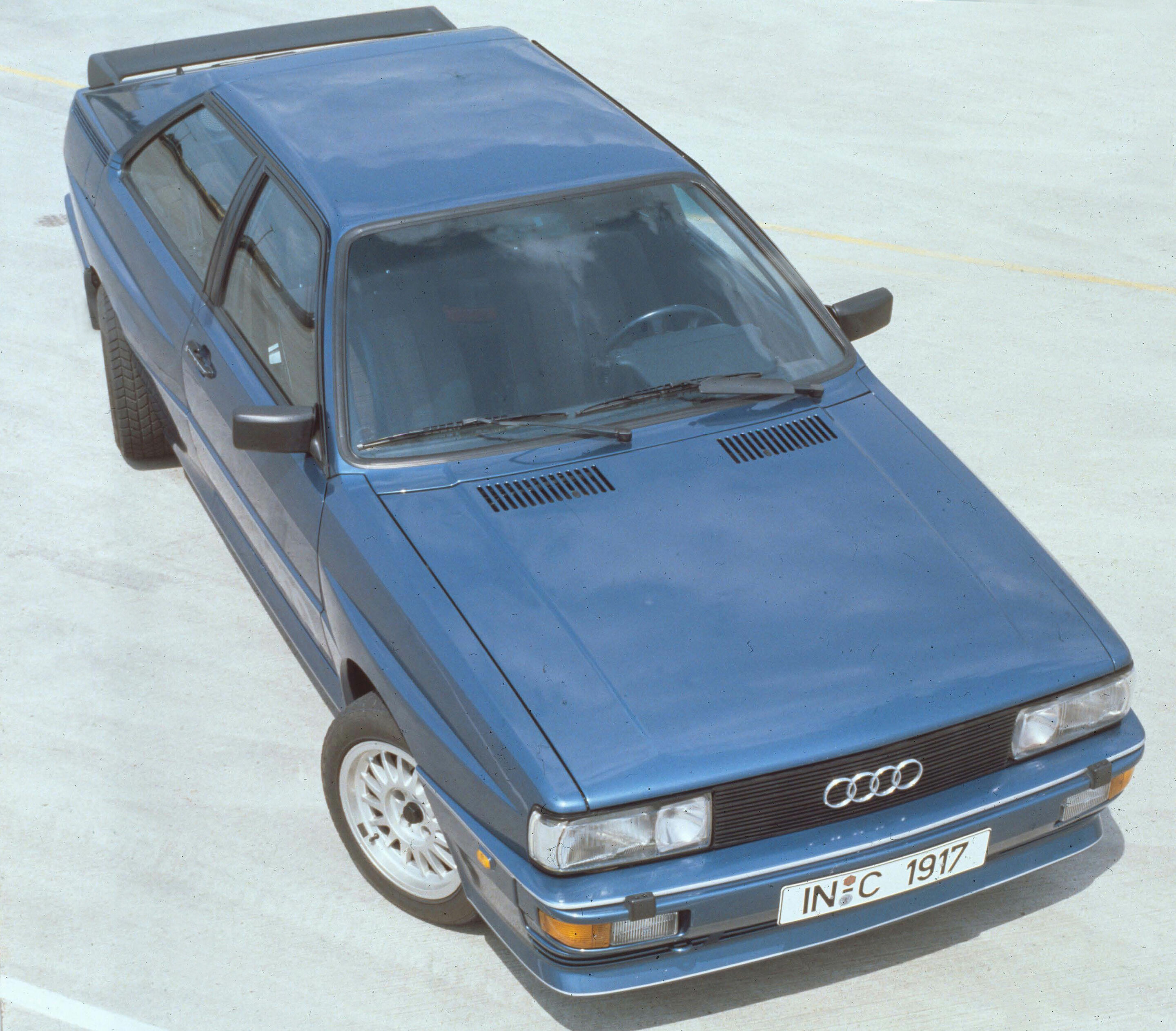
The fans have delivered their verdict, and the winner is – the Audi quattro. With more than fifteen thousand “Likes”, Facebook users chose eleven cars for display in the new special exhibition “I like it” to be held in the Audi museum mobile. Most votes went to the 1984 Audi quattro with four-wheel steering, with the A1 clubsport quattro and Audi TT clubsport quattro joining the winner on the podium in second and third places.
“The Audi quattro has a lot of friends all over the world!” says Thomas Frank, Head of Audi Tradition. “The fans have confirmed our experience over a number of years. No other car represents our ‘Vorsprung durch Technik’ claim more effectively than the Audi quattro. It’s no surprise to find that the Facebook community has awarded its gold medal to the Audi quattro.” Audi’s Technical Development department used this quattro with four-wheel steering for experimental work. The fans’ silver medal went to the A1 clubsport quattro. Audi first displayed this unique car on the 2011 Wörthersee Tour. Its “older brother”, the Audi TT clubsport quattro, was developed from the 2007 show car, and as bronze medallist has also been selected for the exhibition. The remaining cars in this “hit parade”: the Audi A1 Hot Rod, the Q5 Custom Concept, the Audi Fox Wagon, the DKW Meisterklasse Universal Type F 89 S, the Audi Front 225 roadster, the Audi RS2 Avant, the R8 Spyder “Iron Man 2” and the Q7 Pickup.
Audi presents GT4 concept
Audi TT for club sport Demo laps by Frank Biela at the DTM in Shanghai Asia is an important market
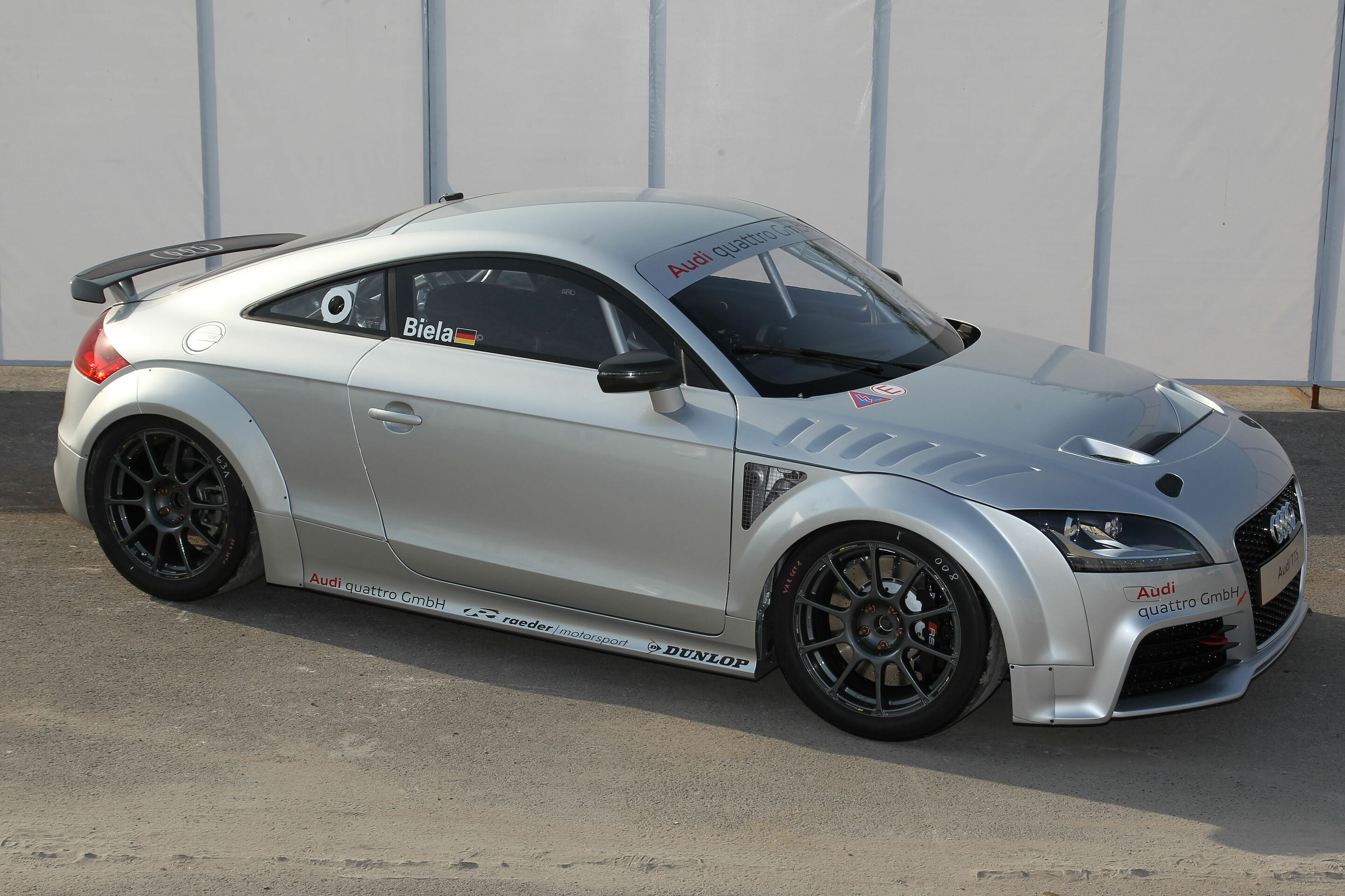
On the occasion of the DTM race in Shanghai, Audi presented the concept of a GT4 car based on the Audi TT. The TT, developed by the Technical Development and the Production divisions plus quattro GmbH, is intended to extend Audi’s new modular customer sport program from 2012 forward.
With the production-based TT GT4, Audi wants to offer potential customers a base option for affordable motorsport. The vehicle’s platform is a motorsport body with a roll-over cage, a safety-optimized fuel tank box and further modifications which will be identical for all future customer sport versions. The Audi TT is equipped with a TFSI engine delivering about 250 kW (340 hp). The front apron, rear apron and the rear wing stem from the production Audi TT RS. The hood, doors and trunk lid are made of CFRP and the windows of plastic. The TT is fitted with a S-tronic transmission with a differential lock, a modified production suspension with adjustable dampers, plus 9.5 x 18 inch light alloy wheels. The Audi TT GT4 is planned to sell for about 120,000 euros. Audi is not only targeting Europe but also the Asian market. On the occasion of the DTM race in Shanghai the Audi TT is being launched in the Chinese market as well. The five-time Le Mans winner Frank Biela did some demo laps in the new Audi TT on the street circuit in Shanghai. Other cars that could be seen in action in Shanghai as well were the SP4T version of the TT RS and the Audi R8 LMS.
Images for your search
Audi TT clubsport quattro
Audi TT clubsport turbo concept
Ten years of Audi Sport customer racing
Six models for top-class customer motorsport More than 50 championship titles worldwide Numerous synergies due to close affiliation within the Group
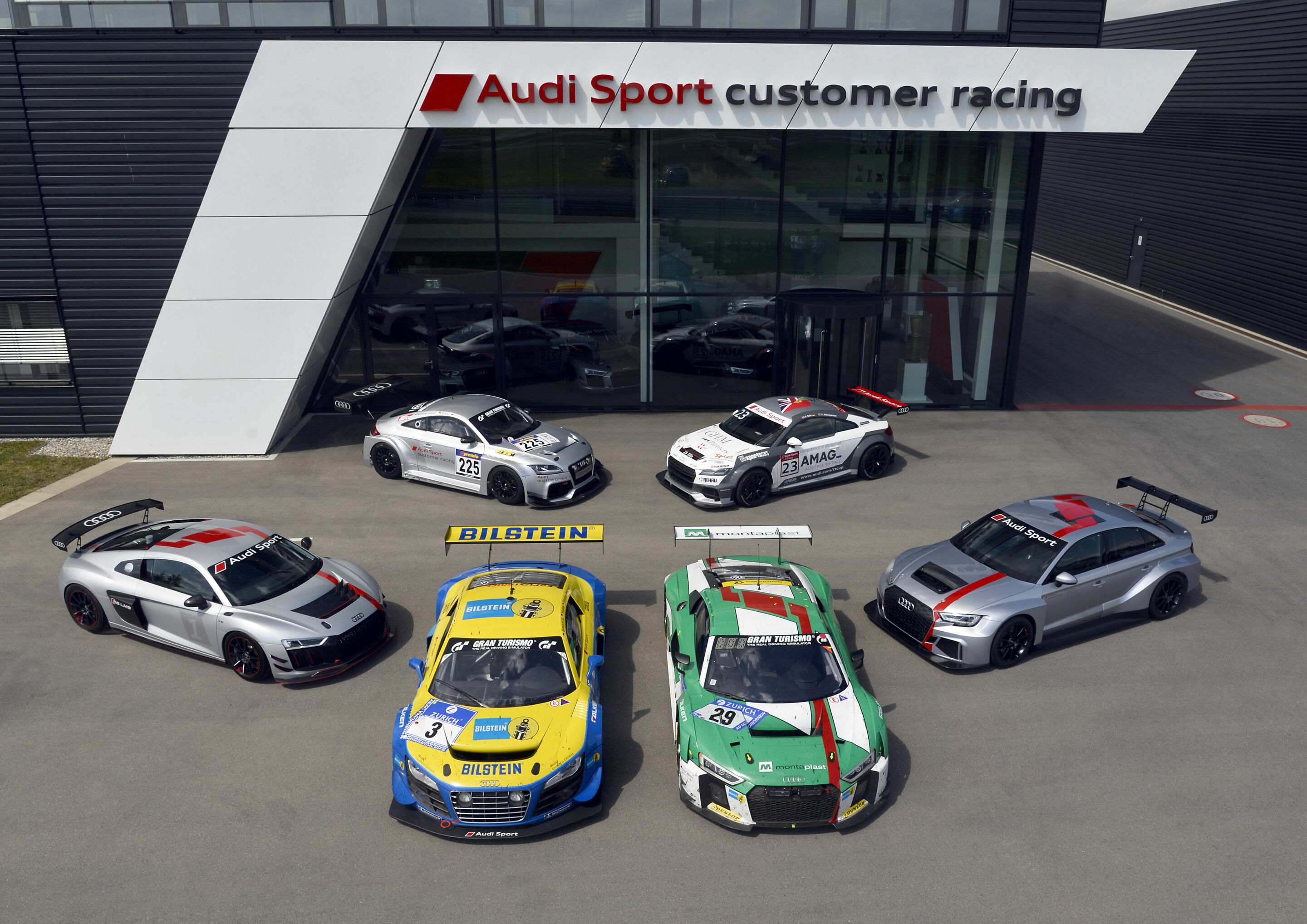
Audi Sport customer racing is celebrating its tenth anniversary. Following the presentation of the first generation of the Audi R8 LMS in 2008, the first customers relied on the GT3 sports car the following season – and immediately clinched three driver championship titles. To date, the number of these successes has increased to 52 around the world, plus other class titles have been won and victories scored in 12-, 24- and even 25-hour races. Audi Sport customer racing has by now built 531 race cars for international customers.
“Audi Sport customer racing today is experiencing the largest model offensive in its history,” says Michael-Julius Renz, Managing Director of Audi Sport GmbH. “In 2018 we’re aiming for our fifth overall victory in the world’s biggest endurance race, the 24 Hours of Nürburgring. The race is under the banner of our anniversary which we’re celebrating with the customers, fans and friends of our company.” 33 race cars from the current model range are deployed to three classes at the Nürburgring. While the GT3 version of the Audi R8 LMS is battling for overall victory, the Audi R8 LMS GT4 and the Audi RS 3 LMS are competing for class wins. At the same time, the Audi Sport R8 LMS Cup entrants are relying on both versions of the Audi R8 LMS, whereas seven Audi RS 3 LMS cars will be on the WTCR – FIA World Touring Car Cup grid. The first two overall victories in the iconic endurance race at the Nürburgring in 2012 and 2014 were achieved by the first generation of the Audi R8 LMS that won the 24-hour race at Spa in 2011, 2012 and 2014 as well. During its seven-year model cycle, 137 race cars were built for the Asian, Australian, European, North and South American markets. The race car is still popular and successful in classes for cars of older generations such as those in Australian club sport.
Ten Audi R8 LMS in the ADAC GT Masters
Audi with the most customer teams in Europe’s strongest national series Title-defender Montaplast by Land-Motorsport competes with two Audi cars Audi R8 LMS also in other European national series
Audi remains the brand with the highest number of cars entered in probably the strongest national GT3 racing series in Europe. On April 28–30, ten Audi R8 LMS start contesting the eleventh season of the ADAC GT Masters. The cars are spread between six Audi customer teams, three of which are present for the first time in this series. The customer teams and their drivers are supported by six Audi Sport drivers.
Audi has already celebrated the overall victory in the ADAC GT Masters three times: Christian Abt in 2009, René Rast/Kelvin van der Linde in 2014 and Connor De Phillippi/Christopher Mies in 2016. The two champions from last year will be looking to defend their title with team Montaplast by Land-Motorsport. Their team mate Jeffrey Schmidt will share a cockpit with Christopher Haase. In 2007, Haase wrote history as the first ADAC GT Masters champion. In the South African Kelvin van der Linde from the Aust Motorsport team, another former title-holder will be in action in an Audi R8 LMS. Furthermore, Frank Aust’s team will provide a cockpit for a rising star from the Audi Sport TT Cup. Dennis Marschall is the 2016 runner-up from the Audi one-make cup. Yaco Racing, as another Audi customer team, has already proven that it is capable of victories with two race triumphs in the ADAC GT Masters. Three more teams will be relying on the Audi R8 LMS for the first time in this year’s ADAC GT3 racing series. The Audi Sport racing academy is giving a chance to the junior duo Mikaela Åhlin-Kottulinsky/Ricardo Feller, and is counting on Elia Erhart/Christopher Höher in the second car. The team BWT Mücke Motorsport has, among others, Markus Winkelhock and Frank Stippler in the cockpit – two established Audi Sport drivers who have already celebrated many endurance race victories.
Season opener with 13 race cars from Audi Sport customer racing
24 Hours of Dubai to kick off the season for Audi on January 12/13 Five Audi R8 LMS for GT3 and two for GT4 Six Audi RS 3 LMS in TCR category
Never before has Audi Sport customer racing’s representation in Dubai been as strong as this year. 13 of the 93 race cars in the field are sporting the four rings on their hoods. For the first time, the brand will be on the grid with all three current products in the GT3, GT4 and TCR classes.
“The 24 Hours of Dubai is an outstanding club sport event,” says Chris Reinke, Head of Audi Sport customer racing. “Amateurs share the cockpits with pros, are able to compete with them and have chances of clinching victories in class and overall.” In 2016, Belgian Audi Club Team WRT won this endurance race in the Audi R8 LMS and a year ago, Team Cadspeed Racing with Atech prevailed in the Gulf state with the Audi RS 3 LMS in the TCR class. This year, Audi Sport customer racing will be represented in the race with its three current products for the first time. Four teams are fielding the GT3 version of the Audi R8 LMS that is in contention for overall victory. Team MS7 by WRT is relying on Vincent Mosse’s seasoned and successful Belgian race team. Also on board will be the two Audi Sport campaigners Christopher Mies and Dries Vanthoor. Optimum Motorsport in position four of the overall classification was the best Audi customer team in Dubai a year ago. This year, Audi Sport campaigner Christopher Haase, winner of the 24 Hours of Spa, is augmenting the UK squad. Car Collection Motorsport is providing Audi’s largest lineup in the GT3 class once again. The German privateer driver team from Walluf clinched third place in the A6-Am classification the last two years and won both rookie titles in the 24H Series at the end of the year. In Dubai, Peter Schmidt’s team will again compete with two privateer driver lineups and receive support by Audi Sport campaigner Frank Stippler.
Audi Sport customer racing: Audi Sport first-class worldwide
Audi Sport customer racing has established a worldwide reputation in customer motorsport on four continents within the space of ten years. With premium quality in products and support Audi Sport’s customer racing department occupies an outstanding position in a tough competitive environment – in as many as four racing categories. In addition, Audi Sport customer racing in 2019 supports commitments in the Intercontinental GT Challenge, the FIA GT World Cup, in the WTCR – FIA World Touring Car Cup and at stand-alone events such as the Nürburgring 24 Hours. The four rings have been firmly established also in customer sport since 2009. Following Audi’s successes in rally racing, in touring car racing and in the sports prototype category, the brand started offering products specifically designed for customers a decade ago. During the first decade the company developed six different models. Everything began in GT3 racing with the Audi R8 LMS that was followed in 2015 by the second generation and is now starting to the 2019 season as an evolution. In 2011, the Audi TT RS that was particularly successful in endurance racing was the second model in the program. In 2015, the Audi TT cup car for one-make racing complemented the portfolio. For the 2017 season, a TCR race touring car – the Audi RS 3 LMS – was available for the first time. Since 2018, customers have been fielding the new Audi R8 LMS GT4 with great success. “We want to introduce one new product per year and in pursuing this model offensive specifically focus on growth categories,” says Chris Reinke, Head of Audi Sport customer racing. “As a result, Audi Sport has developed a clear profile in all key markets around the world. Due to the production volumes, we achieve the greatest synergies in manufacturing, sales and support.” In the world of Audi Sport customer racing, GT3 racing stands for globally visible, international competitions, as well as for national racing series and for club racing.
The Audi RS 3 LMS: First Audi for entry-level motorsport
In the new Audi RS 3 LMS, Audi, for the first time, offers its customers a cost-efficient factory-built entry-level race car. The touring car has been developed for the relatively young TCR category. With its massively flared fenders, low front splitter, large vent on the hood and top-mounted rear wing, the Audi RS 3 LMS is reminiscent of a DTM race car shortly after the turn of the millennium – albeit being much more akin to the production model. The steel body has been adopted from the production version nearly unchanged. For use in racing, the body produced at the Győr plant was only made lighter, reinforced in some areas, and provided with a steel-tube safety cage for maximum protection of the driver. The four-cylinder TFSI engine stems from the production version nearly unchanged too. In the TCR version, the unit delivers 243 kW (330 hp). The Audi RS 3 LMS accelerates from 0 to 100 km/h in about 4.5 seconds and achieves a top speed of about 240 km/h. As stipulated by the regulations, the car has front-wheel drive. Installed at the front are McPherson struts. At the rear, the Audi RS 3 LMS uses a multilink suspension. Ride height, toe and camber are infinitely variable. The front and rear stabilizers are three-way adjustable. The sequential six-speed racing transmission of the Audi RS 3 LMS has a proven track record in other race cars of the Group, as does the multi-plate limited slip differential. To keep costs low, driving aids are prohibited in the TCR category. That is why the Audi RS 3 LMS neither uses an anti-lock braking system (ABS) nor traction control (ASR) or an active differential. In the development project, Audi attached particular importance to safety, in terms of which the Audi RS 3 LMS sets new standards. The extensive safety package includes an FIA-conformant safety fuel tank, a safety cell for racing, the PS3 safety seat, FIA safety nets on both sides of the seat and a rescue hatch in the roof like the one used in the Audi R8 LMS.
The Audi RS 3 LMS: First Audi for entry-level motorsport
In the new Audi RS 3 LMS, Audi, for the first time, offers its customers a cost-efficient factory-built entry-level race car. The touring car has been developed for the relatively young TCR category. With its massively flared fenders, low front splitter, large vent on the hood and top-mounted rear wing, the Audi RS 3 LMS is reminiscent of a DTM race car shortly after the turn of the millennium – albeit being much more akin to the production model. The steel body has been adopted from the production version nearly unchanged. For use in racing, the body produced at the Győr plant was only made lighter, reinforced in some areas, and provided with a steel-tube safety cage for maximum protection of the driver. The four-cylinder two-liter TFSI engine stems from the production version nearly unchanged too. In the TCR version, the unit delivers up to 257 kW (350 HP). The Audi RS 3 LMS accelerates from 0 to 100 km/h in about 4.5 seconds and achieves a top speed of up to 265 km/h. As stipulated by the regulations, the car has front-wheel drive. Installed at the front are McPherson struts. At the rear, the Audi RS 3 LMS uses a multilink suspension. Ride height, toe and camber are infinitely variable. The front and rear stabilizers are three-way adjustable. The sequential six-speed racing transmission of the Audi RS 3 LMS has a proven track record in other race cars of the Group, as does the multi-plate limited slip differential. To keep costs low, driving aids are prohibited in the TCR category. That is why the Audi RS 3 LMS neither uses an anti-lock braking system (ABS) nor traction control (ASR) or an active differential. In the development process, Audi attached particular importance to safety, in terms of which the Audi RS 3 LMS sets new standards.