Search
All search results for "Audi RS 5"
(1010)
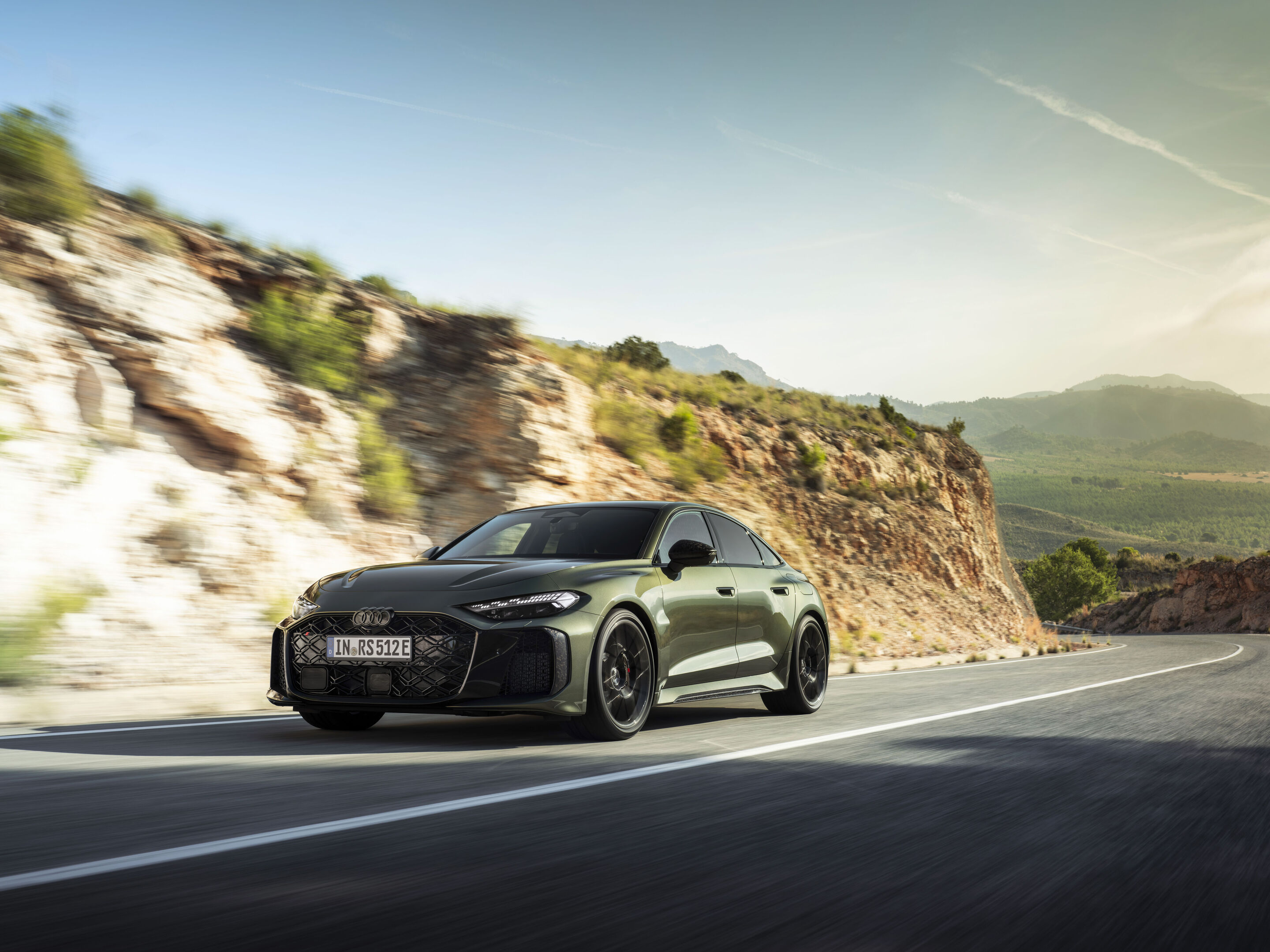
Audi RS 5 Sedan
The new Audi RS 5 Sedan impresses with sporty elegance and electrifying power. Its coupé-like profile and dynamic contours give it a striking presence. The combination of a 2.9-liter V6 twin turbo engine and a powerful electric motor makes the high-performance plug-in hybrid the perfect companion – both for enduring performance and for comfortable, electric everyday driving. The rear transaxle, featuring the world-first large-scale introduction of electro-mechanical torque vectoring, guarantees a sublime driving experience.
Images
Videos
Engine type V6 engine
Displacement in cc / bore x stroke in mm / compression 2894 / 84.5 x 86.0 / 10.9
Max. power output in kW (PS) / at rpm 375 (510) / 6300 – 6800
Max. torque in Nm (lb-ft) / at rpm 600 (442.5) / 2000 – 5000
Top speed / electrical in km/h (mph) 250 (155.3) / 140 (87.0)
System acceleration, 0-100 km/h (0-62.1 mph) 3.6
Electrical range, City (EAER) in km (mi) 82 – 87 (51.0 – 54.1) (preliminary values)
Electrical range, combined (EAER) in km (mi) 78 – 84 (48.5 – 52.2) (preliminary values)
Fuel consumption, weighted combined in l/100 km (US mpg) 4.3 – 3.8
Electric power consumption, weighted combined in kWh/100 km (62.1 mi) 18.4 – 17.7
CO2 emissions, weighted combined, in g/km (g/mi) 98 – 86
CO2 class, weighted combined C – B
Fuel consumption with discharged battery, combined, in l/100 km (US mpg) 10.0 – 9.5 (23.5 – 24.8)
CO2 class with discharged battery G
Unladen weight without driver / with driver / gross weight limit in kg (lb) 2355 / 2430 / 2905 (5191.9 / 5357.2 / 6404.4)
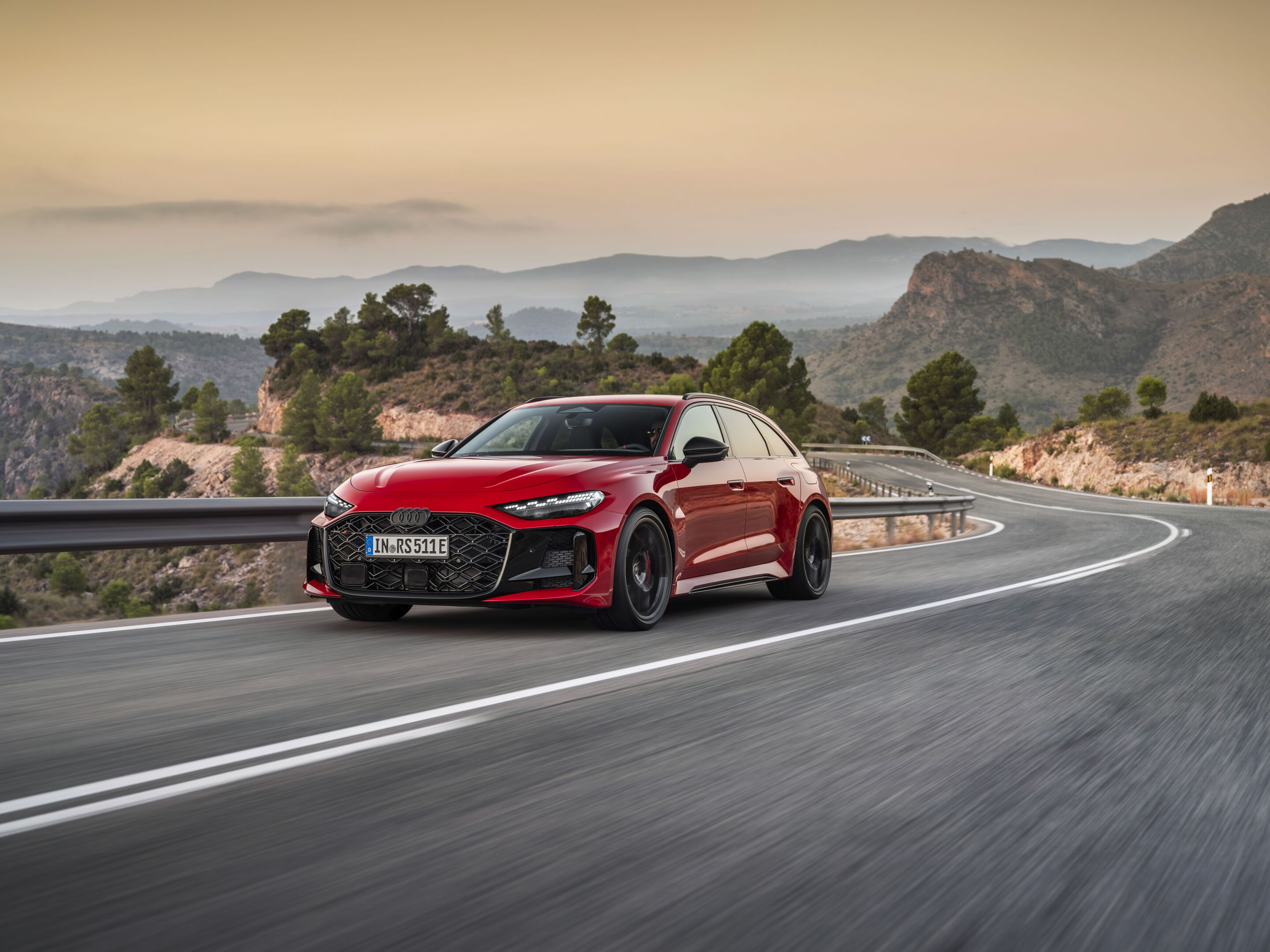
Audi RS 5 Avant
The new Audi RS 5 Avant delivers an exceptionally sporty driving experience combined with maximum everyday usability. Along with its RS qualities, this high-performance plug-in hybrid offers generous space and exclusive equipment options. The powerful 2.9-liter V6 twin turbo engine and strong electric motor enable both enduring performance on long journeys as well as smooth, electric city driving. The rear transaxle, featuring the world-first large-scale introduction of electro-mechanical torque vectoring, takes handling to a new level.
Images
Videos
Engine type V6 engine
Displacement in cc / bore x stroke in mm / compression 2894 / 84.5 x 86.0 / 10.9
Max. power output in kW (PS) / at rpm 375 (510) / 6300 – 6800
Max. torque in Nm (lb-ft) / at rpm 600 (442.5) / 2000 – 5000
Top speed / electrical in km/h (mph) 250 (155.3) / 140 (87.0)
System acceleration, 0-100 km/h (0-62.1 mph) 3.6
Electrical range, City (EAER) in km (mi) 81 – 86 (50.3 – 53.4) (preliminary values)
Electrical range, combined (EAER) in km (mi) 75 – 83 (46.6 – 51.6) (preliminary values)
Fuel consumption, weighted combined in l/100 km (US mpg) 4.4 – 3.9 (53.5 – 60.3)
Electric power consumption, weighted combined in kWh/100 km (62.1 mi) 18.6 – 17.8
CO2 emissions, weighted combined, in g/km (g/mi) 100 – 88 (160.9 – 141.6)
CO2 class, weighted combined C – B
Fuel consumption with discharged battery, combined, in l/100 km (US mpg) 10.1 – 9.6 (23.3 – 24.5)
CO2 class with discharged battery G (preliminary values)
Unladen weight without driver / with driver / gross weight limit in kg (lb) 2370 / 2445 / 2925 (5225.0 / 5390.3 / 6448.5)
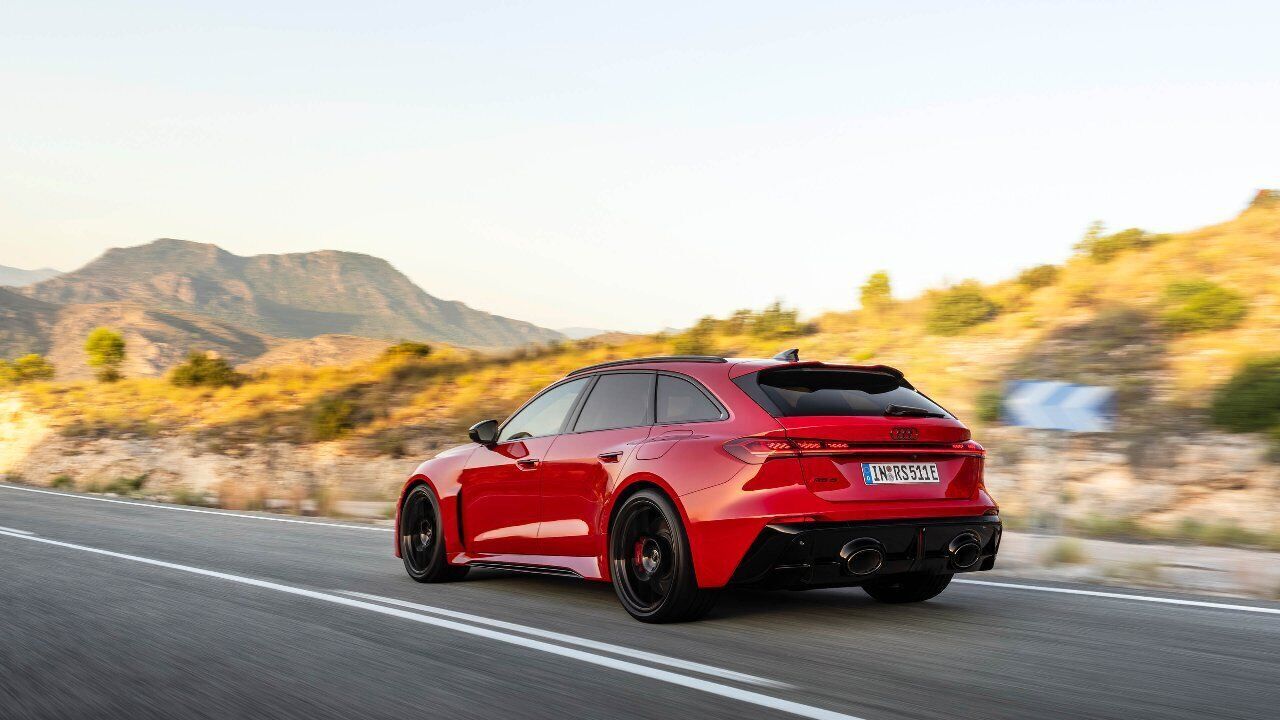
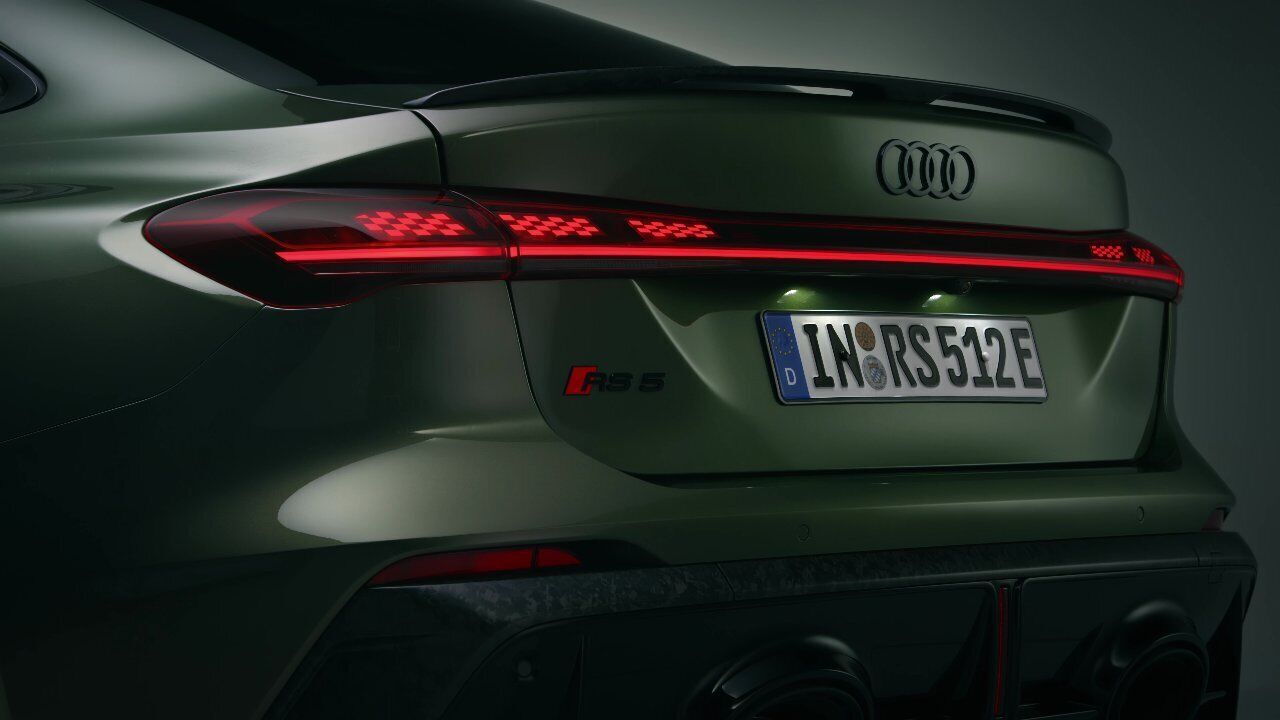
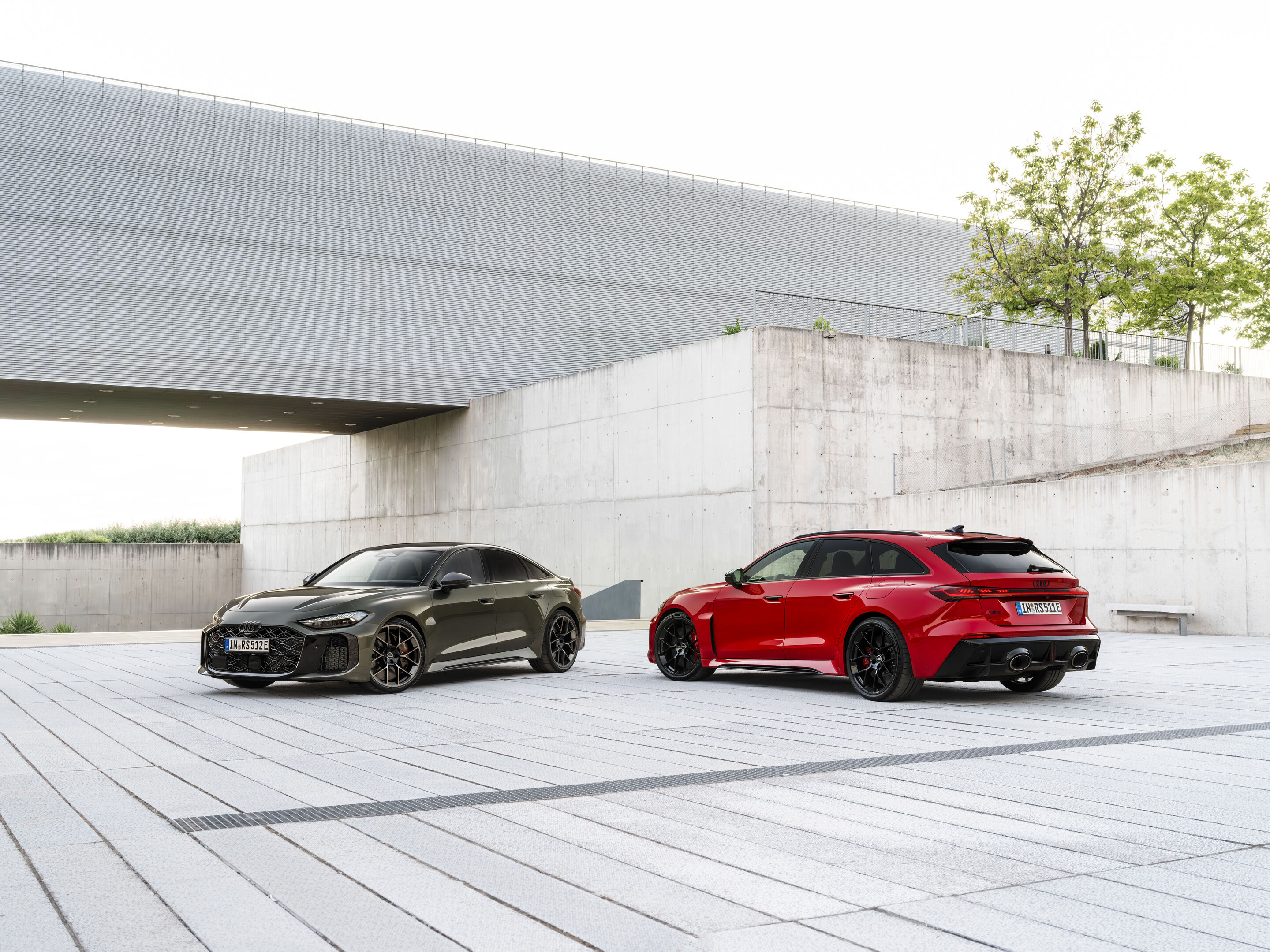
Audi Sport’s first-ever high-performance plug-in hybrid: 470 kW (639 PS) of system output, optional top speed of 285 km/h, and day-to-day driving more than 80 km on electric power alone in the city World-first quattro with Dynamic Torque Control in the rear transaxle brings handling to a new level Unmistakably RS: wider body work, darkened Matrix LED headlights, RS sport exhaust system and bold interior details
The new Audi RS 5 is Audi Sport’s first high-performance plug-in hybrid (PHEV) – with real RS DNA and the highly-tuned hybrid-technology to match. Whether carving canyons, running highway marathons, or gliding through town on electric power – the RS 5 masters any situation with agility and impressive precision. It covers an extremely wide spread of driving dynamics – from comfortable every-day companion to potent performer. For the first time at Audi Sport, the powertrain pairs a 2.9-liter twin-turbo V6 outputting 375 kW (510 PS) and a 130 kW electric motor. They are joined by bespoke RS sport suspension with twin-valve shock absorbers and a completely new quattro drivetrain with Dynamic Torque Control, enabling electromechanical torque vectoring at the rear as a world first.
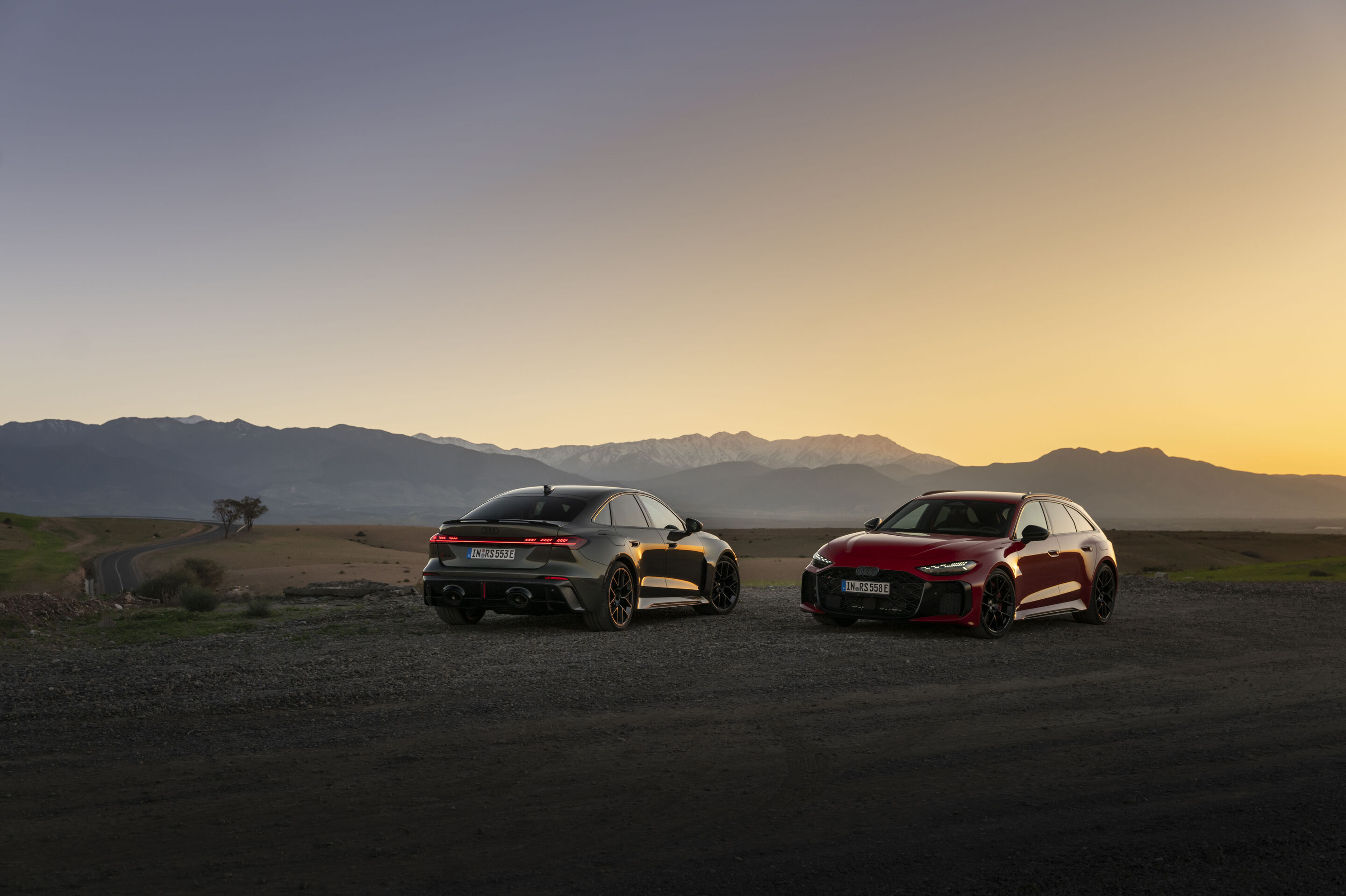
Following a successful world premiere, the Audi RS 5 has now shown off its dynamic driving in real-world conditions during its first drive in Morocco. On the Circuit de Marrakech and the winding roads of the Atlas Mountains, the first high-performance plug-in hybrid from Audi Sport showed what it’s made of: uncompromising performance, precision, and electrified athleticism that breaks the mold.
As the sun rises over the red clay walls of Marrakesh and the morning air is still cool above the asphalt, the city awakens with all its characteristic features: the vibrant hum of voices in the markets, the scent of exotic spices, and the labyrinthine alleyways of the old town. Just a few miles away, the expansive Atlas Mountains dominate the landscape – barren valleys, snow-capped peaks, and long switchback roads snaking up into the mountains. This is the setting for the new Audi RS 5 to unleash its full potential: uncompromising athleticism and precise cornering paired with genuine everyday usability. The Audi RS 5 on the track The Circuit de Marrakech was turned into a challenging course that put the RS 5 through its paces. Tight curves, slalom sections, and designated drift zones presented real and demanding driving conditions – with a clear focus on agility, precision, and cornering performance. Straight off the starting line, the RS 5 demonstrates how precisely and directly it responds to steering inputs. The torque distribution continuously adapts to the driving situation and enables nimble turns as well as a stable line at higher speeds. Even with rapid load changes, the vehicle remains poised, under control, and superbly balanced thanks to its brand-new quattro drivetrain with Dynamic Torque Control. This enables electromechanical torque vectoring at the rear axle and transfers torque between the wheels with lightning speed and precision, resulting in agile steering, maximum stability, and controlled acceleration even out of the tightest bends.
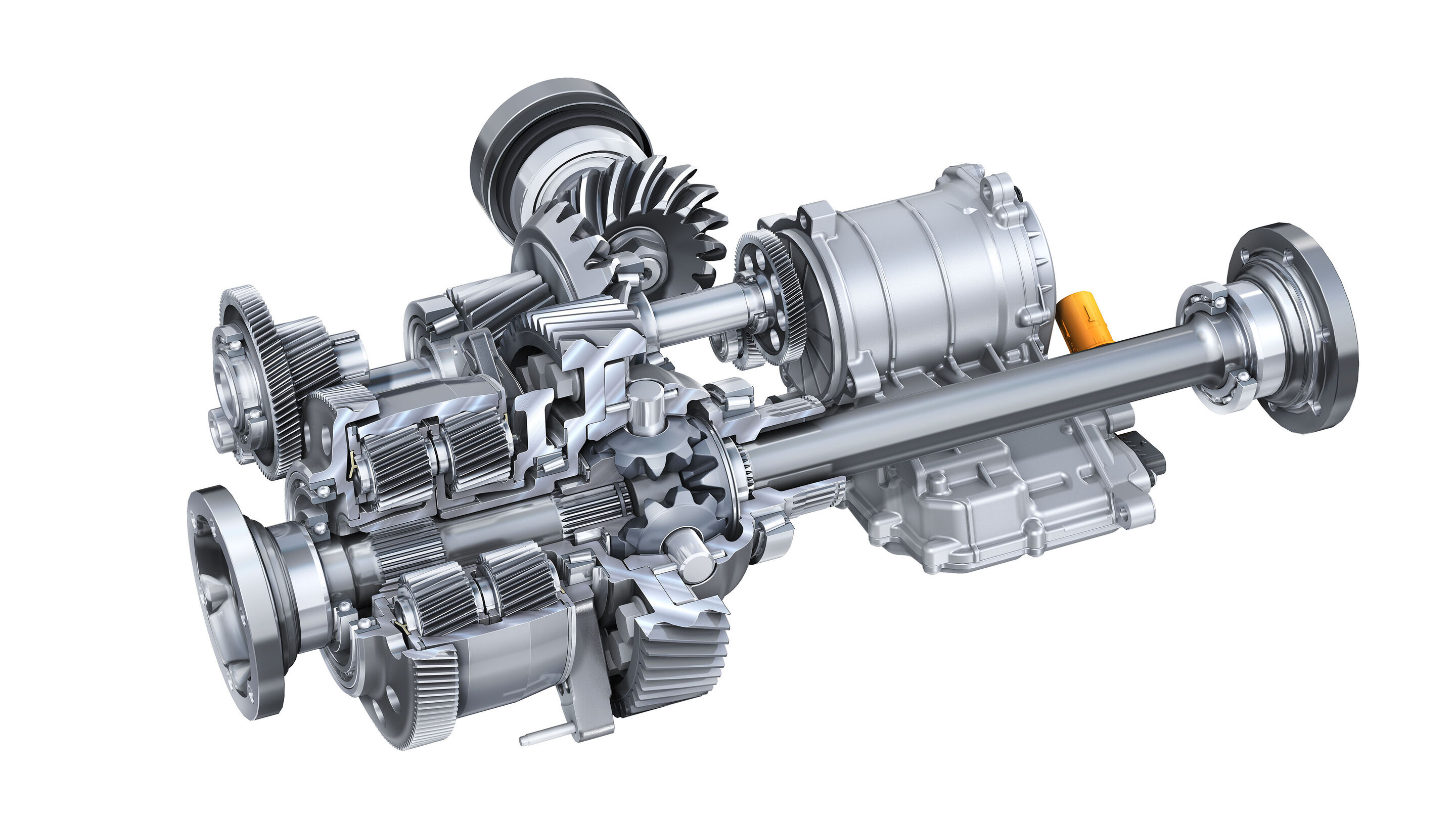 The new Audi RS 5: the first performance hybrid provides top driving dynamics
World first in a production model: quattro with Dynamic Torque Control enables electromechanical torque vectoring in the rear transaxle Handling on a new level: electromechanical torque vectoring promises maximum agility, stability, and traction and increases control and manageability, even at the limits of dynamic driving Intelligent function architecture: performance-oriented positioning of the function modules enables all components to work together
The new Audi RS 5 is powered by a modular high-performance plug-in hybrid system. A brand-new rear transaxle with electromechanical torque vectoring gives it superb driving dynamics. We call it quattro with Dynamic Torque Control. This world-first technology is an invisible maestro conducting the transverse torque distribution, shifting torque between the wheels in milliseconds for agile and controlled driving right up to the limit. Brake, turn in, back on the gas just after the apex of the curve: electromechanical torque vectoring in the new Audi RS 5 is at its best during sporty driving. It takes just 15 milliseconds – around a tenth of the blink of an eye – for the brand-new system to react precisely to any driving situation.
What is electromechanical torque vectoring? For the first time ever, quattro with Dynamic Torque Control enables electromechanical torque vectoring at the RS 5’s new rear axle. The system can deploy torque differences between the rear wheels regardless of the power applied. It operates accurately and reliably, both on and off throttle as well as under braking, to offer maximum agility, stability, and traction for handling on a new level. How does electromechanical torque vectoring work? Audi has designed a brand-new rear axle for the hybrid drive in the RS 5. Electromechanical torque vectoring in the rear transaxle comprises a water-cooled permanent-magnet 400-volt electric motor as a high-voltage actuator with an output of 8 kW and 40 Nm.
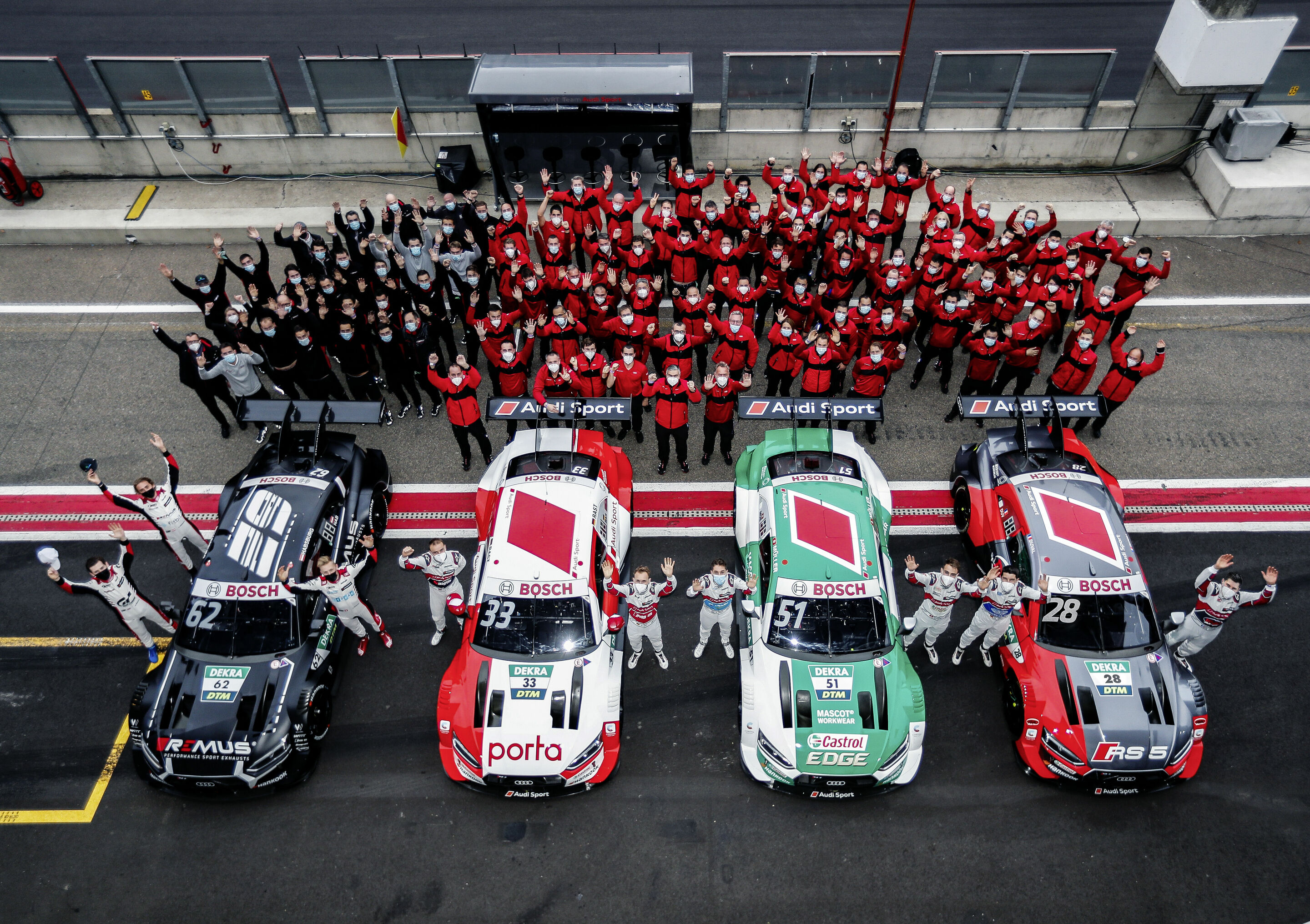 Farewell: Audi RS 5 DTM breaks numerous records
28 victories, 95 podiums and six DTM championship titles in just two years Audi RS 5 DTM dominates the Class 1 era with its TFSI technology Specific consumption under full load improved by around ten percent
28 victories, 95 podiums, 29 pole positions, 28 fastest race laps and all six championship titles: The Audi RS 5 DTM, which completed its last race at the Hockenheimring last Sunday, has set numerous records in just two years. Thanks in part to its efficiency, it is one of the most successful race cars in the history of the DTM, which will be staged with GT3 cars from 2021.
Due to the corona pandemic, 2020 was the most compact DTM season ever: There were only 100 days between the season opener at Spa and the finale at Hockenheim. In only 50 days and already six races before the end of the season, Audi won the manufacturers’ title – a record, possibly for eternity. With more than 610 hp, the four-cylinder turbo of the Audi RS 5 DTM was not only the most powerful engine in the company’s DTM history, but also the most efficient. Thanks to the combination of turbocharging with gasoline direct injection (TFSI), which is also widely used in series production at Audi, the specific consumption in the speed range under full load was improved by around ten percent compared to the old V8 engine, thus significantly reducing fuel consumption and CO2 emissions. Rarely before has a racing car in the DTM been as superior as the Class 1 version of the Audi RS 5 DTM. Audi won 28 of 36 races in 2019 and 2020. The Audi drivers achieved 95 out of 108 possible podiums in the two years of racing. Added to this are 29 pole positions, 28 fastest race laps and all six of the championship titles in the drivers’, manufacturers’ and teams’ classifications. The record advantage of 582 points in the 2019 season was followed by another record in the manufacturers’ championship in 2020 with a lead of 753 points.
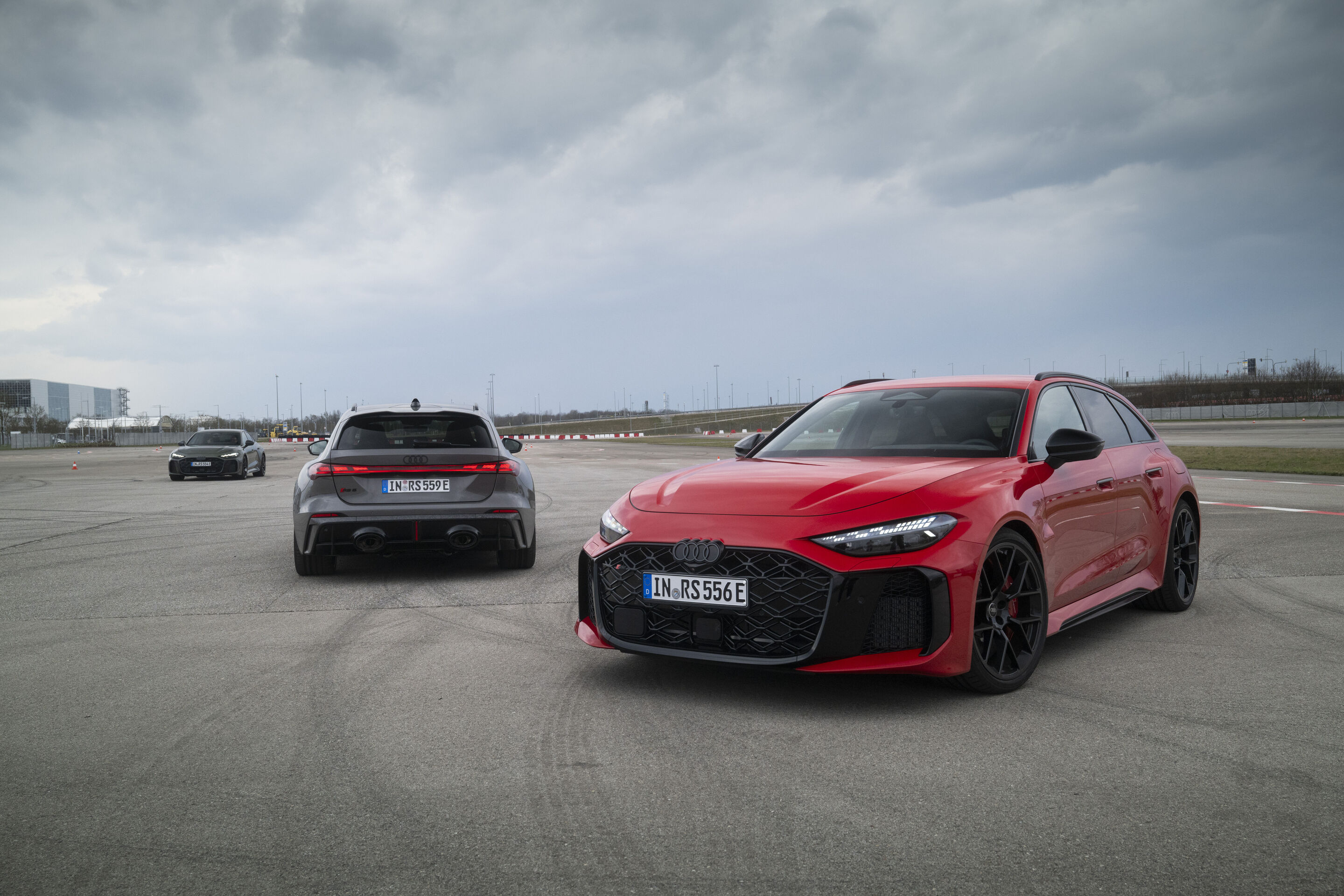
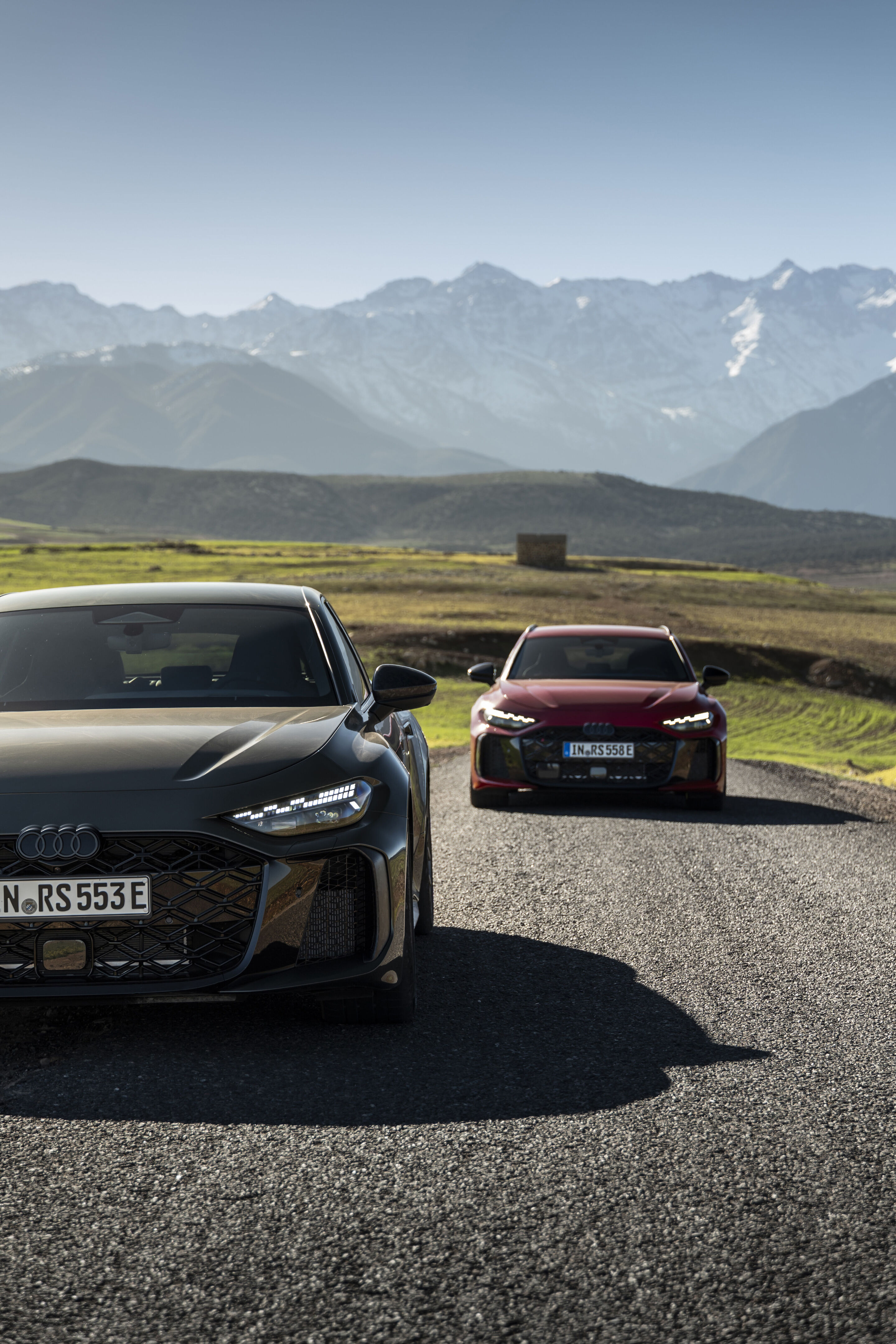
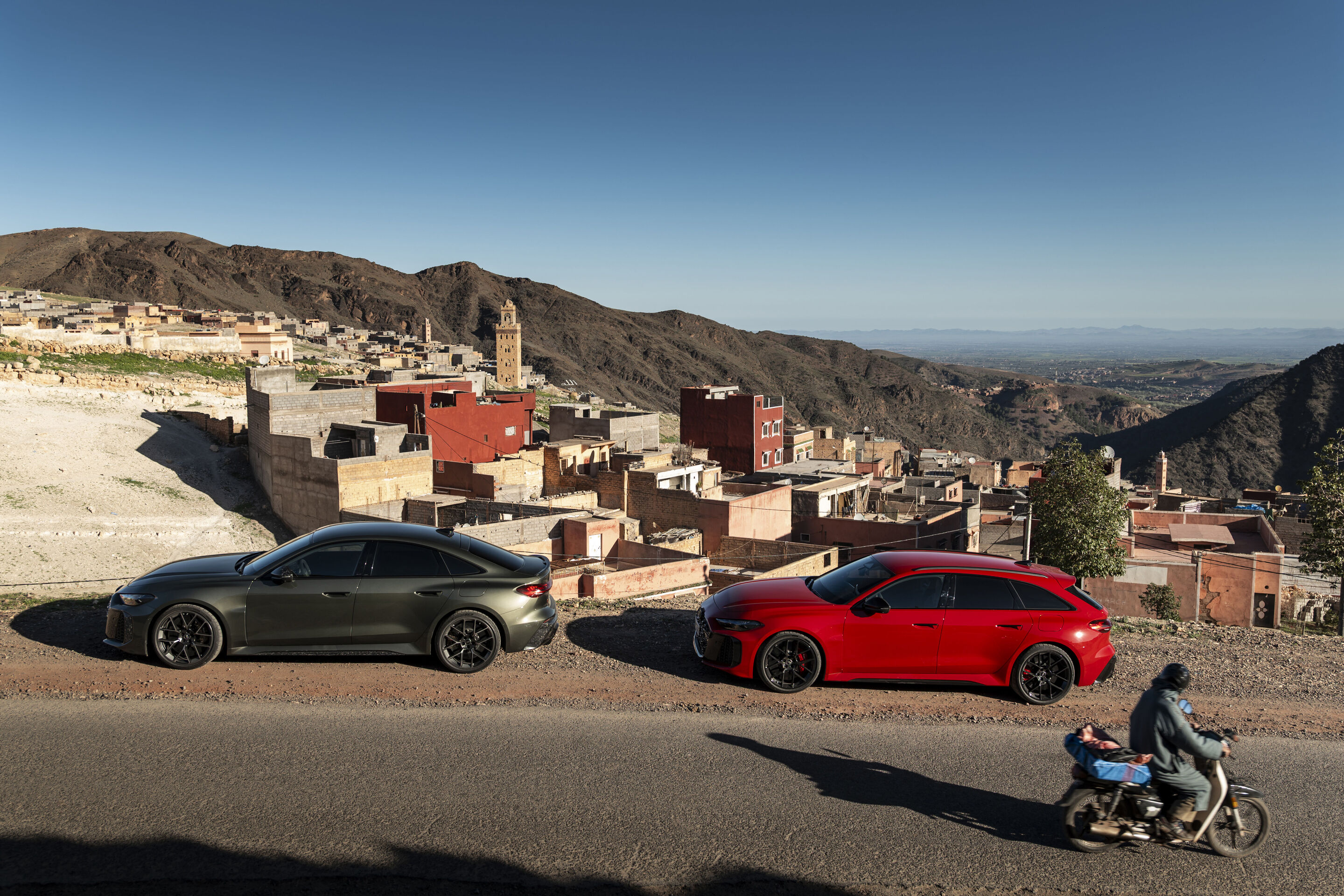
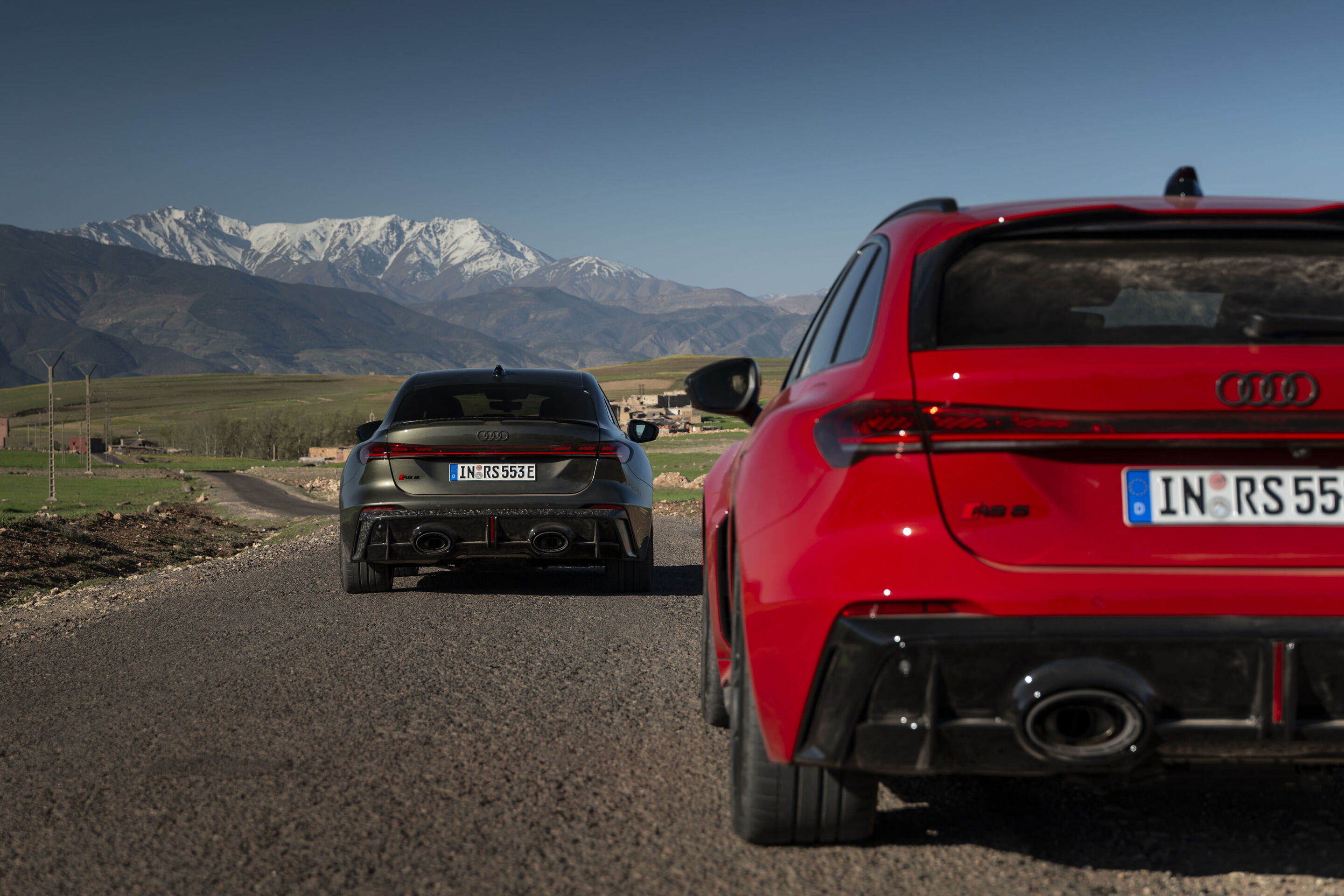
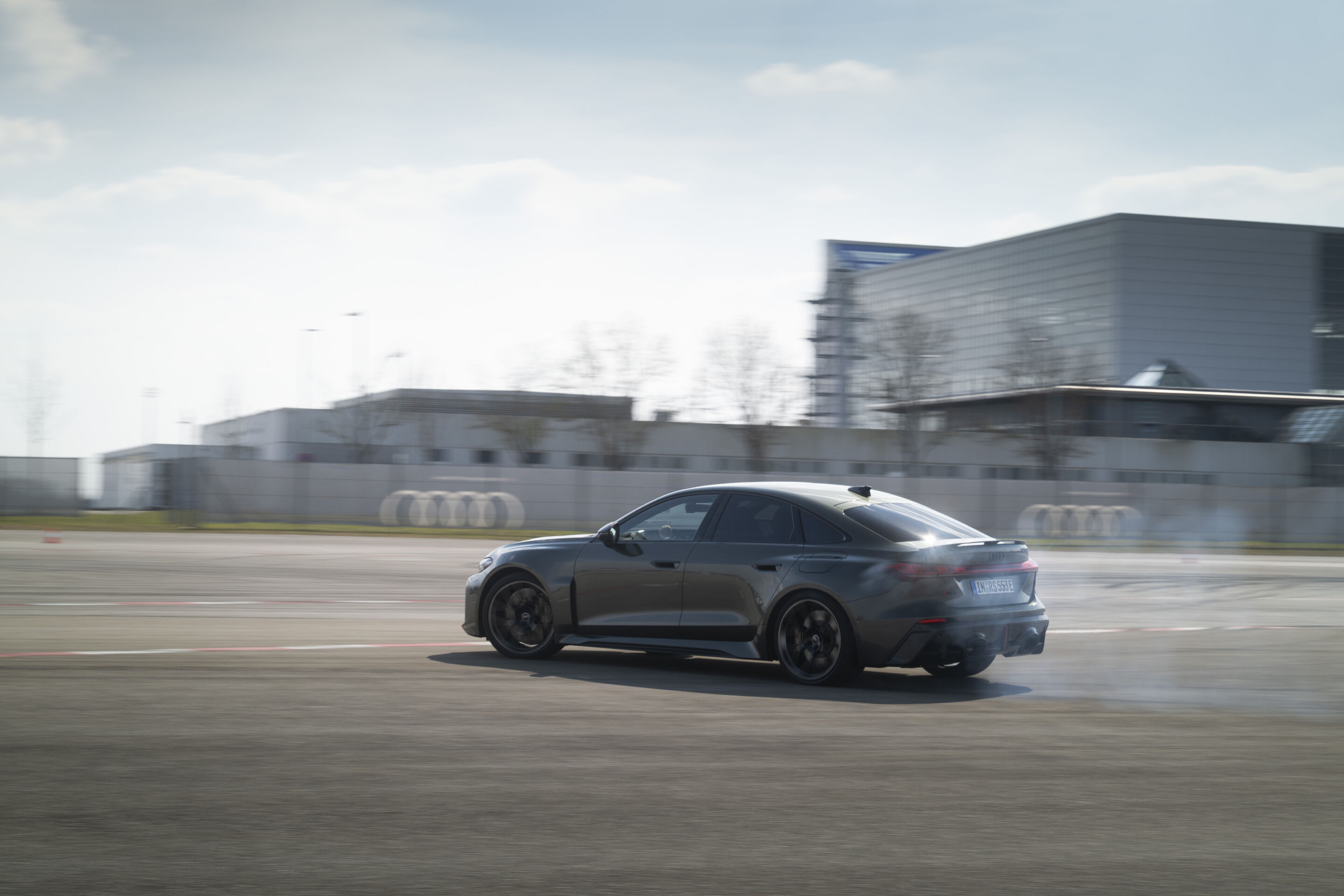

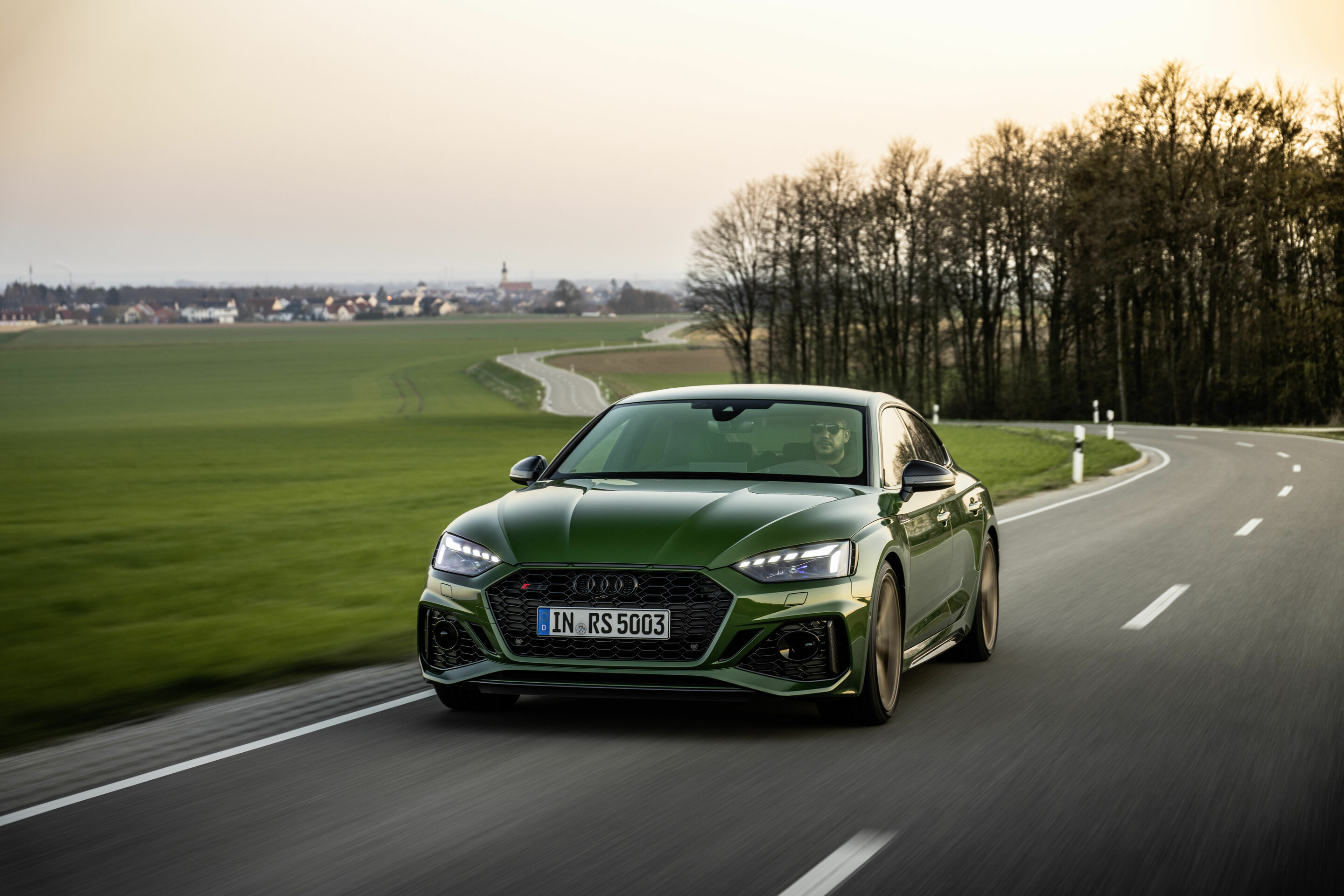
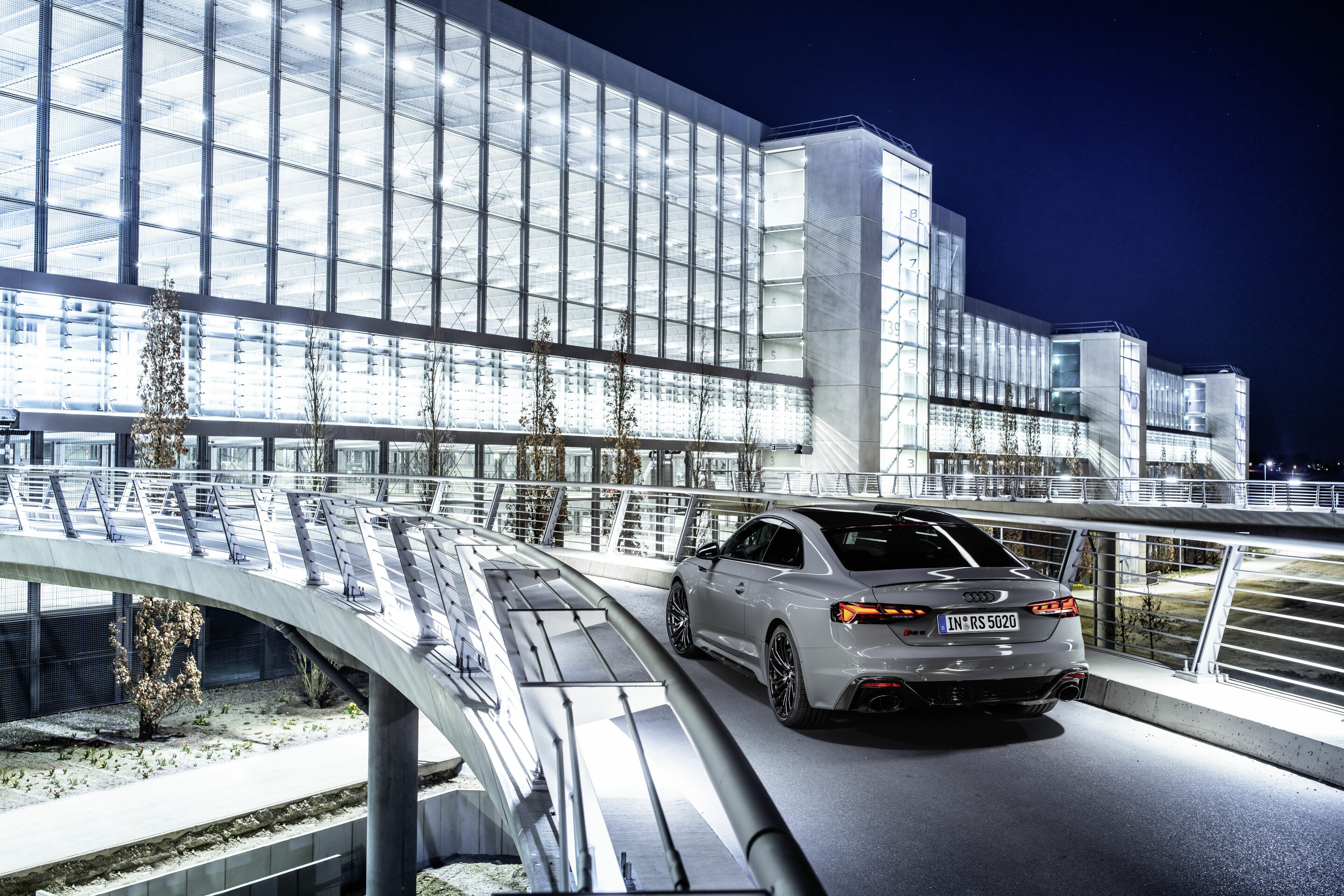
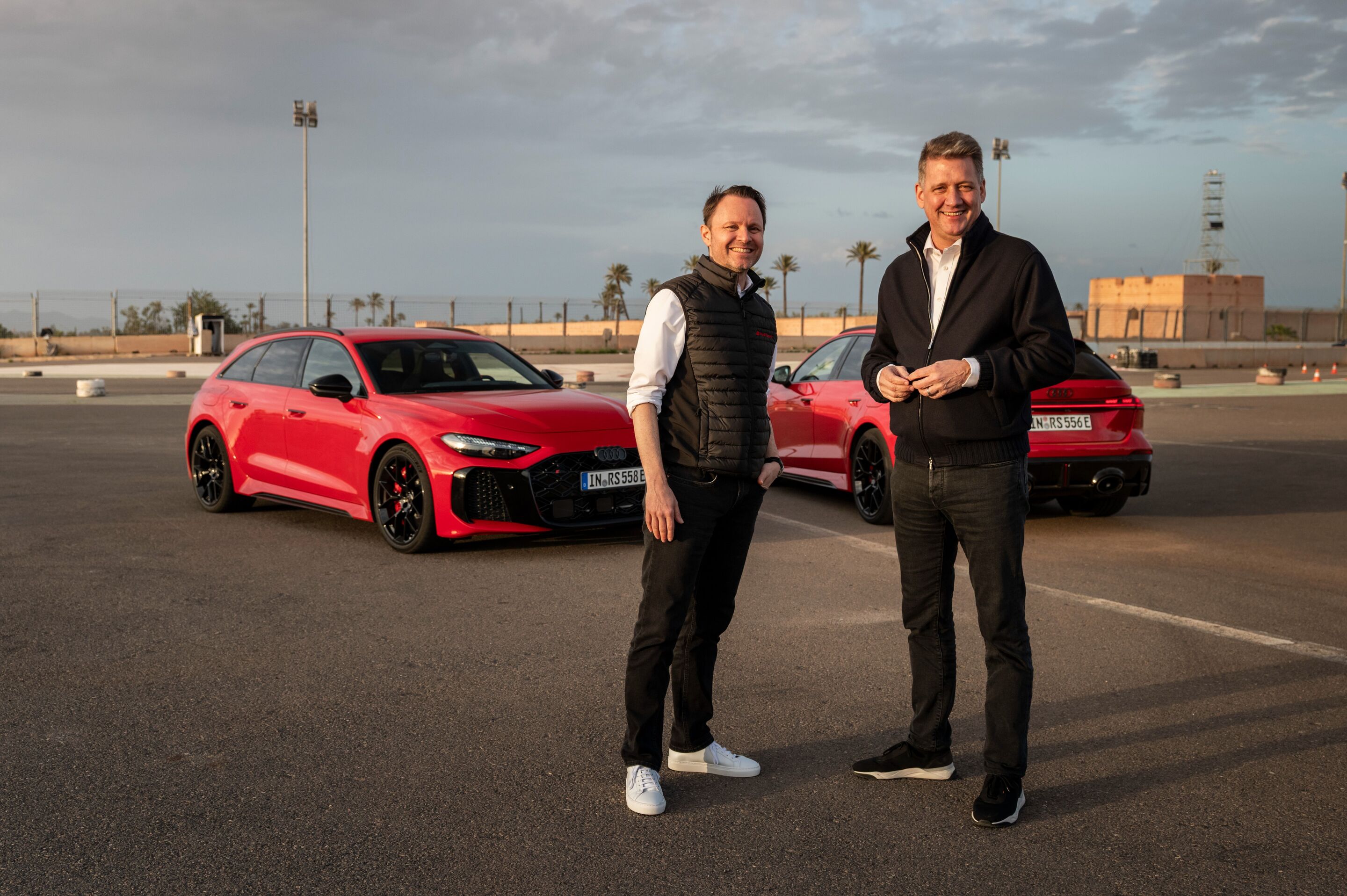
The new Audi RS 5 is Audi Sport’s first high-performance plug-in hybrid (PHEV) – with real RS DNA and the highly tuned hybrid technology to match. This sports car marks a bold new direction for Audi, pairing maximum performance with remarkable efficiency. For the first time at Audi Sport, the powertrain pairs a 2.9-liter twin-turbo V6 outputting 375 kW (510 PS) and a 130-kW electric motor. Global media gathered in Morocco to experience the A5 series’ flagship model in action for the first time. As well as bespoke RS sport suspension with twin-valve shock absorbers, the guests put the brand-new quattro drivetrain with Dynamic Torque Control – enabling electromechanical torque vectoring at the rear axle – through its paces in a first drive. Here are some of the key takeaways from Audi CEO Gernot Döllner, Product Line Manager Horst Hanschur, Audi Sport GmbH Managing Director Rolf Michl, and Steffen Bamberger, Head of Technical Development at Audi Sport GmbH.
Gernot Döllner, CEO of AUDI AG: “With the new RS 5, our first high‑performance plug‑in hybrid, we’re delivering triple the value to our customers: genuine everyday usability, the benefits of electric mobility, and undiluted RS performance.
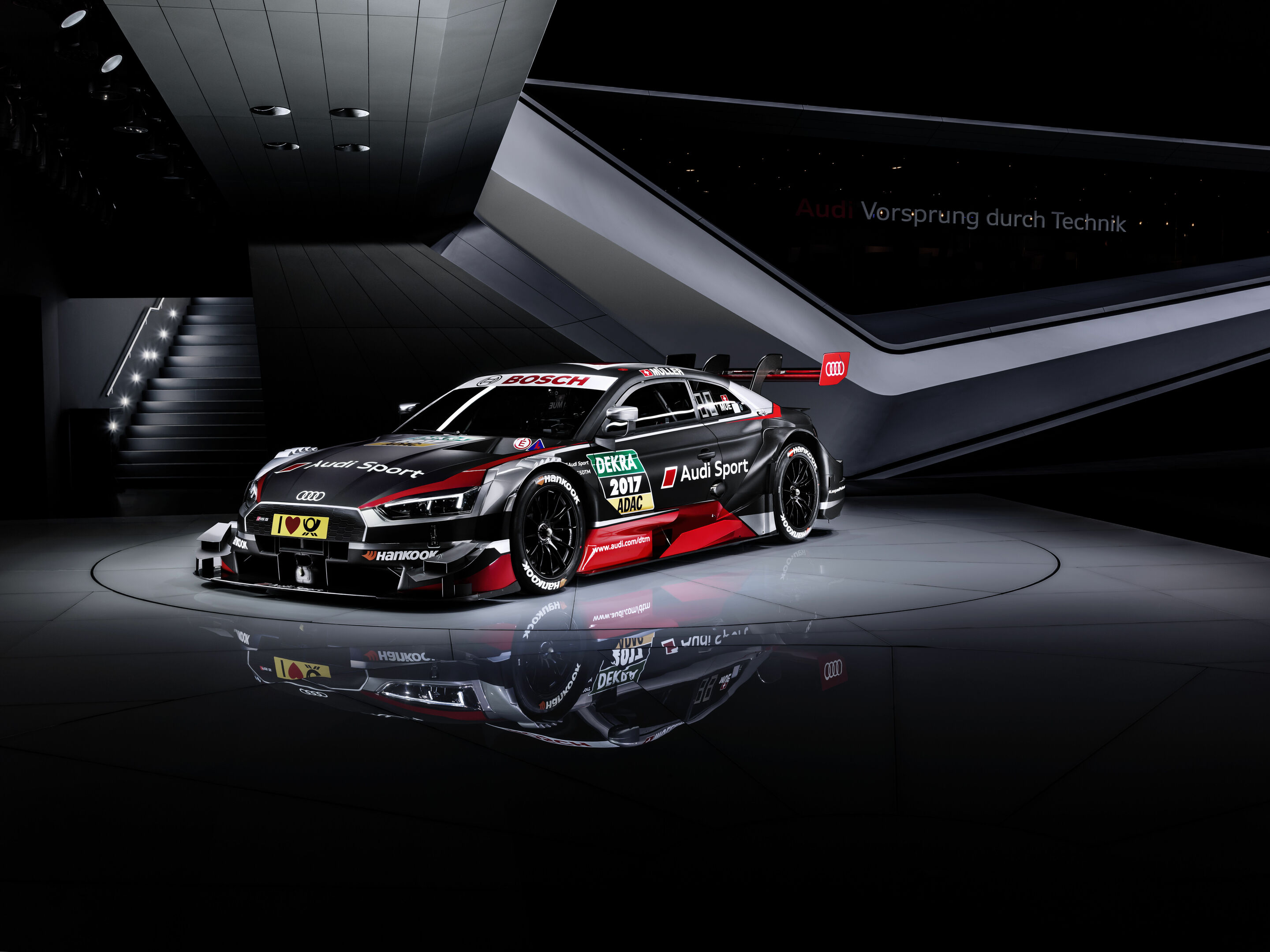 World premiere in Geneva: the new Audi RS 5 DTM
New design language, progressive styling and extreme aerodynamics First production model and DTM racing version to have been developed in parallel Engine output boosted to more than 500 HP
Clear the stage for an exciting new race car: At the same time as the production model, Audi Sport presented the DTM racing version of the Audi RS 5 Coupé at the Geneva Motor Show. The new RS design language premieres in this model that features numerous modifications required by the regulations as well.
“This is a special day for me and everyone involved in the DTM project,” says Head of Audi Motorsport Dieter Gass. “For the first time, we developed a new DTM car in parallel with the production model. This underlines once again how closely motorsport and production work together at Audi.” The track record of the previous-generation model sets benchmarks for the future. Having clinched ten victories in each of the last two seasons, it was the most successful DTM car in both years. “Obviously, we’d like to repeat this with the new RS 5 DTM,” Gass adds. Visually, the third-generation Audi RS 5 DTM clearly stands out from its two successful predecessor models. “It appears even more progressive and is even more extreme in terms of aerodynamics,” says Project Leader Stefan Gugger. “In many areas of aerodynamics, we explored further detailed options.” This is evident particularly in the area of the front end and around the rear wheel arches. On the race car, the distinctive single-frame radiator grill of the new Audi RS 5 consists of a very thin film. The restrictive DTM regulations allow the engineers the greatest latitude around the rear wheel arches. Accordingly, they have been trimmed for maximum downforce combined with utmost efficiency. “In addition, we’ve improved the components in terms of accuracy of fit once again,” says Gugger. “As far as gap dimensions are concerned, Audi has always stood out from the competition.