Search
All search results for "AVS "
(32)
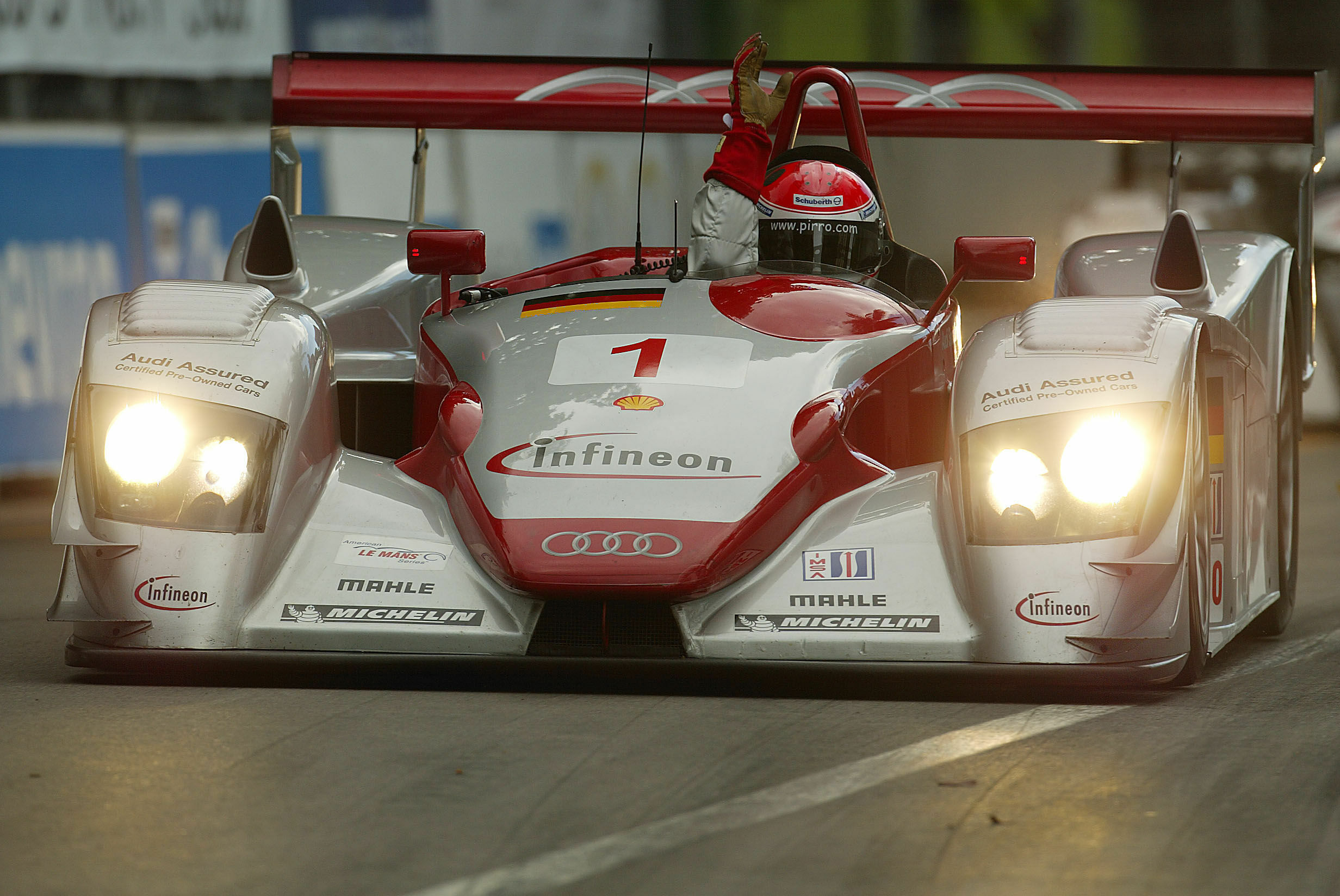 Audi clinches ALMS title with Miami victory
Goossens/Ave (Riley&Scott-Elan) - 1 lap 7. Bernard/Collard (Cadillac) - 2 laps 8. Knight/Hürtgen/Block (MG Lola) - 3 laps 9. Fellows/O’Connell (Chevrolet) - 3 laps 10. Pilgrim/Collins (Chevrolet) - 4 laps
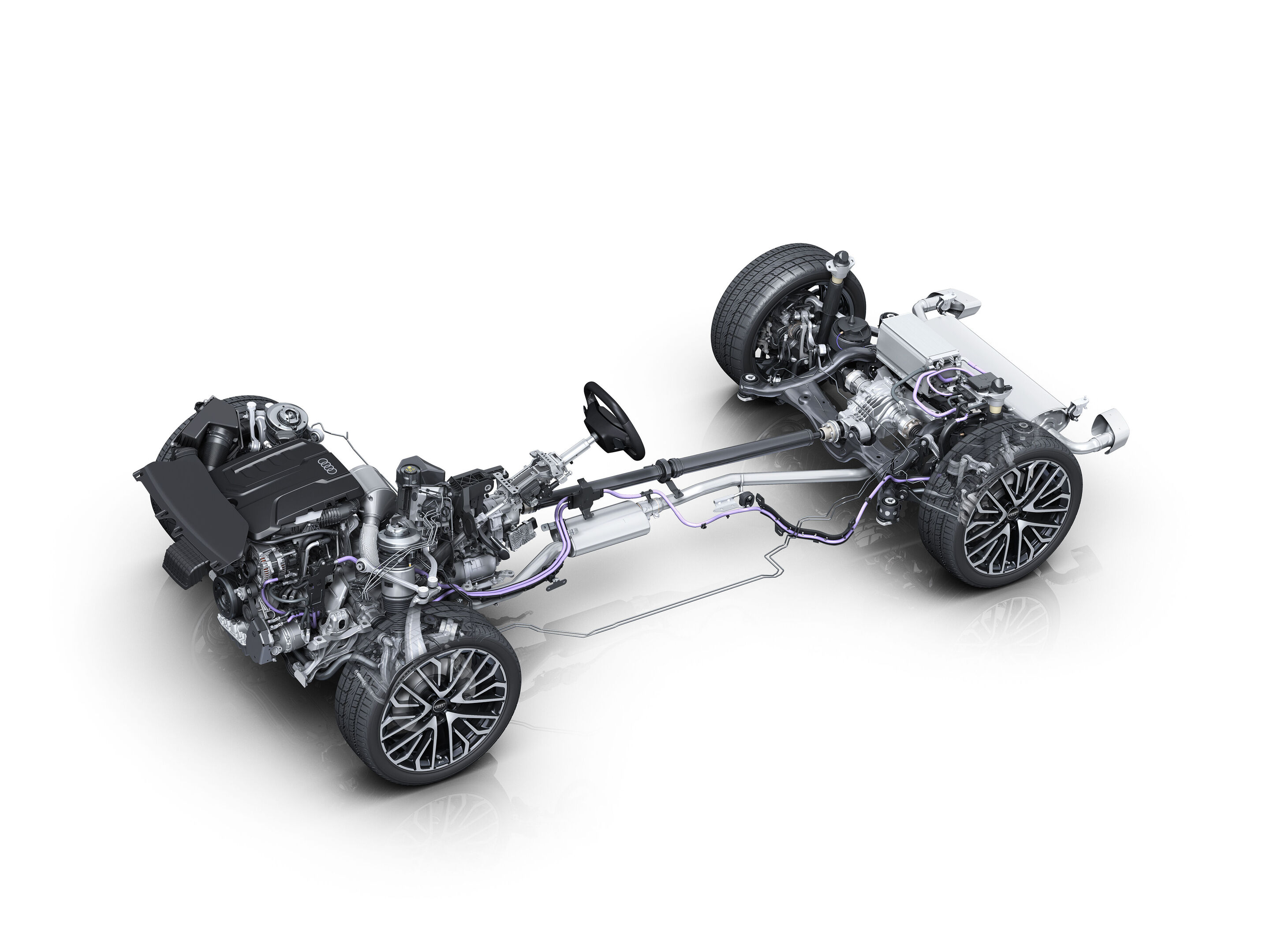 Combustion engines and hybrid drives
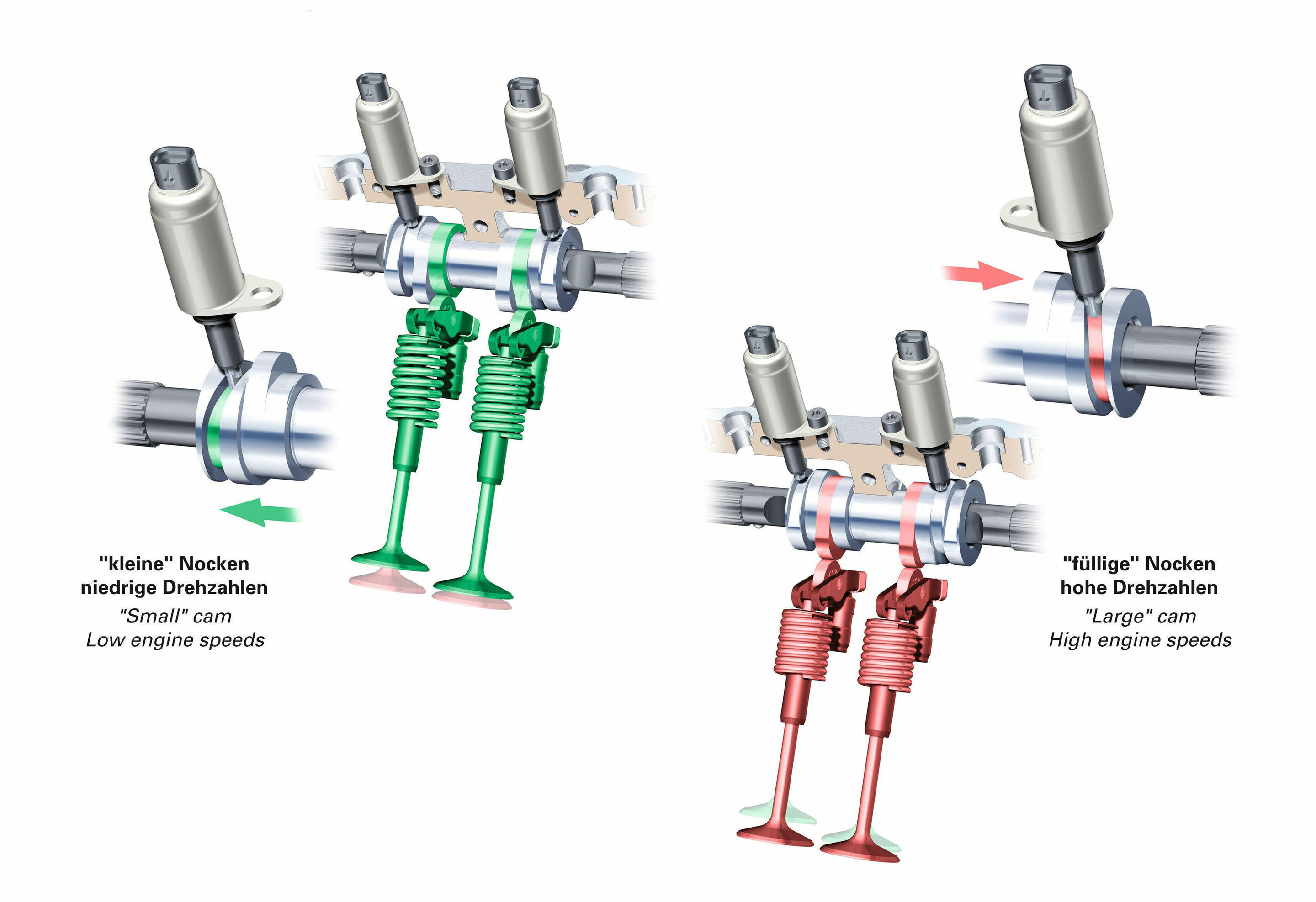
Innovative technologies make this possible, such as the Audi valvelift system (AVS), the exhaust manifold integrated into the cylinder head, and the turbocharger with an electric wastegate actuator. These technologies allow engines to be designed so that displacement, power, torque, and fuel consumption are perfectly matched to the required operating conditions. The cylinder on demand (COD) system is another example. It deactivates half of the cylinders under partial load. This solution is a variant of the rightsizing strategy, which aims to balance displacement and turbocharging in the optimal ratio.
B-cycle process
The B-cycle combustion process is an efficiency technology for Audi gasoline engines. It is specially designed for the partial-load range, which is by far the predominant operating mode. Essentially, the process is comparable to the so-called Miller cycle. However, Audi has significantly advanced it – by adding higher compression, turbocharging, and the Audi valvelift system (AVS). As a result, at moderate speeds, drivers experience the fuel-saving benefits of a small-displacement engine. With a sporty driving style, they profit from the dynamics of a large engine. The B-cycle combustion process is used in three TFSI engines: a variant of the 2.0 TFSI, the 3.0 TFSI V6, and the 2.9 TFSI V6 with its biturbo charging. The core of the combustion process is an unusually short intake valve opening duration under partial load. In the V6 TFSI, the intake valves close at just 130 degrees of crankshaft angle – well before the piston reaches bottom dead center (BDC). This, combined with increased intake manifold pressure, reduces throttling losses. The amount of fresh charge drawn in remains relatively small; when the piston moves upward after BDC, the compression phase begins correspondingly late. This allows a high geometric compression ratio of 11.2:1 in the 3.0 TFSI – the combustion occurs in a relatively small chamber volume.

Vicky Karadimou
Spokesperson
Languages:
Greek, English
Kosmocar S.A.
566-568 Vouliagmenis Ave
16452 Argyroupoli
Greece
Ilias Tsounis
Spokesperson
Languages:
Greek, English
Kosmocar S.A.
566-568 Vouliagmenis Ave
16452 Argyroupoli
Greece
Viollier Pablo
Spokesperson
Languages:
English, Spanish
Porsche Chile SpA
Av. Apoquindo 5400, Piso 19
Las Condes, Santiago
Chile
Sergii Salii
Spokesperson
Languages:
English, Ukrainian, Russian
Porsche Ukraine LLC
Pavla Tychyny Ave. 1V
Office B, 4. Floor
02152 Kiev
Ukraine
Rafael Fiuza Lamim
Spokesperson
Languages:
Portuguese, English
Audi do Brasil Industria e Comércio de Veículos LTDA
Av. das Nações Unidas, 14261
14ª Andar Torre A
04794-000 São Paulo, São Paulo
Brazil
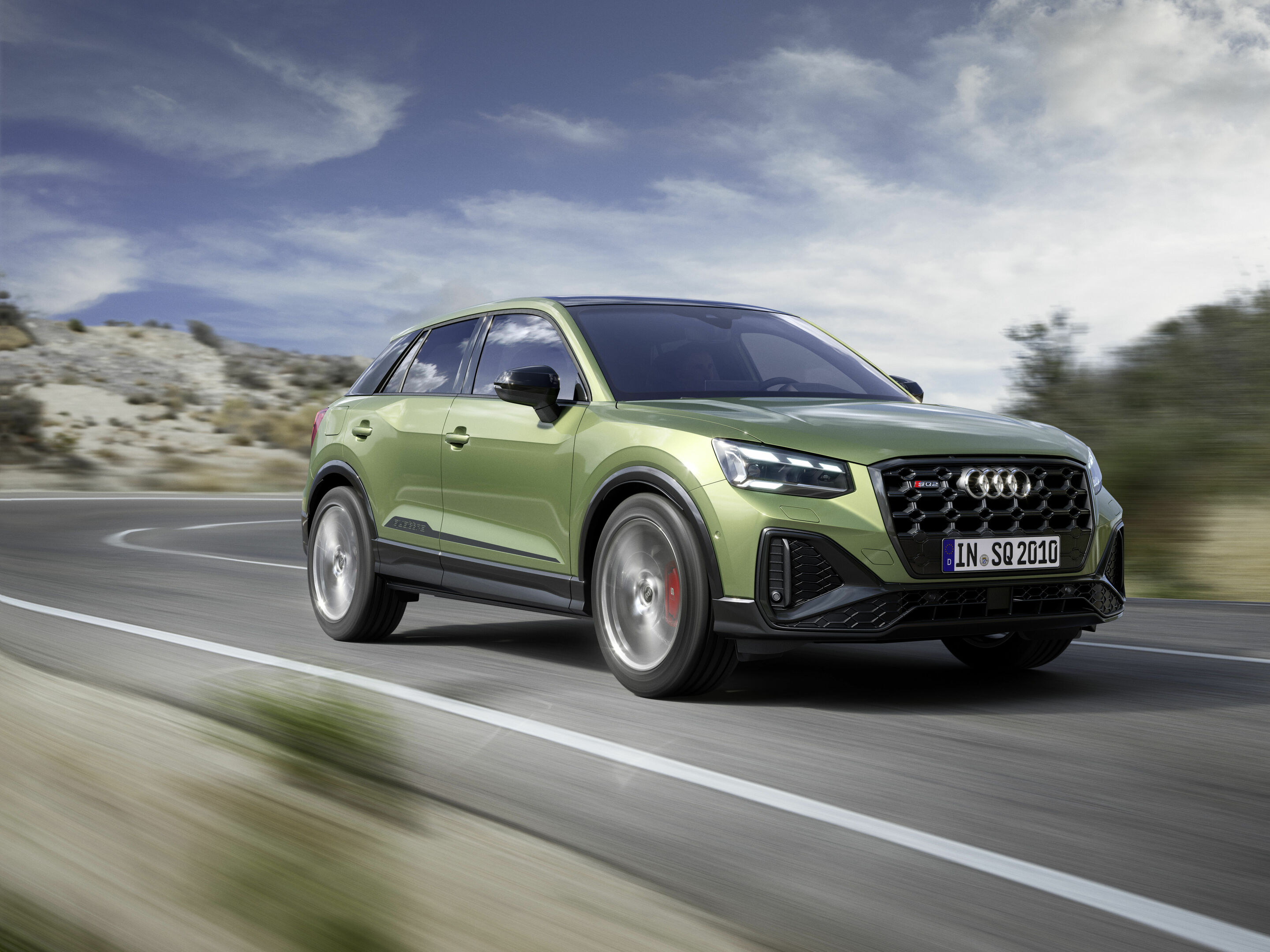
The Audi valvelift system (AVS) switches the stroke of the outlet valves between two levels as needed, thereby optimizing the charge cycle in the lower engine speed range in particular: The improved flow of exhaust gas to the turbocharger results in an agile response and powerful torque build-up. Sophisticated thermal management controls the coolant flow, and the exhaust manifold integrated in the cylinder head helps the engine to warm up quickly, which allows exhaust gas aftertreatment to be activated early on. Needless to say, the Audi SQ2 complies with the limits of the new Euro 6 AP emission standard. Driving pleasure and driving safety: the seven-speed S tronic and quattro drive The seven-speed S tronic is standard in the Q2 top model**. Its lower gears feature short, sporty ratios while the seventh gear is long to reduce fuel consumption. Drivers can operate the lightning-fast dual-clutch transmission in modes D or S, or shift themselves. If the Audi drive select system is in “efficiency” mode, the clutch disengages when coasting, allowing the compact sport SUV to freewheel. The quattro all-wheel drive provides the updated Audi SQ2 with the crucial amount of additional dynamism and stability. Its electro-hydraulic multi-plate clutch distributes the torque smoothly between the axles. Should the front wheels lose traction, the clutch redirects it completely to the rear within a few milliseconds. The SQ2 is fitted with the latest generation of the multi-place clutch, which features many improvements, for example to the bearings and oil supply, that increase its efficiency. The pump is powered by a low-wear, brushless electric motor. The entire clutch is just under one kilogram (2.2 lb) lighter than the part in the predecessor model. This is due in part to the fact that the control unit is integrated in the clutch housing.