Search
All search results for "R8 Manufaktur"
(192)
 Fully integrated: 50th Audi R8 LMS GT4 produced at Böllinger Höfe
Audi Sport customer racing’s most recent product a sales success Highest level of synergies between production and racing
In close vicinity to the Neckarsulm location, the 50th Audi R8 LMS GT4 was driven out of the assembly hall at “Audi Böllinger Höfe” in Heilbronn in mid-March. The GT4 model is a worldwide sales success and, like no other race car at Audi, benefits from synergies in terms of its technical concept and production in the flexible, low-volume manufacturing operation. Since deliveries began on December 15, 2017, Audi Sport customer racing has produced 50 race cars and further orders are on hand.
The driverless transportation system moves a race car amidst the high-performance models for consumers through the special low-volume R8 manufacturing operation. What looks like an arranged photo subject is daily manufacturing routine at Audi Sport. The GT4 race car is actually produced at the same facility as the production version and passes through the same 15 cycles, from the body shop to the inspection station. There the same employees that approve the quality of the production model are responsible for quality inspection of the race car as well. Both versions share some 60 percent of their components. The kinship in the chassis and the powertrain areas is particularly close. The 5.2-liter V10 engine and the S tronic 7-speed double-clutch transmission of both models are near-identical. In terms of its chassis the race car benefits from the excellent genes of the road-approved car as well. 79 percent of the multi-material Audi Space Frame (ASF) consists of aluminum and 13 percent of carbon fiber reinforced plastics (CFRP) which results in both high strength and light weight. For racing, it is provided with specific additional equipment for safety and service such as the steel roll cage or the air jack. The employees install these systems in the pre-production operation prior to cycling the car into the assembly line.
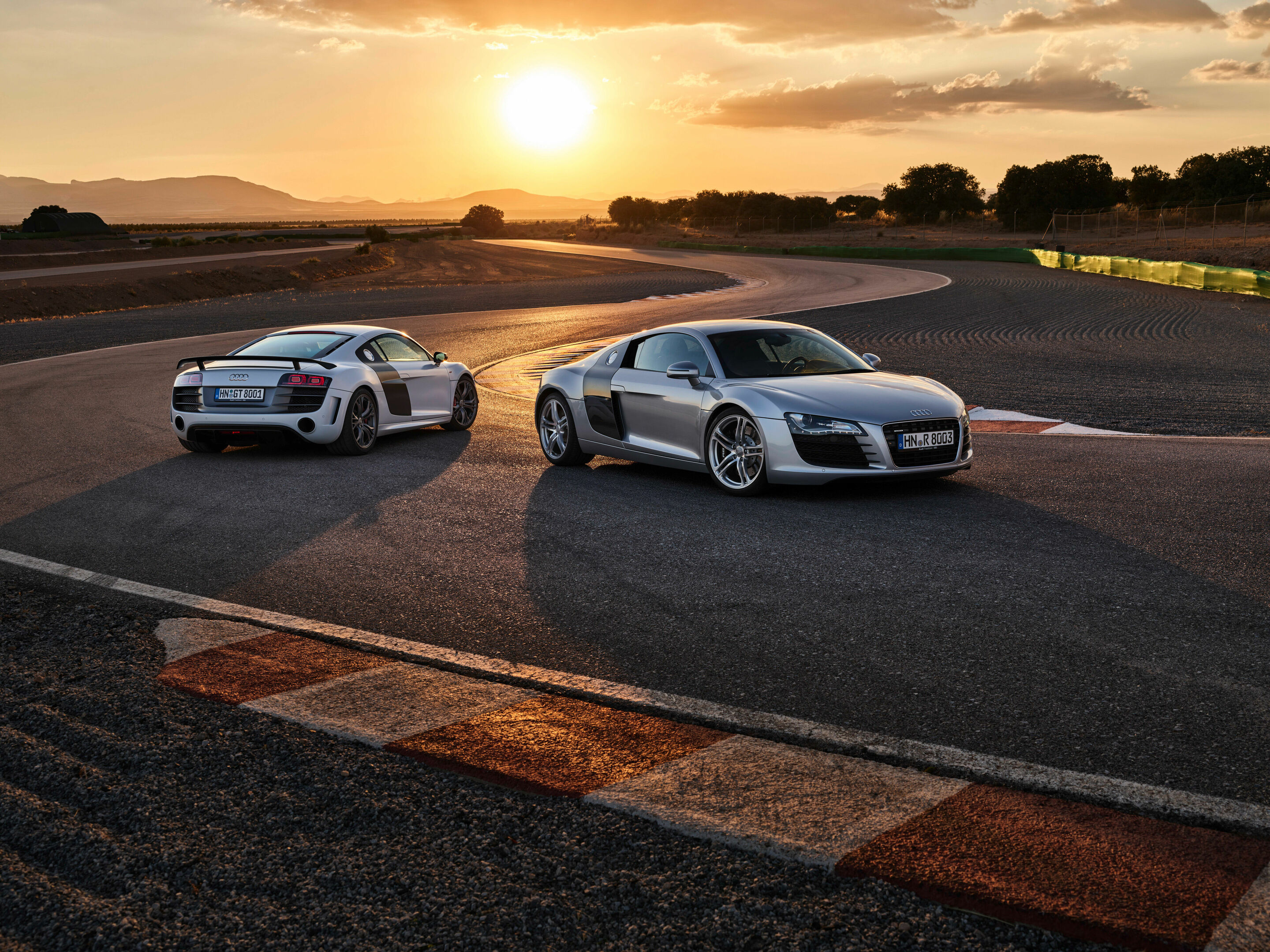
The R8 was Audi’s first super sports car and the result of a cooperation with subsidiary Lamborghini A total of 45,949 units have left the Neckarsulm and Böllinger Höfe plants since 2007 The final particular model is a pinnacle: the R8 V10 GT RWD with rear-wheel drive
A super sports car legend takes its leave: In its 17 years, the Audi R8 has captured hearts and celebrated just as many successes. After 45,949 units produced, the final R8 rolled off the line at Böllinger Höfe in March 2024. A look back at an unparalleled success story.
Breathtaking design, a tantalizing engine sound, and driving dynamics like no other road-legal Audi ever offered: When it was unveiled in 2006, the R8 was a revolution – in Germany and around the world. A mid-engine super sports car; never before had Audi offered such a vehicle. With the R8, Audi moved into more exclusive segments previously dominated by brands such as Ferrari, Porsche, and Lamborghini. The Audi R8 was developed and built by the former quattro GmbH (today: Audi Sport GmbH). It immediately became the sporty icon in the company’s product portfolio and continues to contribute to the exclusive image of the Audi brand to this day. The R8 name refers to a successful race car that brought Audi more wins at Le Mans than any other manufacturer in history: In 1999, Audi launched its legendary Le Mans program with a sports prototype that started in the LMP900 class. The first name of this racing prototype was R8. It won at the 24 Hours of Le Mans in 2000, 2001, 2002, 2004, and 2005, making it the Le Mans sports car with the most victories in modern history. The prototype claimed more victories at the 12 Hours of Sebring, a race in the USA, which it won every year from 2000 to 2005. With these victories, Audi increased its prestige in international racing and laid the foundation for the road-legal R8 super sports car.
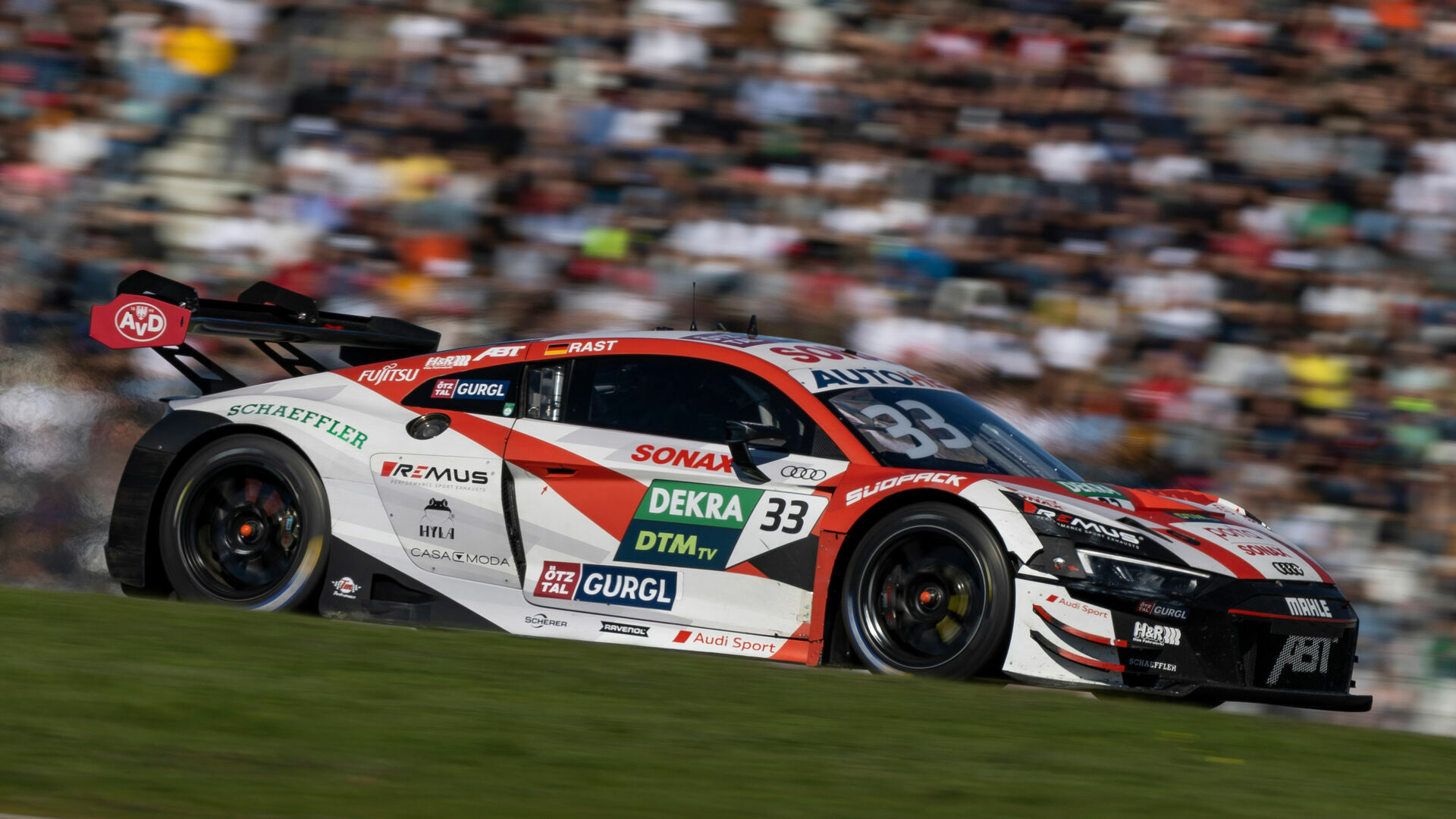
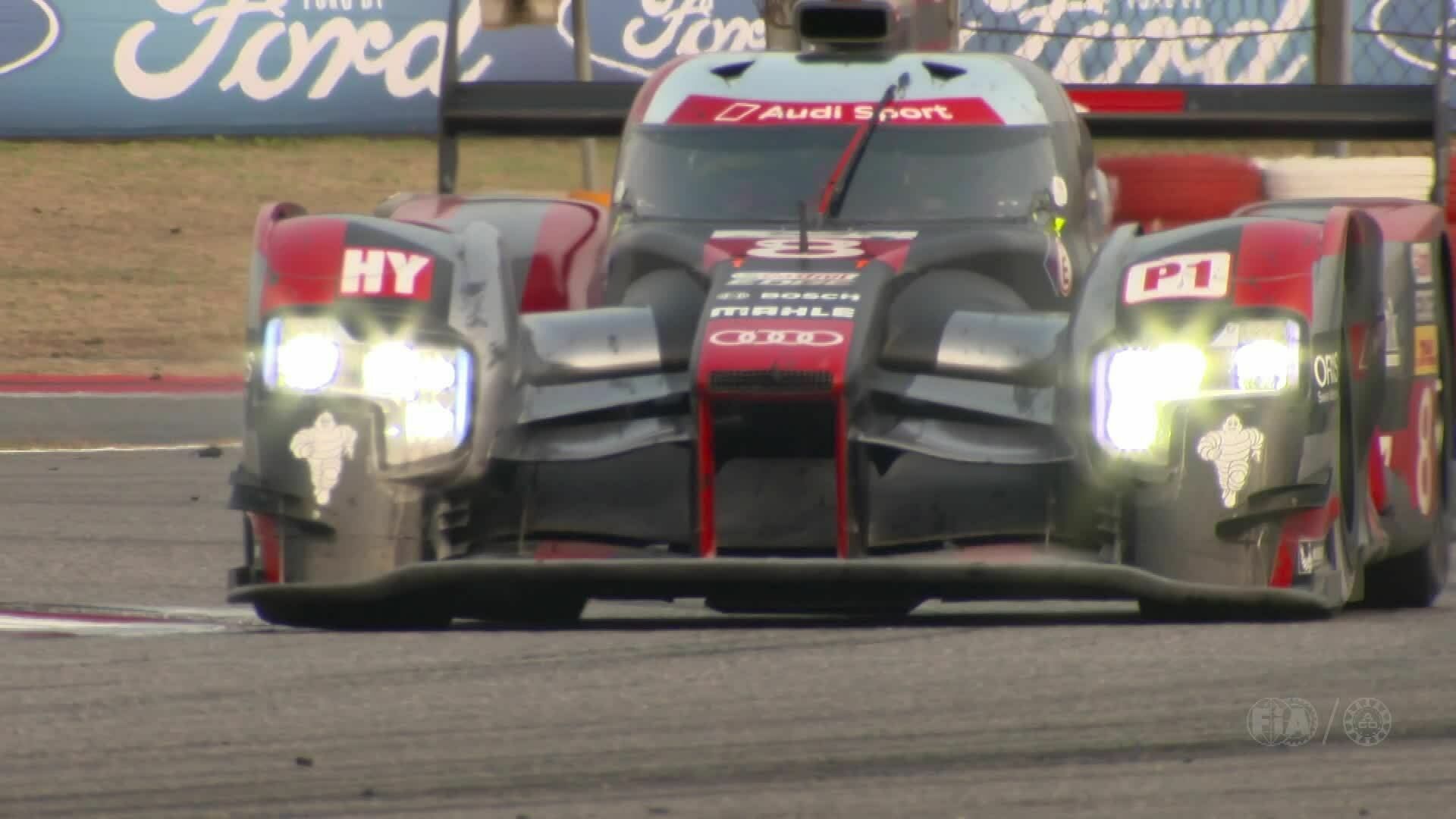 Tribute to the successful R8 LMS: the Audi R8 green hell
The racing car has won the 24 Hours on the Nürburgring five times since 2012 Edition model pays tribute to the legendary victories in the “Green Hell” Paint finish in Tioman green, interior with Alcantara and exclusive contrasting stitching V10 naturally aspirated engine with 620 PS, zero to 100 km/h (62.1 mph) in 3.1 seconds
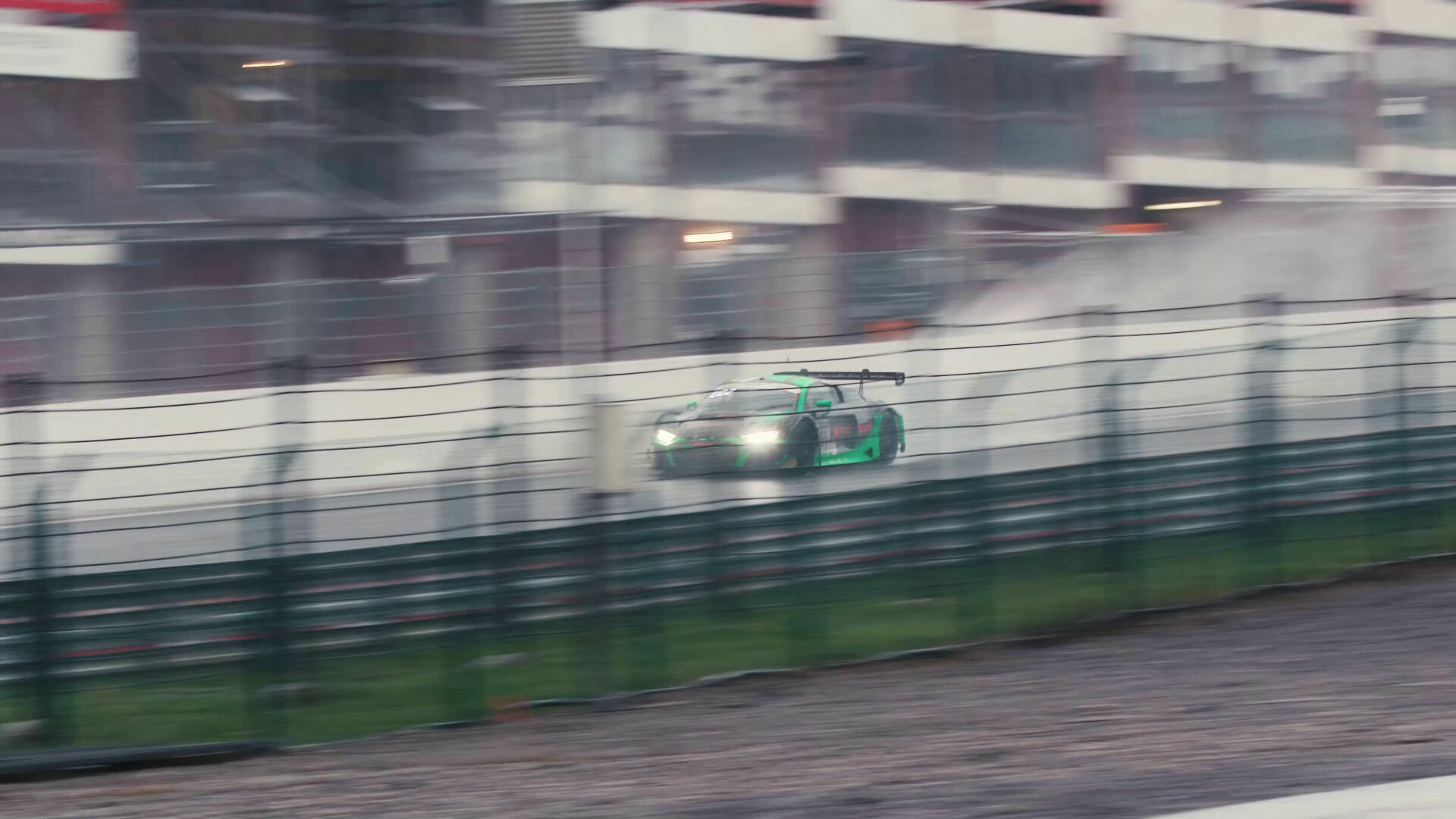
The Audi R8 LMS has notched up five overall victories since 2012 in the 24 Hours on the Nürburgring – the “Green Hell” –, which is regarded as one of the world’s toughest and most popular endurance races. As a tribute to the great success story, Audi Sport GmbH is presenting a limited special edition of the road sports car at this year’s race on the Nürburgring – the R8 green hell.
“We are synonymous with high performance – in both series production and motorsport,” says Julius Seebach, Managing Director of Audi Sport GmbH. “The R8 road sports car and the R8 LMS racing car were designed and developed jointly; around half of their parts are identical. The R8 green hell edition model draws on the proximity to motorsport, while also paying tribute to our legendary victories on the Nürburgring.” The close connection between road sports car and racing car is also underscored at this year’s 24 Hours on the Nürburgring race. The GT3 racing car with number 1, which is used by the Audi Sport Team Phoenix, is visually adapted to the R8 green hell with its foil wrap in dark green. Nico Müller/Frank Stippler/Dries Vanthoor/Frédéric Vervisch (CH/D/B/B), all of whom have won the race at least once, are the four Audi drivers that will take turns behind the wheel of the R8 LMS. Two-time winner Frank Stippler in particular, who knows the “Green Hell” better than most, has close ties with the R8.
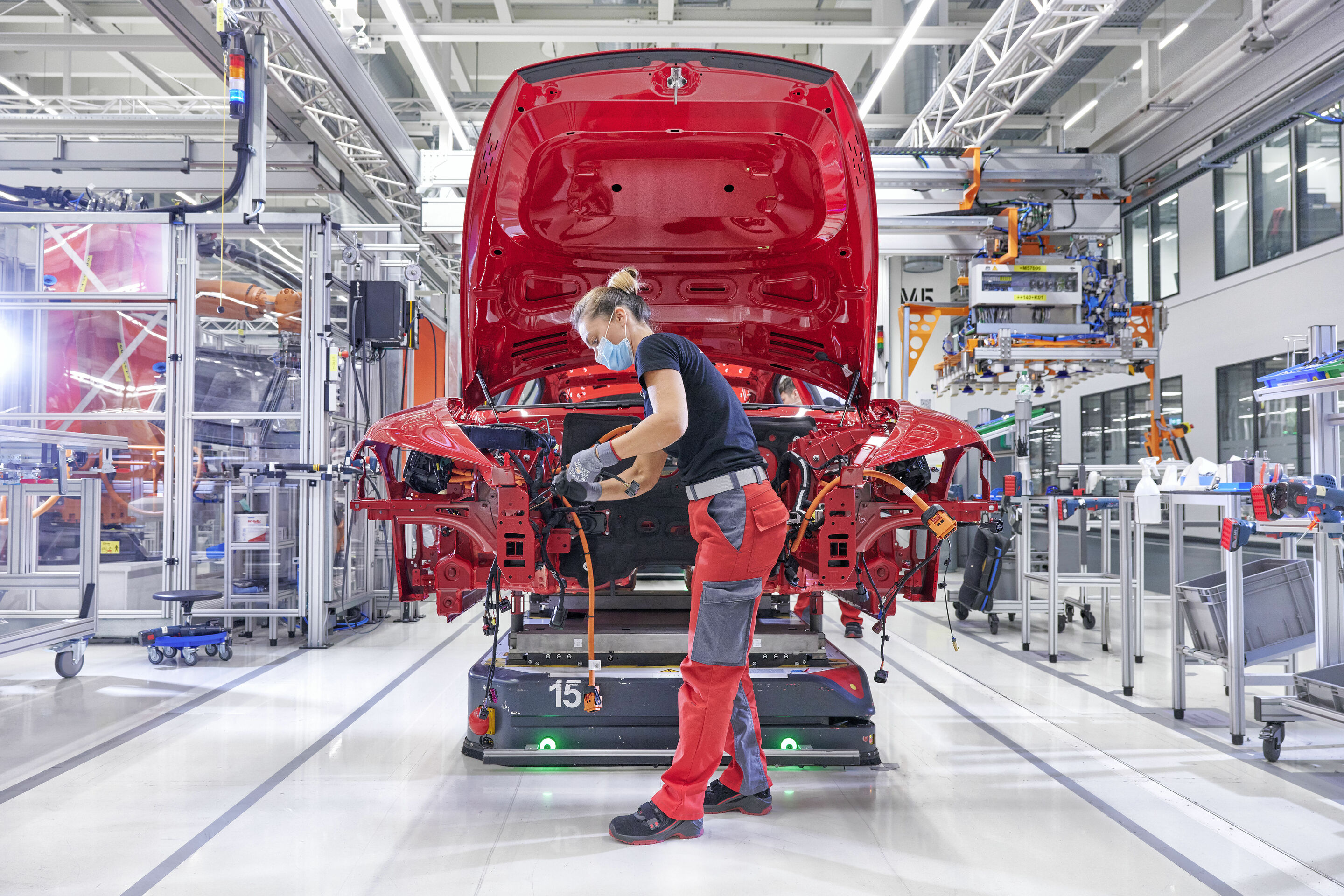 Manufacturing and smart factory: Unique cohesion
“We have retained the craftsmanship from the R8’s manufacturing and added new and intelligent technologies. And our employees immediately transferred all their passion from the R8 to the e-tron GT.”
Audi Sport GmbH produces the Audi R8 and the two all-electric models, the Audi e-tron GT quattro and Audi RS e-tron GT, at the Böllinger Höfe industrial park in Heilbronn. The small batch production of the Audi subsidiary’s two most powerful and sporty vehicles, not far from its Neckarsulm headquarters, is unique in the Group. “We have managed to put two completely different vehicles on one assembly line: The high-performance R8 sports car with a V10 combustion engine was joined by the e-tron GT, which is an all-electric Gran Turismo,” says Wolfgang Schanz, production manager at Böllinger Höfe. Planned to be highly flexible from the outset, Audi Sport GmbH is merging the best of two worlds at the end of 2020.
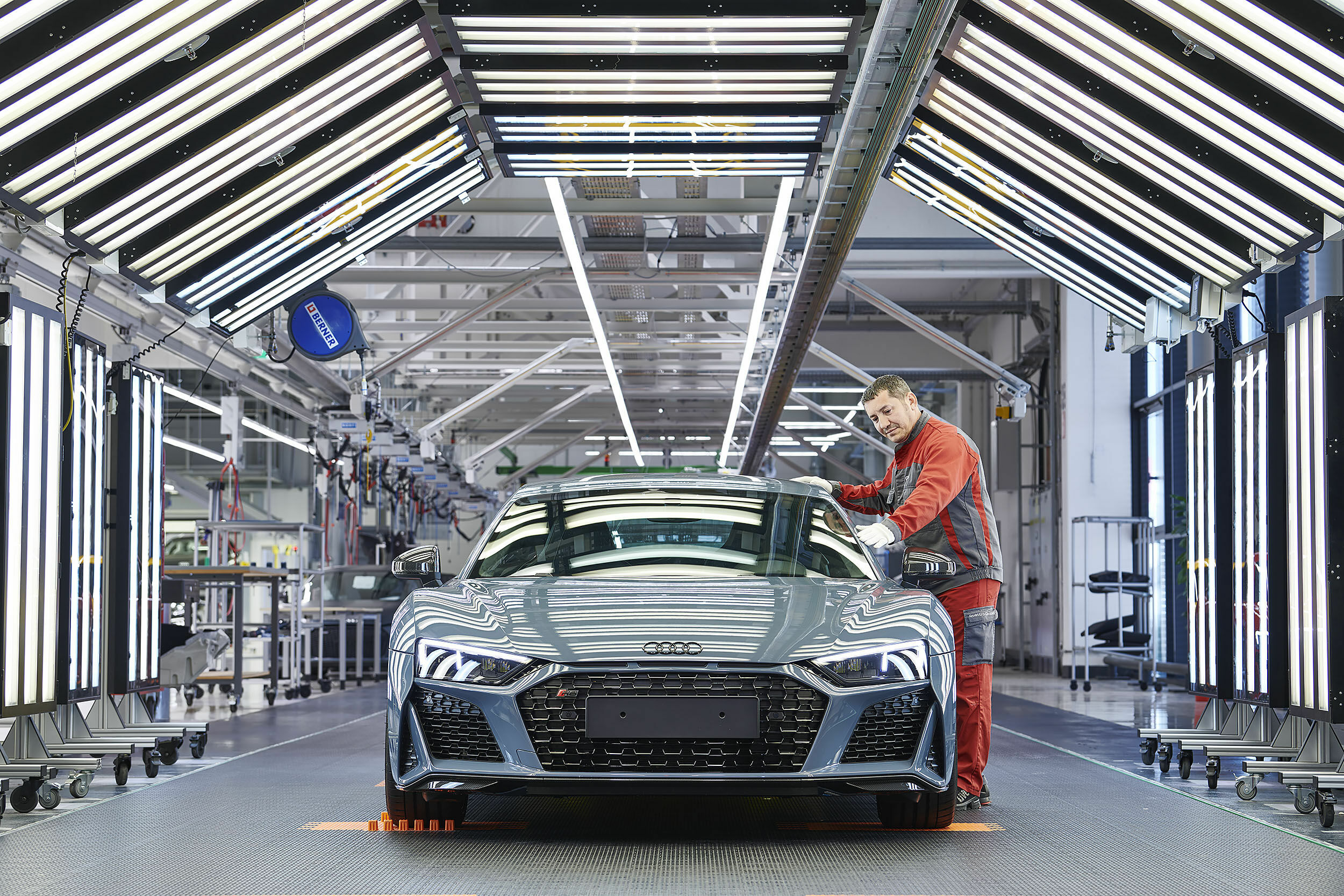
The R8 V10 performance RWD is manufactured – predominantly by hand – at the “Böllinger Höfe” sports car production facility in Heilbronn, not far from Neckarsulm, Audi’s second location in Germany. The Audi R8 has been manufactured here since 2014, and in 2019 the factory was expanded as well as upgraded and converted to accommodate the Audi e-tron GT. As a result, Audi’s two most powerful and fastest production models of all time are now being built here. “Manufacturing two vehicles that are so technologically different on one assembly line is unique across the group,” noted production manager Wolfgang Schanz. “With the integration of the all-electric four-door coupe, our small-scale production facility at Audi's Böllinger Höfe has transformed into a highly flexible high-tech production facility that nevertheless retains its small-scale character.” The LMS GT4 race car, which is directly derived from the production model and uses around 60 percent of the same parts, is also built at the site. Up to 1,000 highly qualified employees work in sports car production here on around 40,000 square meters of production space.
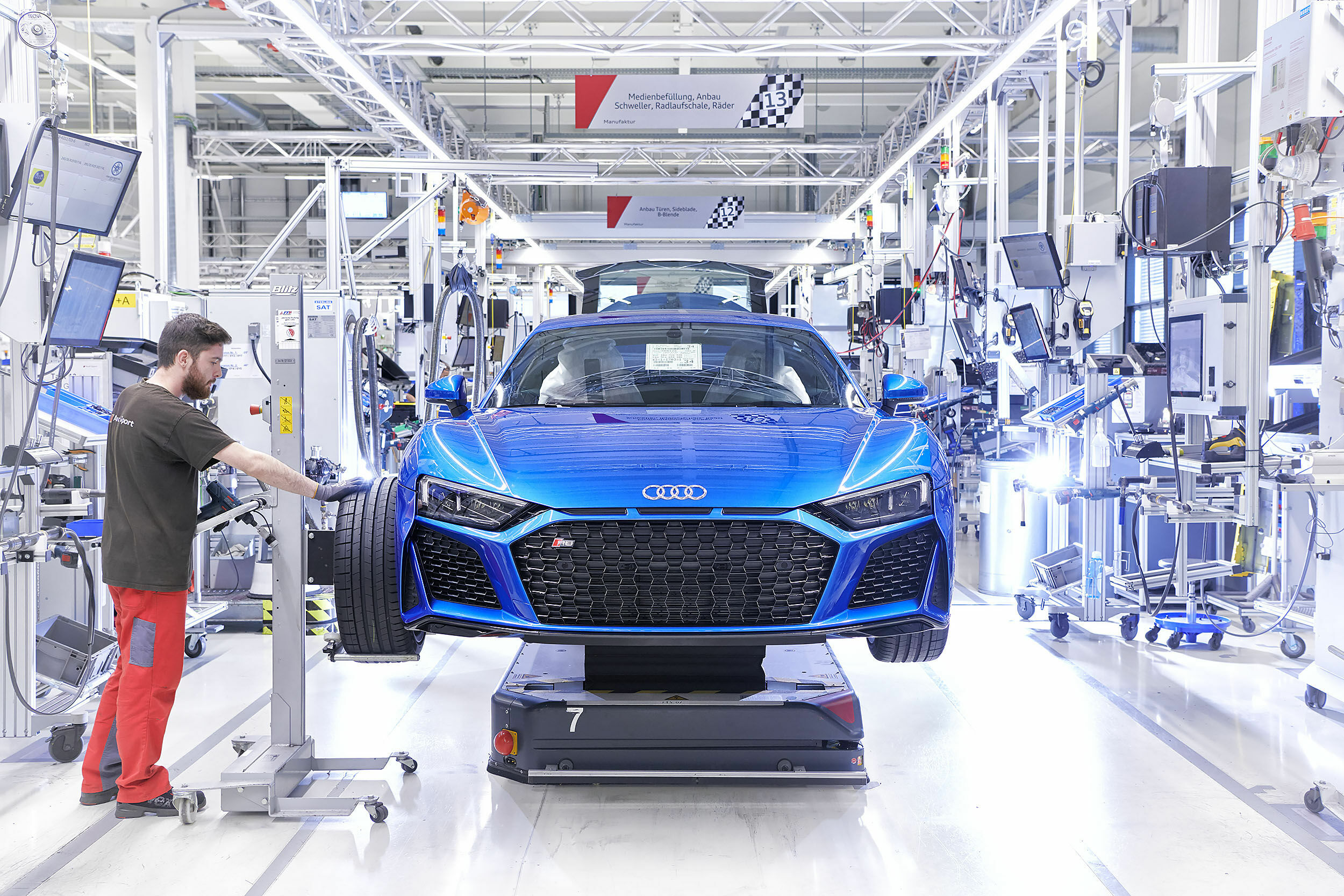
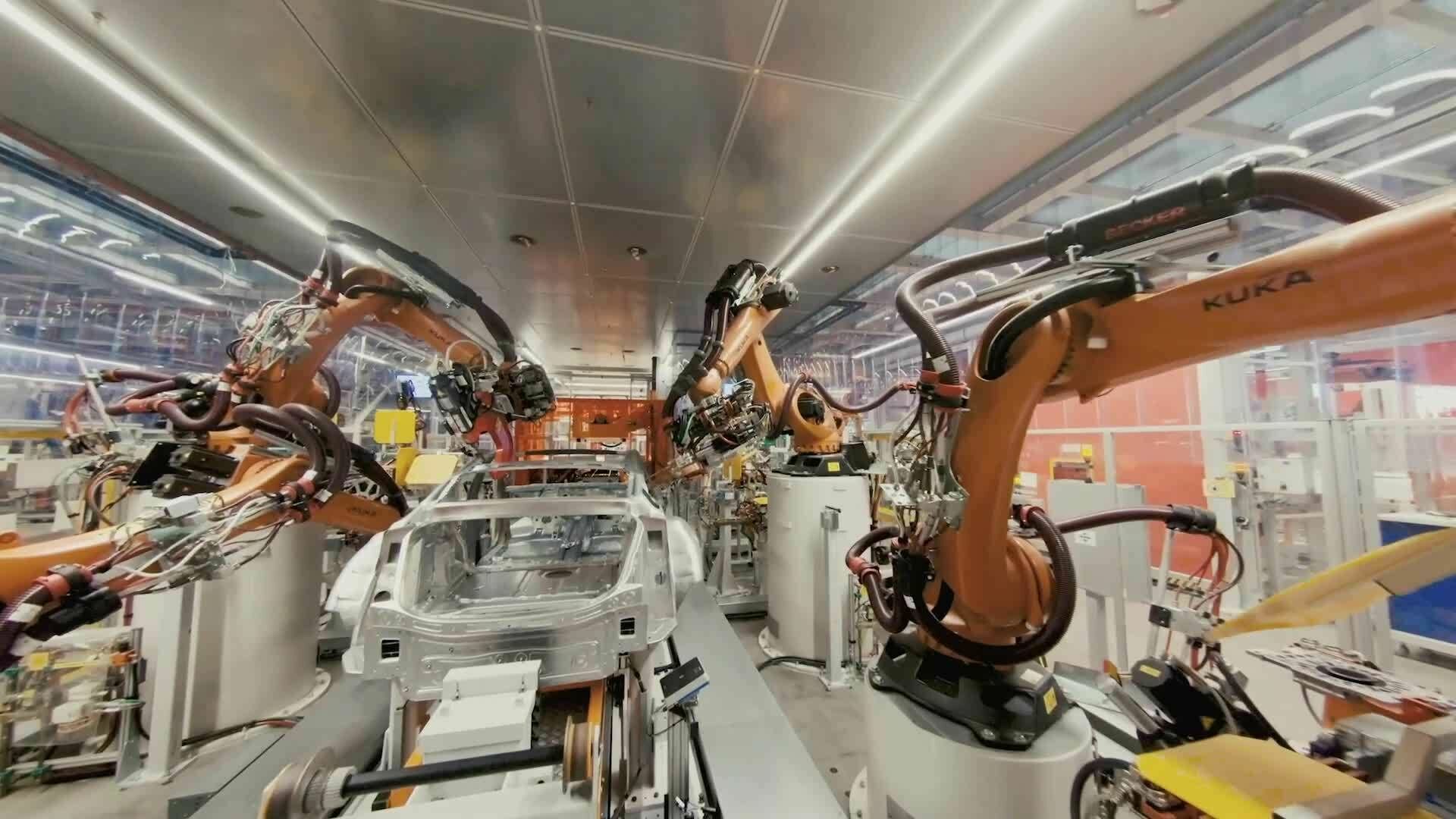
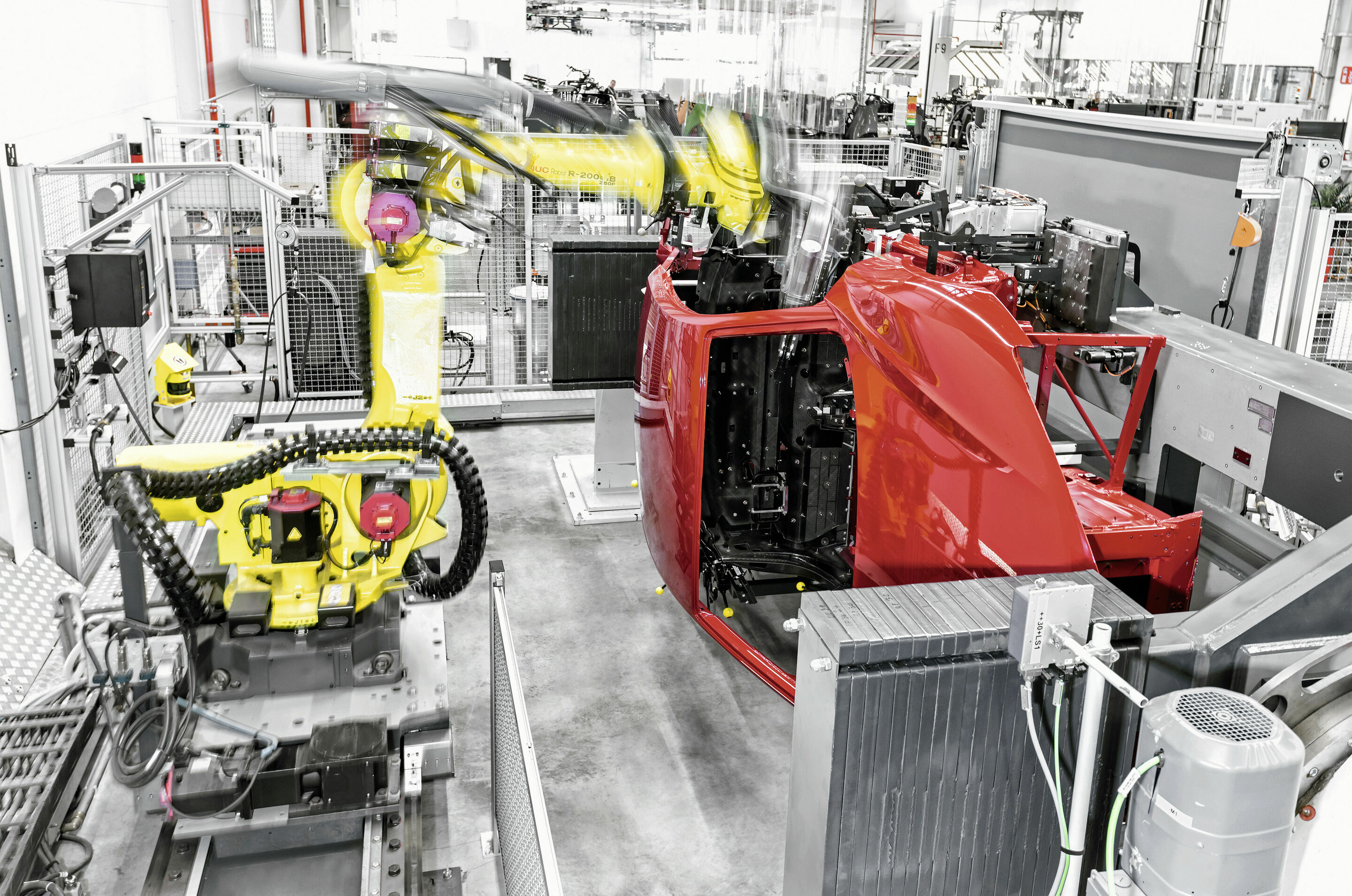
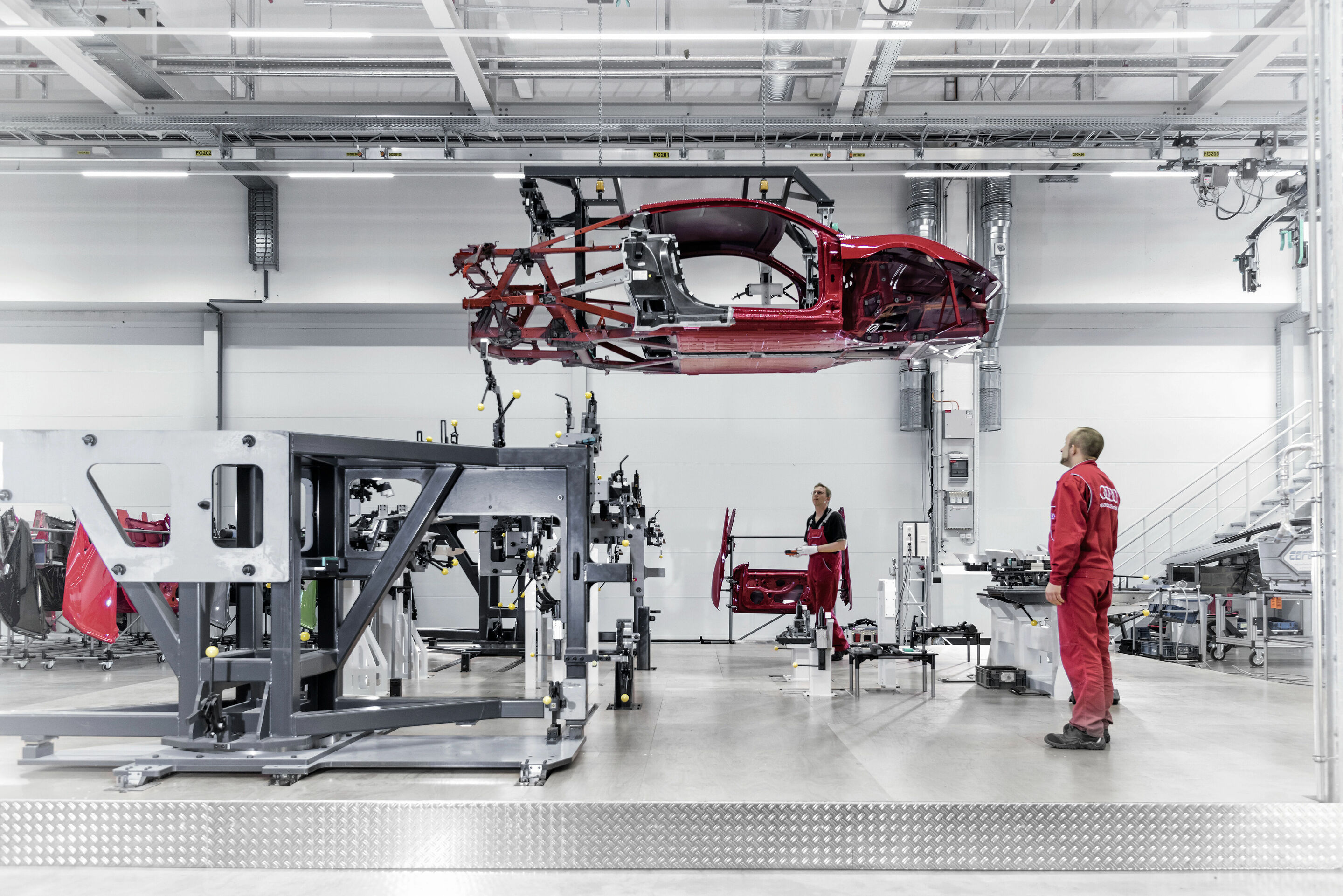
The Audi R8 is being produced under the responsibility of Audi Sport GmbH at the “Audi Böllinger Höfe” location in Heilbronn, near the Neckarsulm plant. As many as 500 highly qualified employees work in the body shop and assembly areas at the production site, which has 30,000 m2 (322,917 sq ft) of production floor area. Production is organized as a flexible production facility. In the body shop, the initial focus is on the aluminum parts of the ASF. In the first step, experts weld the front body, center floor, and rear body together from cast parts and extruded sections. Then they join the three modules to create the substructure. Robots perform joining processes that involve cold joints such as rivets and screws, while workers execute welding tasks. The body continues to grow with the addition of the greenhouse and the roof. Humans and robots work closely together in installing the CFRP parts. The finished body is transferred to the assembly area on a self-propelled assembly skid, which is known as a driverless transport system (DTS). The DTS utilizes high-power storage capacitors as its energy storage medium, and uses a laser scanner and RFID (Radio Frequency Identification) chips to navigate through the production floor areas. In the assembly area, which is laid out as a U-shaped chain, employees perform a large share of the work done by hand in 15 cycles. Flexibility is a top priority at “Audi Böllinger Höfe.” In addition to the production vehicles, the employees also produce the R8 LMS racing cars in the body shop. Given the complex work procedures, this requires ongoing technology transfer from motorsports as well as a high level of qualification. The assembly area is also designed for quick modifications. The cars move through many areas of the hall on the DTS. There are no overhead conveyors or a classic “marriage” station. Instead, the drive unit and axles are preassembled and installed separately from one another.
 Race car and production model: Close relatives
Direct synergies between racing and production: The Audi R8 LMS is based on the Audi R8 (Audi R8: combined fuel consumption in l/100 km: 13.3-12.9; CO2 emissions in g/km: 301-293. Fuel consumption, CO2 emissions and efficiency classes given in ranges depend on the tires/wheels used). It is even more powerful than its predecessor. About 50 percent carry-over parts characterize the versions for the road and the race track. Audi Sport carries the genes from motorsport to the road, and no other model embodies this idea as consistently as the Audi R8. Its development was characterized by close cooperation between the racing and the Technical Development Departments. The production model and race car share a common basis. For example, the chassis: The close connection between the production and the race car starts with the design stage and ends with manufacturing. The Audi R8 is made at a production site that has specifically been established for the sports car – the Böllinger Höfe industrial park in Heilbronn. In addition to the production model, the chassis of the race car is produced at the factory. The sports car is subsequently completed with racing-specific components. Both versions come from the same facility. For the assembly of the individual motorsport components, the racing chassis is removed from the production line and subsequently reintroduced. For example, the lightweight design: Characteristic for the Audi Space Frame (ASF) is the multi-material lightweight design. Carbon fiber reinforced plastic (CFRP) components form the B-pillars, the center tunnel and the rear wall. The front end, the roof arch and the rear end are assembled as a framework of cast aluminum nodes and profiles, some of which consist of new alloys. As in any ASF, every component has been precisely designed for its place and purpose. For example, a number of components are integrated in the body shell according to their respective functions.
 Audi e-tron GT enters series production: Carbon-neutral production begins at the Böllinger Höfe
Neckarsulm site producing the first fully electric Audi to be built in Germany Accepting orders from spring 2021 Audi Board of Management Member for Production Kössler: “Net carbon-neutral production at the Böllinger Höfe is another step toward the achievement of our sustainability goals”
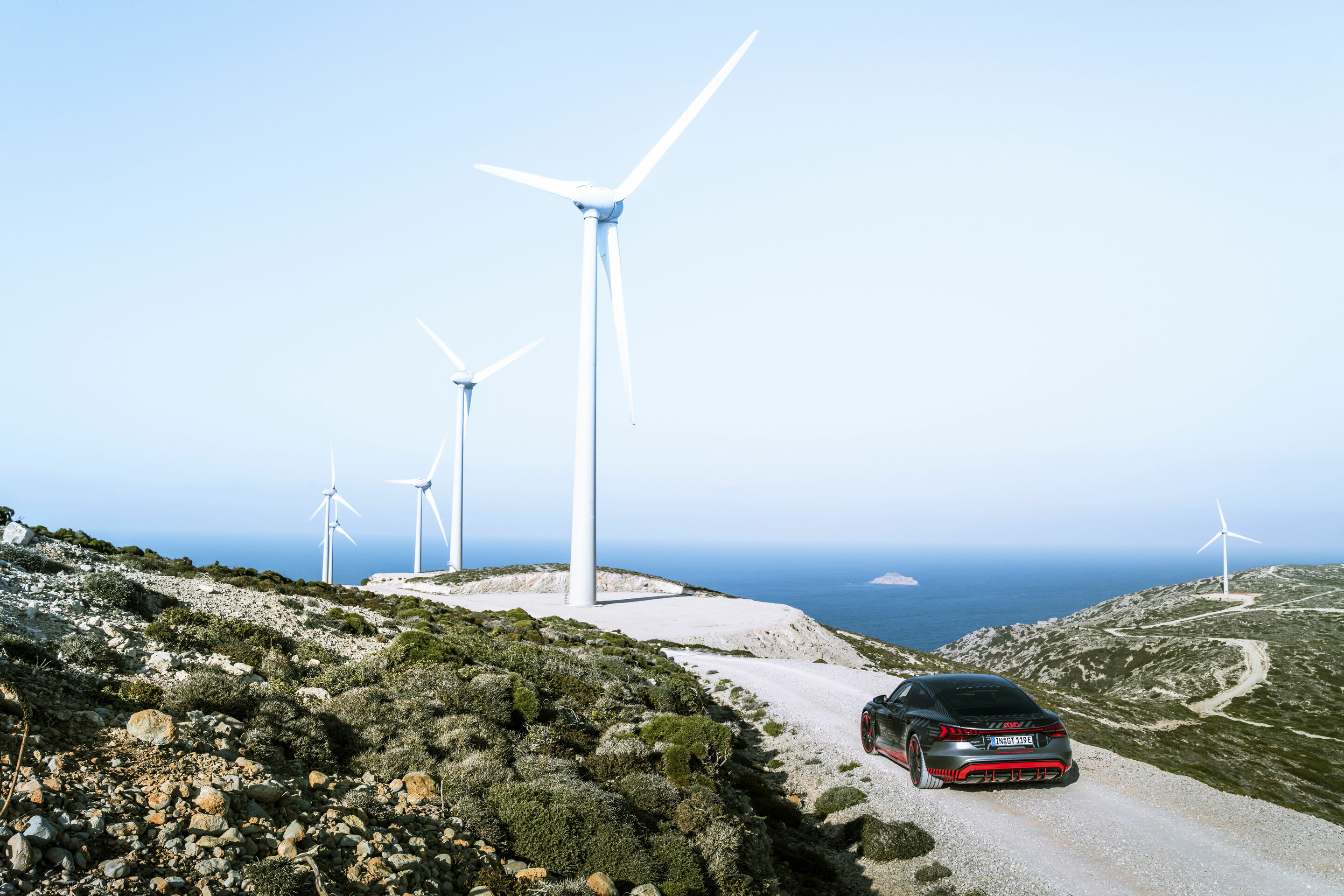
At the Böllinger Höfe, passion meets precision, innovation and sustainability: Series production of the fully electric-powered Audi e-tron GT is getting underway there. High performance and environmental awareness go hand-in-hand here. With 100 percent eco-electricity and heat from regenerative sources, production is net carbon-neutral. The resource-conserving vehicle production process also avoids paper and packaging, uses an aluminum closed loop, and in a first for a new Audi model was planned without any physical prototypes at all.
Series production of the Audi e-tron GT, the brand’s most powerful electric vehicle is launching at the Neckarsulm site. The production process at the Audi Böllinger Höfe is every bit as unique as the car itself. No vehicle bearing the four rings has ever been readied for series production as quickly.