The new Audi RS 5: the first performance hybrid provides top driving dynamics
- World first in a production model: quattro with Dynamic Torque Control enables electromechanical torque vectoring in the rear transaxle
- Handling on a new level: electromechanical torque vectoring promises maximum agility, stability, and traction and increases control and manageability, even at the limits of dynamic driving
- Intelligent function architecture: performance-oriented positioning of the function modules enables all components to work together
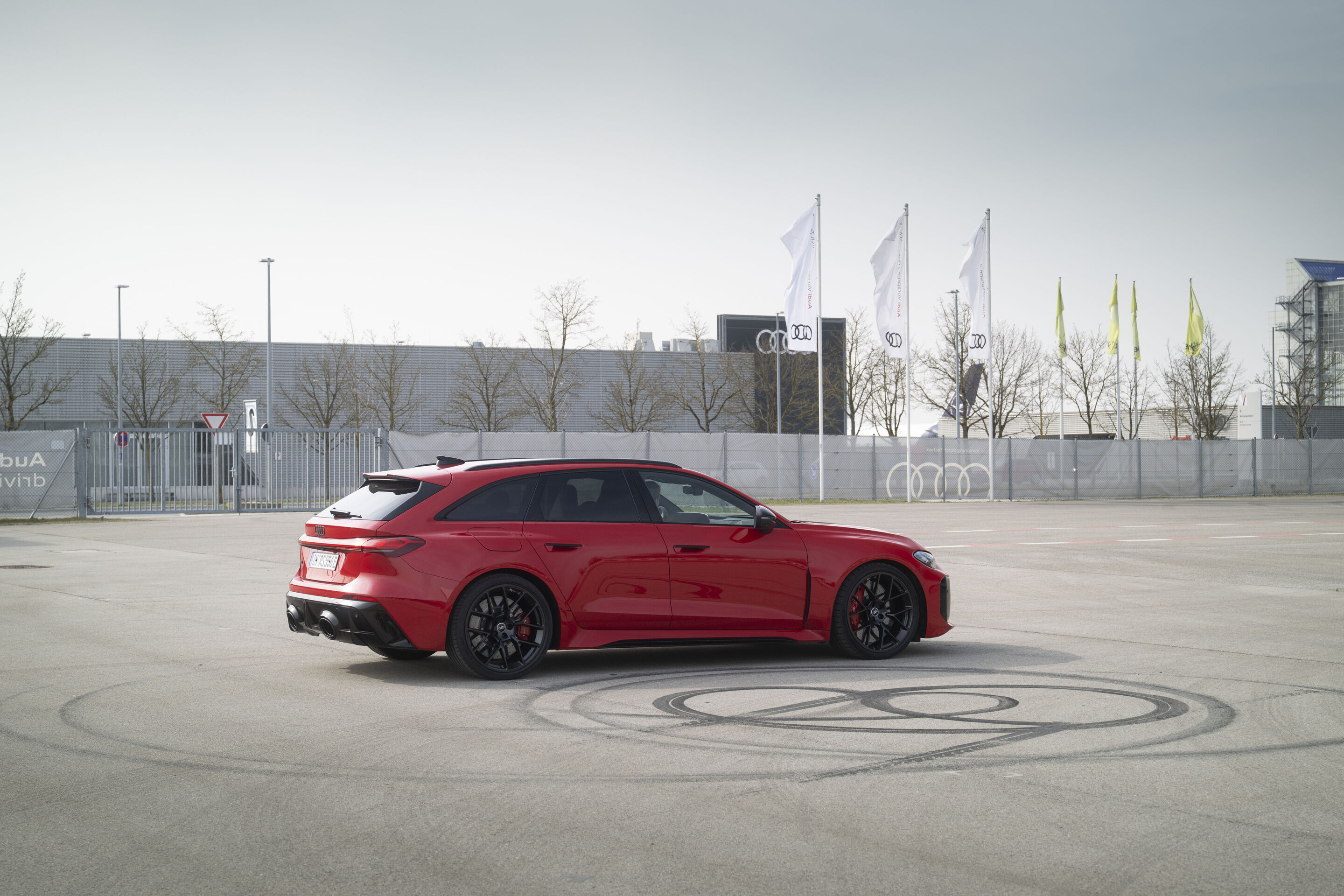
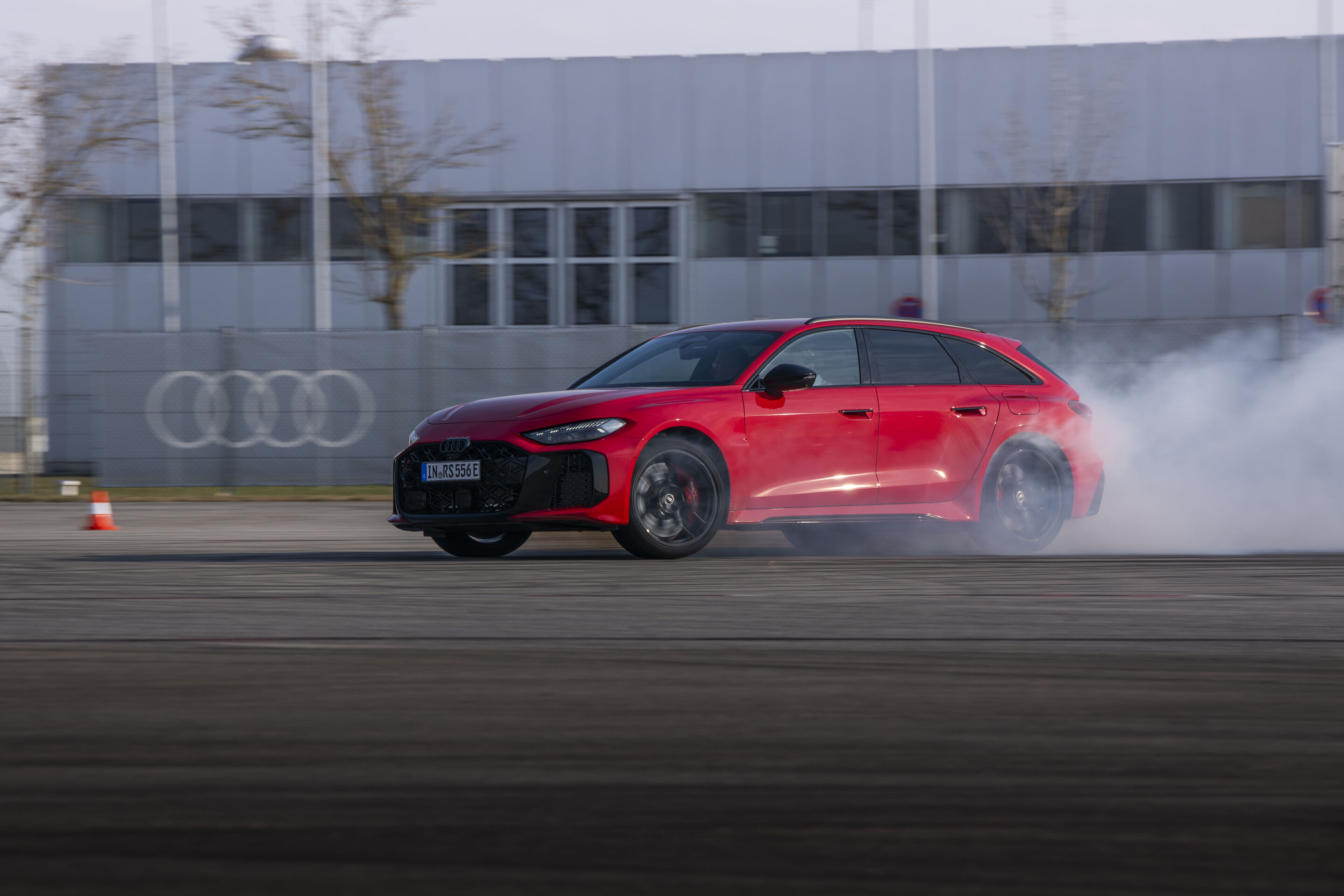
The new Audi RS 5 is powered by a modular high-performance plug-in hybrid system. A brand-new rear transaxle with electromechanical torque vectoring gives it superb driving dynamics. We call it quattro with Dynamic Torque Control. This world-first technology is an invisible maestro conducting the transverse torque distribution, shifting torque between the wheels in milliseconds for agile and controlled driving right up to the limit. Brake, turn in, back on the gas just after the apex of the curve: electromechanical torque vectoring in the new Audi RS 5 is at its best during sporty driving. It takes just 15 milliseconds – around a tenth of the blink of an eye – for the brand-new system to react precisely to any driving situation.
What is electromechanical torque vectoring?
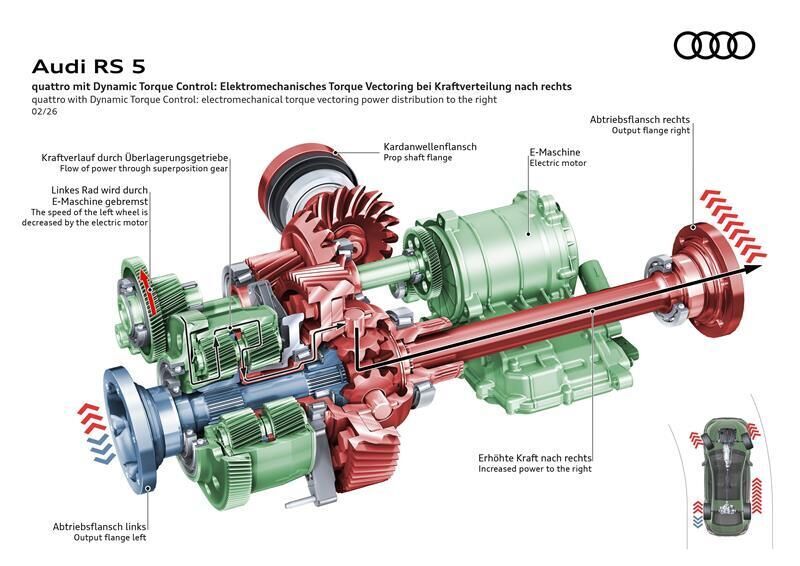
For the first time ever, quattro with Dynamic Torque Control enables electromechanical torque vectoring at the RS 5’s new rear axle. The system can deploy torque differences between the rear wheels regardless of the power applied. It operates accurately and reliably, both on and off throttle as well as under braking, to offer maximum agility, stability, and traction for handling on a new level.
How does electromechanical torque vectoring work?
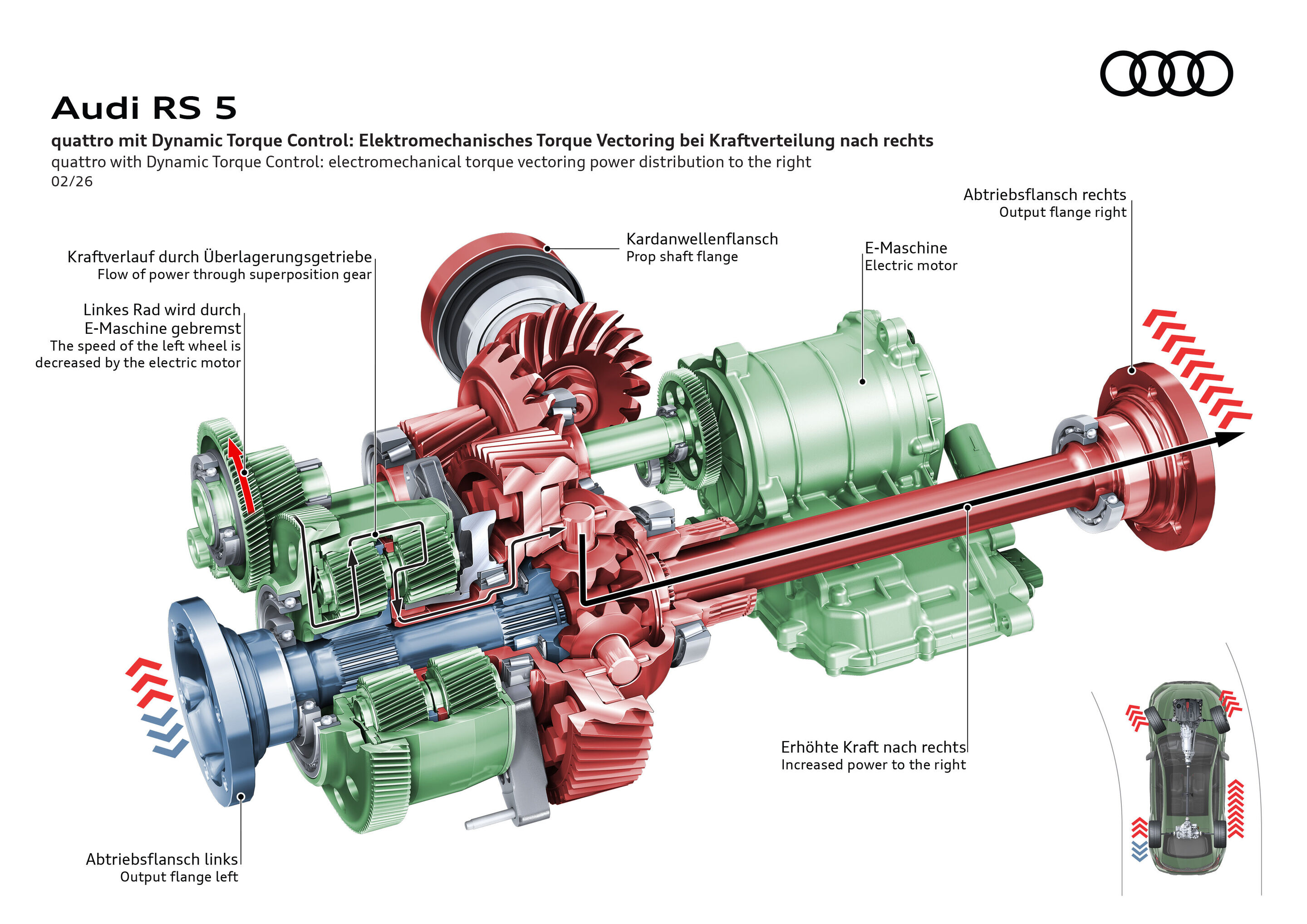
Audi has designed a brand-new rear axle for the hybrid drive in the RS 5. Electromechanical torque vectoring in the rear transaxle comprises a water-cooled permanent-magnet 400-volt electric motor as a high-voltage actuator with an output of 8 kW and 40 Nm. Overdrive gears and a conventional differential with low lock percentage are also key components. The overdrive gears use the actuator’s torque to transfer torque differences to the wheels. Thanks to this combination, torque is distributed between the rear wheels rapidly and precisely – significantly improving handling in curves, for example.
Unlike mechanical systems, quattro with Dynamic Torque Control works in all operating states, including when off throttle and braking – irrespective of the drivetrain torque and which way the forces are pushing.
How does quattro with Dynamic Torque Control affect handling?
Electromechanical torque vectoring shifts torque between the rear wheels, flexibly transferring a differential of up to 2,000 Nm to both the left and right driveshafts within just 15 milliseconds. The high-voltage actuator is permanently connected via spur and planetary gears to the left driveshaft and the differential carrier, a design that guarantees highly precise adjustment dynamics. If torque needs to be directed to the right driveshaft, the high-voltage actuator, due to its position on the left side of the vehicle, must transmit additional torque to the differential carrier – essentially taking a detour. If the RS 5 enters a left-hand bend and begins to oversteer, quattro with Dynamic Torque Control increases the torque at the inside wheel to stabilize it. Conversely, if more power needs to be delivered to the outer right wheel for improved traction and to prevent understeer, electromechanical torque vectoring in the rear transaxle reduces the torque at the left drive shaft. The torque is then redirected from there to the differential carrier and subsequently to the right driveshaft.
What do the electromechanical torque vectoring components do?
The high-voltage actuator generates additional torque. The overdrive gears use this torque to vary and influence the power flow within the rear transaxle. Finally, the differential gear distributes the torque applied to the differential carrier to the right and left driveshafts as required.
How does quattro with Dynamic Torque Control influence driving dynamics?
Electromechanical torque vectoring enhances both driving safety and performance. First of all, quattro with Dynamic Torque Control makes the best possible use of the vehicle’s potential, particularly when cornering, by shifting torque to the wheel with the greatest grip. When balancing, electromechanical torque vectoring uses torque differences to directly influence vehicle behavior and controllability through corners, ensuring the vehicle neither understeers nor oversteers. The chosen drive select mode determines character and driving feel. Dynamic Torque Control stabilizes the vehicle by applying torque differences, managing yaw during transitions so driving remains agile and precise. If the vehicle becomes unstable, the system reduces the speed at which the car is turning into the corner, giving the driver enough time to re-stabilize the vehicle with appropriate steering, braking, or throttle inputs.
What do drivers feel when electromechanical torque vectoring kicks in?
The RS 5 executes commands almost instantaneously and with high precision. Drivers always maintain maximum control over the vehicle’s movements, with handling that is more direct and predictable – even at the limits of dynamic driving. The exceptionally wide spectrum of Audi drive select modes ranges from neutral and balanced to rear-biased and highly agile. Customers have ample time to react to the vehicle’s movements. In essence, electromechanical torque vectoring increases control and manageability, making driving even more fun.
What role do measurement and control technology play?
The HCP1 (High-Performance Computing Platform) in the RS 5 is the central control unit for the drivetrain and suspension, where all the functions come together – including electromechanical torque vectoring in the rear transaxle. The system compares the vehicle’s condition with environmental data and harmonizes these data with the driver’s inputs, such as steering. In addition, quattro with Dynamic Torque Control interprets steering input, anticipating the driver’s intentions. For example, there are different intentions behind rapid steering to counter oversteer and a quick steer at the start of a bend. The transfer of steering input to the wheels is instantaneous and unfiltered.
Is electromechanical torque vectoring more than just a torque splitter?
Whereas a clutch-based torque splitter can only fully distribute torque under load, electromechanical torque vectoring – with its fixed coupling – can do so even when the driver steps off the gas. This means that – unlike with the torque splitter – torque distribution and thus the driving experience is independent of drive torque.
How do electromechanical torque vectoring, the electronic differential lock, brake torque vectoring, and adaptive shock absorbers work together?
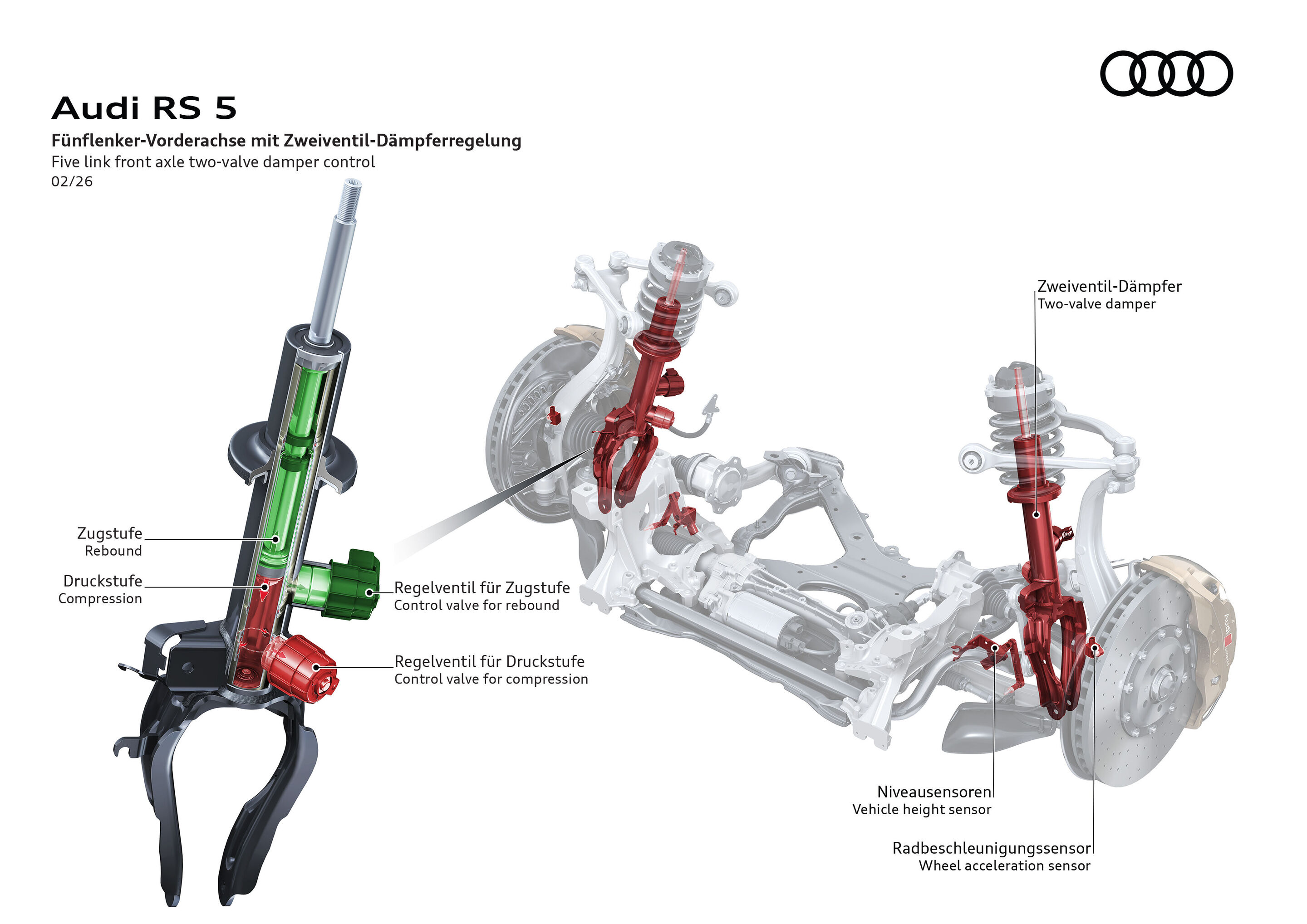
Electromechanical torque vectoring is located at the rear axle, where it manages torque distribution, while the electronic differential lock and brake torque vectoring primarily support the front axle. The electronic differential lock operates via the brakes, increasing traction. Electromechanical torque vectoring in the rear transaxle and the twin-valve shock absorbers in the RS 5 are precisely calibrated to each other – such as when turning into a bend after driving straight at high speed. This ensures an extremely fast throttle response.
What is Audi particularly proud of in the new quattro with Dynamic Torque Control?
The new quattro with Dynamic Torque Control, enabling electromechanical torque vectoring at the rear axle, allows drivers to fully enjoy the dynamic capabilities and emotional driving experience of the RS 5.
The high level of driving pleasure is further enhanced by customizable driving dynamics via the drive select modes, allowing every driver to find their ideal setup. In essence, quattro with Dynamic Torque Control makes the RS 5 even more accessible and exhilarating for our customers. The vehicle is almost playful to drive in any driving mode, with predictable and intuitively manageable responses.