First quarter of 2026: Audi figures shaped by challenging market conditions – growth in Germany and Europe
- CFO Jürgen Rittersberger: “The pace of change in the global environment has sped up significantly – and is having a noticeable impact on our business. Our performance clearly shows that we need to act urgently. We are therefore working on our cost structures and pressing ahead with efficiency measures.”
- CEO Gernot Döllner: “In a world where customer needs are increasingly diverse from region to region, Audi delivers market-specific solutions and models.”
- Revenue amounts to 14.2 billion euros, operating profit reaches 588 million euros, and net cash flow comes in at 883 million euros.
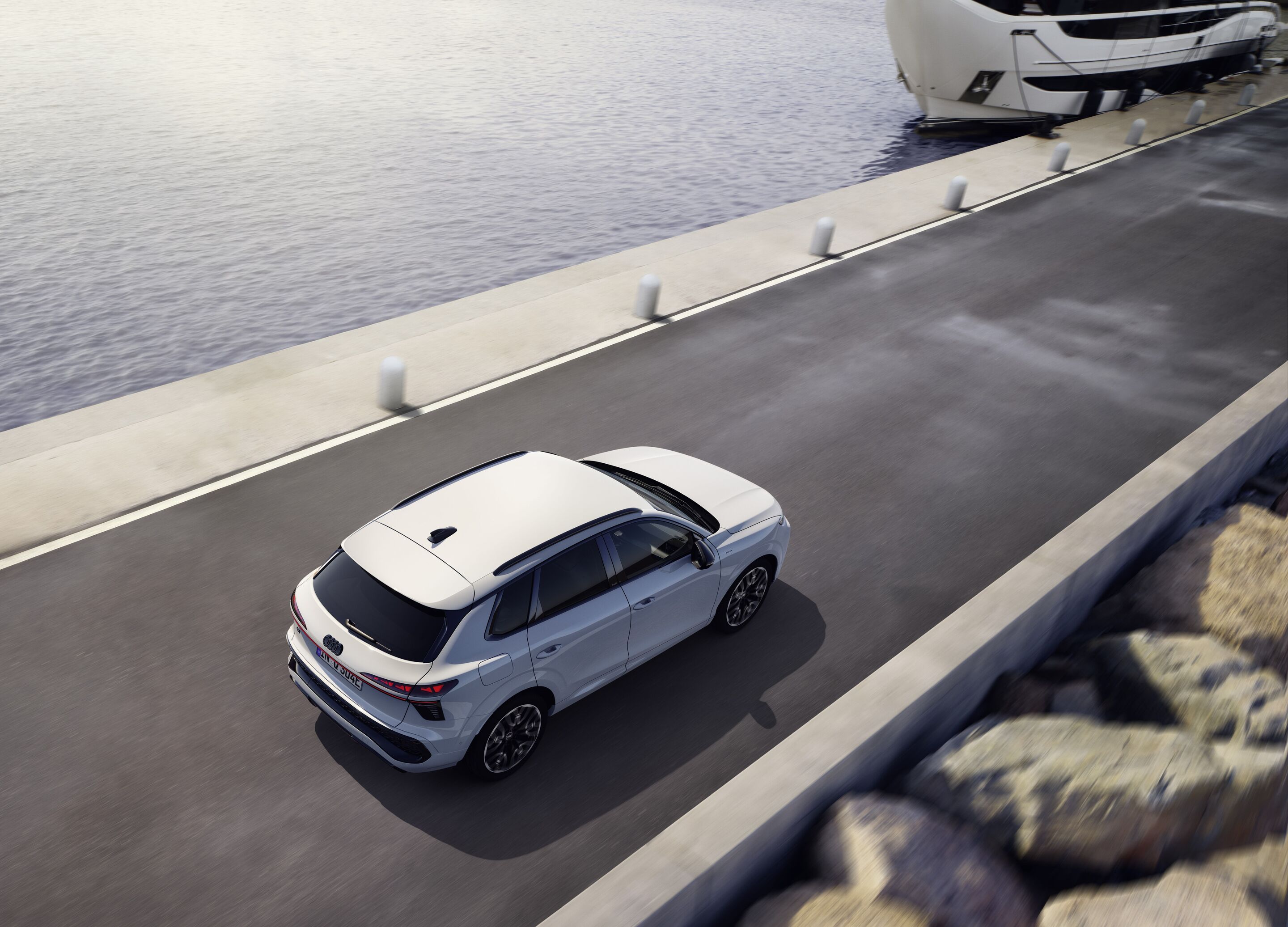
The Audi Group performed solidly in the first quarter of 2026, a period marked by geopolitical and economic turbulence. Despite the global decline in the automotive market, the company increased its deliveries in Germany and Europe. While deliveries of battery-electric vehicles declined slightly overall, partly due to changes in subsidy policies, Audi-brand plug-in hybrids saw year-on-year growth of approximately 160 percent. In the first three months of the year, revenue reached 14.2 billion euros, operating profit rose to 588 million euros, and net cash flow stood at 883 million euros.
“Certainties of the past – such as stable sales markets and predictable conditions – no longer apply. The pace of change in the global environment has sped up significantly – and is having a noticeable impact on our business. Our performance clearly shows that we need to act urgently. We are therefore working on our cost structures and pressing ahead with efficiency measures,” says Audi CFO Jürgen Rittersberger.
The Audi Group delivered 364,877 (-6.1 percent) cars from the Audi, Bentley, and Lamborghini brands to customers in the first quarter of 2026.
Electrified vehicles account for 20 percent of deliveries
The Audi brand delivered 360,106 vehicles. This includes more than 30,000 plug-in hybrids – a year-on-year increase of nearly 160 percent. In contrast, global demand for fully electric models declined slightly to around 42,000 vehicles delivered as a result of changes in subsidy policies in the USA and China. Including fully electric models, electrified vehicles accounted for 20 percent of deliveries.
Audi continues to refresh its model lineup with electric cars, plug-in hybrids, and internal combustion engine vehicles specially tailored to core markets. “In a world where our customers’ expectations are increasingly diverse from region to region, it is clear the ‘world car’ business model is becoming less and less viable. Market-specific solutions and models are a necessity,” says Audi CEO Gernot Döllner. “The courage to pursue new partnerships and new approaches to development, branding, and markets is not a nice-to-have, but a prerequisite for gaining a competitive edge.” With this in mind, the company unveiled the AUDI E7X, the second model from its China-exclusive sister brand, at Auto China in Beijing in April. This summer, the new Audi Q9 will be launched as the first full-size flagship SUV, targeting customers in North America. In the fall, this will be followed by the Audi A2 e-tron, an electric entry-level model designed for and built in Europe. Audi will introduce even more new models of different drive types around the world in 2026, including the new Audi Q7 and the updated
Audi Q4 e-tron, as well as several vehicles exclusively for the Chinese market.
Deliveries in Europe, North America, and China
In Europe1 (excluding Germany), deliveries grew in the first quarter of 2026. Audi delivered 123,724 vehicles to its customers – nearly 6 percent more than in the same period last year. In Germany, Audi increased its deliveries by nearly 4 percent to 50,308. The brand significantly strengthened its position in its home market, particularly in the electric vehicle segment: 12,223 vehicles delivered represent growth of 41 percent compared with the first quarter of 2025.
Audi saw a significant decline in North America (excluding Mexico), where the brand delivered 35,464 vehicles in the first quarter of the year. The drop of 27 percent is primarily attributable to US tariffs and the end of subsidies for electric cars in the USA. Meanwhile, Audi continues to expand its lineup: the spacious interior and numerous technological features in the Audi Q9 are tailored to the needs of customers in North America. With the new Audi Q3, which was successfully launched in March, and the new Audi Q7, which is also set to debut on the US market this year, these model launches will make Audi’s premium SUV lineup the youngest in the USA.
In China, Audi delivered 127,109 vehicles from January to March 2026. The decline of 12 percent is primarily attributable to macroeconomic uncertainties, a market environment that remains highly competitive, and model changes. At the same time, deliveries of fully electric models increased by nearly 28 percent. Audi is continuing the product initiative with its partners FAW and SAIC: the new Audi A6L was launched just a few weeks ago. The AUDI E7X will follow in the first half of 2026.
In addition, Audi and SAIC are strengthening their strategic partnership and establishing a new AUDI Innovation and Technology Center in Shanghai.
In overseas and emerging markets, customers took delivery of nearly 24,000 vehicles, equating to a decline of more than 6 percent. Among other factors, the conflict in the Middle East had a negative impact on local deliveries.
Revenue, operating profit, operating margin
The Audi Group generated revenue of 14,178 million euros in the first quarter of 2026. The decline of approximately 8 percent is attributable to lower delivery volumes in a highly competitive market environment as well as negative product mix effects.
Operating profit rose by nearly 10 percent to 588 (Q1 2025: 537) million euros; the operating margin increased to 4.2 (Q1 2025: 3.5) percent. Cost discipline and lower provisions relating to CO₂ compliance had a positive impact here. Restructuring expenses also declined. Among other things, US tariffs had a negative effect.
Overview of Bentley, Lamborghini, and Ducati
Bentley’s revenue fell to 462 (Q1 2025: 661) million euros, partly due to lower volumes, especially as a result of the challenging market environment in China and the USA. The operating result was further impacted by US tariffs and restructuring measures and amounted to -26 (Q1 2025: 71) million euros, while the operating margin stood at -5.6 (Q1 2025: 10.7) percent.
Compared with the strong first quarter of last year, Lamborghini generated revenue of 863 (Q1 2025: 895) million euros from January to March 2026. Operating profit came to 200 (2025: 248) million euros, while the operating margin amounted to 23.1 (2025: 27.7) percent and remained at a high level.
Ducati’s revenue fell to 203 (Q1 2025: 246) million euros, reflecting the highly competitive market. Operating profit amounted to 7 (Q1 2025: 15) million euros, the operating margin to 3.5 (Q1 2025: 6.3) percent.
Financial result and profit after tax
The Audi Group’s financial result at the end of the first three months of the 2026 fiscal year amounted to 174 (Q1 2025: 265) million euros. This includes 28 (Q1 2025: 170) million euros from business in China.
Profit before tax fell to 763 (Q1 2025: 802) million euros, while profit after tax amounted to 559 (Q1 2025: 630) million euros.
Net cash flow
Net cash flow amounted to 883 (Q1 2025: -61) million euros. The increase is primarily attributable to optimized working capital.
Forecast for 2026
The Audi Group continues to expect revenue of between 63 and 68 billion euros for 2026. The operating margin is projected to range from 6 to 8 percent. Audi forecasts net cash flow of between 3 and 4 billion euros. The financial outlook for 2026 is based on the tariff situation as of end-April, while potential impacts from further escalation in the Middle East cannot currently be reliably assessed and are therefore not included.
Further information can be found in the Quarterly Update and Fact Pack for the first quarter of 2026.
Selected Audi Group key figures at a glance
| Q1 2026 | Q1 2025 | |
| Brand Group car deliveries | 364,877 | 388,756 |
| Audi brand deliveries | 360,106 | 383,401 |
| Revenue in million euros | 14,178 | 15,431 |
| Operating profit in million euros | 588 | 537 |
| Operating margin in percent | 4.2 | 3.5 |
| Net cash flow in million euros | 883 | -61 |
| Financial result in million euros | 174 | 265 |
| Profit before tax in million euros | 763 | 802 |
| Profit after tax in million euros | 559 | 630 |
| Audi brand deliveries1 | Q1 2026 | Q1 2025 |
| World | 360,106 | 383,401 |
| Europe (excl. Germany) | 123,724 | 116,815 |
| Germany | 50,308 | 48,447 |
| North America (excl. Mexico) | 35,464 | 48,599 |
| China (incl. Hong Kong) | 127,109 | 144,471 |
| Overseas and emerging markets | 23,501 | 25,069 |
1Note: A new calculation method introduced in Q1 2026 affects the allocation of countries between Europe and overseas and emerging markets.