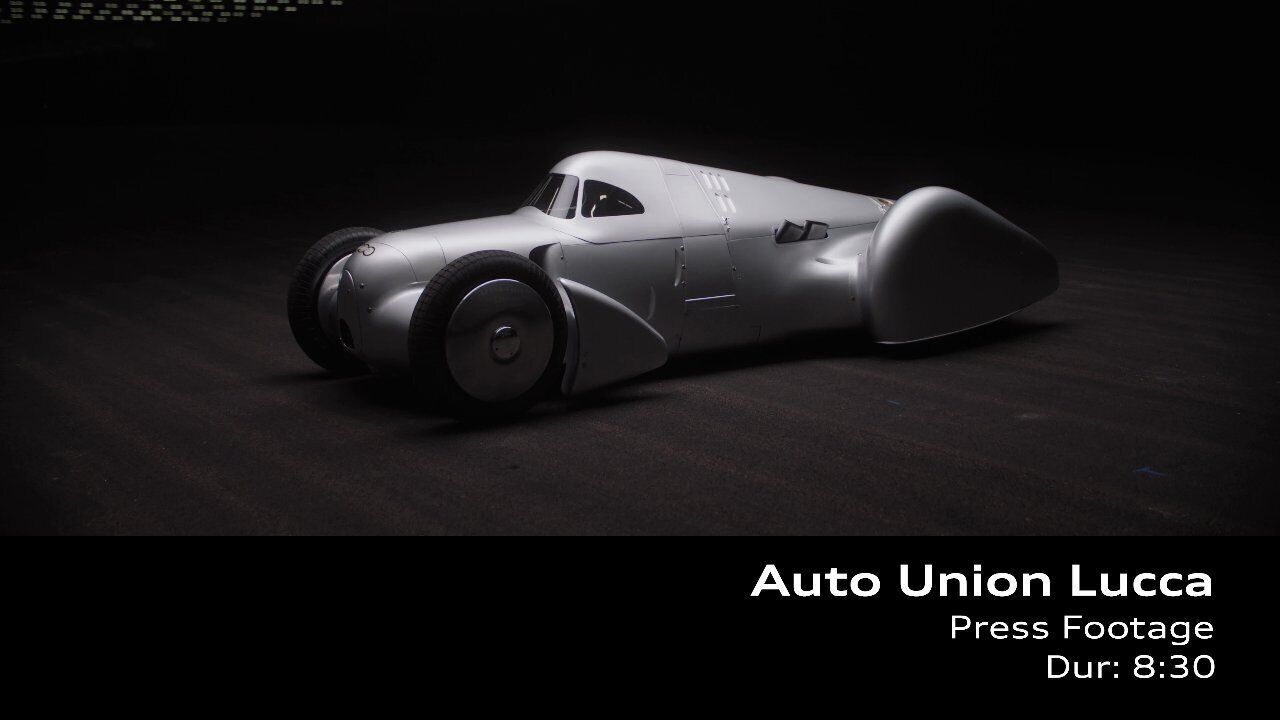
Audi Tradition unveils record-breaking car in Italy: Auto Union Lucca joins the Silver Arrow family
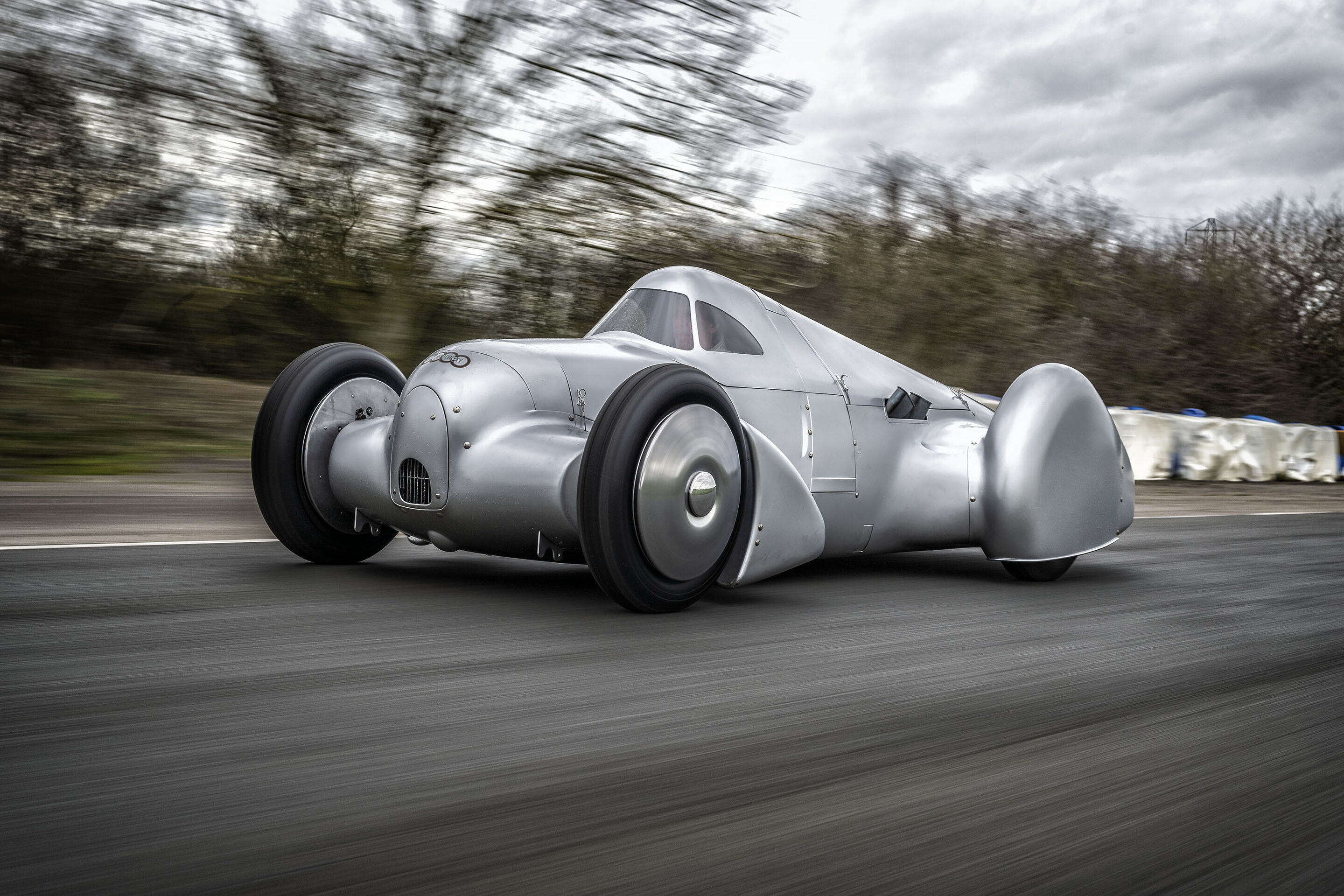
- First dynamic appearance of the recreated Rennlimousine at the Goodwood Festival of Speed in July
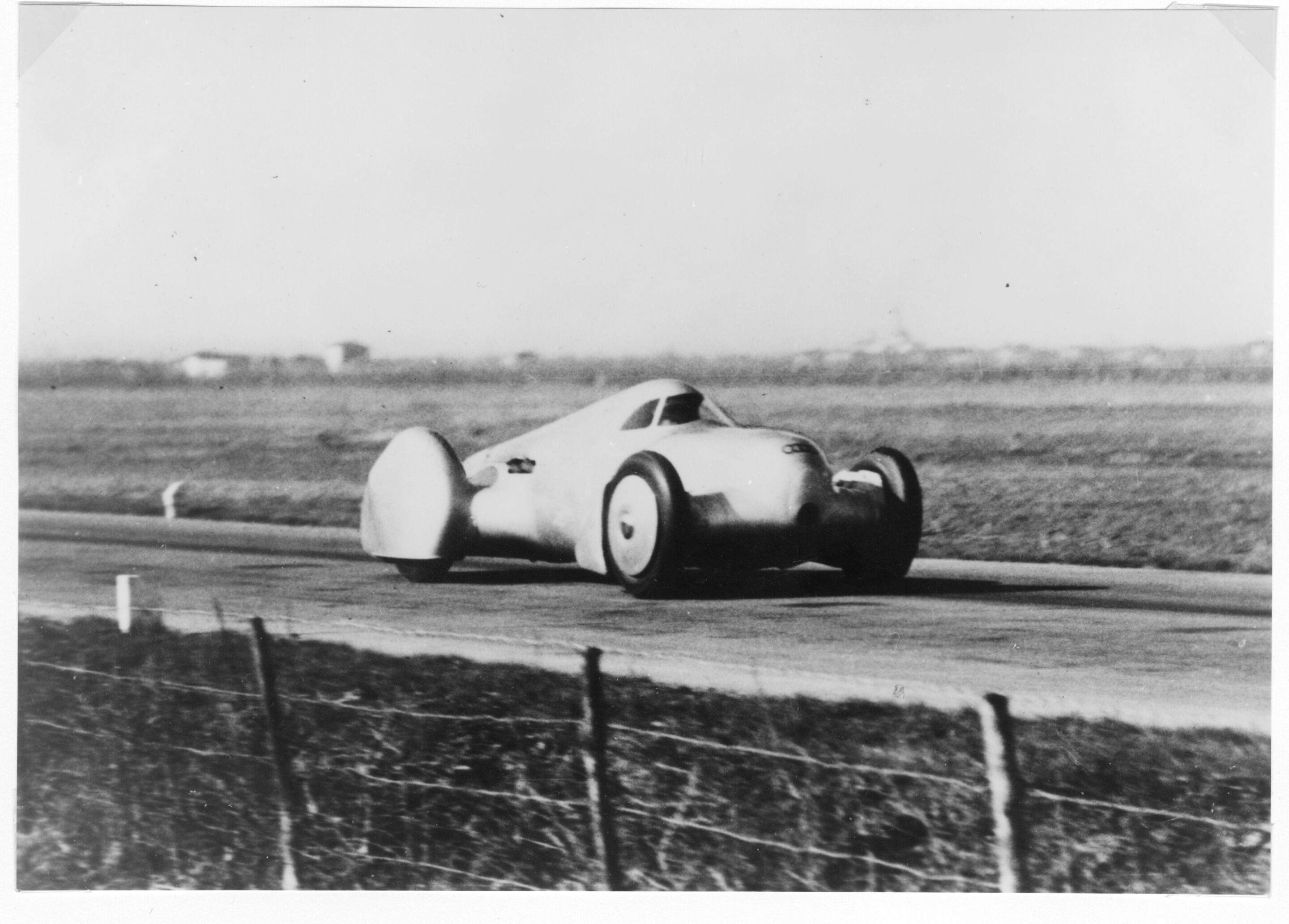
- “The fastest road racing car in the world”: Hans Stuck accelerates the Auto Union Lucca to a top speed of 326.975 km/h on February 15, 1935
- Aerodynamics, lightweight construction, high-performance engines – a testament to Auto Union’s innovation and engineering expertise
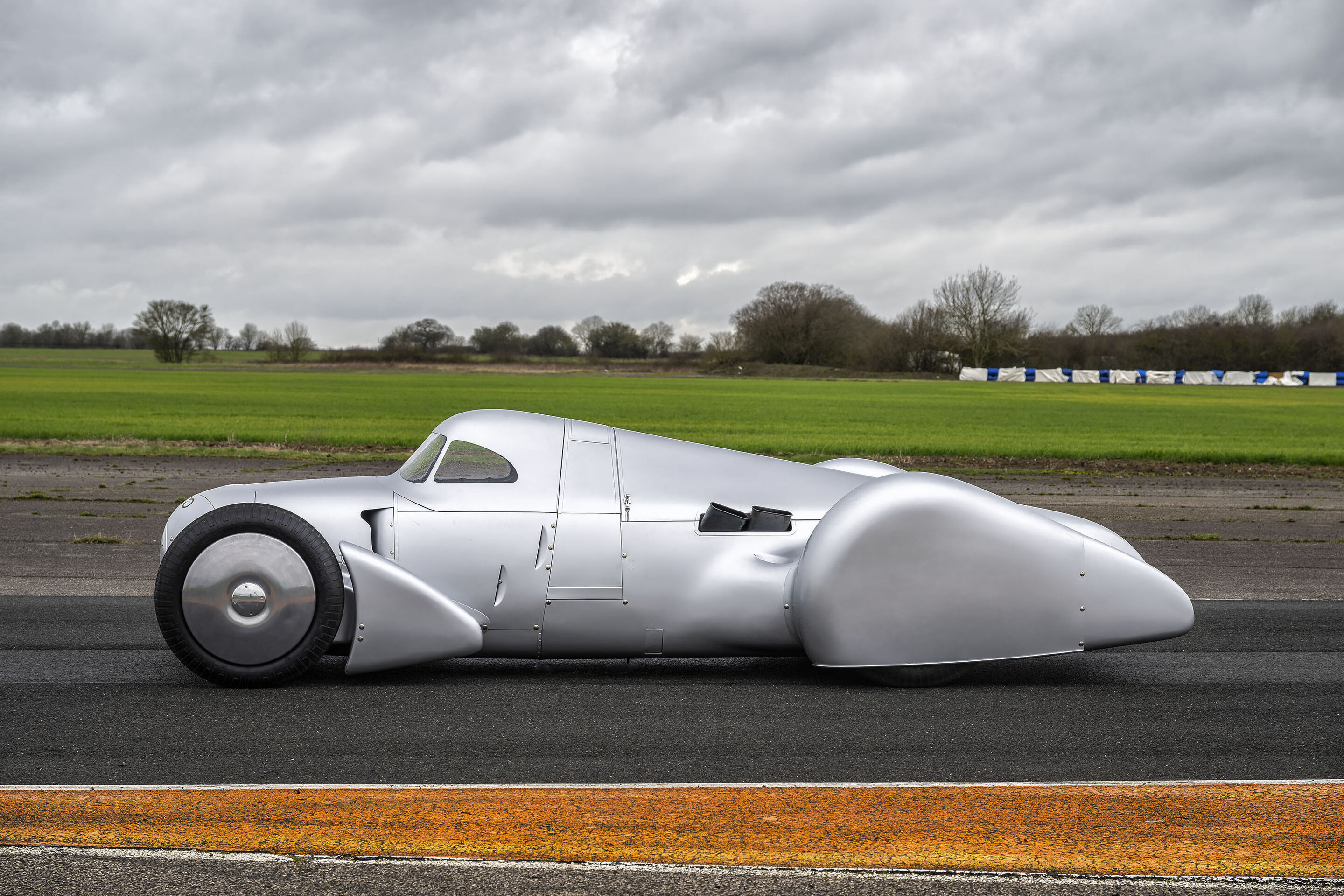
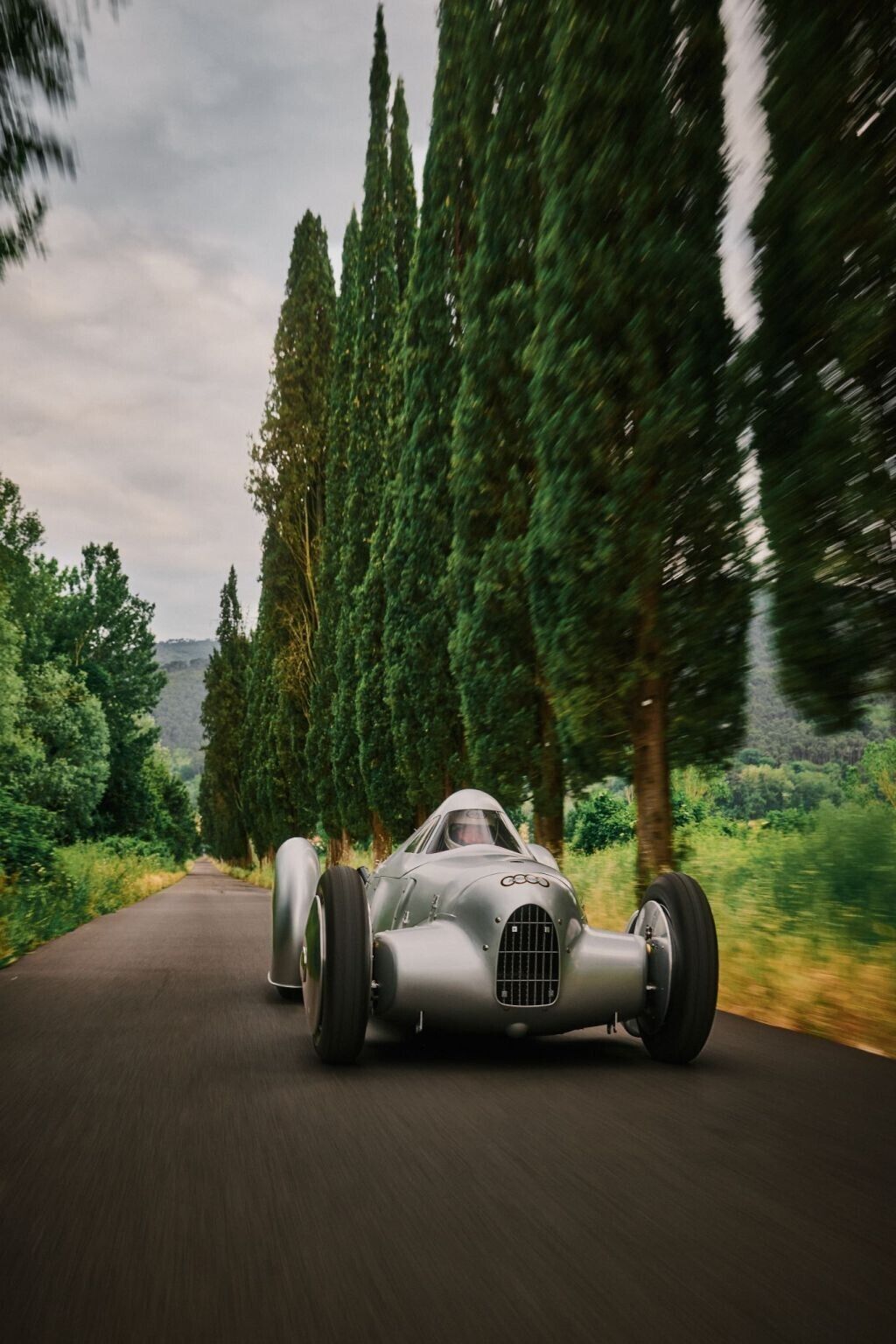
This car makes a statement: the Auto Union Lucca is emblematic of the technical innovation of the four rings in the 1930s. Audi Tradition has recreated the spectacular record-breaking car and will unveil it for the first time in early May in – aptly – the Italian city of Lucca. On February 15, 1935, the car set a widely acclaimed flying-start mile record on a straight section of the autostrada near Lucca, achieving a calculated average speed of 320.267 km/h and a measured top speed of 326.975 km/h. The Rennlimousine, a period term meaning “racing sedan,” was completed in the spring of 2026 and will join the legendary Silver Arrows in AUDI AG’s historic vehicle collection.
The 1930s see an international race to set records. Speed is far more than a mundane measurement – Grand Prix races and the constant breaking of speed records are followed and celebrated almost obsessively by the media and the public. Over the years, Germany becomes the scene of fierce competition among brands, drivers, and technologies: the star versus the four rings, Caracciola and von Brauchitsch versus Stuck and Rosemeyer, front engine versus mid-engine. Auto Union AG, founded in 1932 by a merger of Audi, DKW, Horch, and Wanderer, enters its first Grand Prix season under the new 750-kilogram formula in 1934 with the 295 PS Auto Union Type A. That same year, it leads the way in terms of speed records: Auto Union sets three world records on March 6 and five more on October 20 – all in a car driven by the experienced racing driver and hill climb specialist Hans Stuck.
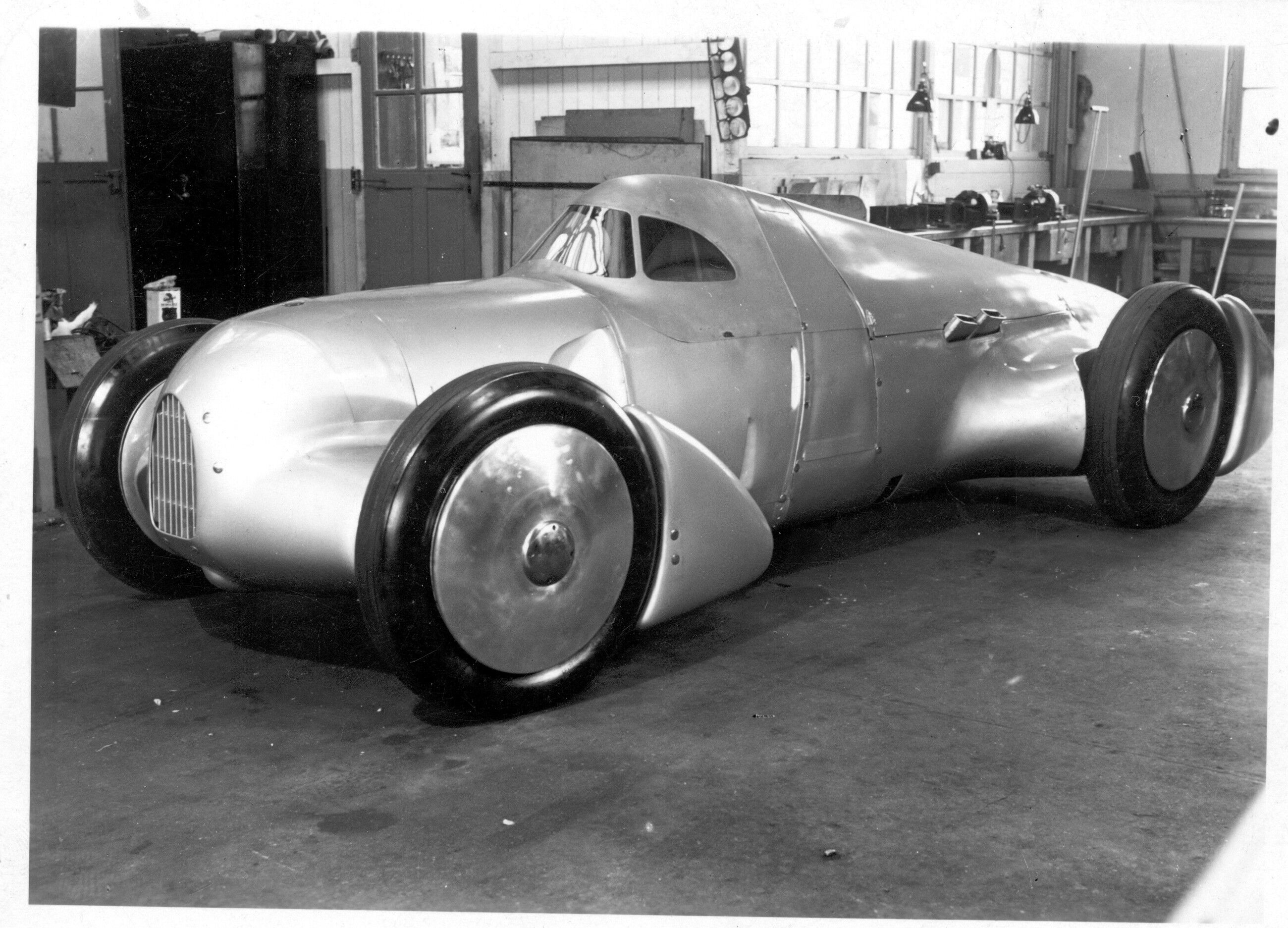
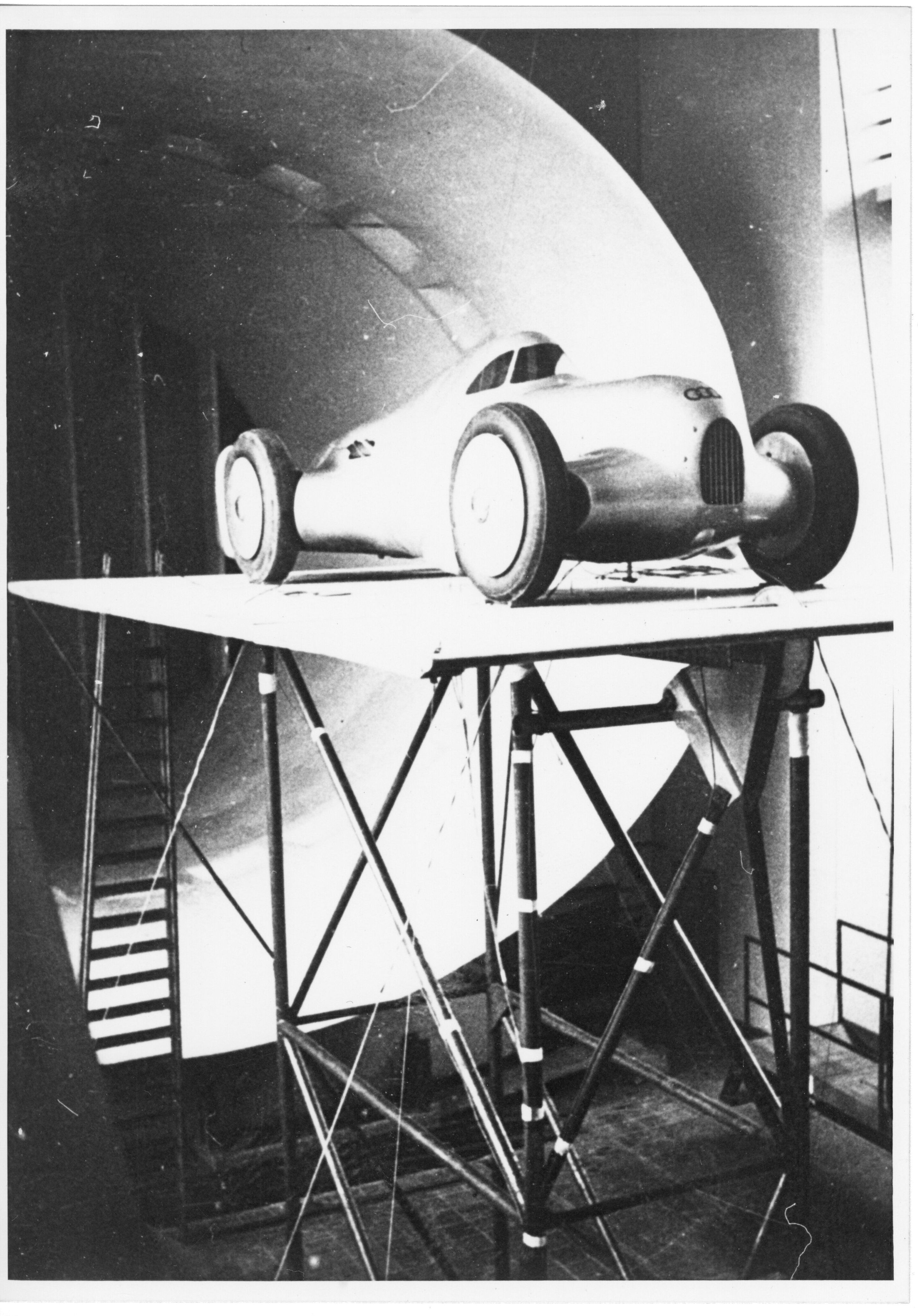
Daimler-Benz AG is under pressure – and steps up its game: Rudolf Caracciola ties Stuck’s record and, in late October 1934, sets several international records on the highway near Gyón, Hungary, in a specially built record-attempt car. Among other records, he reaches an average speed of 316.592 km/h over a mile from a flying start. This is the speed to beat. The race engineers and mechanics at Auto Union are in for a “hot” winter. They are already planning the next record attempts for early 1935, so they need to level up their racing car. Based on the vehicle used to set the records in October, the experts first develop a wind tunnel model. This undergoes various tests – first as an open version, then with a closed cockpit for improved aerodynamics. Auto Union’s racing division incorporates the findings from the wind tunnel at the Berlin-Adlershof Aeronautical Research Institute into the design of what will later become the record-breaking car – “a first in European racing car construction,” as the “Automobilrevue” noted at the time.
The body is finely sanded and coated with clear lacquer, and the spoked wheels are fitted with wheel covers. Two circular openings at the rear serve as fresh air intakes for the carburetor. The exhaust pipes point upward and are grouped into two outlets on each side. The car is already equipped with a 16-cylinder engine from the 1935 season, whose displacement has been increased to approximately 5 liters; however, this early version of the engine, with its 343 PS, does not quite reach the power output of 375 PS achieved later in 1935. The chassis and suspension are still those of the 1934 racing car, whereas the elongated, aerodynamic silhouette – with its fin-like rear end and teardrop-shaped wheel arches – clearly stands out from its racing counterparts of the previous season. At the same time, these changes – which are primarily technical and functional in nature – give rise to an aesthetic of speed that makes the Rennlimousine – as the press dubs this high-speed car – one of a kind.
Record-breaking route: from Gyón in Hungary to Milan to Lucca
After just a few weeks of development work, the car in the workshop of Auto Union’s racing division in Zwickau is finished by December 1934. It is test-driven for the first time on Berlin’s Avus circuit on December 17, and at the end of January 1935, the decision is made: the record attempt will take place in Hungary – on the very same track near Gyón where Caracciola set the class record for a flying-start mile in a Mercedes the previous year. Auto Union makes all the necessary arrangements with the Hungarian Automobile Club; the high-performance record contender arrives in Budapest on February 4, 1935. The next day, the team sets off for the route about 40 kilometers further south; the weather is rapidly deteriorating. Nevertheless, two test runs are carried out on February 5. On the second run, the exhaust pipe burns through, and the tests have to be suspended. Due to the unpredictable weather, the race organizers decide to continue the record attempts south of Milan. But conditions are not ideal there either: the planned route is covered in snow, so Auto Union heads even further south. A suitable stretch is finally found on the Florence-Viareggio road between Pescia and Altopascio, near the city of Lucca.
This section of the autostrada is ideal for record attempts – level, with a high-grip surface, eight meters wide, and virtually straight as an arrow for around five kilometers. The first test drives begin on February 14, 1935. Various vehicle configurations are trialed, details such as the radiator grille and wheel covers are adjusted, data is analyzed. The next morning at 9 a.m., the car takes to the track near Lucca once again – with Hans Stuck at the wheel. Word has gotten around that something big might be in the works. “Automobilrevue” writes: “Auto Union’s new single-seater racing car, with its streamlined body made entirely of light metal, caused quite a stir among the many prominent figures from the world of Italian sports who had traveled to Lucca for the event. (…) Thousands of spectators watched the test runs.” Official timekeepers are also on hand: the independent chronometrists, as they are called at the time, use state-of-the-art chronometers equipped with electrically triggered photocells. Stuck makes a few attempts; some adjustments are made to the Rennlimousine. With the front of the radiator sealed – the radiator grille is covered except for a small opening – and further aerodynamic optimizations, the ambitious goal is finally achieved: over two averaged runs, the flying-start mile record in International Class C is set at an average speed of 320.267 km/h. Furthermore, the measuring devices record a time of just 11.01 seconds for a section of the return run in “Run 3 Stuck II,” which corresponds to a blistering speed over the kilometer of exactly 326.975 km/h – making the car the “fastest road racing car in the world.”
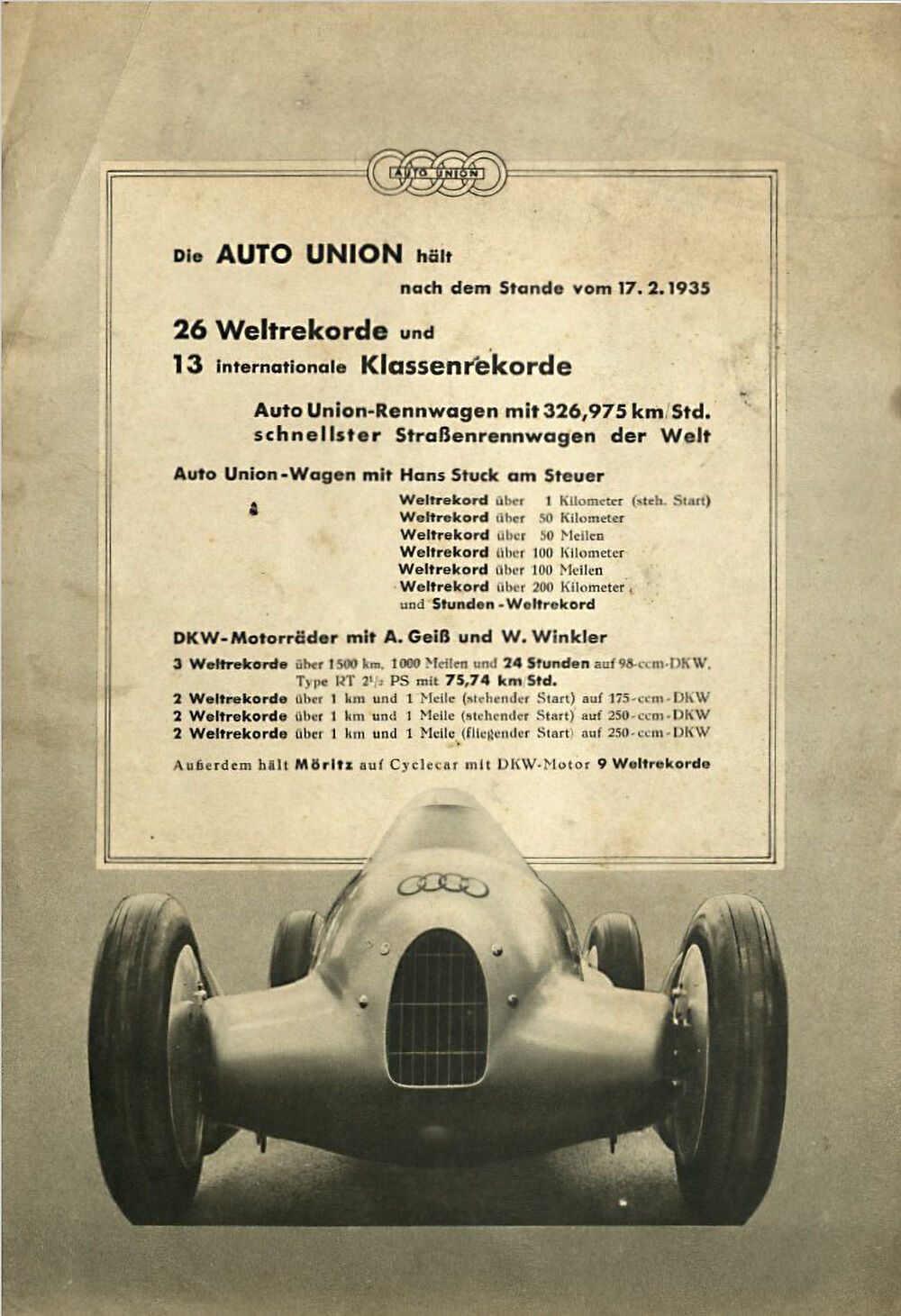
The spectacular display of speed put on near Lucca by the magnificent car and its daring driver Hans Stuck must, of course, be broadcast to the world immediately in order to give Auto Union yet another edge over the Silver Arrows from Stuttgart in their hotly contested battle for prestige. At almost the same time as the successful record attempt in Lucca, a virtually identical version of the record-breaking car is unveiled at the International Motor Show in Berlin (February 14 to 24). The main difference compared with the Lucca model is the larger grille. Since the mile record has not yet been officially recognized, the promotional poster created for the trade show – alongside a list of all world and class records achieved by Auto Union brands to date – features the Lucca car as the “fastest road racing car in the world,” citing the top speed of 326.975 km/h.
On the racetrack: late May 1935 on the Berlin Avus
Since success in motorsport must be proven again and again, the racing division in Zwickau immediately analyzes the data collected in Lucca in order to continue developing and optimizing the vehicle. The modified Lucca car makes its next appearance just a few months after setting the record in Italy, this time accompanied by its Berlin counterpart: on May 26, 1935, the fifth International Avus Race is held in Berlin. As this is a non-formula race and the 750 kg weight limit does not apply, Auto Union fields not only two Grand Prix cars but also the two heavier Rennlimousinen; the documented starting weight (including the driver) is 1,030 kg. Hans Stuck and the Italian Achille Varzi drive the Grand Prix cars; the driver of the former Lucca car with starting number #3 is Prince Hermann zu Leiningen, who has been a member of the Auto Union team since early 1934. Bernd Rosemeyer, a young driver signed for the 1935 season, drives the second Rennlimousine, numbered #4 – it was displayed at the motor show in Berlin and has been fitted with a larger radiator grille for the Avus race. Rosemeyer reaches an impressive 290 km/h in practice and therefore starts alongside Stuck on the front row in the first heat. But then, as he accelerates out of the north curve, his car’s right rear tire bursts. Rosemeyer manages to bring the car under control and rolls to the side of the track – his very first circuit race for Auto Union comes to an early end. In the second heat, Prince zu Leiningen starts from the second row in his Rennlimousine, the technically enhanced record-breaking car from Lucca. Driving alongside him is Mercedes driver Rudolf Caracciola, bearing starting number #5. Achille Varzi in #2 and Manfred von Brauchitsch in #6 start at the front. At first, the two Auto Union cars and Rudolf Caracciola battle for the lead. However, Auto Union ultimately has to cede victory to its competitors from Stuttgart: Hermann zu Leiningen’s Rennlimousine cannot withstand the constant strain, and so he, too, retires his car due to a damaged coolant line during the heats.
Auto Union Lucca embodies the pursuit of “higher, faster, further”
The 1930s are a prime example of just how fast-paced motorsport is and how many ups and downs, successes, and dramatic moments it has to offer: the Lucca car sets a speed record in Italy in mid-February 1935, but by the end of May neither of the two Rennlimousinen make it to the finish line of the Avus race in Berlin. At the same time, both the Auto Union Lucca and its Avus variants provide the Auto Union racing team with valuable insights and, overall, play an important role in the history of the four rings in motorsport in the 1930s, as Stefan Trauf, Head of Audi Tradition, explains: “Audi does not yet have any Auto Union racing or record-attempt cars from the early Grand Prix era in its historic vehicle collection. With the Auto Union Lucca, we are adding a highly evocative member of the Silver Arrow family to the AUDI AG collection. The record-breaking car from Lucca is an impressive demonstration of the role of engineering: setting new standards, breaking new ground, and continually pushing the boundaries of what’s possible. The car is a testament to the technical innovation of the four rings and shows how ‘Vorsprung durch Technik’ was achieved in the 1930s. To me, the Auto Union Lucca is a masterpiece of engineering, tuned for high speeds and maximum performance, yet at the same time a beautiful car – in my view, this combination is unique.”
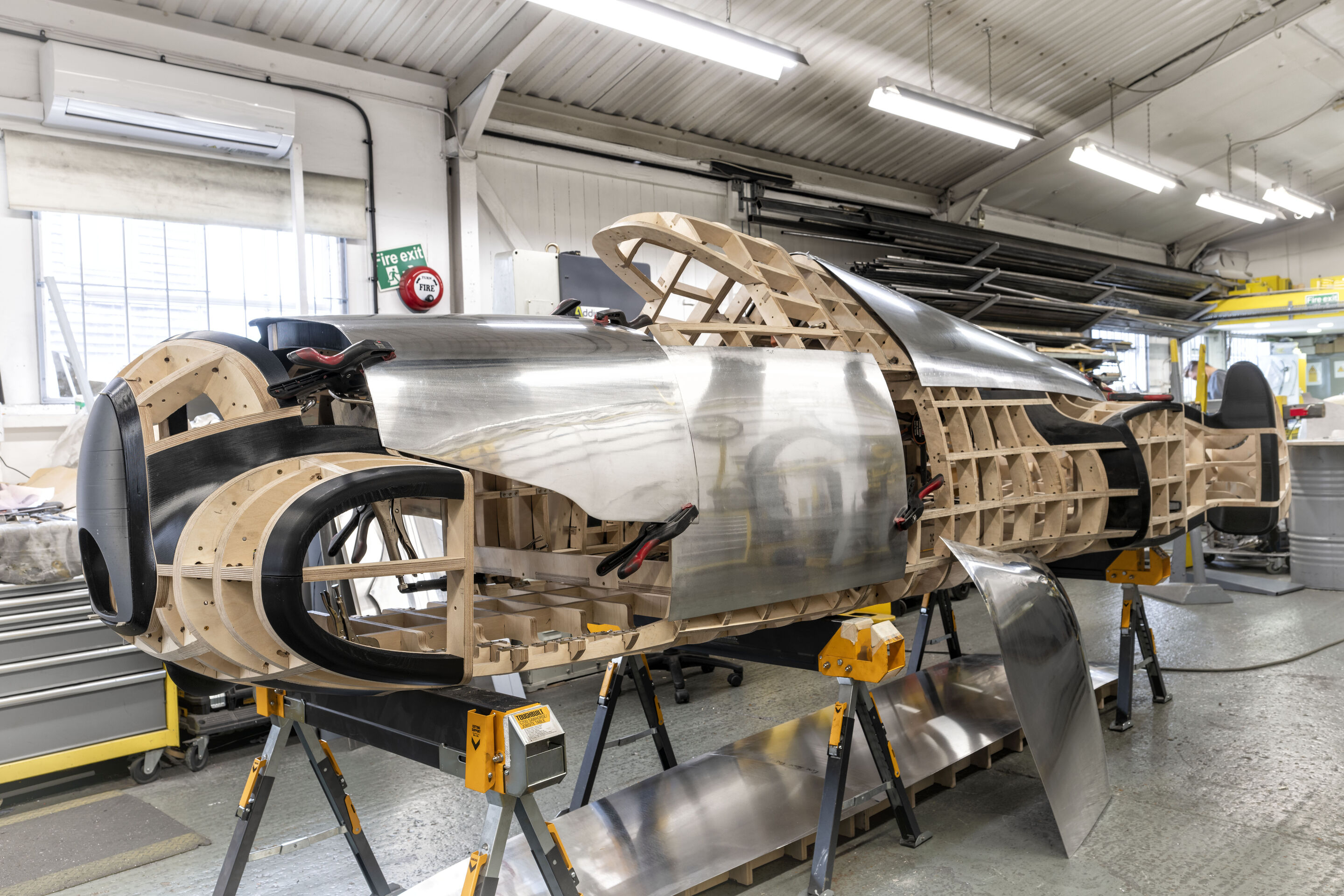
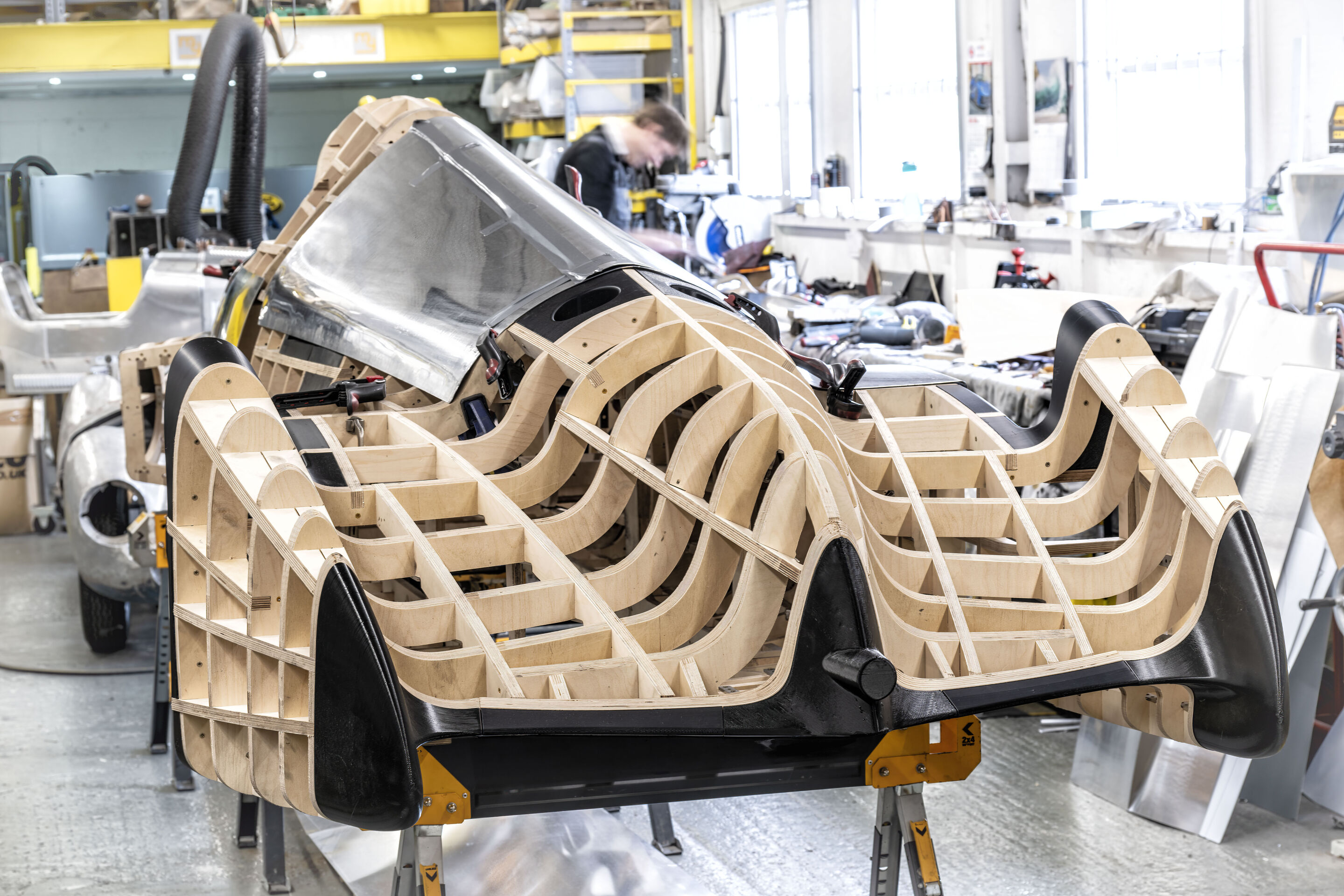
Audi had the Auto Union Lucca recreated by Crosthwaite & Gardiner based on historical photos and various other documents from the archives. After spending just over three years on its construction, the British restoration specialists completed the project in early 2026. All components are handcrafted especially for this model; in addition to the technical implementation, the production of the streamlined bodywork – such as the cockpit canopy and the tapered tail – was particularly labor-intensive. The hard work paid off: at the end of April, a drag coefficient of 0.43 was measured for the record-breaking car in the Audi wind tunnel. Project manager for the construction of the Auto Union Lucca was Timo Witt. He has been in charge of the historic vehicle collection at Audi Tradition since 2015 and previously spent more than ten years as a motorsport engineer. Witt: “I’m impressed by the agility and speed with which they responded to the competition back then – in the technical realm, in vehicle development, and in organizational matters: when the weather takes a turn, the whole team moves on without hesitation. Without this high degree of flexibility or the ability to adapt to new situations at lightning speed, the record-breaking drive in Lucca would not have been possible.” Timo Witt also shares some fascinating details about the vehicle’s construction: “Of course, we recreated the car as authentically as possible, but at the same time, issues such as the car’s durability and maximizing efficiency in the project’s implementation were also important to us.” He illustrates this with two examples: Audi Tradition has fitted the Lucca with the 16-cylinder engine from the Auto Union Type C, because its 6-liter engine is visually indistinguishable from a 5-liter engine, making the engines interchangeable within the Silver Arrow family. The Auto Union Lucca also features several modifications that were implemented for the Avus race in Berlin in May 1935, such as the ventilation system. Timo Witt: “We made these changes to the Auto Union Lucca because, otherwise, the vehicle would have been subjected to excessive thermal stress during our upcoming demonstration runs.” With minor modifications to the radiator or the body panels, the Auto Union Lucca can be converted into the Avus car.
Whether in the Lucca or Avus configuration, the Auto Union Lucca embodies – like almost no other model in the lineup of Auto Union racing and record-attempt cars – the deeply emotional fusion of maximum performance and elegant lines. After being unveiled in Lucca, Italy, the Rennlimousine will make its first public appearance in motion at the Festival of Speed from July 9 to 12. Goodwood – the beauty of speed is coming …!
Technical data
| Auto Union Lucca | |
| Engine | 16-cylinder engine |
| Displacement | 6,005 cc |
| Power output | 520 PS (382 kW) |
| Maximum speed | Not specified |
| Fuel | 50% methanol |
| Dimensions (L/H/W) | 4,570 / 1,200 / 1,700 mm |
| Wheelbase | 2,800 mm |
| Curb weight | 960 kg |
| Exterior color | Cellulose silver |
| Total production run | One-off |