Search
All search results for "exit warning"
(51)
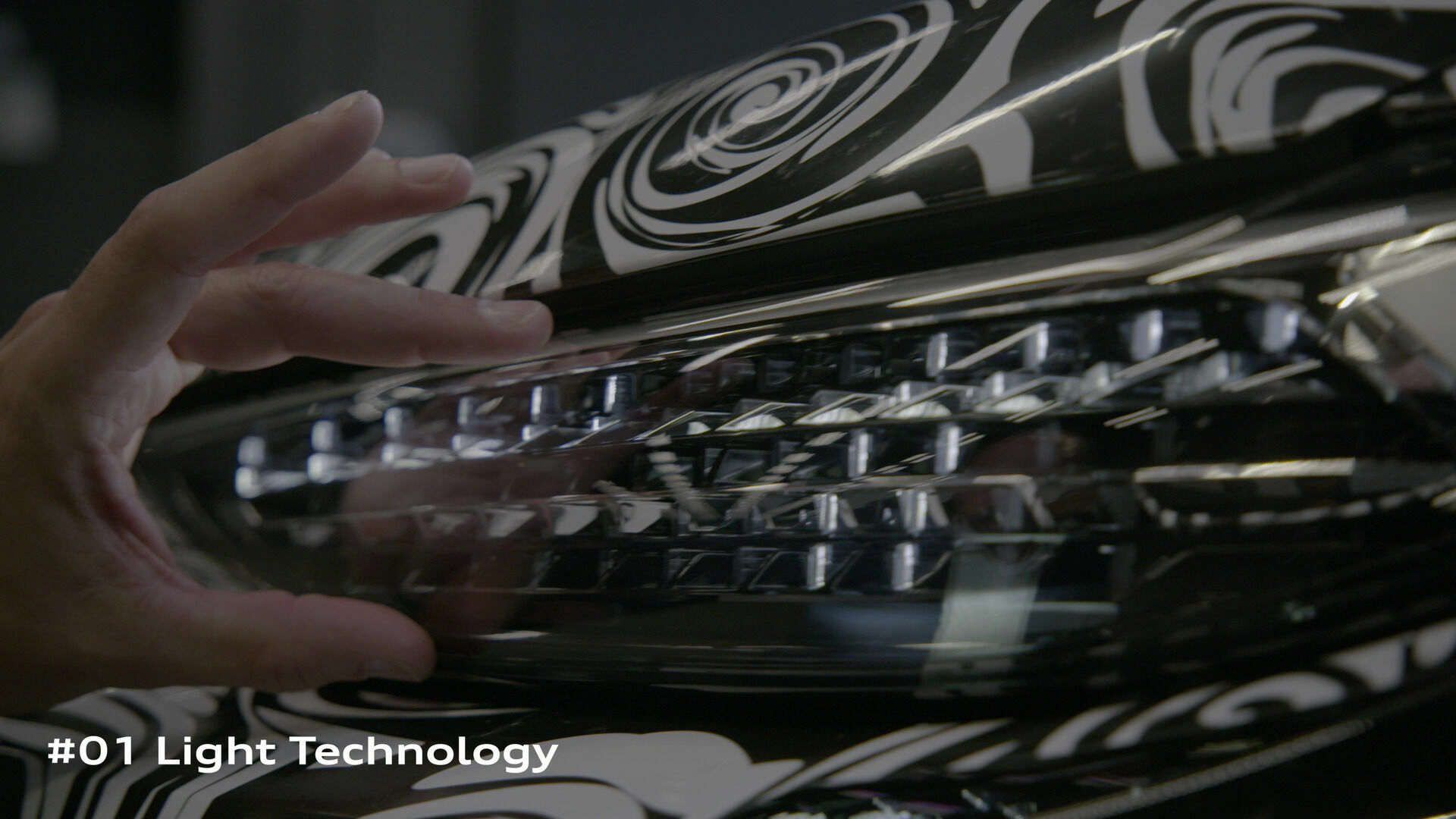
Integrated with the digital OLED rear lights, it warns other road users forsighted of accidents and breakdowns by displaying a specific static rear light signature with integrated warning symbols and the regular rear light graphic in critical road situations. The assistance system thus aids Audi drivers forsighted and all other road users. As with the advanced traffic information system in the A8, which warns road users of accidents or hazards via the digitalized headlights, the communication light uses data from the swarm. In addition, second-generation digital OLED rear lights activate the communication light with warning symbols for emergency assist, RECAS (rear-end collision alert signal), hazard warning lights, emergency calls (eCall), roadside assistance calls (bCall), and emergency brake lights. The communication light also adds an extra dimension to the exit warning function. Previously, it only informed the occupants when exiting the car, for example, if another car or a bicycle was approaching. But now, a specially adapted light signature in the rear light graphic warn cyclists or drivers approaching from behind. In this way, the Audi Q6 e-tron extends its safety concept to other road users, increasing road safety for everyone. Finally, the communication light also uses a specific light signature at the front and rear to indicate the car’s park assist status when it is in automated parking mode. This makes it clear to road users in the immediate vicinity that the car is safe to approach. A new level of freedom: digital light signatures available via the MMI and the myAudi app With up to eight digital light signatures for the headlights and rear lights, drivers can enjoy a new level of freedom in personalizing their Q6 e-tron. Customers can select a signature in one of two ways, via the myAudi app or in the car via the MMI.
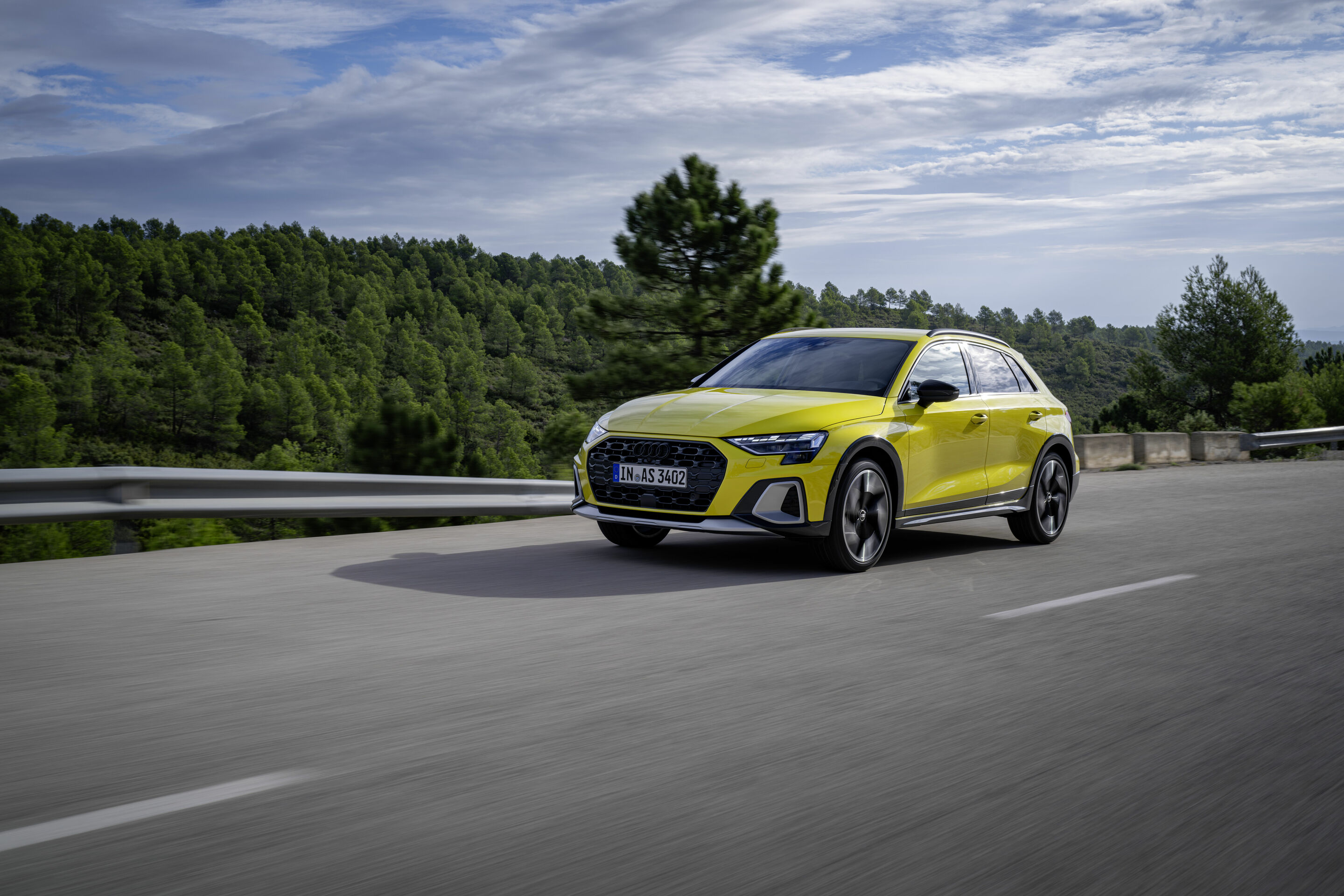 In heightened form: the new Audi A3 allstreet
As such, the A3 allstreet also offers increased comfort when entering and exiting the vehicle and better 360-degree visibility thanks to the slightly higher seat position. As with the A3 Sportback, the luggage compartment has a capacity of 380 liters, and up to 1,200 liters with the rear seat folded. Optional equipment includes an electric tailgate, a detachable hitch, and a storage and luggage compartment package. The latter offers the ability to store small objects in nets affixed to the front seat backrests or in a compartment on the driver’s side. Larger pieces of luggage are held in place by a net in the trunk. Due to the vehicle’s higher center of gravity, the A3 allstreet features a specific spring/shock absorber tuning that offers an excellent balance of high ride comfort and a sporty, precise driving experience. The front suspension uses a McPherson design with triangular lower control arms. The rear features a multi-link rear axle with a separate spring/shock absorber arrangement. Its design enables it to handle the longitudinal and lateral forces separately, ensuring high driving stability and ride comfort. Aluminum pivot bearings reduce the unsprung masses, contributing to optimum handling and steering characteristics. The electro-mechanical steering is responsive and precise. Power assistance adapts to the speed at which the vehicle is driving. For increased agility, progressive steering with variable ratio is available as an option. The harder the driver turns into a curve, the more direct the steering response. In city traffic and during maneuvering, this reduces steering effort; the A3 allstreet is more precise in sharp corners. Highly connected thanks to integration of apps and functions on demand The A3 allstreet is digital and connected – thanks to numerous connect services, functions on demand, and a store for apps.

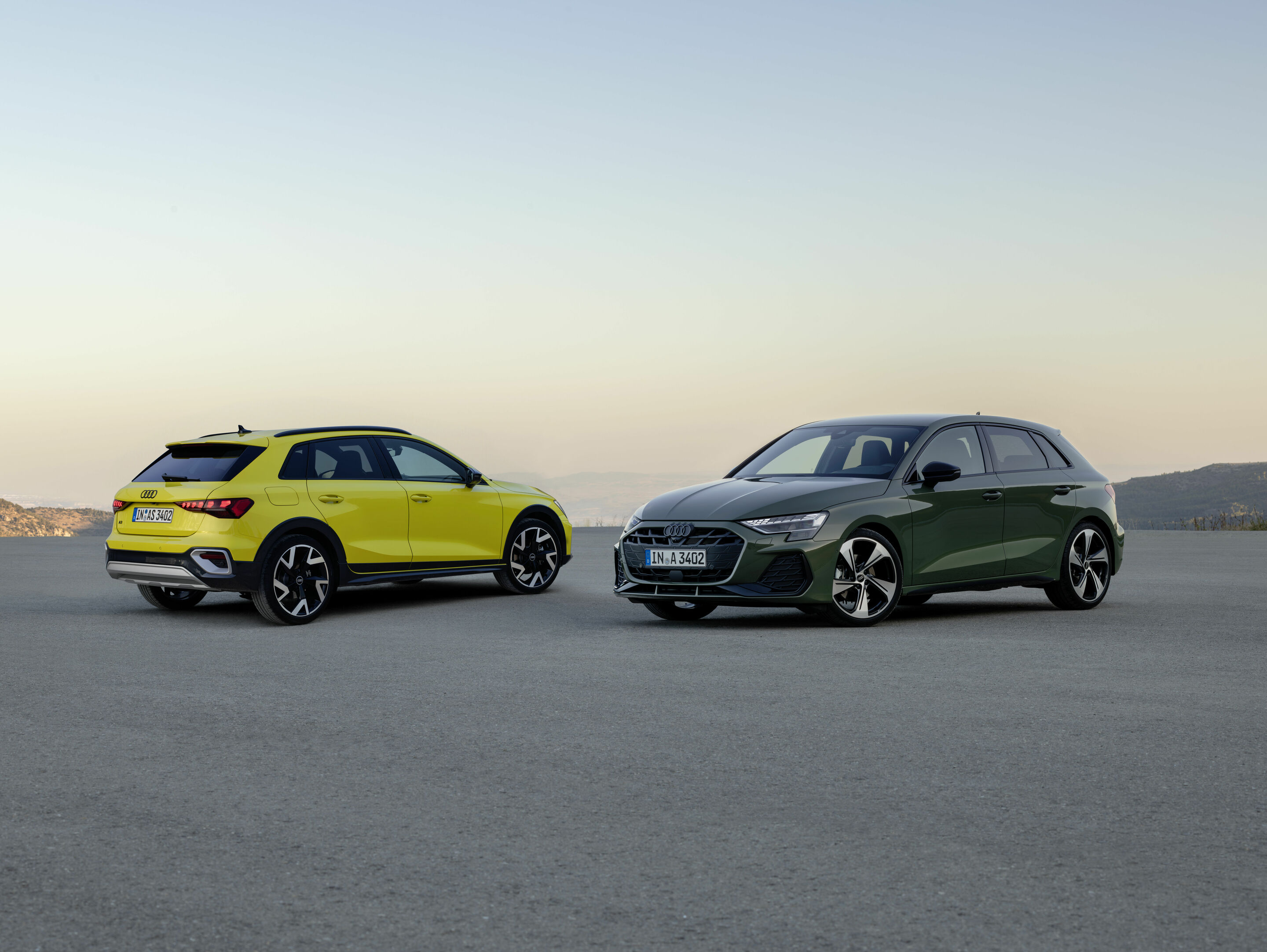 In top form: the Audi A3 and new A3 allstreet
Thanks to the slightly raised seat position, the A3 allstreet offers increased comfort when entering and exiting the vehicle and a better command of the road. As with the A3 Sportback, the luggage compartment has a capacity of 380 liters, and up to 1,200 liters with the rear seat folded. The model features roof rails as standard. Optional features include an electric tailgate, a removable tow hitch, and a storage and trunk package. The latter enables the customer to store small items in nets attached to the backs of the front seats or in the compartment on the driver’s side. A net in the trunk prevents larger pieces of luggage from shifting while on the move. Selectable: up to four selectable daytime running light signatures For the first time in the A3 series models, it is now possible to select and switch between up to four different digital daytime running light signatures in the MMI. “This gives our customers a higher degree of customization. They can change the appearance of their model at any time. The signatures interpret confidence and agility in different ways,” says Cesar Muntada, Head of Design Light Experience at AUDI AG. “This is also true for the coming home/leaving home scenarios, which were designed individually for each signature.” The LED and Matrix LED headlights create the digital daytime running lights using 24 pixel elements in three rows on the upper edge of the housing. With their wedge-shaped, flat form and wide light graphics, the headlights emphasize the sporty character of the A3 models. Significantly sharpened: the Interior To match the more striking exterior, the interior has also been significantly sharpened. There are quite a few innovations here – from the shifter design and air vents to the decorative fabric inlays and new interior lighting. All these elements are precise and detailed, emphasizing the vehicle’s progressive and technical look. The standard equipment has been significantly extended.
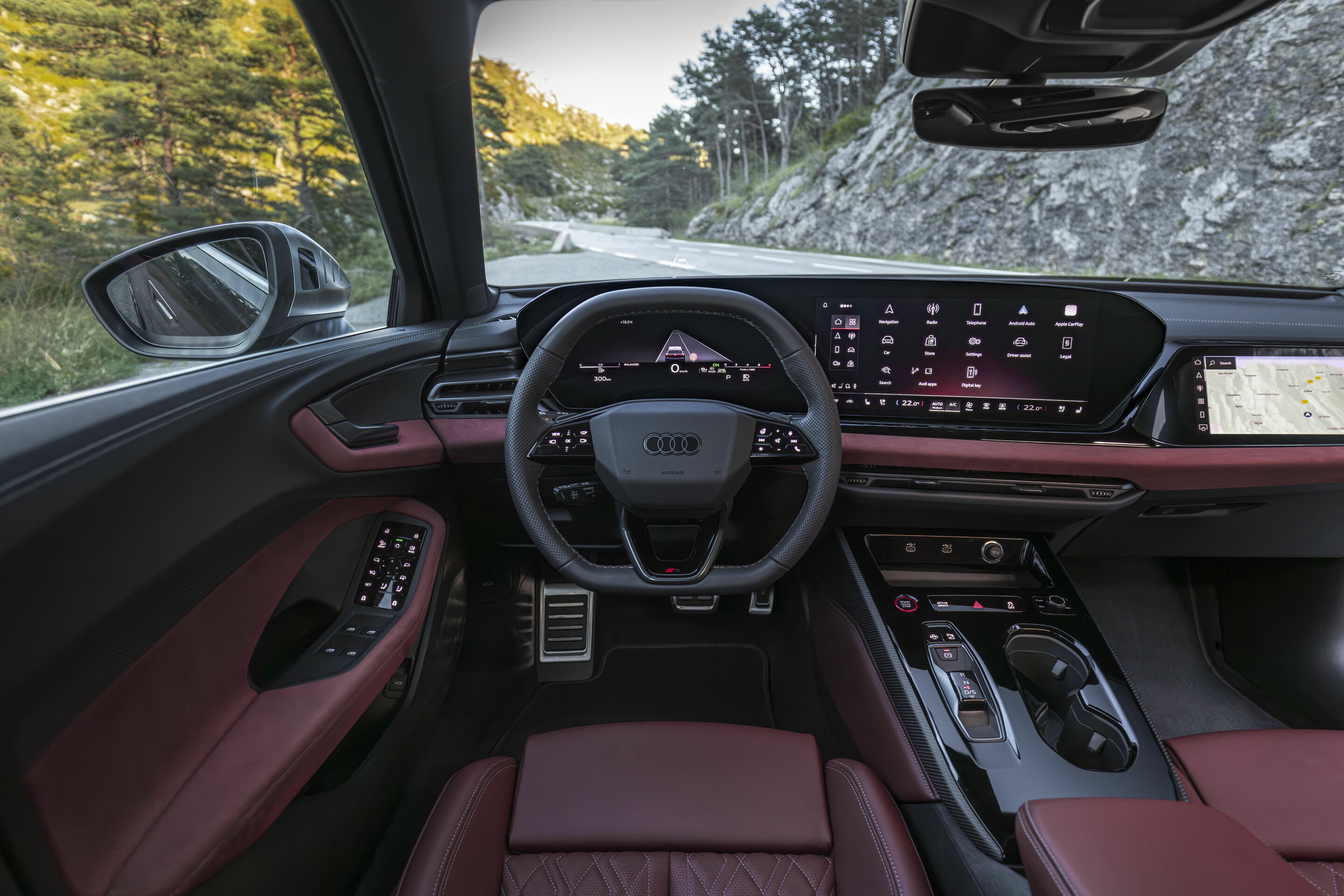
Standard features on Audi A5 models from market launch include a rear parking aid with distance display, cruise control and speed limiter, lane departure warning, efficiency assistant, and an attention and drowsiness warning. The scope of standard equipment in Audi S5 models is significantly expanded. For example, in addition to the functions described above, the S model comes as standard with adaptive cruise assist, park assist plus with distance display, traffic sign-based speed limiter, park assist plus, and, if a trailer hitch has been specified, trailer assist. A wide range of optional assistance systems can be configured for the Audi A5 and S5 models. A particular highlight is the adaptive driving assistant plus, which uses high-resolution map data and swarm data from other vehicles aggregated in the cloud. The system thus optimizes traffic sign recognition and provides support when accelerating, maintaining speed and distance, and with lane guidance. This can increase ride quality, especially on long journeys. The system uses various sensors to continually monitor the vehicle's surroundings. These include the radar sensor installed in the front of the vehicle, the front camera, and the ultrasonic sensors. Depending on the region, high-resolution map data and swarm data from other vehicles aggregated in the cloud are also used to improve driving behavior. From a fusion of this information, the system calculates the route ahead and guides the car comfortably and in the center of the lane through traffic using supportive steering interventions. At the same time, the system reacts to vehicles in front and approaching vehicles with distance control and anticipates and adapts the vehicle speed to speed limits and situations such as bends, junctions, roundabouts, and highway ramps and exits. In stop-and-go traffic, the system brakes to a standstill and can set off again automatically, depending on how long the vehicle has been stationary.
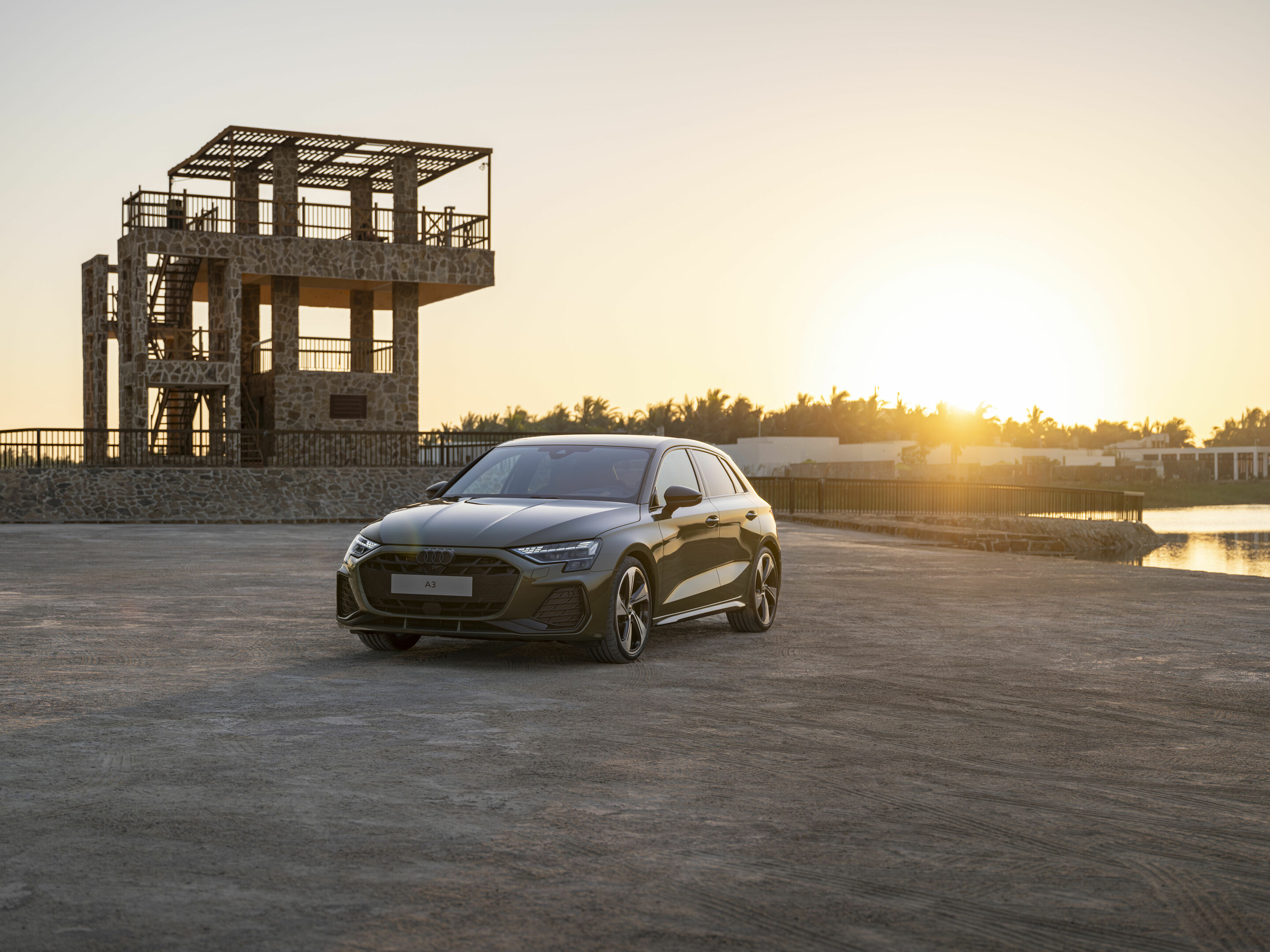 Sharpened favorite: upgrade for the Audi A3
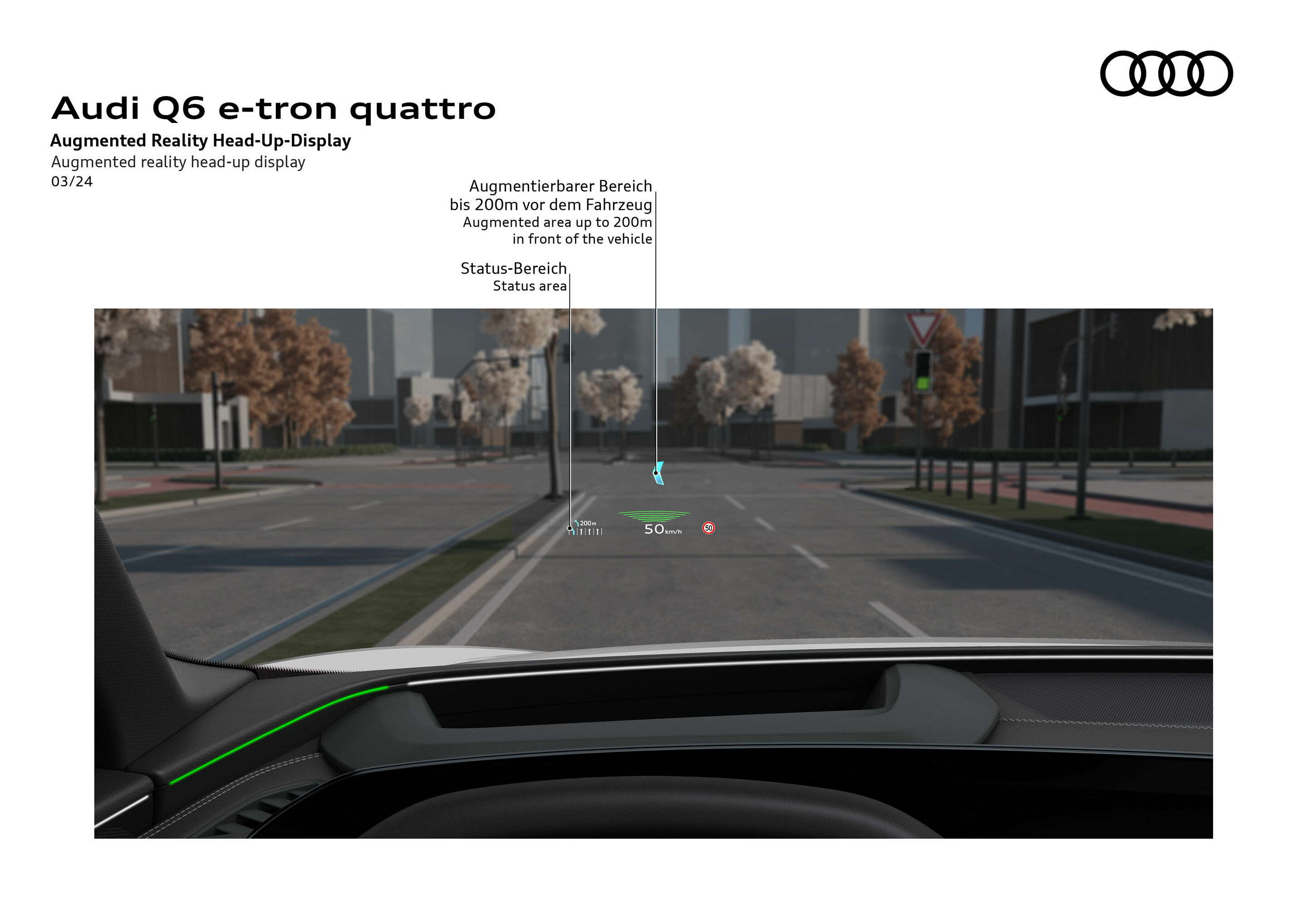
Audi pre sense front, Audi pre sense front, collision avoidance and turn assist, and the lane departure warning system help in avoiding accidents with other road users. Adaptive cruise assist, which assists with longitudinal and lateral control and has been supplemented by an assisted lane change function, enhances driving comfort. The system handles acceleration, braking, and steering at speeds of up to 210 km/h (130 mph), and also assists with lane changes at speeds above 90 km/h (55 mph) on highways. Activated via the MMI, the system uses data from the rear radar to display white arrows in the instrument panel and head-up display to indicate whether and in which direction it is possible to change lanes. If the driver initiates the lane change by tapping the turn signal, the system actively assists the driver in steering. During city driving, the park assist with park assist plus helps the driver when parking and backing out of parking spaces through targeted steering maneuvers. The lane departure warning system, exit warning, and the cross-traffic assist monitor traffic behind and on the sides of the vehicle using the rear radar, thus further increasing safety and comfort. Available for order from March: engine options and pricing In Europe, the A3 will initially be launched in two engine/transmission versions. The 35 TFSI with a 1.5-liter engine has an output of 110 kW (150 PS) and is available as an automatic version with seven-speed S tronic and mild hybrid technology.

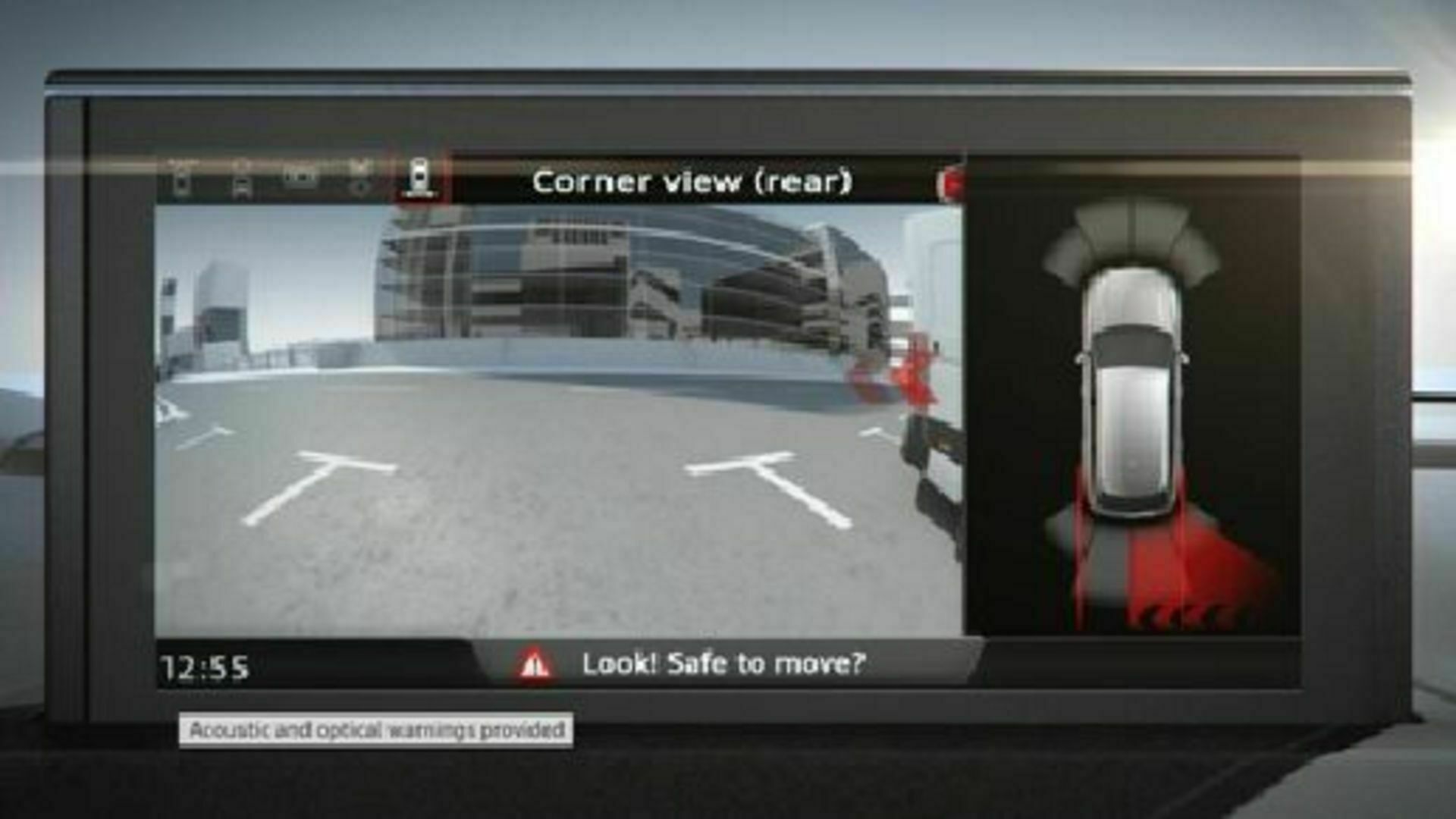
The standard lane departure warning helps the driver to keep the car in the lane from a speed of 65 km/h (40.4 mph). Also standard is the speed limiter, which reliably prevents the A1 Sportback from exceeding a selected maximum speed. Another standard feature is Audi pre sense front. The radar sensor recognizes critical situations involving other vehicles, crossing pedestrians or cyclists ahead of the vehicle, even when visibility is poor such as in fog. The system then gives an acoustic and visual signal to warn the driver. At the same time, it prepares for a possible full brake application and, if necessary, initiates automatic emergency braking in order to prevent an imminent collision or reduce its impact. If necessary, the protective measures of the optional Audi pre sense basic are initiated. The front seat belts are electrically tensioned, the windows are closed and the hazard warning lights are switched on. The adaptive speed assist is also radar-based. It keeps the Audi A1 Sportback at the desired distance from the vehicle ahead. If the vehicle is equipped with S tronic, the system covers a speed range of 0 to 200 km/h (124.3 mph); with the manual transmission, the range begins at 30 km/h (18.6 mph). In stop-and-go traffic, the A1 Sportback with S tronic transmission brakes to a standstill and gets going again under certain conditions automatically. The new Audi A1 Sportback offers various systems to make parking easier. For the first time, there is a reversing camera in addition to the rear parking system. The front ultrasonic sensors of the system recognize objects in front of the car and emit acoustic and visual warnings. The park assist system steers the A1 Sportback parallel and horizontally into parking spaces. With the new version of the assistant, the A1 Sportback also parks forward into perpendicular parking spaces, maneuvering multiple times if necessary. The system also exits parallel parking spaces.
The system can detect impending side collisions at speeds of up to approximately 60 km/h and contribute to protecting the occupants with preventive measures: hazard warning lights are activated, seat belts are tightened, seat positions are optimized, and windows and the optional sunroof are closed. In the event of an imminent side impact from a vehicle traveling at more than 25 km/h, the suspension actuators of the optional Audi AI active suspension raise the body on the endangered side by up to 80 millimeters within half a second. This shifts the impact to an even more robust area. The side sill and floor structure absorb most of the impact forces. The deformation of the passenger compartment and stress on the occupants, especially in the chest and abdominal areas, is up to 50 percent lower than in a side crash without any body lift.
Audi side assist
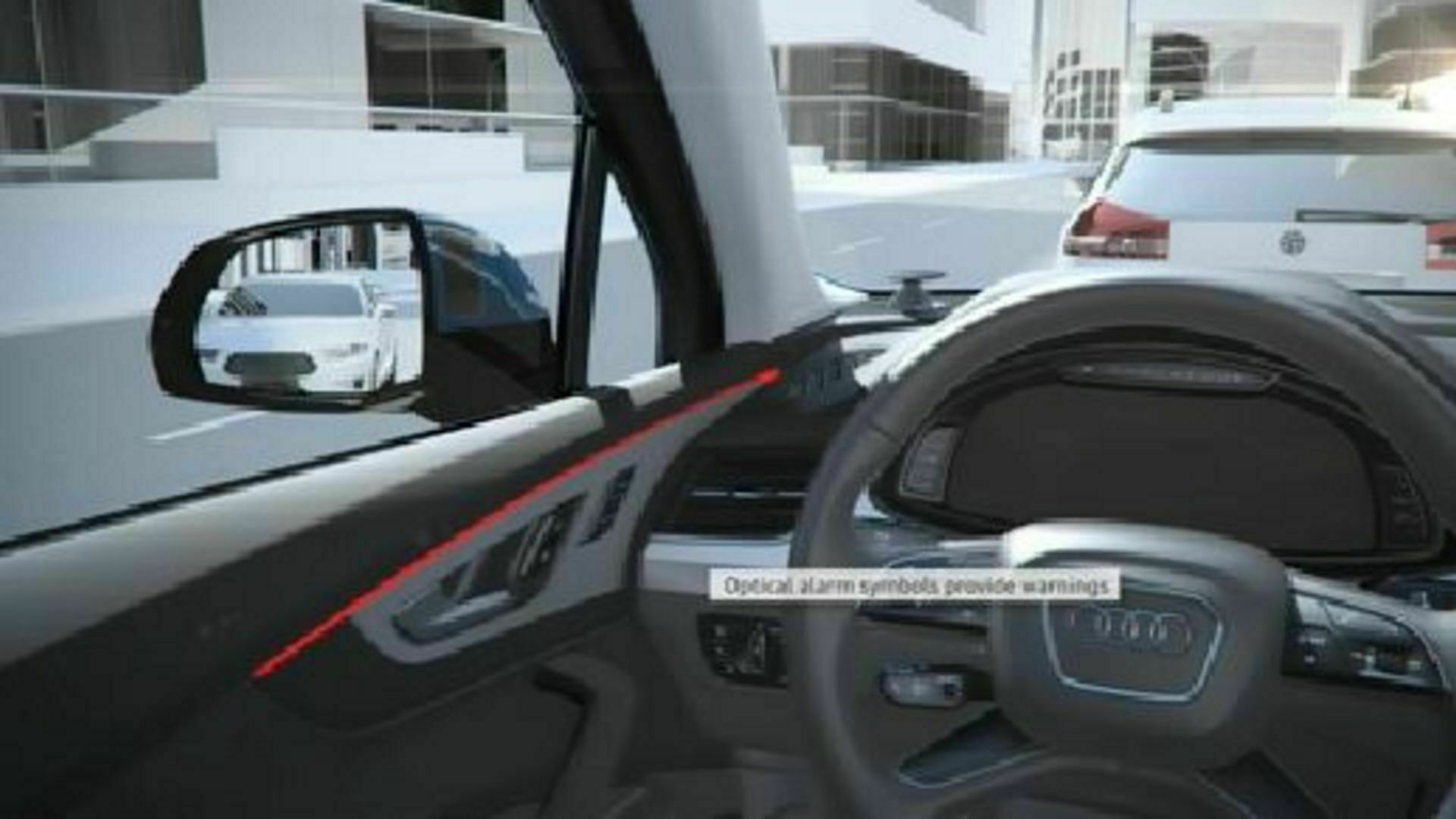
Audi side assist helps monitor the traffic behind the vehicle in city traffic and when driving on multilane roads. Two radar sensors installed in the rear detect vehicles approaching from the side at the rear. The distance and speed differential can be measured and analyzed. If a lane-change situation is classified as critical, a warning light is shown on the side-view mirror of the side in question. If a lane change is indicated by the turn signal at that moment and the system detects a critical situation, a warning will also flash on the display. The system operates in the range of approximately 30 to 250 km/h and can be activated via the corresponding menu in the Audi MMI.
Exit warning
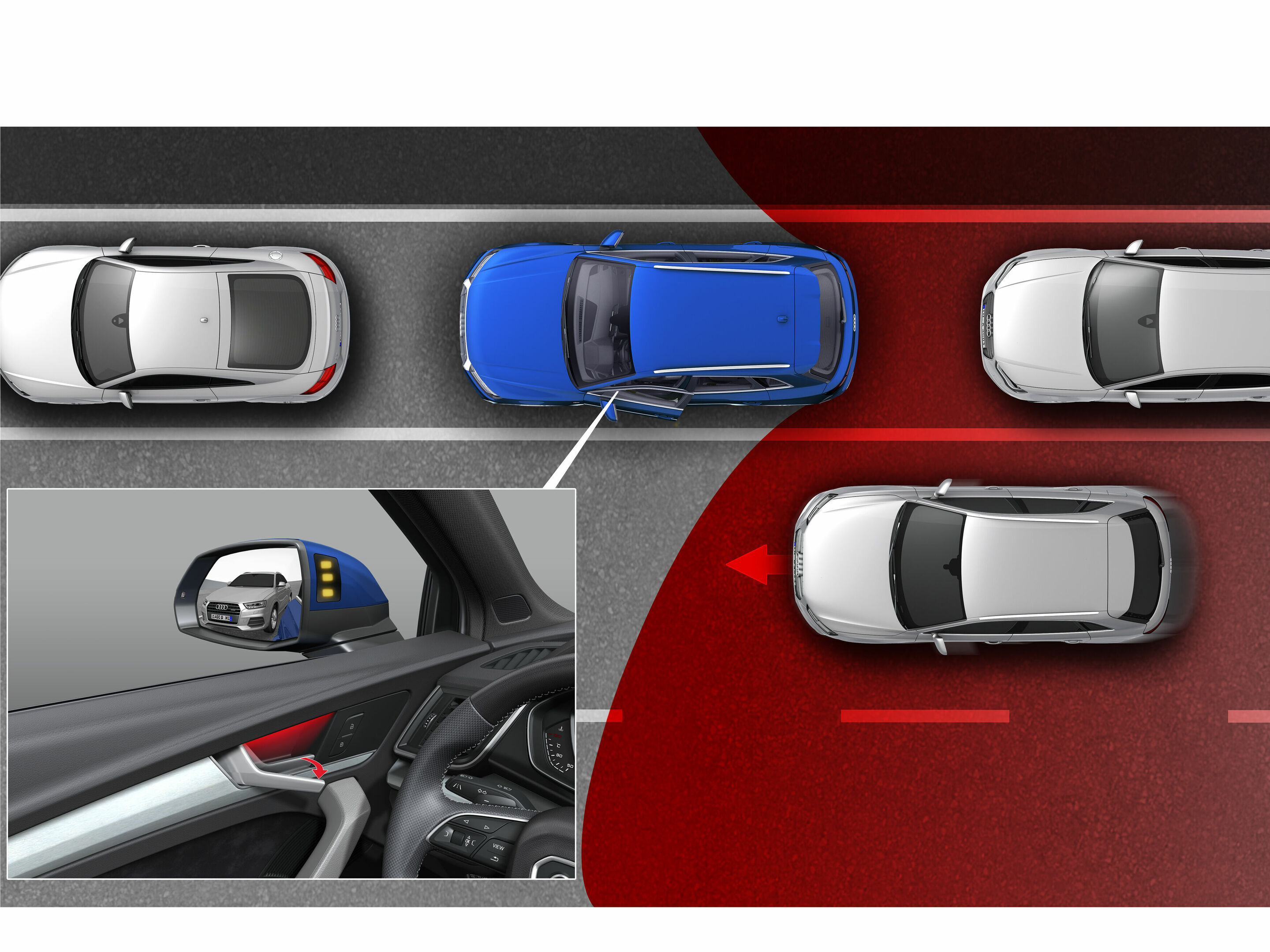
The exit warning increases safety, especially in city traffic. When the car has come to a stop and other vehicles or bicycles are approaching from behind and are classified as critical, the system warns passengers when they open the doors. The system uses LED lights in the door panel as a warning. In a situation that is considered dangerous, these flash and light up red.
Using the front radar sensors, Audi pre sense front detects potentially dangerous situations in front of the vehicle and warns the driver via visual and audible signals. This systems makes it possible to avoid accidents with other vehicles, pedestrians, and cyclists in many cases, or to reduce their severity. Collision avoidance assist, another standard safety system, helps drivers steer around an obstacle. Steering corrections are also initiated by the lane departure warning system, which is also standard. Turn assist helps drivers when making a left-hand turn by applying the brakes if there is a risk of collision with an oncoming vehicle. Cruise control with speed limiter also comes standard, as does park assist with parking system plus for finding a suitable parking space along the side of the road. Park assist can even steer the car automatically into perpendicular and parallel parking spaces – all the driver has to do is put the car in gear, step on the accelerator, and brake. The most complex system is the adaptive cruise assist, which can take over steering, accelerating, and braking up to a speed of 210 km/h in most situations. It maintains a constant speed and distance from the vehicle in front and helps to keep the vehicle in its lane by gently intervening in the steering. The adaptive driving assistant is available as an individual option or in the comprehensive driver assistance package with MMI navigation plus. High beam assist and emergency assist are also included in the package. It also includes park assist and camera-based traffic sign recognition. Also helpful in urban traffic are the lane change and exit warning systems, as well as cross-traffic assist rear. All terms marked in the text are explained in detail in the technology lexicon at www.audi-mediacenter.com/en/technology-lexicon. The equipment, data and prices specified in this document refer to the model range offered in Germany.