Search
All search results for "exit warning"
(467)
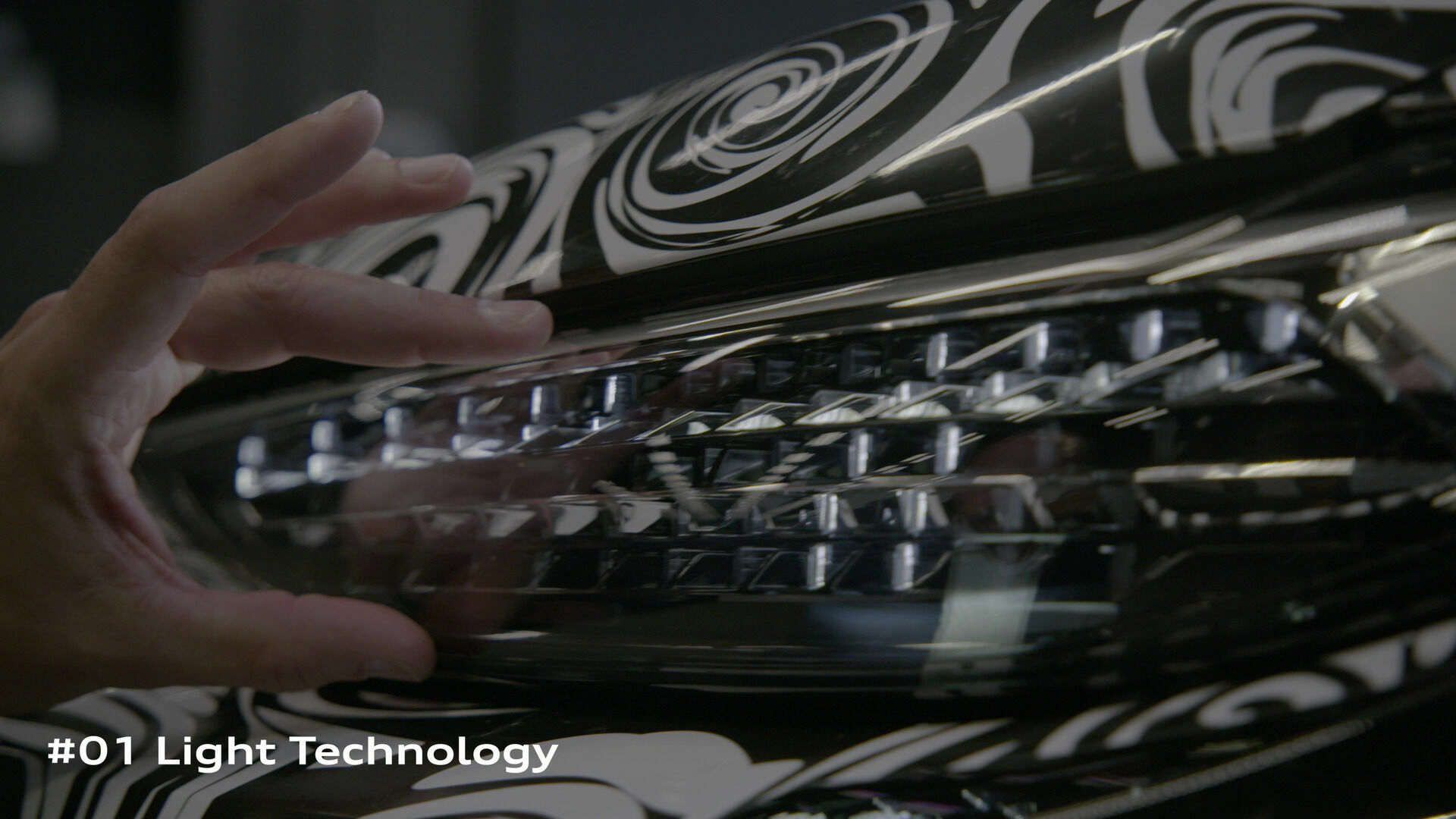
World premiere: The active digital light signature sets headlights and rear lights in motion in an unprecedented way For the first time, customers can select digital light signatures for the headlights and rear lights via the MMI and the myAudi app Package with digital light signatures available on demand
This innovation will permanently change automotive light design and car-to-X communication: With second-generation digital OLED rear lights, the Audi Q6 e-tron is taking light design, range of functions, and road safety to a new level. Audi is gradually developing the technology into intelligent displays that can communicate with other road users by displaying information via the exterior lights – this is the new communication light. The active digital light signature is another world first making its debut in the Audi Q6 e-tron. It makes an entirely new and vibrant impression, pointing the way to the future of Audi lighting technology. For the first time, customers can optionally select digital light signatures for this new evolution of digital daytime running lights in the Matrix LED headlights and the new generation of digital OLED rear lights. In addition, customers may book digital light signatures on demand.
The Q6 e-tron not only marks a new chapter in electromobility at Audi; lighting technology is an important part of Audi’s DNA. With the world’s first active digital light signature, the Audi Q6 e-tron ushers in a new era characterized by distinctive design and aesthetics unique to Audi. The second-generation of digital OLED technology shapes the look of new Audi models and increases their range of functions many times over. This, in turn, improves road safety, as impressively demonstrated by the communication light in the digital OLED rear lights.
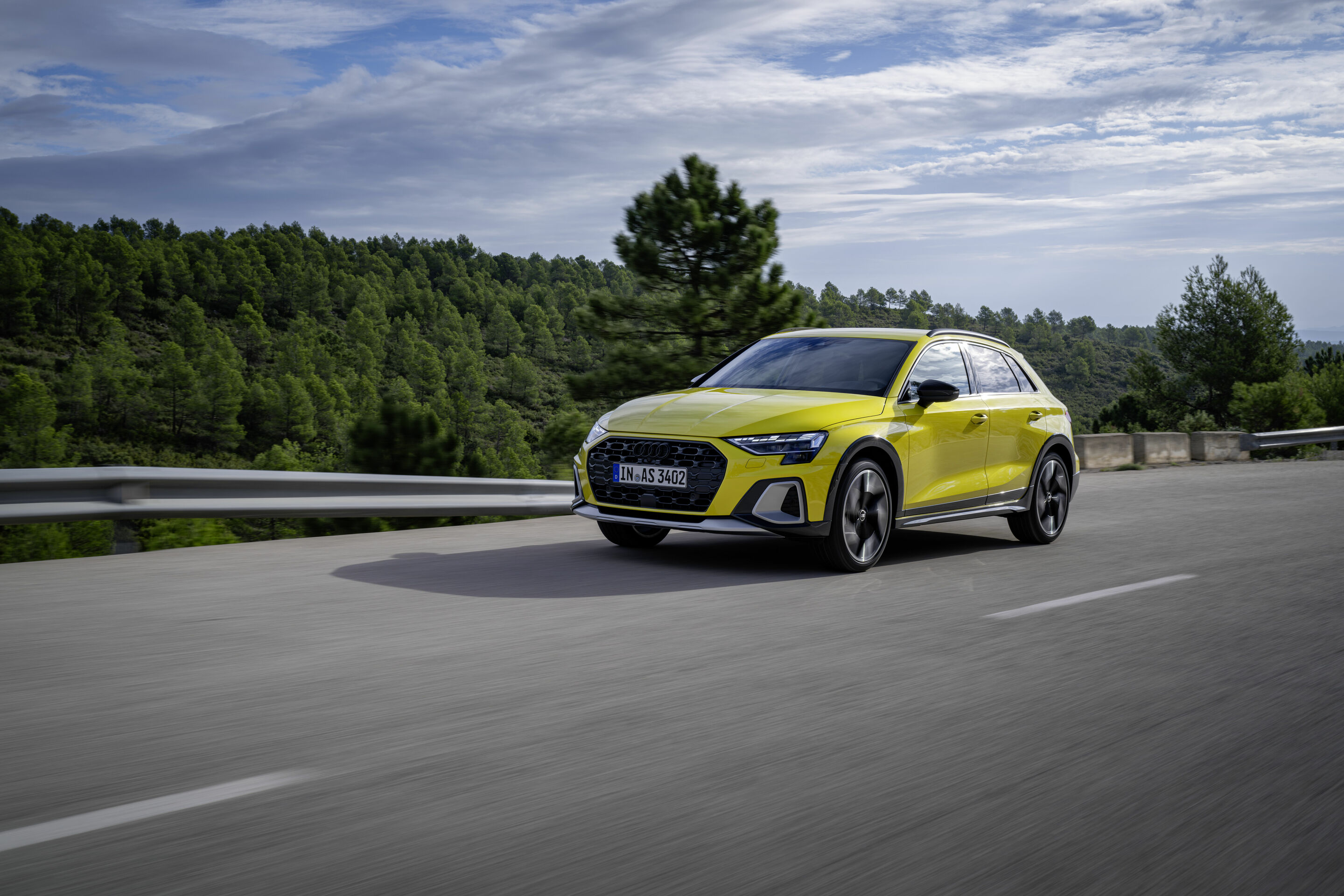 In heightened form: the new Audi A3 allstreet
With its characteristic off-road look, three centimeters more ground clearance than the A3 Sportback, and the raised seating position, the vehicle offers an SUV-like driving experience combined with high functionality. Thanks to the seamless integration of apps into the infotainment system, the ability to flexibly add vehicle functions, as well as a comprehensive range of connect services, the A3 allstreet is digitally connected.
“At very first glance, the Audi A3 allstreet stands out from the rest of the A3 family,” says Stephan Fahr-Becker, Team Leader of Exterior Design at AUDI AG. “As a crossover in the premium compact class, it has a completely unique look. The aim was to use specific design elements to emphasize the vehicle’s higher ground clearance even more.” Off-road character for a confident look This goal was achieved, among other things, through a vertical emphasis of the matte black Singleframe. The large octagonal radiator grille with its honeycomb structure sits higher than on the A3 Sportback, bringing the crossover closer to the Q models. Unique to the allstreet, three grooves at the front and rear enhance the off-road character. At the front, the beading is integrated into the distinctive spoiler lip, which are reminiscent of a skid plate, and at the rear into the diffuser as part of the robustly designed rear bumper. The rear also echoes the design of the trapezoidal air intakes: Their high-contrast double frame in Selenite Silver and Manhattan Gray creates a strong contrast, lending the A3 allstreet a powerful appearance. The same applies to the dark rocker panel trims and the trim in the lower door areas. They visualize the increased ground clearance and also emphasize the vehicle’s length. The standard roof rails further tighten the roofline. At the same time, the wide wheel arch trims in Manhattan Gray visually shorten the overhangs. This gives the A3 allstreet a sporty, robust look.
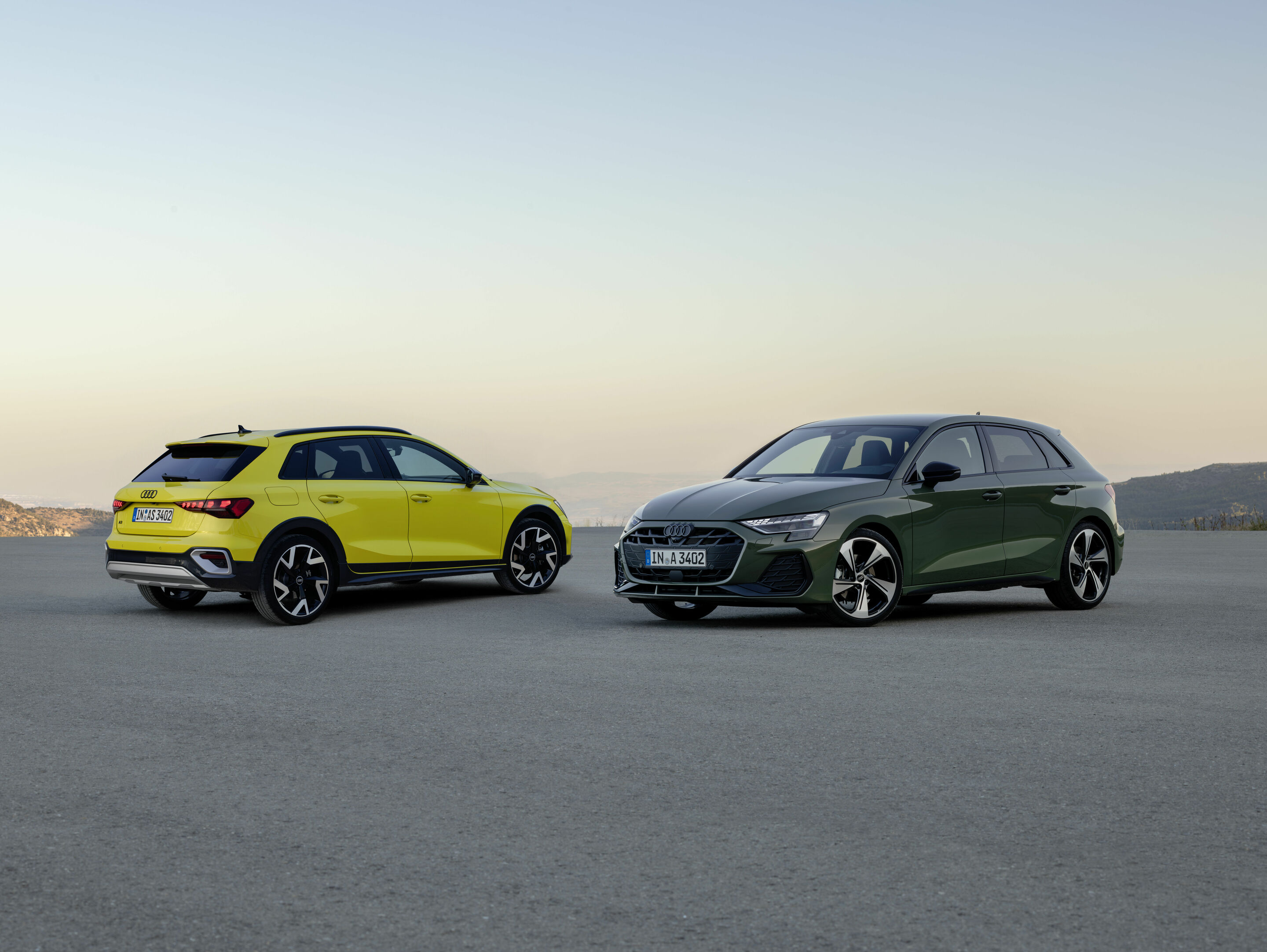 In top form: the Audi A3 and new A3 allstreet
A sportier design, selectable daytime running light signatures, extended standard equipment, and new materials The crossover A3 allstreet offers an SUV-like driving experience thanks to higher ground clearance and a distinctive off‑road look Integrated Audi store for apps and functions on demand ensure a personalized digital experience
An extensive upgrade for a successful model: The car with which Audi established the premium compact class in 1996, the A3, is sportier, more comfortable, and more digital than ever, thanks to its more progressive design, significantly extended standard equipment, and new materials and offers. Apps that can be used directly in the vehicle display, selectable daytime running light signatures, and the ability to add vehicle functions on demand any time enable a high degree of customization. The A3 allstreet, the distinctive crossover of the A3 family, is new to the market. With its characteristic off-road look, three centimeters of extra ground clearance compared to the A3 Sportback, and a raised seat position, the vehicle offers an SUV like driving experience combined with high functionality.
Sportier than ever: the exterior of the Audi A3 More dynamic – more progressive – more emotional: This is the character of the A3 Sportback and Sedan models after the model upgrade. The hexagonal, frameless Singleframe features a new structure and is noticeably flatter and wider. It dominates the front end and, in addition to the large angular side air intakes, clearly symbolizes the compact models’ sporty character. The striking front spoiler connects the two intakes and makes the Audi A3 appear lower. The same is true of the rear, which is particularly sporty with its new bumper and distinctive diffuser. Partly inspired by the RS models, the progressive design elements are particularly effective when combined with the S line exterior.
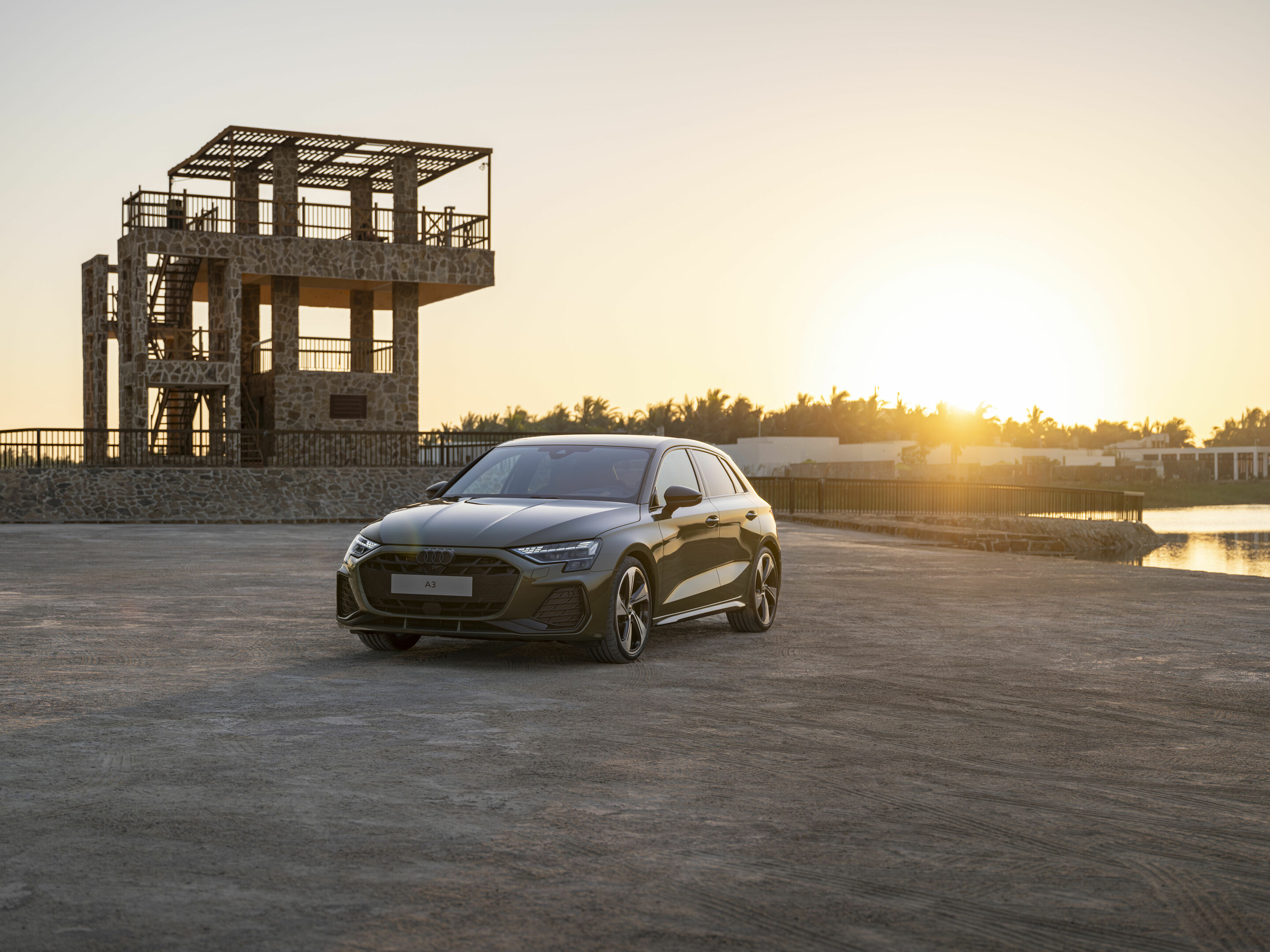 Sharpened favorite: upgrade for the Audi A3
Sportier than ever: the exterior More dynamic – more progressive – more emotional: This is how the A3 Sportback and Sedan present themselves following the model upgrade. The hexagonal, frameless Singleframe features a new structure that is noticeably flatter and wider. It dominates the front end and, in addition to the large angular side air intakes, clearly symbolizes the compact models’ sporty character. The striking front spoiler connects the two and makes the Audi A3 appear lower. The same is true of the rear, which is sportier than ever with a new bumper and distinctive diffuser. The progressive design elements are particularly effective with the S line exterior, as they are partly inspired by the RS models.The expressive exterior colors District Green, Ascari Blue, and Progressive Red further strengthen the sporty look. Selectable: up to four different daytime running light signatures Like the redesigned Singleframe, the lighting design is significantly thinner, emphasizing the width of the Audi A3 series. The 24-pixel elements that make up the digital daytime running lights in the LED and Matrix LED headlights are now arranged in three rows on the upper edge of the housing. It is now possible to select and switch between up to four different digital daytime running light signatures via the MMI – the first time the models of the A3 series. “This offers our customers a higher degree of personalization. They can change the expression of their model at any time. The signatures interpret self-confidence and agility in different ways,” says Cesar Muntada, Head of Design Light Experience at AUDI AG. “This is also true for the coming home home/leaving home scenarios, which were designed individually for each signature.” The tail lamps also feature a progressive rear light design and new staging of the coming home/leaving home function.
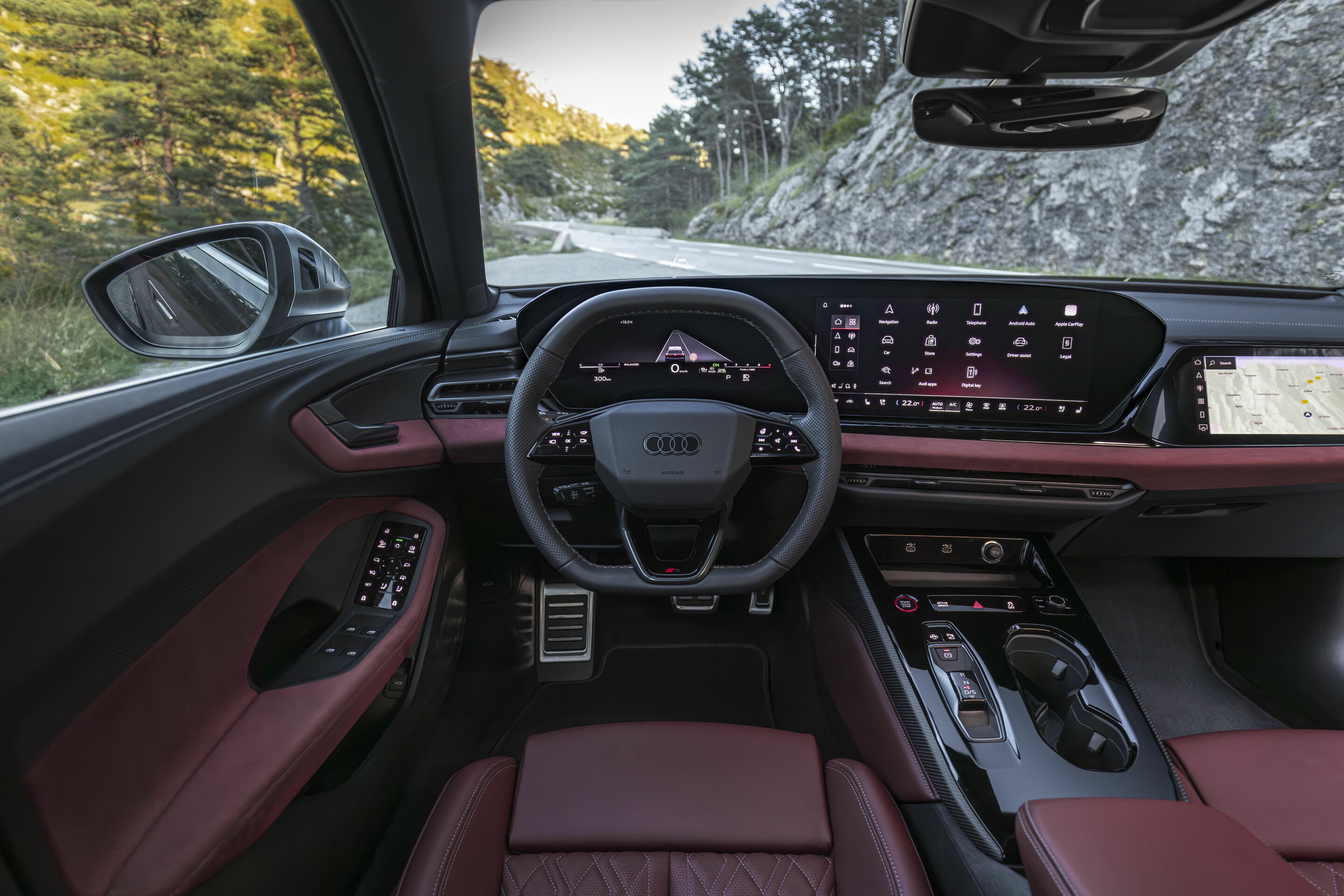
Standard features on Audi A5 models from market launch include a rear parking aid with distance display, cruise control and speed limiter, lane departure warning, efficiency assistant, and an attention and drowsiness warning. The scope of standard equipment in Audi S5 models is significantly expanded. For example, in addition to the functions described above, the S model comes as standard with adaptive cruise assist, park assist plus with distance display, traffic sign-based speed limiter, park assist plus, and, if a trailer hitch has been specified, trailer assist. A wide range of optional assistance systems can be configured for the Audi A5 and S5 models. A particular highlight is the adaptive driving assistant plus, which uses high-resolution map data and swarm data from other vehicles aggregated in the cloud. The system thus optimizes traffic sign recognition and provides support when accelerating, maintaining speed and distance, and with lane guidance. This can increase ride quality, especially on long journeys. The system uses various sensors to continually monitor the vehicle's surroundings. These include the radar sensor installed in the front of the vehicle, the front camera, and the ultrasonic sensors. Depending on the region, high-resolution map data and swarm data from other vehicles aggregated in the cloud are also used to improve driving behavior. From a fusion of this information, the system calculates the route ahead and guides the car comfortably and in the center of the lane through traffic using supportive steering interventions. At the same time, the system reacts to vehicles in front and approaching vehicles with distance control and anticipates and adapts the vehicle speed to speed limits and situations such as bends, junctions, roundabouts, and highway ramps and exits. In stop-and-go traffic, the system brakes to a standstill and can set off again automatically, depending on how long the vehicle has been stationary.

Eye-catching, masculine design with taut lines Infotainment concepts from the Audi full-size class New driver assistance systems for more safety and comfort
In 2010, a brand-new Audi model line made its debut in the shape of the A1. And now the second generation of the successful compact car is rolling to the starting line. Its dynamic design characterizes the new Audi A1 Sportback. It is the ideal companion in the urban environment and is also very well suited for longer journeys. With its infotainment and driver assistance systems on a par with the full-size class, the A1 Sportback is firmly networked with the digital world. New trim lines provide ample opportunity for customization.
Exterior design: Striking, masculine with genes of the sporty Ur-quattro The A1 Sportback has grown significantly in length – with an additional 56 millimeters (2.2 in), it now measures 4.03 meters (13.2 ft). At the same time, the width has remained almost the same at 1.74 (5.7 ft) meters. The new-generation model is only 1.41 meters (4.6 ft) in height – including aerial, the car is 1.43 meters (4.7 ft) tall. The wide track and short overhangs provide for a taut, sporty look. The wide, low-placed Singleframe grille and the implied side air inlets dominate the distinctive front. Below the edge of the hood are three flat slits – an homage to the Sport quattro, the brand’s rally icon from 1984. The new A1 Sportback also emphasizes a resemblance to the Audi Ur-quattro and Sport quattro when viewed from the side: The wide, flat sloping C-pillar seems to push the car forward even while standing still. The roof contrast line, which is available in two dark colors, ends above the C-pillar. This gives the impression that the roof is flatter and the complete car is even lower-slung. All lines on the flanks, from the window edge to the sill, slope upward toward the rear in a wedge shape.
With late steering intervention, Audi active lane assist only intervenes shortly before the detected lane marking is likely to be crossed, specifying the direction of correction with a steering intervention. In addition to this, drivers can be warned by steering wheel vibration when they cross detected lane markings.
Audi pre sense 360˚
Audi pre sense 360˚ detects collision hazards around the car and initiates targeted safety measures such as optimizing seat positions, closing windows, applying brake force assistance or full braking, and even tightening seat belts. Audi pre sense 360˚ includes the following driver assistance systems: Audi pre sense basic Audi pre sense front Audi pre sense rear Audi pre sense side
Audi pre sense basic
Audi pre sense basic initiates preventive protective measures for the vehicle occupants as soon as it detects a critical driving situation. To do this, it uses information from different vehicle systems. For example, it intervenes when the electronic stabilization control (ESC) sensors register skidding or emergency braking. The system then tightens the seat belts of the front and outer rear seats to reduce forward or sideways movement of the occupants. The side windows and sunroof are automatically closed. The hazard warning lights are also activated to alert vehicles behind.
Audi pre sense front
Depending on the model, Audi pre sense front uses the data from the radar sensors and front camera to calculate the probability of rear-ending the vehicle in front. It warns of impending collisions within the system limits depending on the situation and speed and initiates appropriate braking. When the vehicle is traveling at speeds up to 250 km/h, the system can detect other vehicles; when traveling up to approx. 85 km/h, it can detect pedestrians; and when traveling more than 5 km/h, it can detect cyclists. If an imminent frontal collision is detected, the system issues visual, acoustic, and haptic warnings in a multistage concept.
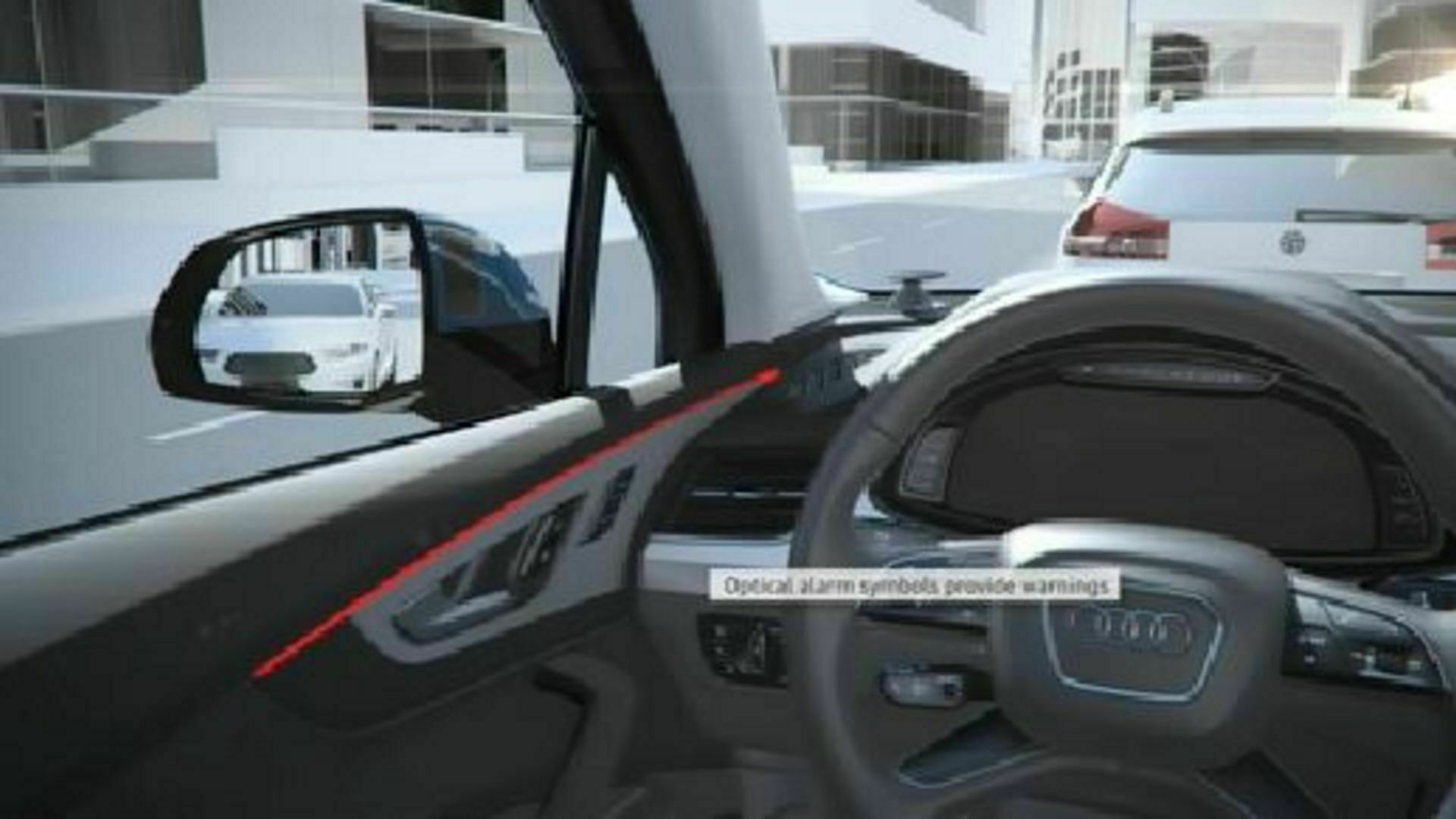
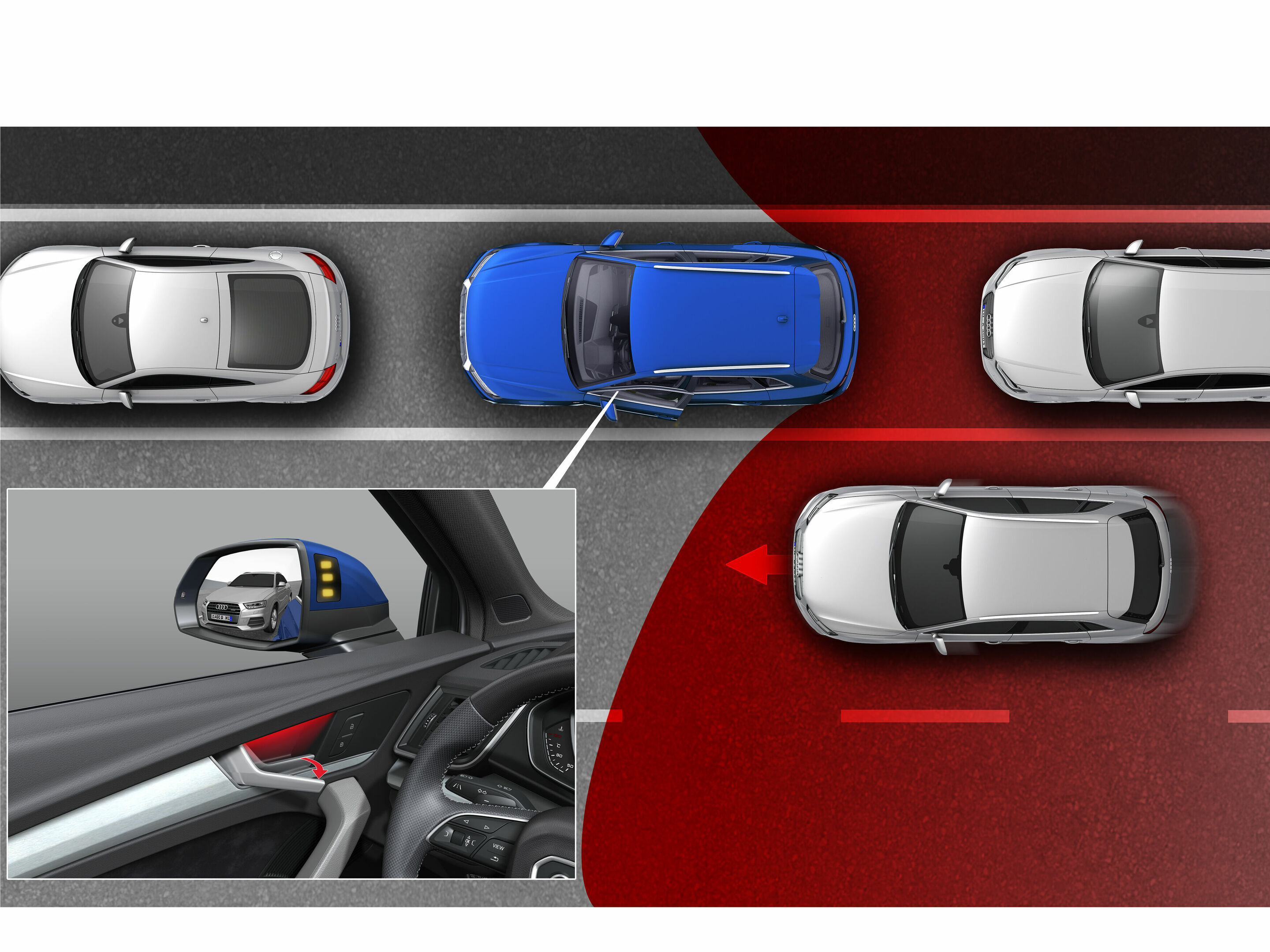
Using the front radar sensors, Audi pre sense front detects potentially dangerous situations in front of the vehicle and warns the driver via visual and audible signals. This systems makes it possible to avoid accidents with other vehicles, pedestrians, and cyclists in many cases, or to reduce their severity. Collision avoidance assist, another standard safety system, helps drivers steer around an obstacle. Steering corrections are also initiated by the lane departure warning system, which is also standard. Turn assist helps drivers when making a left-hand turn by applying the brakes if there is a risk of collision with an oncoming vehicle. Cruise control with speed limiter also comes standard, as does park assist with parking system plus for finding a suitable parking space along the side of the road. Park assist can even steer the car automatically into perpendicular and parallel parking spaces – all the driver has to do is put the car in gear, step on the accelerator, and brake. The most complex system is the adaptive cruise assist, which can take over steering, accelerating, and braking up to a speed of 210 km/h in most situations. It maintains a constant speed and distance from the vehicle in front and helps to keep the vehicle in its lane by gently intervening in the steering. The adaptive driving assistant is available as an individual option or in the comprehensive driver assistance package with MMI navigation plus. High beam assist and emergency assist are also included in the package. It also includes park assist and camera-based traffic sign recognition. Also helpful in urban traffic are the lane change and exit warning systems, as well as cross-traffic assist rear. All terms marked in the text are explained in detail in the technology lexicon at www.audi-mediacenter.com/en/technology-lexicon. The equipment, data and prices specified in this document refer to the model range offered in Germany.