When the rear wing has to go in your carry-on – a look into the different worlds of logistics at Audi
- How the logistics division of AUDI AG and the Formula 1 project benefit from each other
- Dieter Braun, Head of Audi Supply Chain, in discussion with his F1 colleagues Björn Brickwedde and Lars Rolack
- Logistics as a performance factor in motorsport and a driving force in road car production
More than 20 race weekends, global supply chains, tight time windows, geopolitical tensions, and the constant pressure to get every part to the right place on time: Formula 1 is not only a high-performance technological laboratory but also an extreme test for logistics. Many of the challenges faced by Audi Revolut F1 Team on the racetrack are also familiar to Audi Supply Chain – just on a different scale. A discussion between the logistics experts reveals what both worlds can learn from each other.
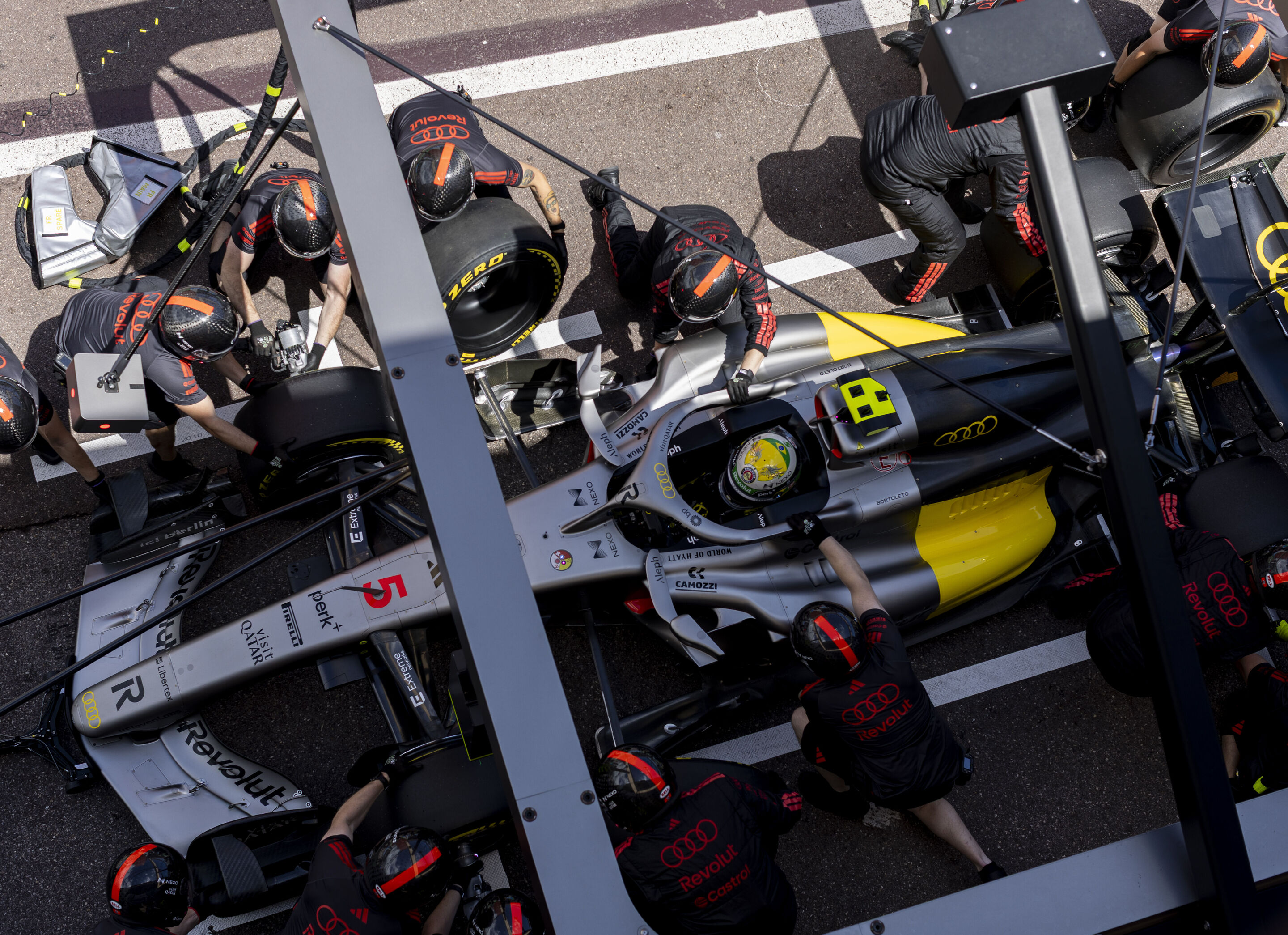
Dieter Braun, Head of Audi Supply Chain, sums it up: “If there’s one thing we need in the company, it’s speed. Not just on the racetrack, but when making decisions.” This is exactly where the key leverage lies: Formula 1 demonstrates what quick decisions, clear responsibilities, and precise preparation can achieve.
Logistics as a performance factor
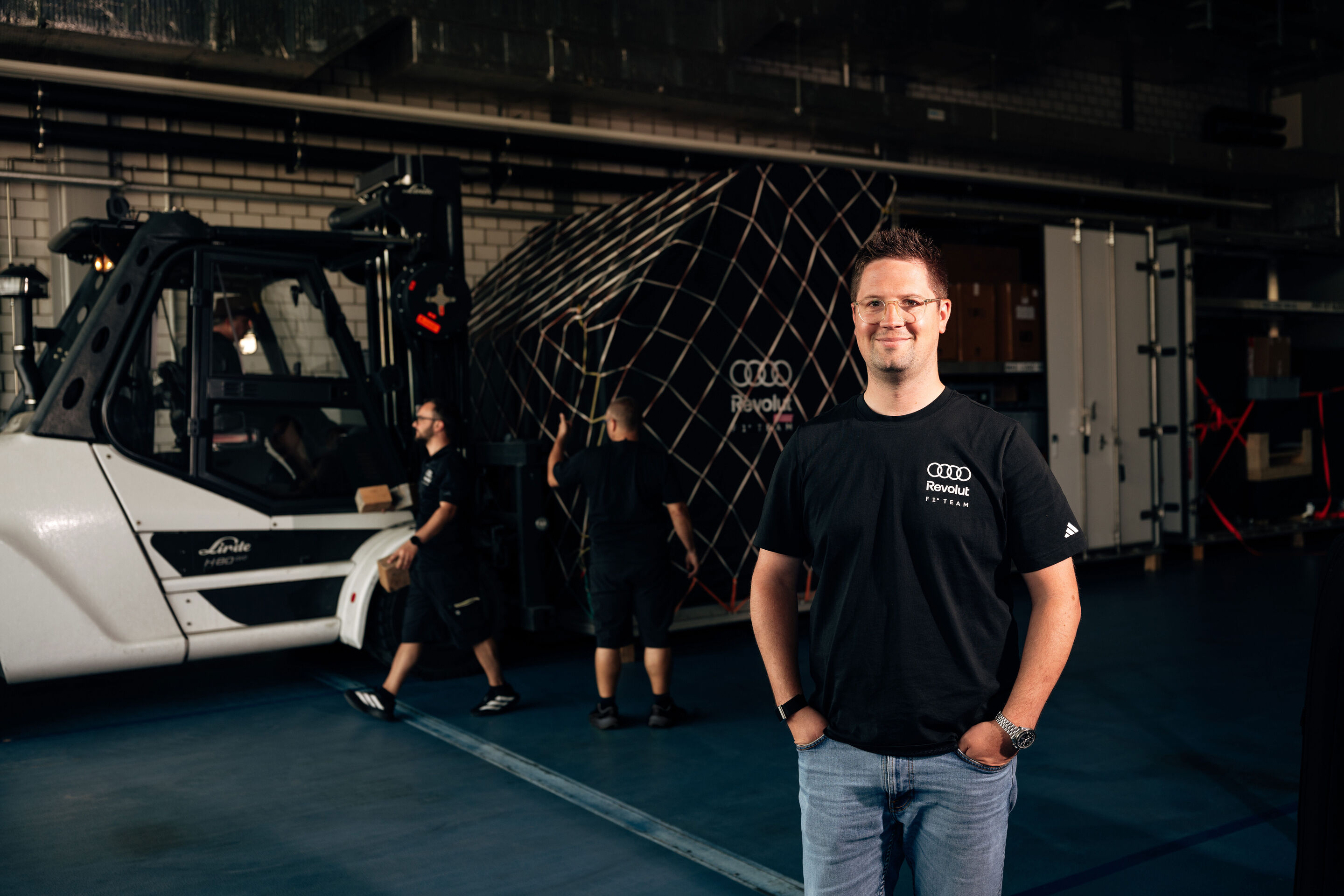
In Formula 1, logistics directly determines on-track performance. Anything that isn’t at the track on time can’t be used. If transportation costs are too high, there’s less left in the budget for other areas. Björn Brickwedde, Head of Logistics at Audi Revolut F1 Team in Hinwil, Switzerland, explains: “Any savings we make in logistics can be invested in development and parts.”
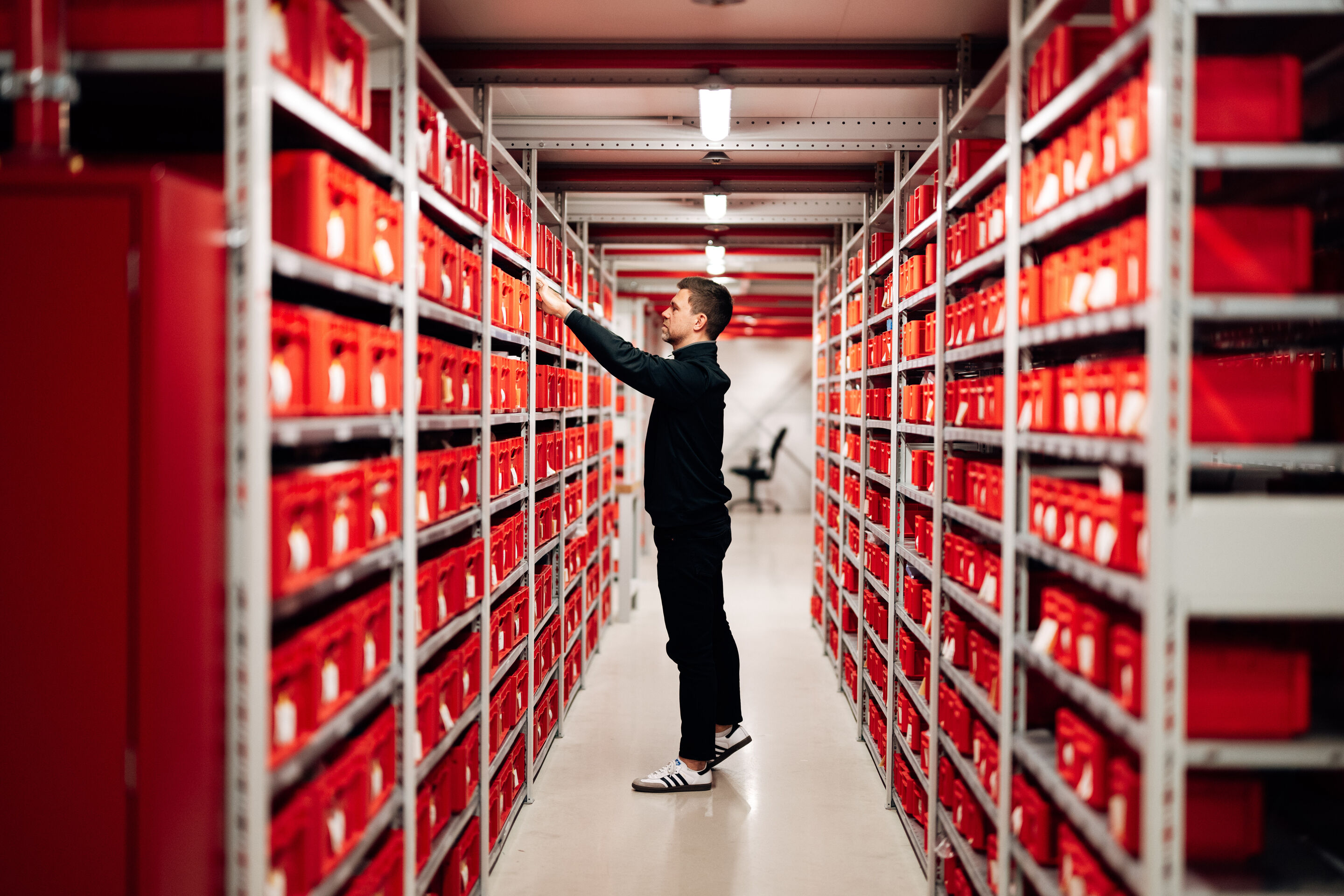
This is especially true under Formula 1’s cost cap. Efficient logistics thus becomes a performance factor. Brickwedde cites specific examples: intelligent strategies for return shipments, minimal spare parts inventory, smart route planning, and determining the most cost-effective location from which to ship update parts or components. “Every expense saved can flow into development – and then into lap times.”
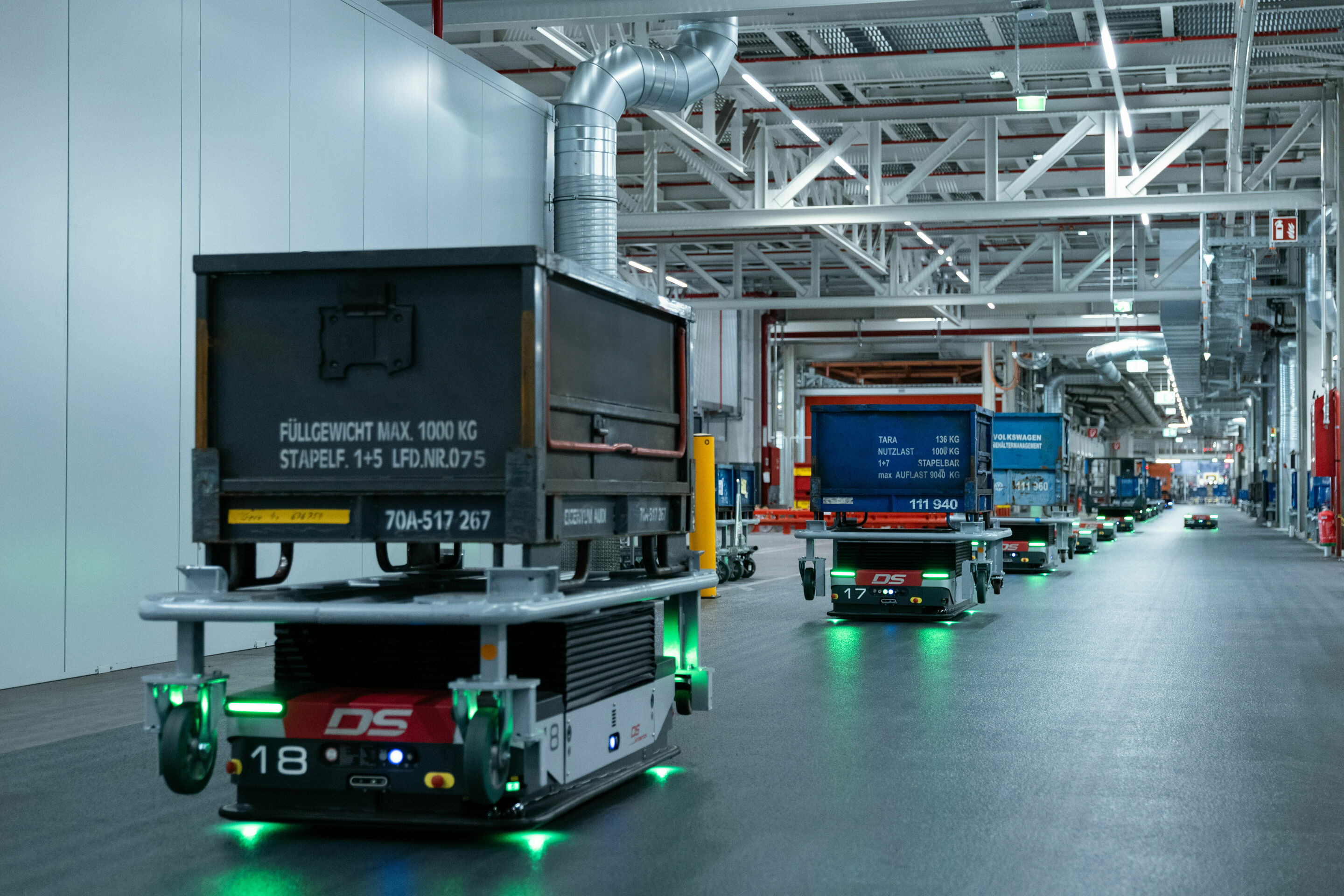
Audi Supply Chain, in turn, designs and manages the entire customer order process – from ordering an Audi to delivery to the customer. This complex system involves several thousand suppliers in nearly 60 countries to manage the flow of goods comprising around one million parts per day. Every optimization in this cross-divisional core process creates leeway – whether in terms of costs, capital tied up, or the CO2 footprint. “In our role as conductors, we can contribute hundreds of millions in earnings for the company,” says Braun.
One example illustrates the scope: Audi Supply Chain doesn’t just orchestrate – it also manages crises and, with experienced employees working as a team, overcomes short-term challenges. Braun describes a situation involving the production of the last Audi Q2 cars. A container with displays that could not be reproduced was on its way from China via Dubai to Germany when war broke out in the Middle East. “The shipping company spontaneously decided to call at a port in India and unload all the containers without consulting us,” says Braun. The goods couldn’t be obtained in time via India, so Audi organized a detour via Sri Lanka and Turkey. “The parts arrived half a day before they were needed,” says Braun, “otherwise we wouldn’t have been able to finish and deliver 2,000 Q2 cars.”
Brickwedde’s account of the Formula 1 season opener in Melbourne sounds very similar. “A supplementary shipment for the first race was supposed to fly from Zurich to Dubai – that’s exactly when restrictions on global air traffic took effect,” he says, referring to canceled transport routes. Important update parts were held up, just like the freight from other teams. “We organized an alternative route with F1 Cargo and DHL and prepared new customs documents. It was a nerve-wracking ordeal for everyone involved – but the parts arrived in Melbourne on Wednesday evening, and thanks to the great teamwork on site, both cars were fully assembled in time for the first session.” In doing so, the logistics team laid the groundwork for Audi Revolut F1 Team to score its first points right off the bat in its debut in the premier class of motorsport.
Speed is also a key factor in the Audi Supply Chain
The racing series brings into sharp focus what often remains abstract in mass production: the impact of quick decisions. “In a race, you immediately realize when you’ve made a wrong strategic decision – for example, when you leave the pit lane too late,” says Braun. “From a business perspective at Audi, the impact of a decision often only becomes apparent later, but it can be just as serious. Deciding too late during a crisis is problematic – but so is doing so during planning, for example with long-term investments, which makes it particularly challenging for my team and the relevant departments.”
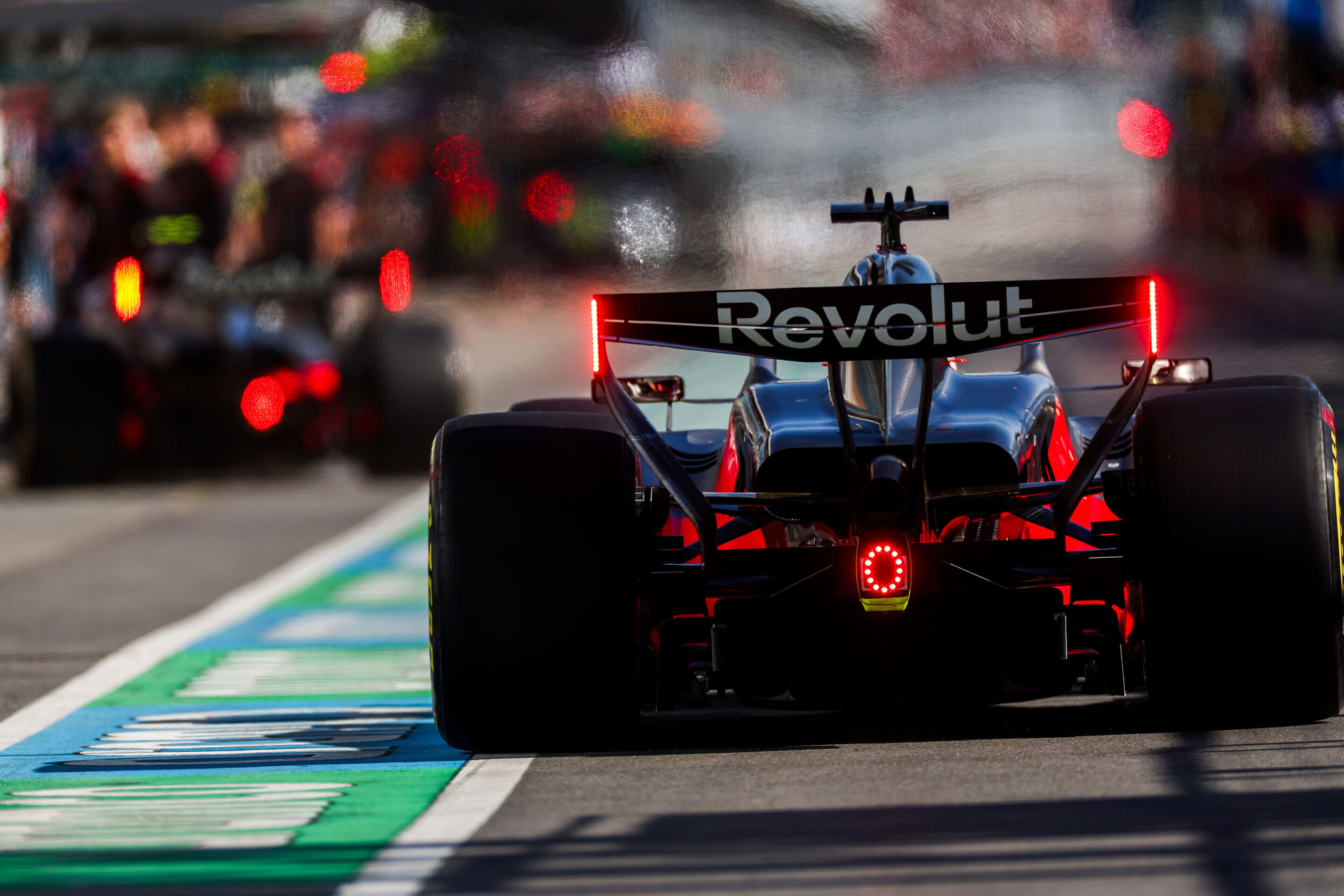
The Formula 1 involvement provides a tangible narrative for this. Braun uses the Audi R26 as a permanent background image for his meetings – not just out of enthusiasm for motorsport, but as a signal to the organization: speed matters in the supply chain, too. Formula 1 shows that a good solution at the right time is more valuable than a perfect solution that comes too late.
When the rear wing has to go in your carry-on
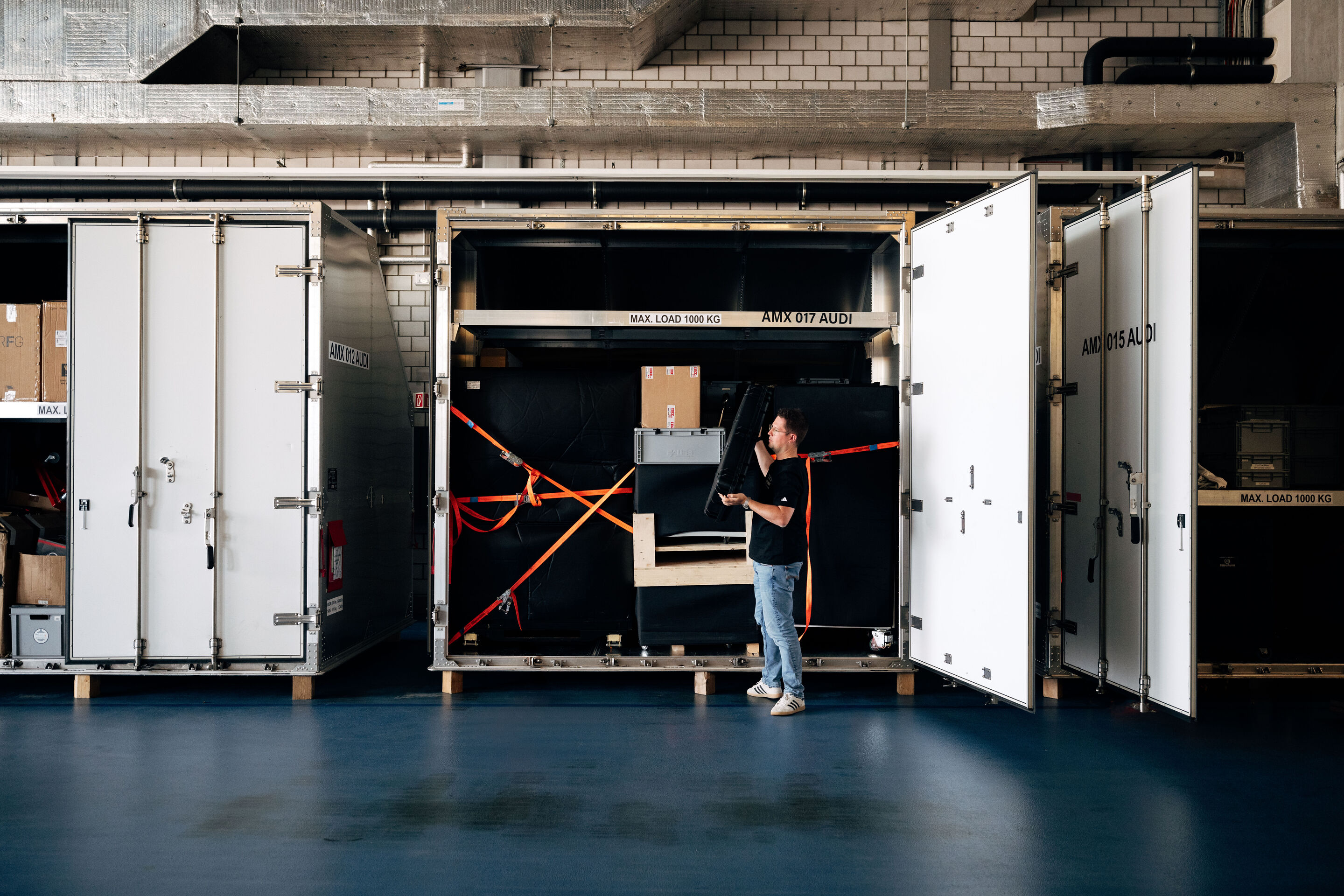
The most exciting examples emerge where planning and improvisation meet. Brickwedde talks about the limited availability of parts during race operations: “We manage the production of parts very efficiently. This is partly because of the cost cap, but also because we only take to the racetrack what we genuinely believe we’ll need. If something unexpected happens, you’ve got to think on your feet. This means that a team member might have to carry the necessary components in their luggage so that they’re available at the track as quickly as possible. In a pinch, these could even be parts of a rear wing.”
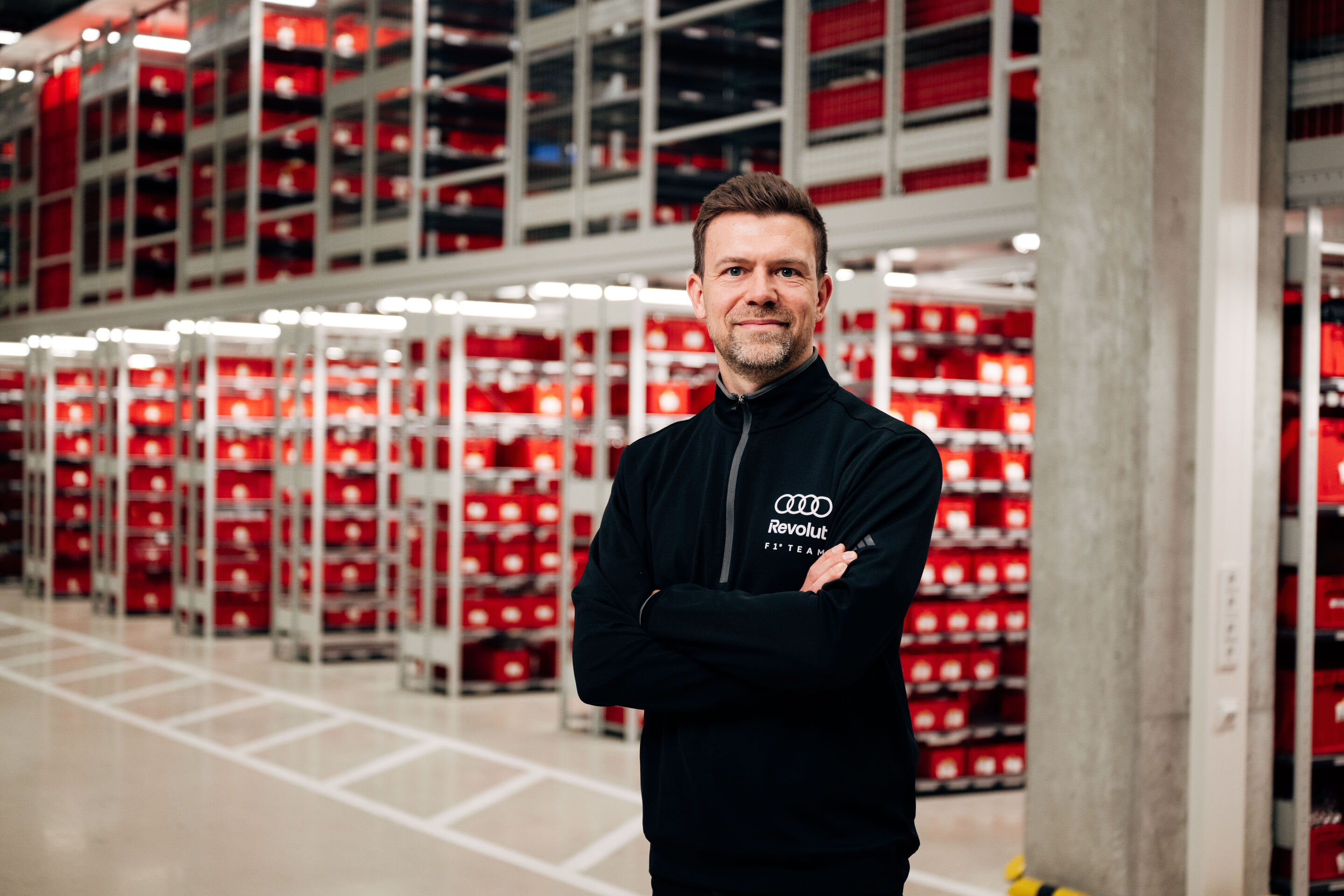
Time windows are tight on the power unit side as well. Lars Rolack, Head of Logistics at Audi Formula Racing in Neuburg an der Donau, describes the unscheduled return shipment of a high-voltage battery during the race weekend in Miami: hazardous materials, special customs and transport regulations, a short analysis window in Neuburg – and shipment back out to the next race just a few days later. “The battery arrived at our facility in Neuburg on Monday morning and was shipped out again on Wednesday evening, heading for Montreal.”
Even though the processes at Audi Supply Chain are generally more predictable, the combination of foresight and flexibility remains a crucial success factor – for instance, in the face of supply bottlenecks, natural disasters, or geopolitical disruptions, which have almost become the new normal these days. Rolack used to work in the logistics division at AUDI AG himself before moving to the Formula 1 project. “My background in planning and my experience helped me, but race logistics is a very ad-hoc business – we all had to adapt our mindset extremely quickly to the pace.” While Audi’s supply chain division manages several thousand different suppliers across the globe using a multitude of processes – now also with the help of complex mathematical algorithms – organizational skills and personal networks are what count in the F1 project. “If something gets stuck here, my first instinct is to pick up the phone. Thanks to lean processes and short lines of communication within the team, problems can be solved very quickly,” says Rolack.
Resilience: organization, team, people
Formula 1 hones resilience under real-time conditions. Race schedules change, transport is canceled, routes become uncertain, and racing accidents create unexpected challenges. Where potential risks are foreseeable, scenarios are developed in advance with transport service providers so that the underlying network is immediately capable of taking action.
Dieter Braun describes it from his perspective: resilience consists of three levels – organizational resilience, team resilience, and individual resilience. Especially during the COVID-19 crisis, Audi learned how important clear responsibilities, resilient teams, and personal resilience are. His conclusion: “An organization must be structured in such a way that it can function effectively both during normal operations and in times of crisis.”
Digitalization and AI: benefits for both sides
When it comes to artificial intelligence, Audi – with its organizational scale and constant pursuit of innovation – is providing important insights that F1 logistics can learn from. “We are convinced that AI has the potential to bring about changes as profound as those brought by the internet in earlier years and will fundamentally transform the way we work,” says Braun. However, he emphasizes the importance of a clear distinction: “Not every large Excel spreadsheet is AI. We also implement many digitalization solutions without AI that nonetheless represent a huge step forward.”
Within his organization, he and his team pursue two approaches: bottom-up – that is, targeted optimizations, such as addressing sequencing errors – and top-down, in which the entire order-to-delivery process is mapped and systematically examined for AI leverage points. “Optimizing this process with the help of AI offers us enormous leverage – for greater efficiency, higher planning reliability, and better quality of results,” says Braun. “In doing so, we focus, among other things, on the ramp-up planning for a new model or the more precise forecasting of installation rates by combining different data sources and systematically incorporating empirical values. AI can derive reliable forecasts from this – and that is precisely where its added value lies.”
The F1 project can also benefit from this approach. So far, AI has primarily been used in the background in Hinwil, Neuburg, and Bicester. “AI definitely helps to handle the endless flood of data,” says Rolack. In logistics itself, AI is still not very prevalent, but the desire for it is clearly stated. “There is still great potential there, especially when it comes to transport management.”
At the same time, Braun warns against blind trust: “From today’s perspective, I would never let AI design my entire network without critically questioning it.” Instead, he says, tasks should be ‘broken down into sections’ and results should be checked repeatedly.
Taking action early rather than reacting later
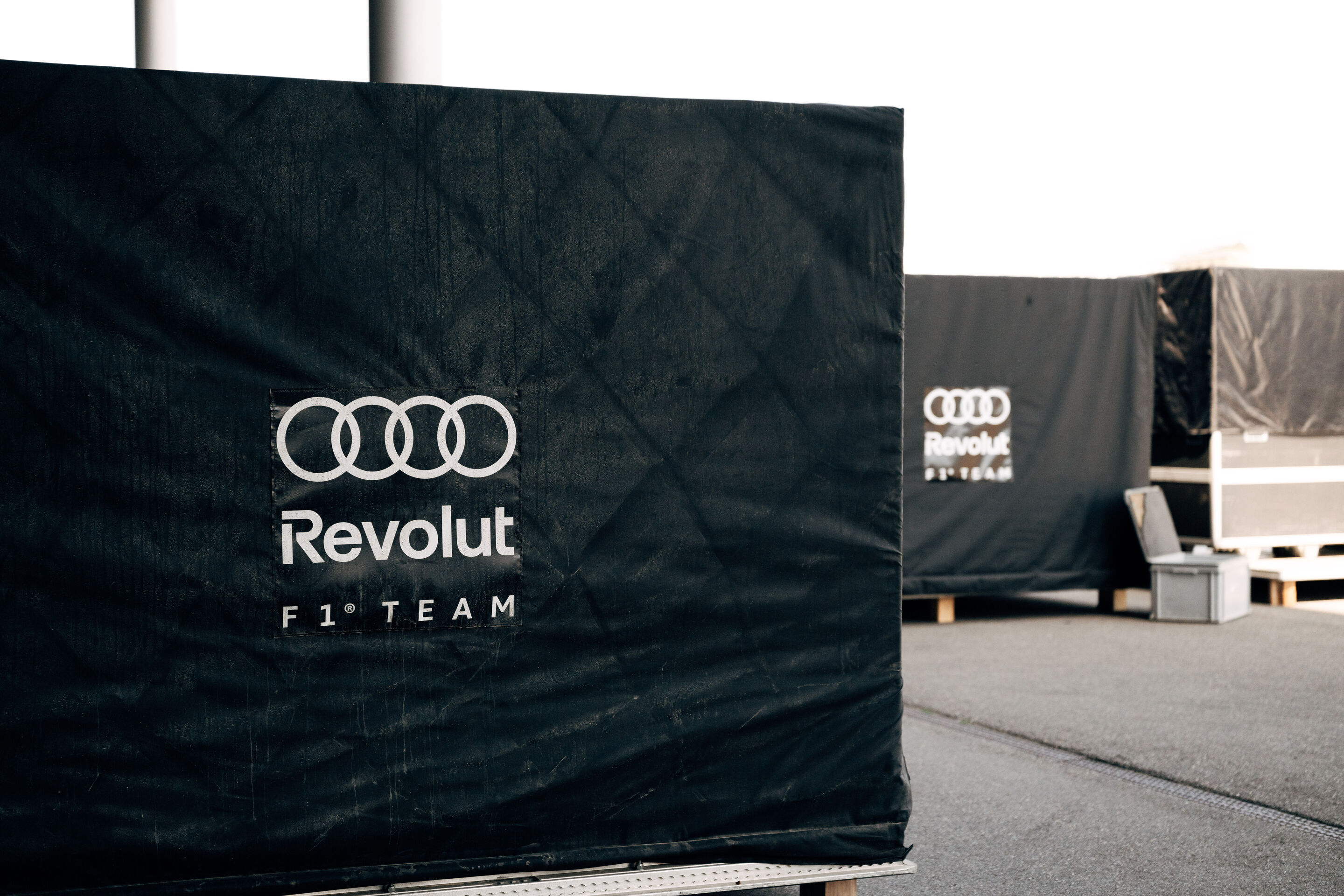
Another area of focus is the early integration of logistics into the development process. Braun describes how significantly product design influences the subsequent supply chain: The geometry of a component can determine whether only half as many parts fit into a container. Logistics must therefore not only plan what is specified but also actively improve the constraints. Clear guidelines and carefully curated product packages – such as interior designs – with less variation, along with the targeted standardization of components, reduce effort, make complexity more manageable, and streamline processes throughout the supply chain. The Formula 1 team is currently particularly creative when it comes to developing optimized transport containers that take up as little space as possible for the cargo.
A shared learning system
The logistics of Audi and those of the racing team differ in scale but not in essence: both must make complexity manageable, anticipate risks, manage networks, and deliver when it counts. The Formula 1 environment intensifies these demands and puts them on full display before a global audience of millions. For Audi, this results in a twofold benefit: The Formula 1 project benefits from the company’s process expertise, digitalization experience, and systemic strength. The supply chain can learn from the pace, consistency, and logic of decision-making seen in Formula 1 conditions. Or, as Braun puts it: “Some decisions don’t get any better if you put them off longer.”