Search
All search results for "audi sport quattro e2"
(11)
 Experience Audi Tradition on tour in 2026
Three events on the same weekend kick off the new season Audi Tradition App shows events and exhibitions at a glance
Audi Tradition kicks off the 2026 event season with three highlights on a single weekend: at the end of January, the Bremen Classic Motorshow, the F.A.T. Ice Race in Zell am See, and the Concours event “The I.C.E.” in St. Moritz are on the schedule. The Audi museum mobile in Ingolstadt, Germany, welcomes visitors to International Museum Day on May 17 and Night of the Museums on September 12. Regular updates and additional information on all events at which Audi Tradition showcases the history of the four rings and their historic brands are available in the Audi Tradition app.
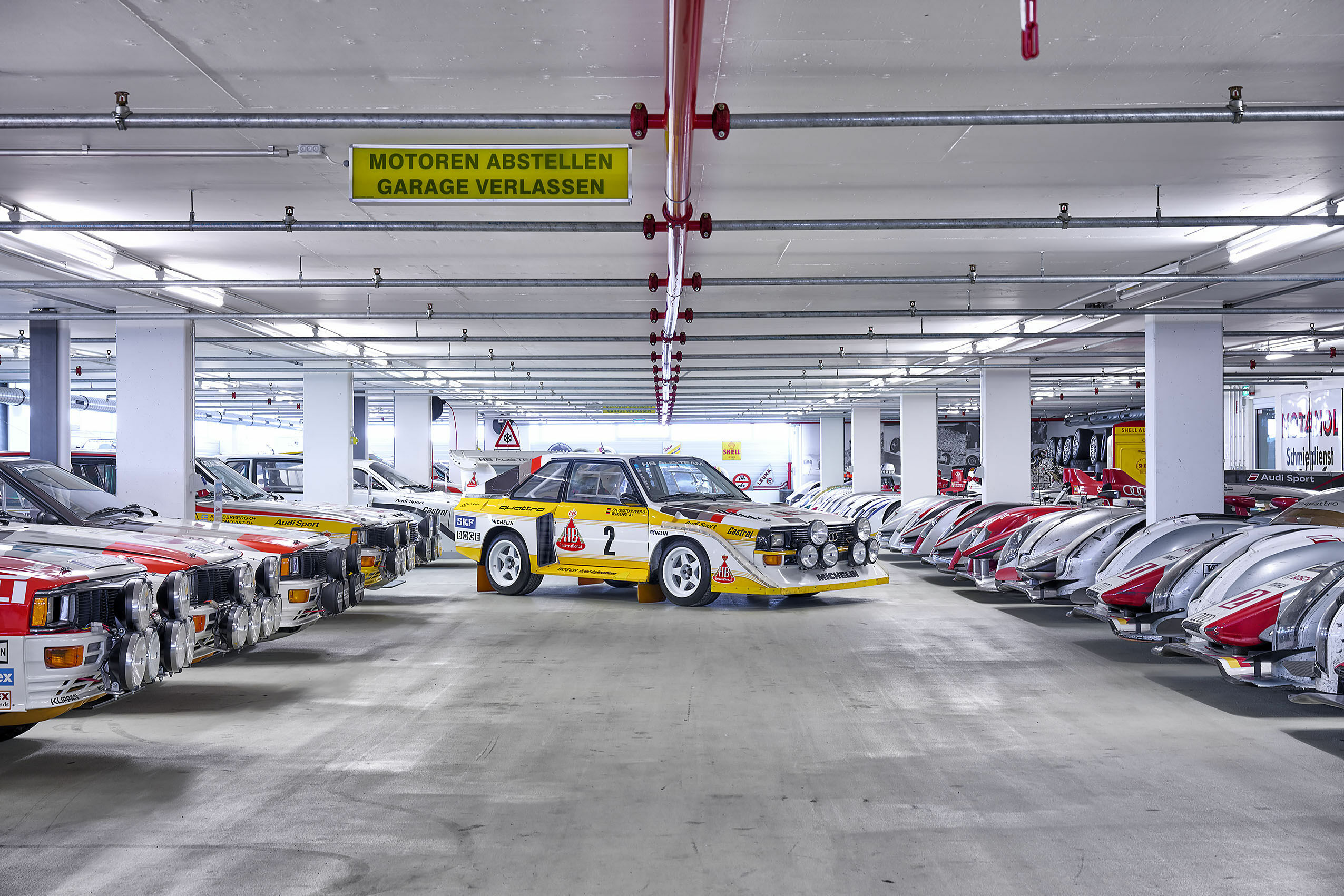
The Bremen Classic Motorshow (January 30–February 1) in Bremen, Germany, marks the start of this year's program: Audi Tradition will commemorate the premiere of the Audi A3 30 years ago and will offer guidance to visitors interested in spare parts for classics and modern classics from Audi. Nine-time Le Mans winner Tom Kristensen is set to turn laps in an Audi Sport quattro S1 E2 at “The I.C.E.” on January 30 and 31 in St. Moritz on the frozen Lake Moritz in Switzerland, and on Saturday, January 31, two-time German rally champion Harald Demuth will be driving an Audi quattro Rallye A2 at the F.A.T. Ice Race in Zell am See, Austria. Every year, motorsport fans from all over the world make the pilgrimage to the Festival of Speed in Goodwood, England – this year's event will take place from July 9 to 12, and Audi Tradition will once again be there to meet the fans. Things will also be sporting at the Eifel Rallye Festival (July 23-25) in Daun in the Vulkaneifel mountains of Germany. Furthermore, Audi Tradition will be bringing vehicles out of storage for the Heidelberg Historic (July 9-11) and the Donau Classic (July 17-18).
 Audi Tradition at many international events in 2024
Experience history through vehicles from Audi’s historical collection, lectures at the Audi museum mobile, and events around the world From Aspen to Zwickau: Audi Tradition presents automotive treasures
Audi Tradition is poised to participate in over a dozen international events in 2024 as the classic car season begins. Mainstays of the event calendar include the Goodwood Festival of Speed in England (July 11–14), two classic car rallies at Audi’s home sites – the Donau Classic (June 27–29) in and around Ingolstadt and the Heidelberg Historic (July 11–13) in Neckarsulm – as well as the Sachsen Classic in Dresden and Zwickau (August 15–17). For 2024, the Audi museum mobile, as always, has a varied program in store. In addition to special exhibitions on the history of aerodynamics, the museum of the brand with the four rings will continue its series of lectures and again take part in International Museum Day (May 19) and the Night of the Museums (September 7).
For Audi Tradition, the 2024 event season kicks off early this winter: The Ice Race in late January in Zell am See, Austria, will be followed by the Bremen Classic Motorshow (February 2–4), where Audi Tradition will showcase a first-generation Audi RS 4 Avant at a joint booth with the Volkswagen Group brands. Visitors can head there for advice on spare parts for their classic cars. One weekend after the trade fair, Audi Tradition will be on the road in the Rockies and the Alps: An Audi 90 quattro IMSA-GTO and Michèle Mouton’s 1985 Audi Sport quattro S1 Pikes Peak will represent Audi Tradition at the Aspen Ice Race (February 8–10). The historic Histo-Monte winter rally will take place simultaneously, taking participants on the trail of the legendary Monte Carlo Rally. At the event, Walter Röhrl will pilot the Audi Sport quattro S1 E2, the original rally car he drove in the 1986 Monte Carlo Rally.

 Powerhouses: five-cylinder engines at Audi
Five-cylinder engine delivering 136 hp presented for the first time in 1976 in the Audi 100 Successful engine concept for series production and rallying Audi RS 3: modified five-cylinder engine with more torque
Audi presented the first five-cylinder gasoline engine 45 years ago in the second-generation Audi 100. Enhancements and new developments followed with turbocharging, exhaust gas purification and four-valve technology, rally engines, and five-cylinder diesel units. The 2.5 TFSI won the “International Engine of the Year” award nine times in a row. Today, the high-performance engine in the new Audi RS 3 Sportback carries on the five-cylinder engine tradition – with more power than ever.
The five-cylinder engines from Audi have achieved cult status – partly due to their successful deployment in motorsport and also on account of their reliability and economy. The engine’s unique 1-2-4-5-3 ignition sequence and the incomparable sound that comes with it make the driving experience so exhilarating. The first five-cylinder gasoline engine powered the Audi 100 (C2) in 1976.
 50 years of the Audi five-cylinder
The five-cylinder engine debuted in 1976 in the Audi 100 with 136 PS Successful engine concept for production models and rally sport Signature sound from its unique 1-2-4-5-3 firing order Audi RS 3 2.5 TFSI with 400 PS and 500 Nm torque Hand-assembled at the Bock plant in Győr, Hungary
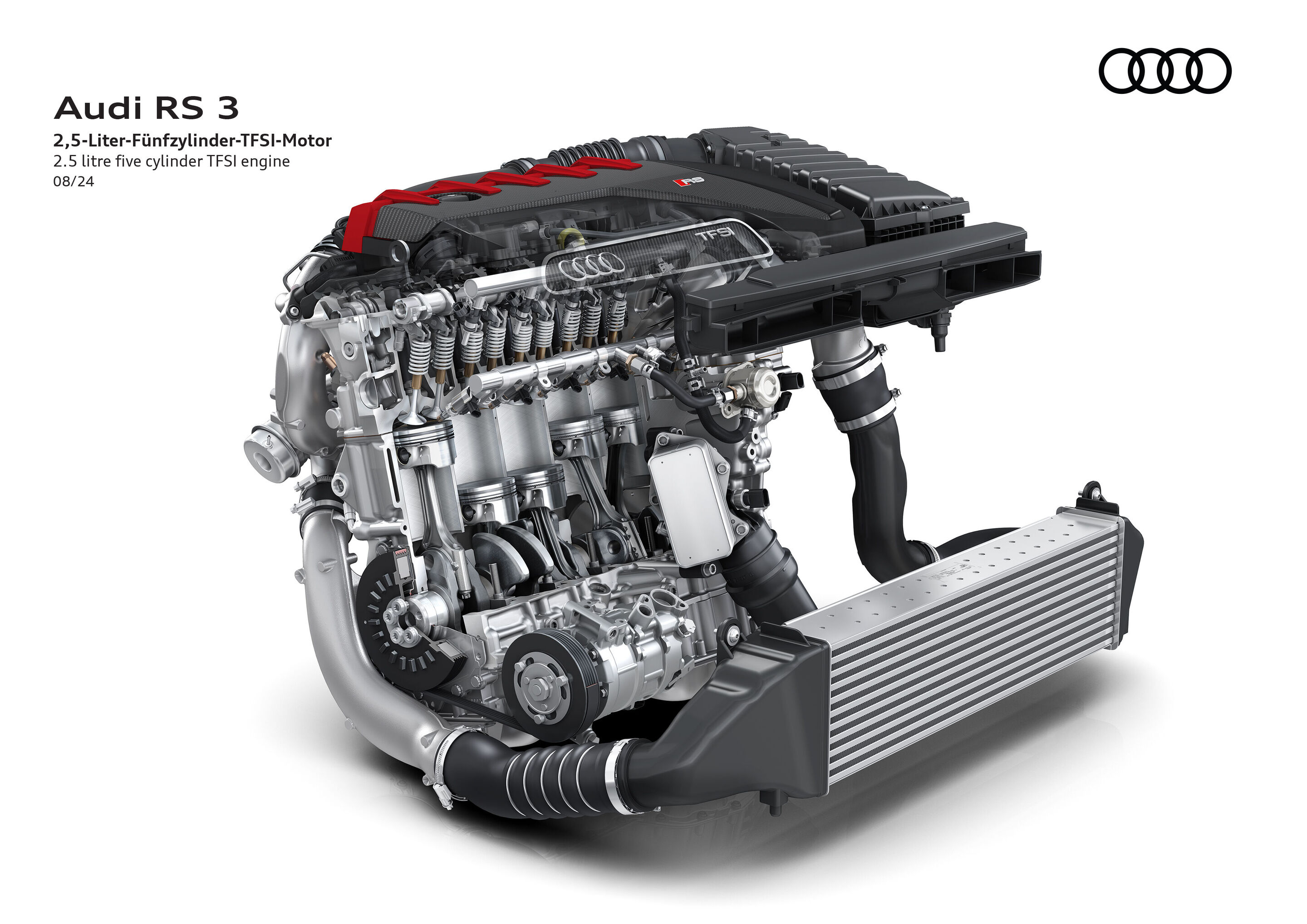
Audi will celebrate a very special anniversary in 2026: 50 years of the five-cylinder engine. The brand with the four rings first introduced this engine in 1976 in the second-generation Audi 100. This was followed by upgrades and new developments with turbocharging, exhaust gas purification, and four-valve technology, rally engines, and five-cylinder diesel engines. Currently, the 2.5 TFSI in the Audi RS 3 continues the great tradition of five-cylinder engines
Audi’s five-cylinder engines have cult status and are deeply rooted in the Audi DNA. They have played a decisive role in shaping “Vorsprung durch Technik” – on the one hand with numerous successes in motorsport, and on the other, by virtue of their outstanding performance in series production. To this day, the 2.5 TFSI provides a highly evocative driving experience, not least because of its characteristic sound. The HISTORY: 50 years of success in series production and motorsport The first five-cylinder engine powered the Audi 100 (C2) in 1976. Known internally as Type 43, the model was intended to be positioned higher in the market than its predecessor. The four-cylinder engines of the time were not sufficient for the developers’ plans. Audi engineers therefore discussed using inline five-cylinder and six-cylinder engines in the early 1970s. The latter were ruled out due to space constraints and the unfavorable weight distribution. As a result, those responsible opted for the inline five-cylinder engine, which was based on the EA 827 engine concept, still in its infancy at the time. This inline four-cylinder engine was used throughout the Volkswagen Group in the 1970s, including in the Audi 80 and Audi 100.
 Motorsport history
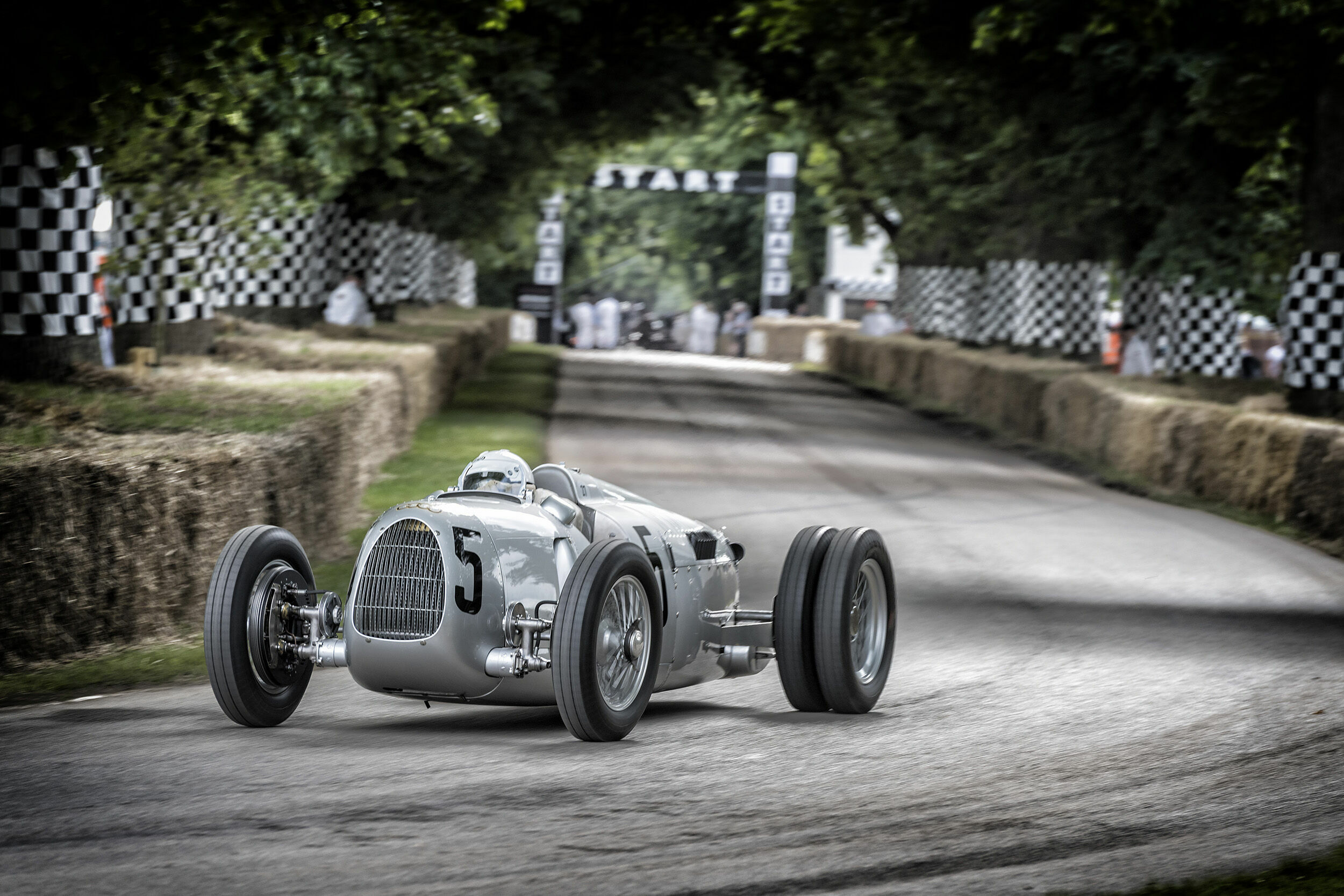
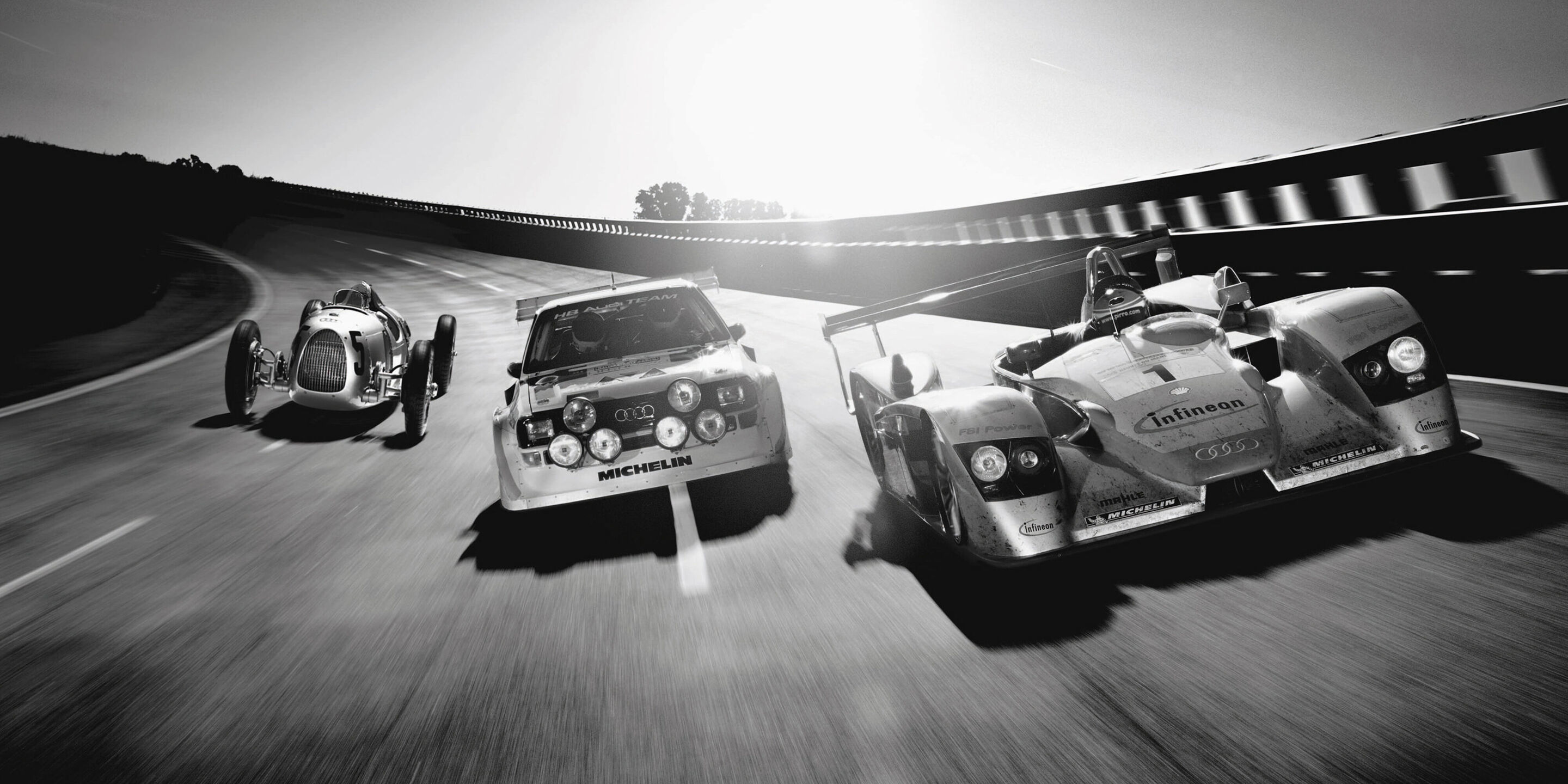
Sportiness, advanced technology, and emotional design are the foundations for the success of the Audi brand. From the early beginnings, roaring through the 30s with the silver arrows, to decades of race wins and titles on four and two wheels, revolutionizing rallying with quattro and taking that technology onto racetracks worldwide, endurance racing triumphs at Le Mans, DTM titles, electric racing in Formula E and winning the grueling Dakar Rally, the four rings represent success in competition.
Motorsport history of the four rings
Success with electric drive concepts
Sustainability does not only play an important role in the premier class of motorsport. The company began electrifying its motorsport program in endurance racing in 2012. With the first victory of a hybrid racing car at the Le Mans 24 Hours, Audi achieved a pioneering feat at the world’s most important endurance race in 2012. The Audi R18 e-tron quattro remained unbeaten three times in a row at Le Mans in 2012, 2013 and 2014. Many other innovations such as the Audi laser light complement the pioneering technical achievements. Drivers and manufacturers titles with the hybrid sports car in the 2012 and 2013 FIA World Endurance Championship (WEC) complete the Audi sports car era, which ended in 2016. Following the LMP program with the R18 hybrid sports car, Audi was the first German car manufacturer to compete in the all-electric Formula E racing series in the 2017/2018 season. With four victories and a total of eleven podium finishes, Audi Sport ABT Schaeffler clinched the team championship after twelve races. Things continued to go electric after that: the brand with the four rings competed in the famous Dakar Rally from 2022 with an innovative prototype. Audi made history in January 2024: the Audi RS Q e-tron was the first low-emission prototype with an electric drive, high-voltage battery and energy converter to win the world’s toughest desert rally.
 In search of driving pleasure: quattro drive and suspension of the Audi e-tron
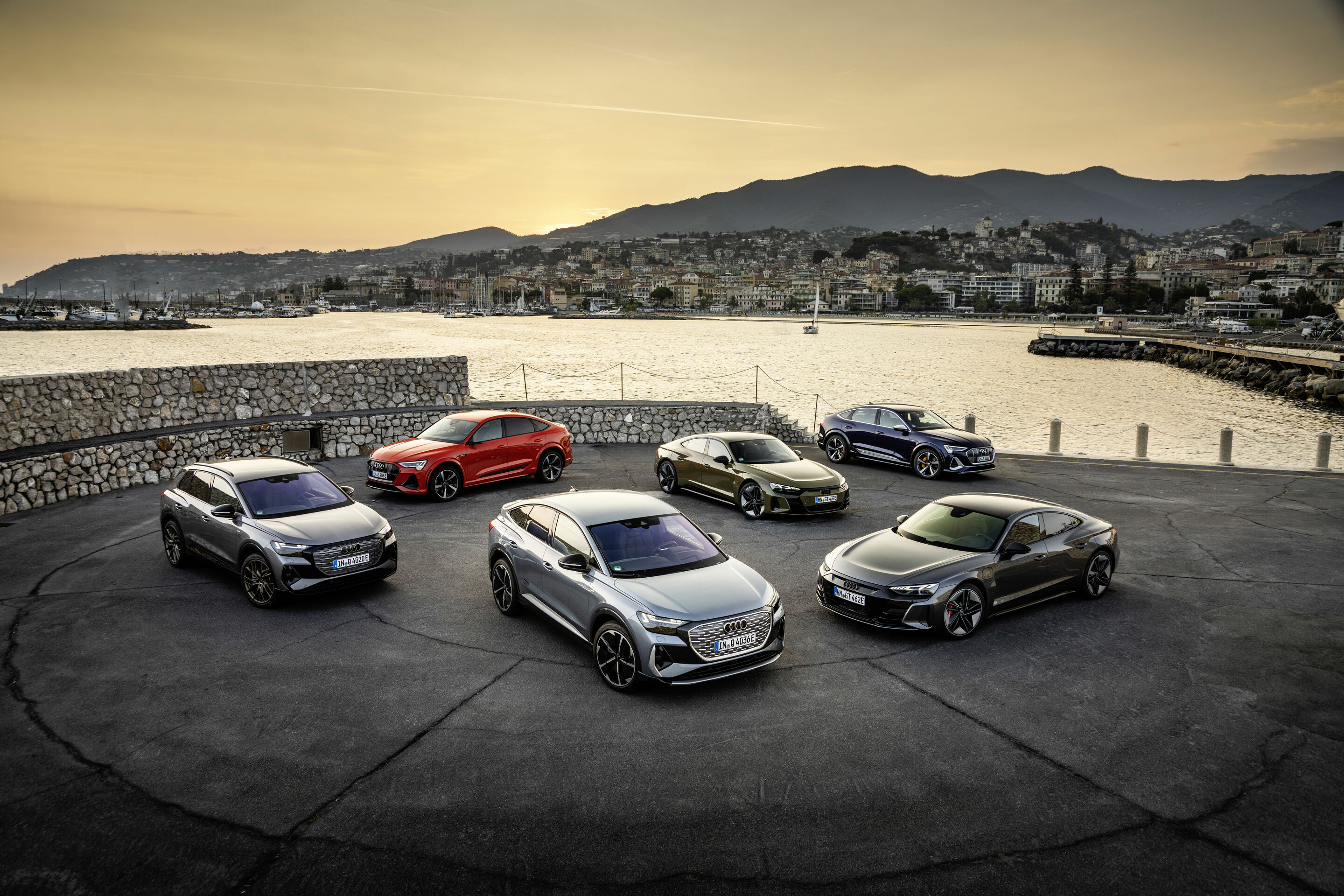
quattro and e-tron – that is the perfect combination for powerful performance and high efficiency. In the Audi e-tron , the brand with the four rings introduced a new generation of quattro drive in 2018: electric all-wheel drive. In conjunction with the versatile suspension, the low center of gravity and the powerful electric motors, the electric SUV offers optimum traction, outstanding dynamics and unshakable stability on any terrain and in any weather – enormous driving pleasure in short.
Variable torque distribution: the electric all-wheel drive With the electric all-wheel drive Audi transferred the combined know-how from more than four decades of quattro drive into the electric age. The premium brand combined the efficiency of a single- axle drive with the driving dynamics and traction of an all-wheel drive. This technology also reached a new level of variability, dynamics and precision. The electric motors are the ideal power source for the high-precision, ultrafast quattro drive in the Audi e-tron: The drive torque can be controlled instantly and distributed fully variably between both axles in fractions of a second – constantly tailored to the particular driving situation. In conjunction with the wheel-selective torque control, the electric all-wheel drive offers high traction in all weather conditions and on any surface. The dynamic talents of the Audi e-tron are especially apparent at low coefficients of friction, such as on snow. In most cases, the electric SUV tends to use its rear electric motor to achieve the highest efficiency.
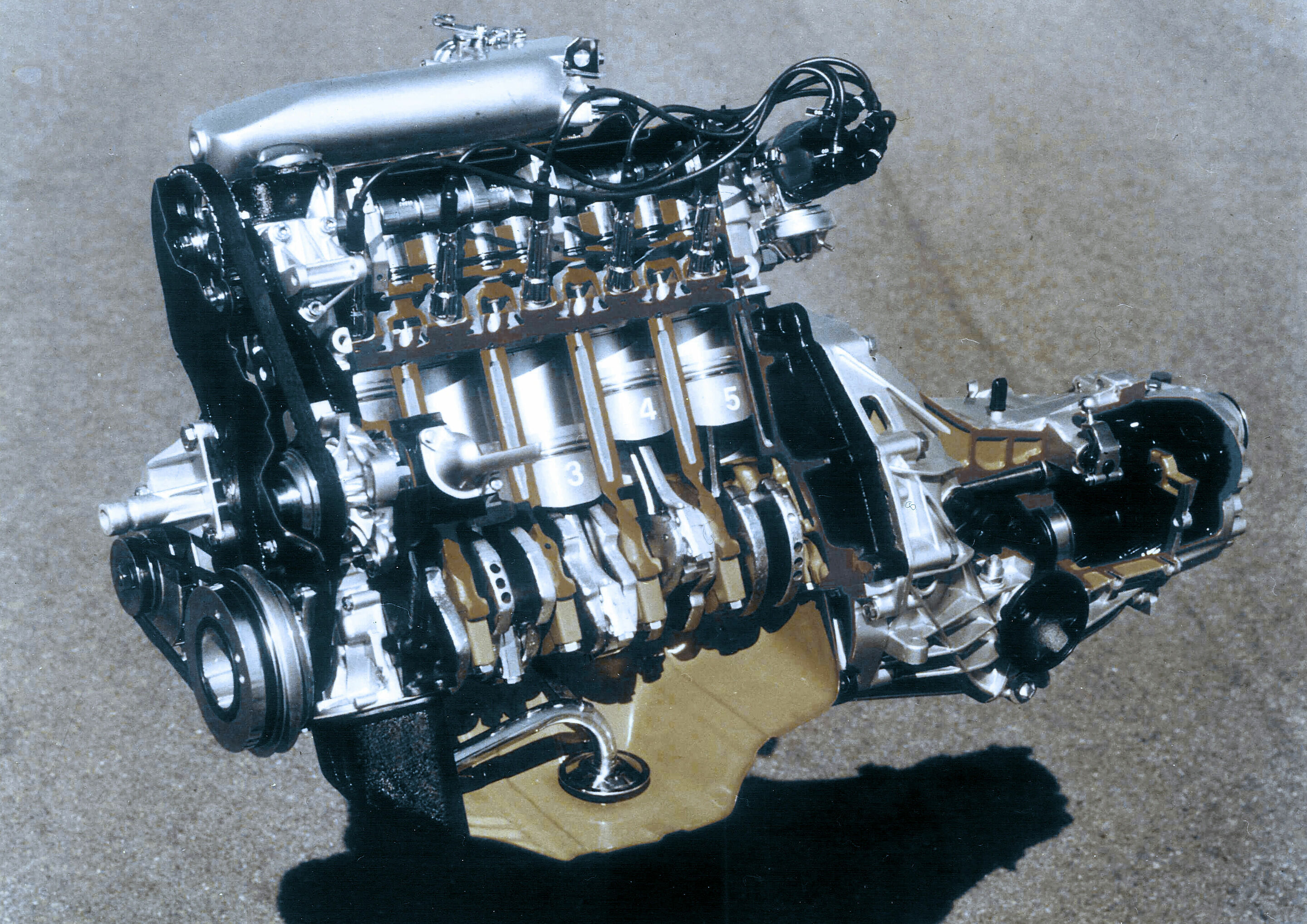 History of five-cylinder engines
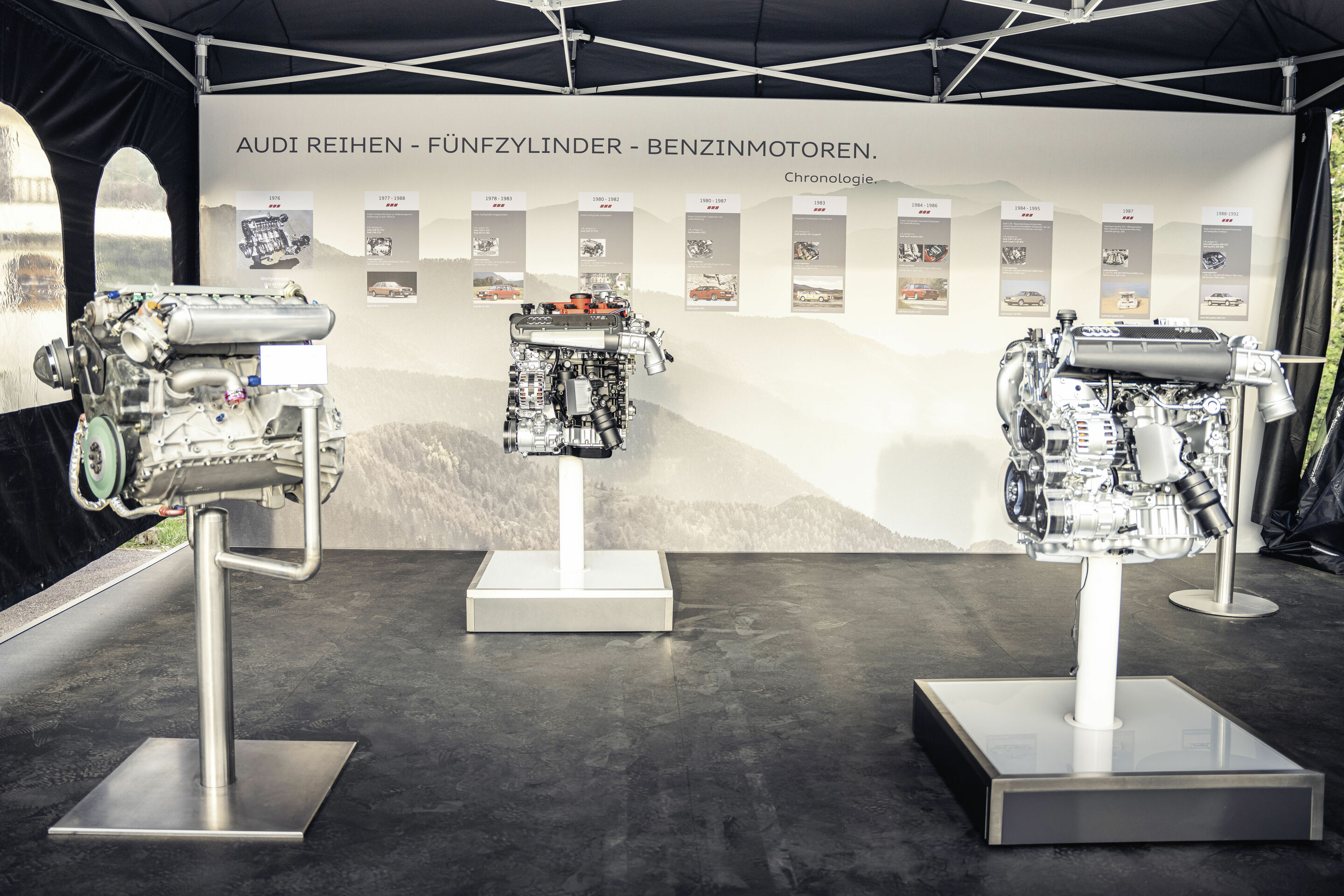
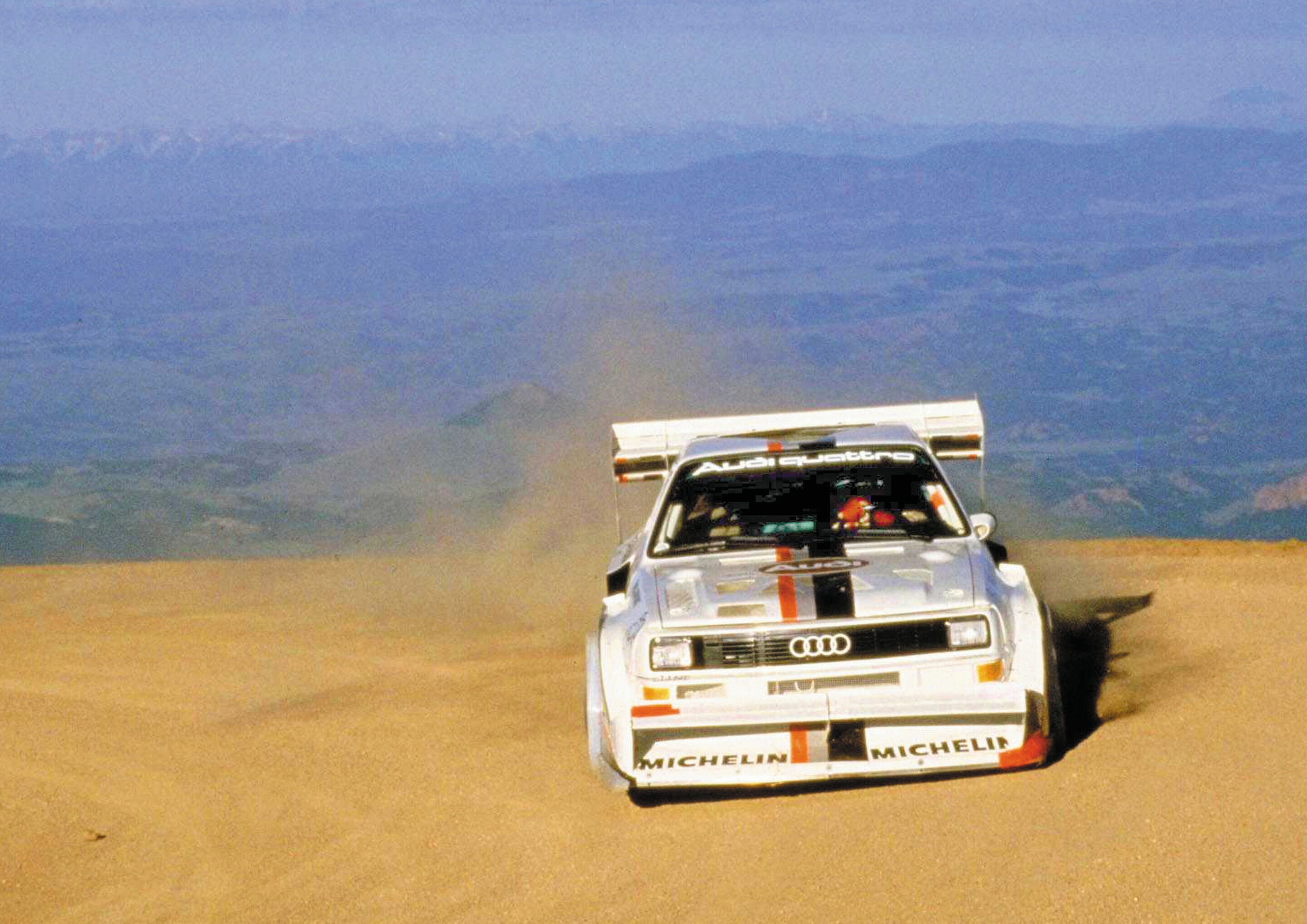
The 2.5 liter TFSI engine in the new TT RS is continuing a great tradition: Audi used five-cylinder engines with great success in rally racing back in the 1980s. Today they provide for an emotional driving experience in production vehicles. The powerful and versatile engines have honed the new, sporty profile and made a key contribution to Vorsprung durch Technik. The five-cylinder gasoline engine premiered in 1977 in the Audi 100 5E. A modern injection system contributed to efficiency and strong power delivery: 100 kW (136 hp) from 2.1 liters of displacement. In 1978, a naturally aspirated diesel engine with a displacement of two liters and 51 kW (70 hp) followed. One year later, the first five-cylinder gasoline engine with turbocharging made its debut – another pioneering achievement from Audi. It powered the new top model, the Audi 200 5T, with an output of 125 kW (170 hp) and 265 Nm (195.5 lb-ft) torque. One year later, the new engine proved to be even more impressive – in the Audi quattro from 1980. With turbocharging, intercooling and permanent all-wheel drive, it formed a strong technology package for road use and racing. At the start of sales it produced 147 kW (200 hp). The 1984 Sport quattro, which was the basis for a new Group B rally car, was powered by a newly developed four-valve light-alloy engine with 225 kW (306 hp). In the competition cars for the World Rally Championship, the five-cylinder demonstrated its immense potential, delivering up to 350 kW (476 hp). Even after Audi left rally racing, additional highlights followed: The Audi Sport quattro S1 E2, in which Walter Röhrl won the Pikes Peak Hill Climb (USA) in 1987, produced 440 kW (598 hp). And the IMSA-GTO dominated the American touring car scene in 1989 with a substantial 530 kW (720 hp) – and still from a displacement of little more than two liters. In series production, Audi used an increasingly differentiated range of five-cylinder engines.
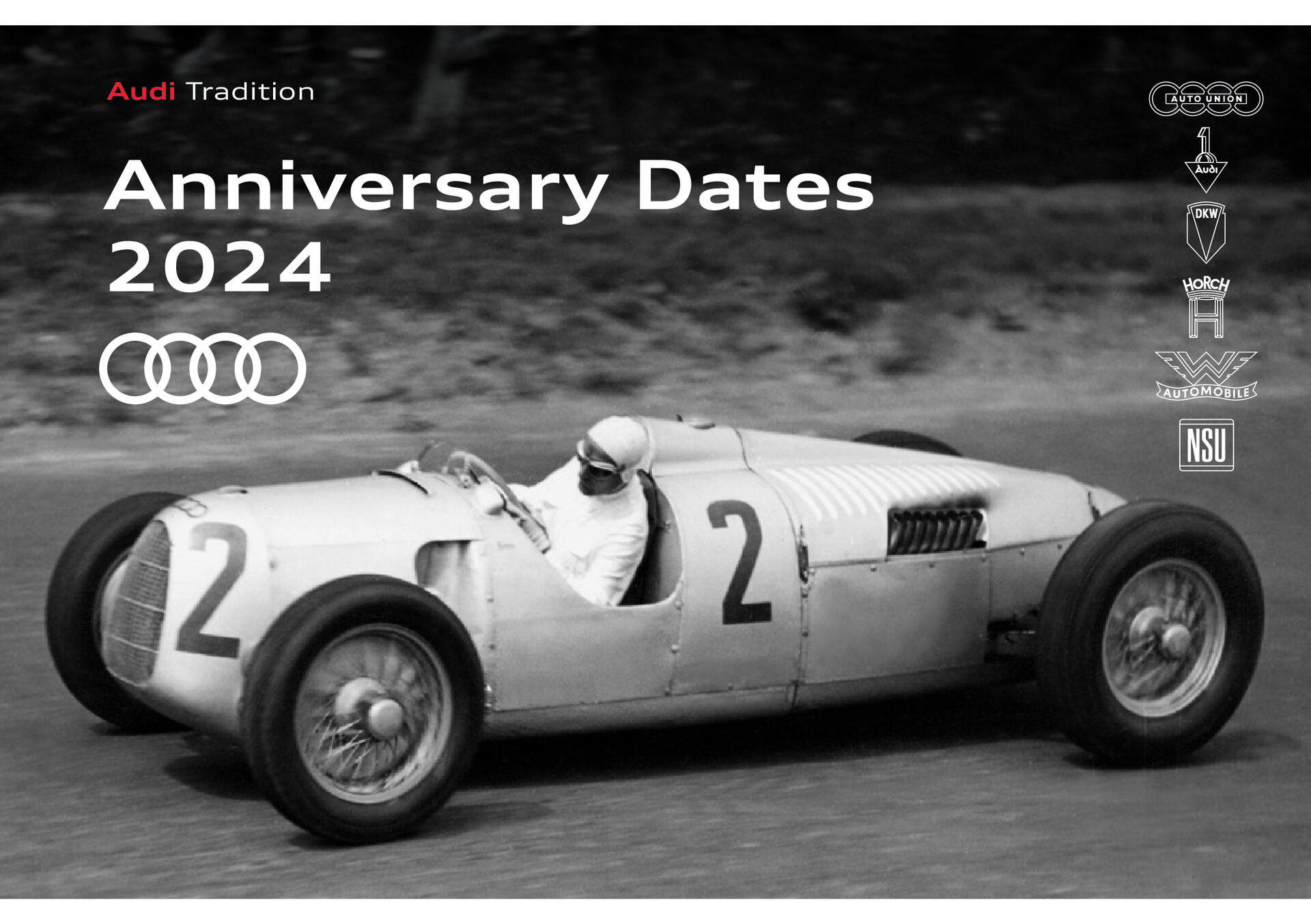 Audi Tradition - Anniversary Dates 2024
1994 30 Years Audi 80 Competition ...............................29 1989 35 Years Audi 90 IMSA-GTO ..................................30 1984 40 Years Double championship win for Stig Blomqvist and Audi .......................................31 May 1984 40 Years Audi Sport quattro S1 .............................32 January 1984 40 Years Walter Röhrl joins Audi ...........................33 1984 40 Years Harald Demuth German rally champion in Audi quattro ....................................................35 1984 40 Years Audi at Pikes Peak ...................................36 November 1954 70 Years Top-three finish in the European Touring Car Championship for DKW ........37 July 1954 70 Years Werner Haas World Champion on NSU Rennmax .................................................38 September 1939 85 Years Final grand prix victory ............................39 August 1939 85 Years Wanderer class victory in the Liège–Rome–Liège Rally .......................................40 August 1934 90 Years Six Days Trial in Garmisch-Partenkirchen ....................................41 March 1934 90 Years Auto Union grand prix racing car ..............42 Audi Tradition 5 Anniversary Dates 2024 Years 25 Audi S3 The compact three-door Audi A3 that was unveiled in autumn 1996 was based on the platform of the VW Golf IV, which hit the market one year later.