Search
All search results for "audi a2 100 years audi"
(45)
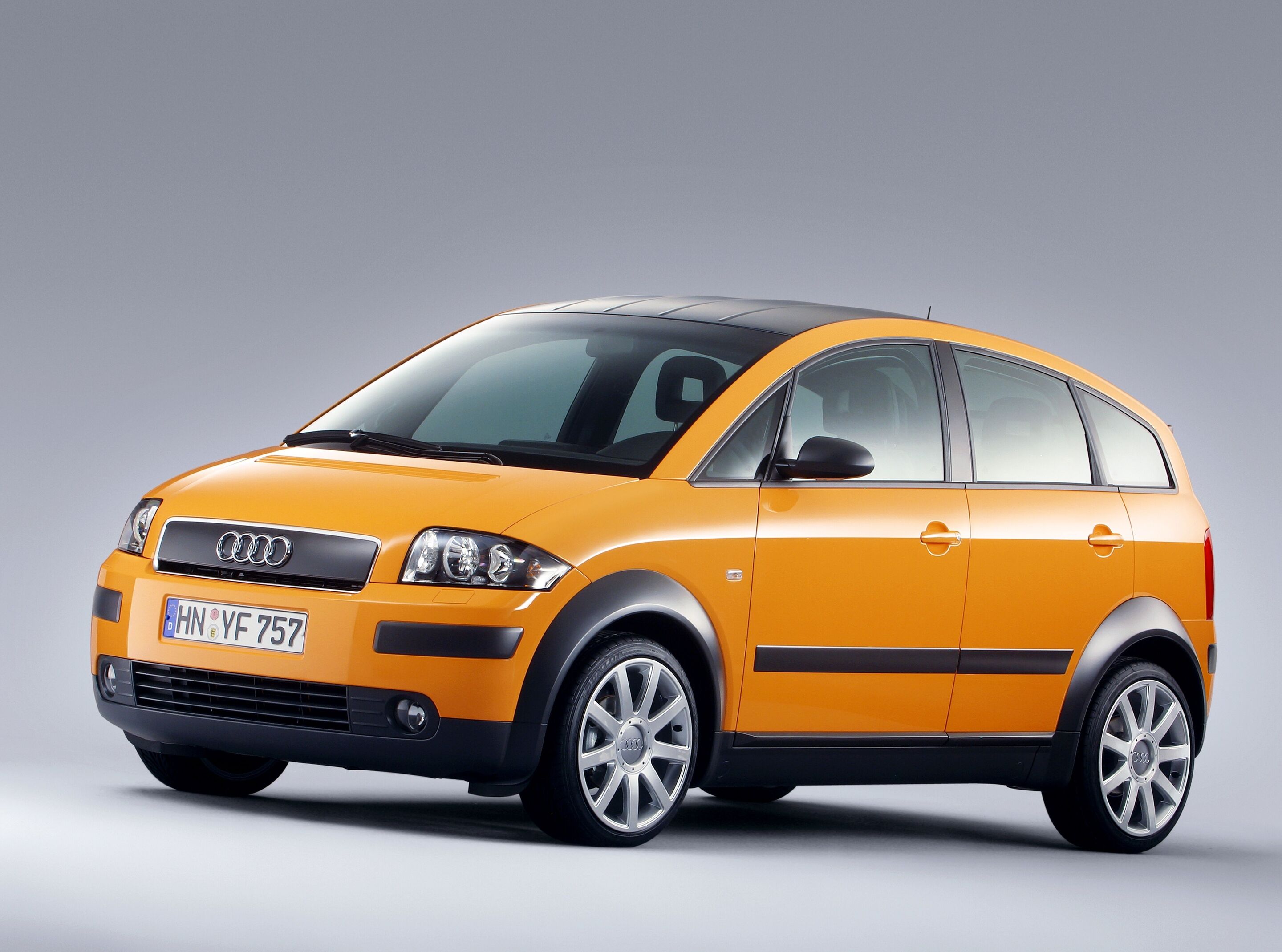
Leading light: 25 years Audi A2
Premium in the entry-level segment: the Audi A2 – progressive in design and technology, and with top long-term quality The Audi A2 1.2 TDI was the world’s first four-door three-liter car
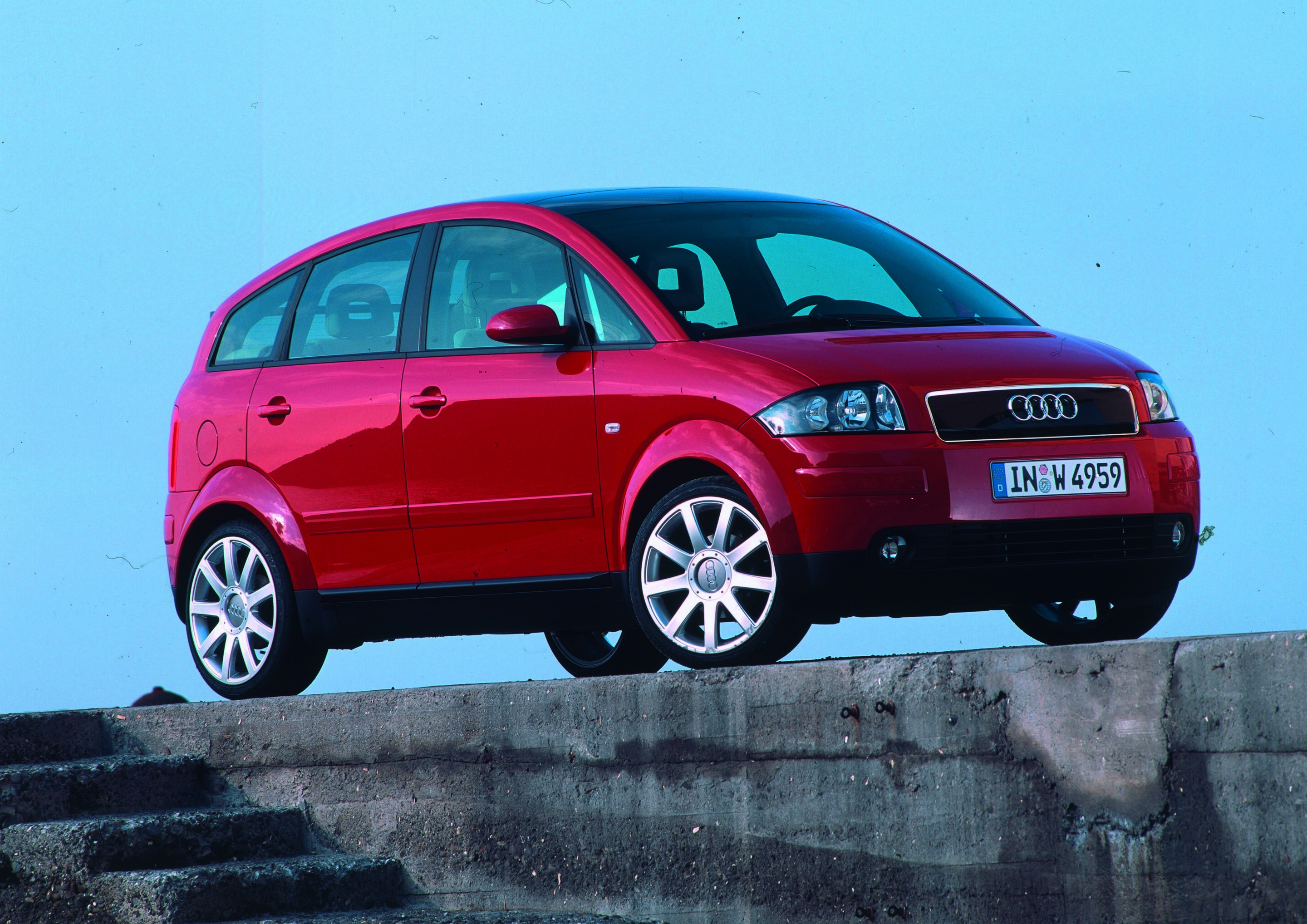
It was launched 25 years ago – and polarized opinions: the Audi A2. With its innovative aluminum body, the compact car was light, aerodynamic, and economical in terms of consumption. There were five engine variants to choose from; the A2 1.2 TDI caused a sensation as the world’s first four-door three-liter car. And since 2003, the special “colour.storm” edition has attracted attention with its special paint colors. However, since sales fell short of expectations, Audi ended production in 2005 after about five years and 176,377 units built. The innovative Audi A2 can showcase its qualities in a “second career”: as a modern classic with a stable value, the A2 has a loyal fan base and can still be seen on the road today as a daily companion.
In the early 1990s, the three-liter car was announced as a development goal by the Volkswagen Group and Audi, and the first work on the project began shortly afterwards. The designers in Ingolstadt worked closely with the experts at the aluminum center in Neckarsulm. In May 1995, they presented a concept study called “Ringo,” whose Audi Space Frame (ASF) was less complex than the ASF of the Audi A8, which was largely built by hand. Stefan Sielaff – the former head of Audi’s Munich design studio – took over the project and led the interior design, while Belgian designer Luc Donckerwolke handled the exterior. Together with future design chief Gerhard Pfefferle, they gave the “rolling cage” Ringo a two-door body – which proved already close to the later design. As development progressed, two studies were created: one was a show car at the IAA in Frankfurt in 1997 and, in addition to the provisional model designation Al2, it bore the nickname “Light Green” because of its color.
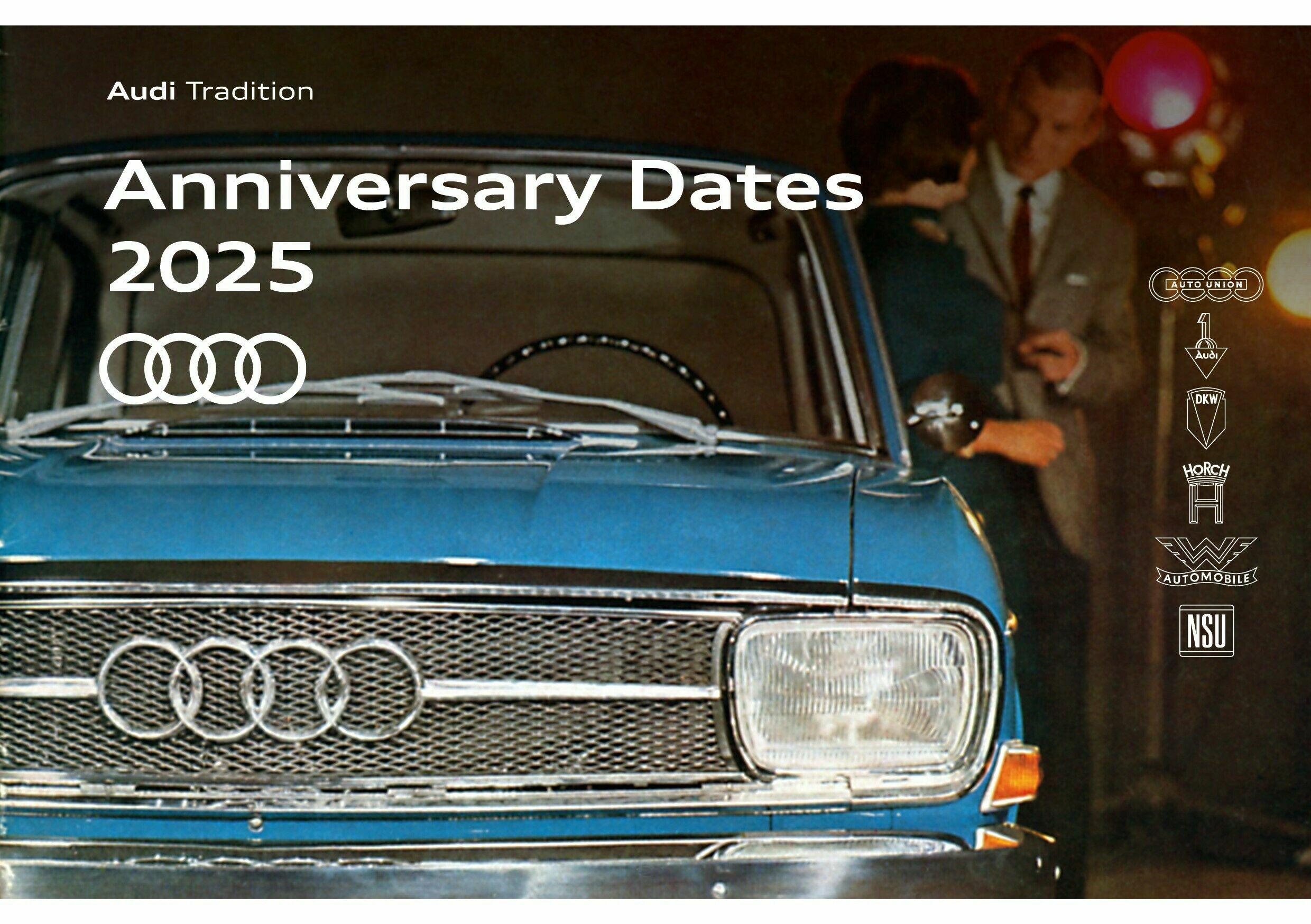
Audi Tradition to commemorate numerous anniversaries in 2025
Booklet features a selection of more than two dozen anniversaries The launch of the Audi A2 25 years ago; the first new Audi in post-war times 60 years ago; and Hans Stuck’s record-breaking exploits in the “world’s fastest road-going car” near Lucca 90 years ago
With the “Anniversary Dates 2025” booklet, Audi Tradition is showcasing the most important moments in the product and company history of Audi, which is as eventful as it is diverse. Audi historians have selected a total of 27 dates to commemorate in 2025.
Twenty-five years ago, the Audi A2 hit the market. With its aluminum body, it made a name for itself as a progressive compact car: light, aerodynamic, and economical. The Audi A2 polarized opinion with its design and unusual proportions; the concept was ahead of its time. However, sales remained below expectations, and Audi ended production after roughly five years and 176,377 units built. Since then, the A2 became a fan favorite and is now a sought-after collector’s item. Sixty years ago, the first post–World War II Audi rolled off the production line. With the “Auto Union Audi” vehicle, Auto Union GmbH revived the tradition-steeped Audi brand name in 1965. The new name was meant to show that this car represented a fresh start for Auto Union in terms of technology. The Audi was the first car from the brand with four rings to feature a four-cylinder four-stroke engine, and it marked the beginning of a new era in Ingolstadt. Twenty years later, on January 1, 1985, Audi NSU Auto Union AG was renamed AUDI AG, and since that time, the company and its products have shared the same short, memorable name. Ninety years ago, in February 1935, a spectacular attempt to break speed records took place in Italy. After test drives in October 1934 with the Grand Prix racing car on the AVUS in Berlin, the Auto Union racing department started developing the vehicle that would later be known as the “Lucca” car.
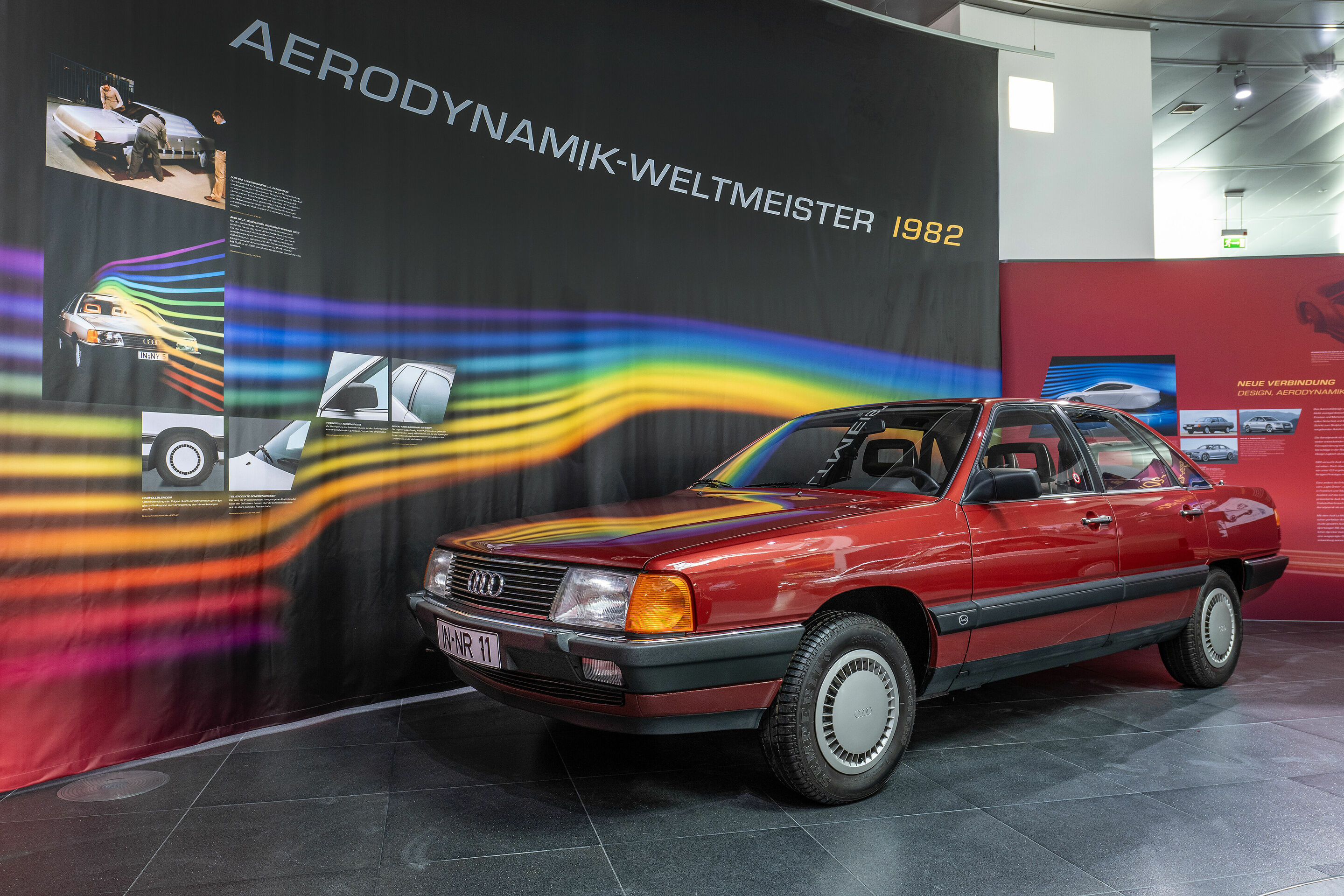
After “Windschnittig” comes “Form vollendet”: A new special exhibition at the Audi museum mobile
Aerodynamics in automotive manufacturing from 1945 to the present day: from concept cars and record-breaking models to race cars and the Cd world champion, the Audi 100 Almost 30 exhibits feature in a special exhibition from July 25, 2024, to March 2, 2025
Audi wrote engineering history in 1982 with the Audi 100. With its drag coefficient of 0.30, the third-generation Audi 100 was the world’s most aerodynamically efficient production saloon at the time, making it an essential part of the new special exhibition "Form vollendet". The new special exhibition will be at the Audi museum mobile in Ingolstadt until March 2, 2025, where Audi Tradition will present aerodynamic concepts from 1945 to the present day.
The aerodynamics research that flourished before the Second World War and which was the subject of Audi Tradition’s “Windschnittig” exhibition (German for “streamlined”) that ran until the end of June received little attention after 1945. Europe’s automotive industry was busy getting back on its feet. During this period, pre-war developments were still in use and improved upon. It wasn’t until the rising cost of fuel during the 1973 oil crisis prompted a shift in thinking that automotive engineers began focusing on reducing fuel consumption. One of the dials used to achieve this was aerodynamic drag. In 1982, Audi made a splash with the Audi 100; its drag coefficient of 0.30 set a world record for production sedans, a value that would become the benchmark for years to come. The new Audi Tradition special exhibition “Form vollendet” (German for “form perfected”) showcases the Cd world champion Audi 100 alongside other models such as the NSU Ro 80, the Porsche 356, the Lamborghini Countach, and the Ducati Paso 950.
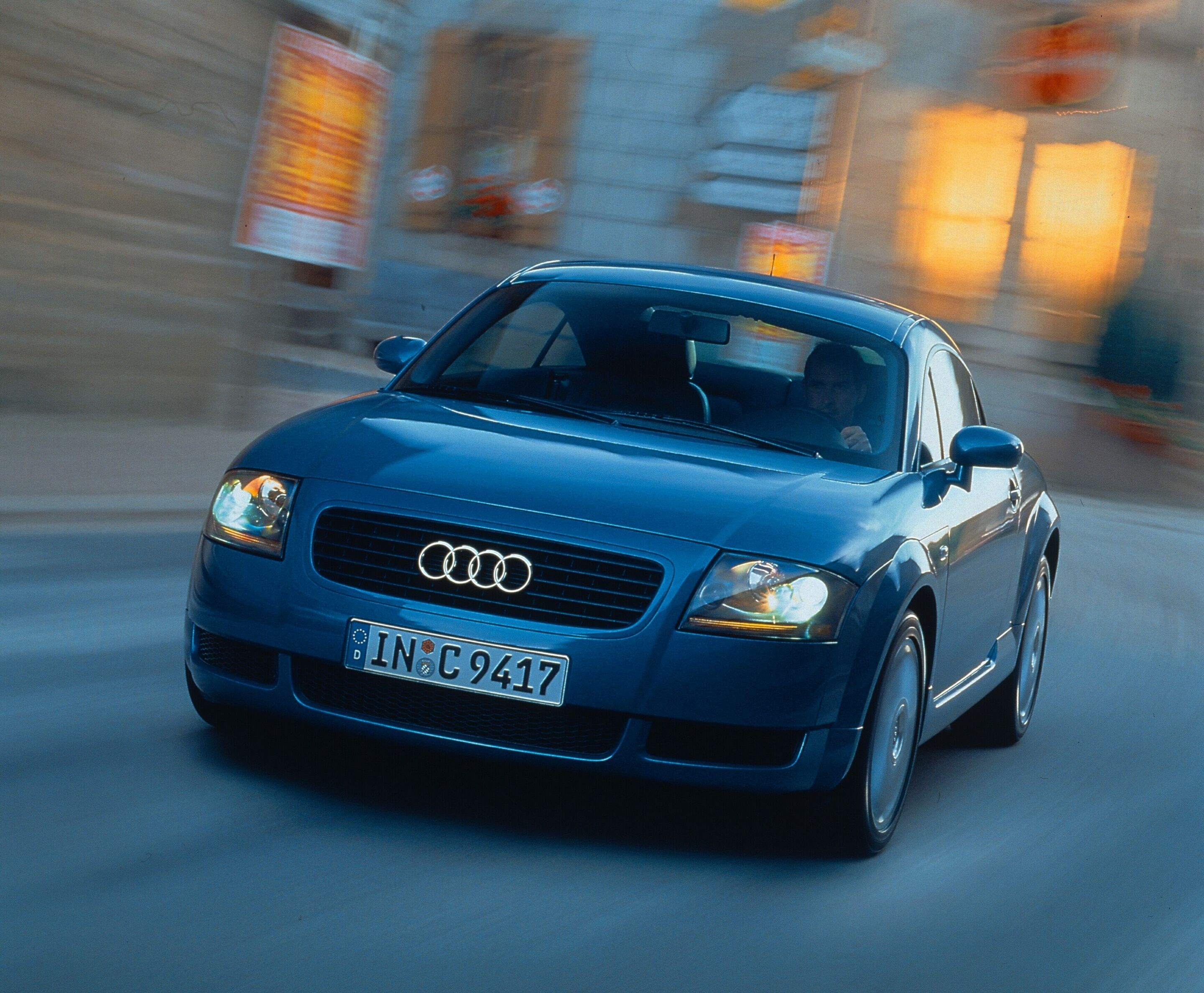
A timeless design icon: The Audi TT turns 25
Inspired by Bauhaus: Coupé study from 1995 began series production in 1998 178,765 first-generation Audi TT Coupés had rolled off the production line by 2006 Audi designer Torsten Wenzel introduced the study to series production: “The Audi TT is a driving sculpture”
Twenty-five years, three generations: The brand with the four rings wrote design history with the Audi TT. Since its debut in 1998, the sports car has struck a chord with people worldwide thanks to the fun it promises drivers and its clear design language. „Auto Europe“ voted it the best new car of the year in 1999.
In the mid-1990s, the Audi A8 luxury model elevated the Audi brand to a higher position and gradually led to the renaming of the model series: The Audi 80 became the Audi A4, and the Audi 100 was dubbed the Audi A6. Introduced in 1994, the Audi A4 was the first model to embody Audi’s new design language. Next was the Audi A3 premium compact car, launched in 1996, and the second generation of the Audi A6, introduced in 1997. In the course of emotionalizing the brand through a fresh, progressive design, American designer Freeman Thomas, under the then Head of Design Peter Schreyer, created a puristic sports car in the Audi TT Coupé. Audi presented the study to an enthusiastic trade show audience at the IAA in Frankfurt in September 1995. The model name “TT” is reminiscent of the legendary Tourist Trophy on the Isle of Man, one of the oldest motorsports events in the world and one where NSU and DKW celebrated great successes with their motorcycles. The name “TT” also recalls the sporty NSU TT of the 1960s. The Audi TT Coupé’s deliberate departure from the usual Audi nomenclature underscored the complete novelty of the model. Designer Wenzel: “In the Audi TT, every shape has a clear function” In December 1995, the decision was made to mass-produce the Audi TT Coupé.
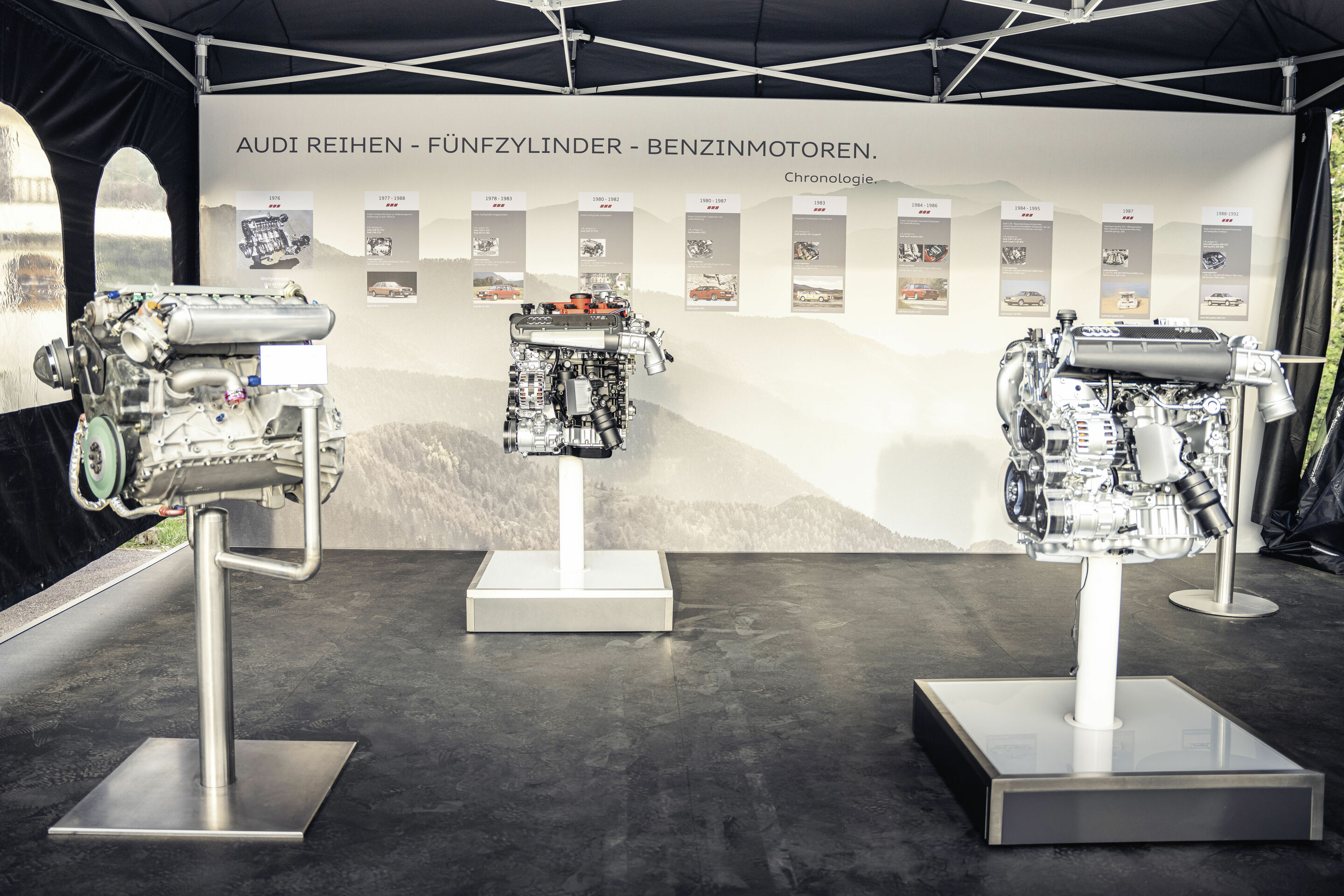
Powerhouses: five-cylinder engines at Audi
Five-cylinder engine delivering 136 hp presented for the first time in 1976 in the Audi 100 Successful engine concept for series production and rallying Audi RS 3: modified five-cylinder engine with more torque
Audi presented the first five-cylinder gasoline engine 45 years ago in the second-generation Audi 100. Enhancements and new developments followed with turbocharging, exhaust gas purification and four-valve technology, rally engines, and five-cylinder diesel units. The 2.5 TFSI won the “International Engine of the Year” award nine times in a row. Today, the high-performance engine in the new Audi RS 3 Sportback carries on the five-cylinder engine tradition – with more power than ever.
The five-cylinder engines from Audi have achieved cult status – partly due to their successful deployment in motorsport and also on account of their reliability and economy. The engine’s unique 1-2-4-5-3 ignition sequence and the incomparable sound that comes with it make the driving experience so exhilarating. The first five-cylinder gasoline engine powered the Audi 100 (C2) in 1976.
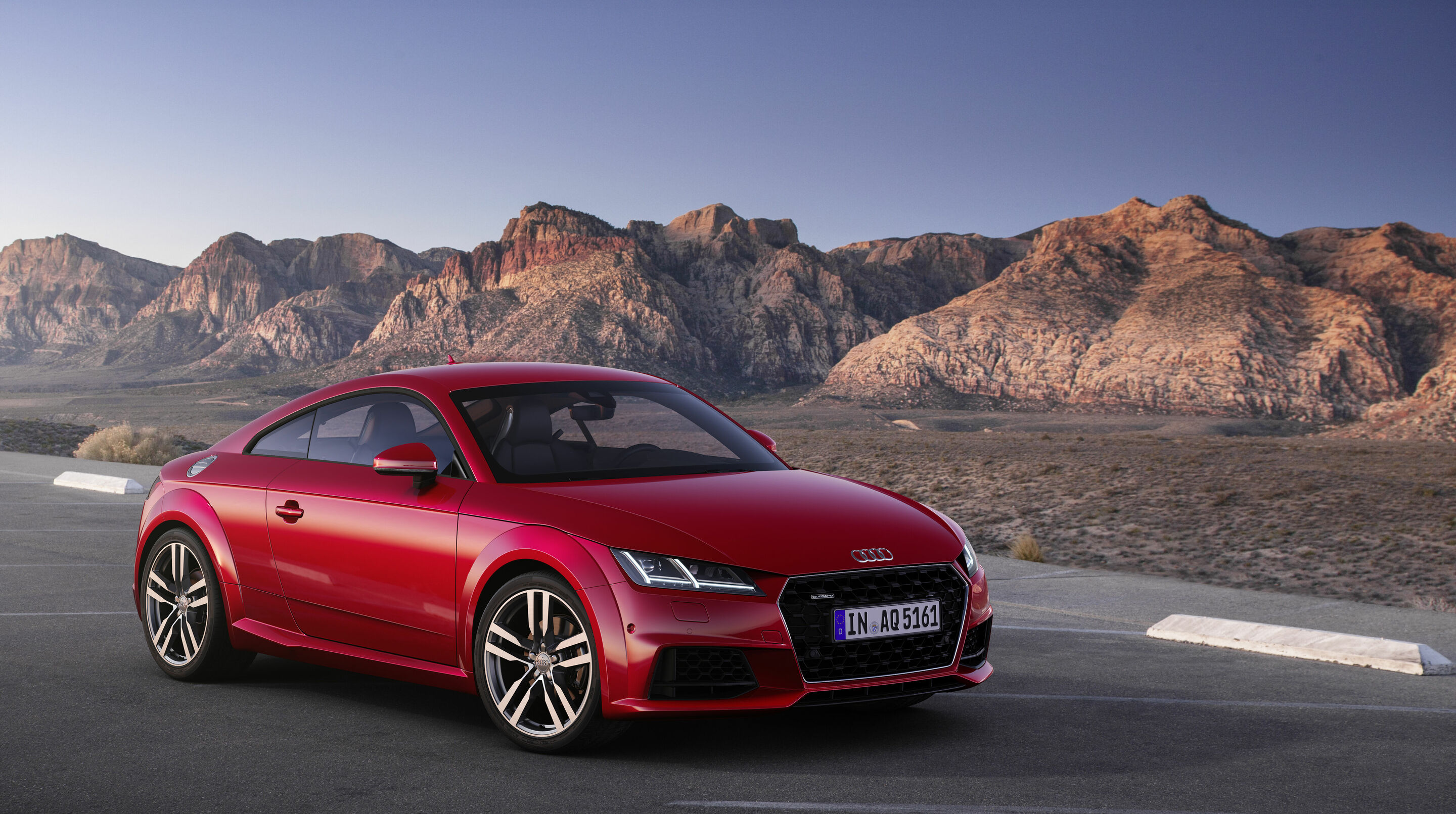
The Audi TT: an icon of brand history
Successful for decades: 662,762 units across three generations built over 25 years Design inspired by Bauhaus: every shape has a clear function Vorsprung durch Technik: New technologies launched with the TT, including Audi magnetic ride, Audi virtual cockpit, and OLED technology
A quarter of a century of TT history: When Audi presented the concept car at the IAA in 1995, public opinion became clear right away: “This car should be mass-produced – exactly as it is!” With the series debut in 1998, the Audi TT wrote design history and was built across three generations as a Coupé and Roadster.
With a vision of “a car for enthusiasts,” Audi presented the Audi TT Coupé as a sports car concept at the IAA in Frankfurt in the fall of 1995. Shortly afterward, the decision was made to mass-produce it. Torsten Wenzel, the exterior designer at Audi who helped introduce the study to series production, recalls: “To us, the greatest praise was when the trade press noted appreciatively that not much had changed from the concept to production model, although we did, of course, have to adapt many details due to the technical specifications for the production version, including the proportions.” Most noticeable was the integration of a rear side window, which elongated the car’s profile and increased the sports car’s dynamics. For Wenzel, the TT remains “a driving sculpture, with highest-quality surfaces and lines.” The body of the Audi TT appears to be made from one piece, Wenzel says, and the front end without traditional bumper overhangs emphasizes its distinctive shape. Another design element contributes to the unmistakable silhouette of the Audi TT Coupé: the circle – “the perfect graphic shape,” as Wenzel describes it. Numerous circular elements inspired the sports car’s exterior and interior design. Inspired by Bauhaus, every line in the Audi TT has a purpose, every shape a function. “At Audi Design, we always follow the philosophy of ‘less is more.’
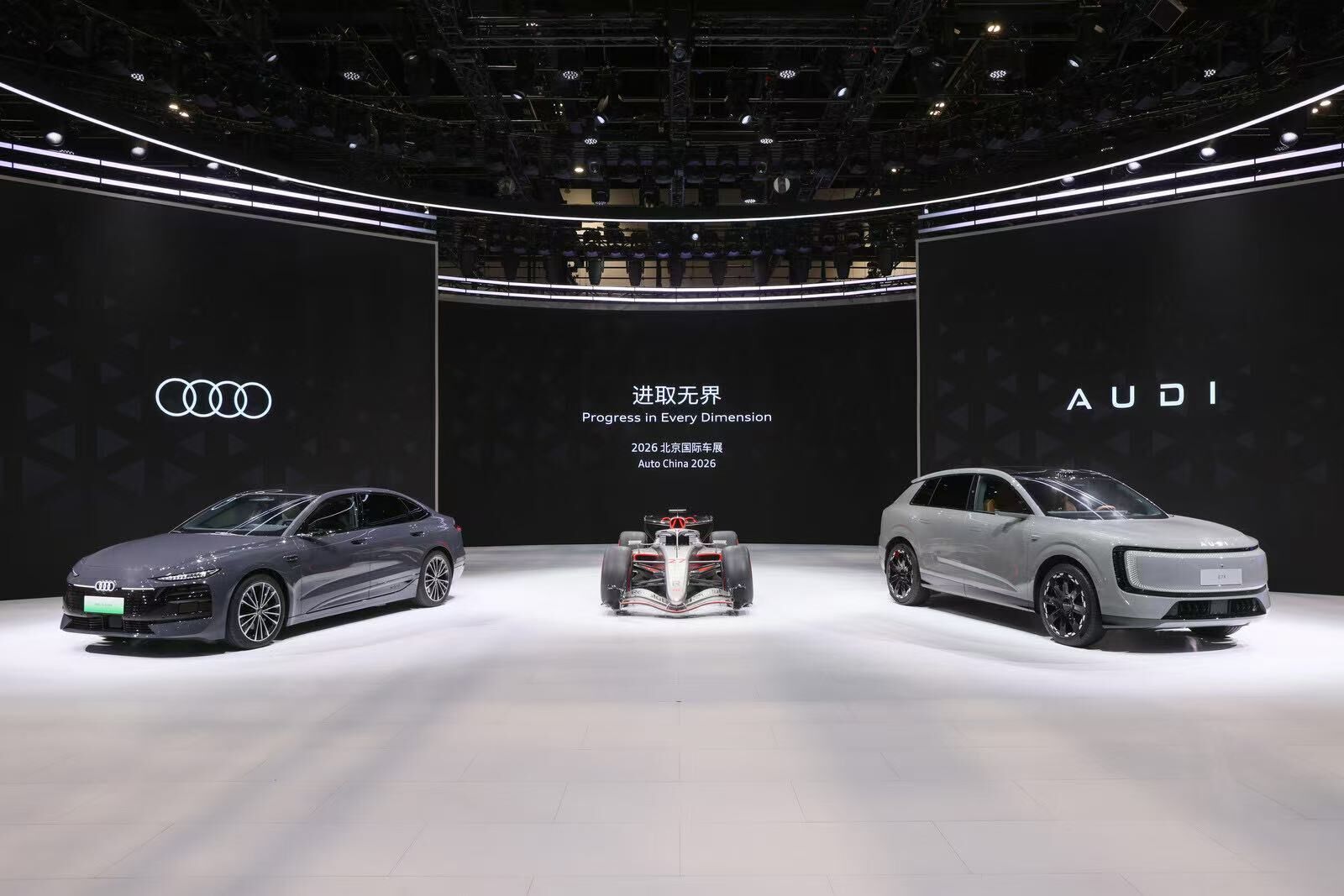
Auto China 2026: Audi continues its product initiative with China-tailored models and technologies
Two partners, two brands, a differentiated powertrain portfolio: Audi is accelerating its China strategy World premiere of the AUDI E7X in Beijing – second production model from the China-exclusive AUDI brand; market launch of the SUV in the first half of the year Strategic agreement for the establishment of an AUDI Innovation & Technology Center in Shanghai The new Audi A6L and Audi A6L e-tron strengthen the local portfolio with combustion engines and electric drives as well as market-specific advanced driver assistance systems
Audi continues to gain speed in China. At the Auto China motor show in Beijing, the company is showcasing a comprehensive model portfolio that is more closely tailored than ever to the needs of Chinese customers. One highlight is the premiere of the electric AUDI E7X – the second production model developed for China by the AUDI brand. The four rings are also expanding their model initiative with the locally produced Audi A6L and Audi A6L e-tron, equipped with technologies designed specifically for the Chinese market. With its two partners, FAW and SAIC, and two strong brands, Audi is addressing diverse target groups. The four rings deliver “Vorsprung durch Technik” and premium products across different drive types, while the sister brand AUDI focuses on connected electric vehicles for highly tech-savvy customers. As part of the deepening collaboration between Audi and SAIC, the two partners have signed a strategic agreement to develop a new generation of AUDI models for China.
“Audi is on the move. This is especially evident in the important Chinese market. In 2026, we’re ushering in the next chapter of the largest product initiative in Audi’s history in China, with a sharpened strategy, two brands, and numerous new localized models,” says Audi CEO Gernot Döllner. Sister brand AUDI unveils its second production model In Beijing, the AUDI E7X is making its debut as the first SUV from the sister brand.
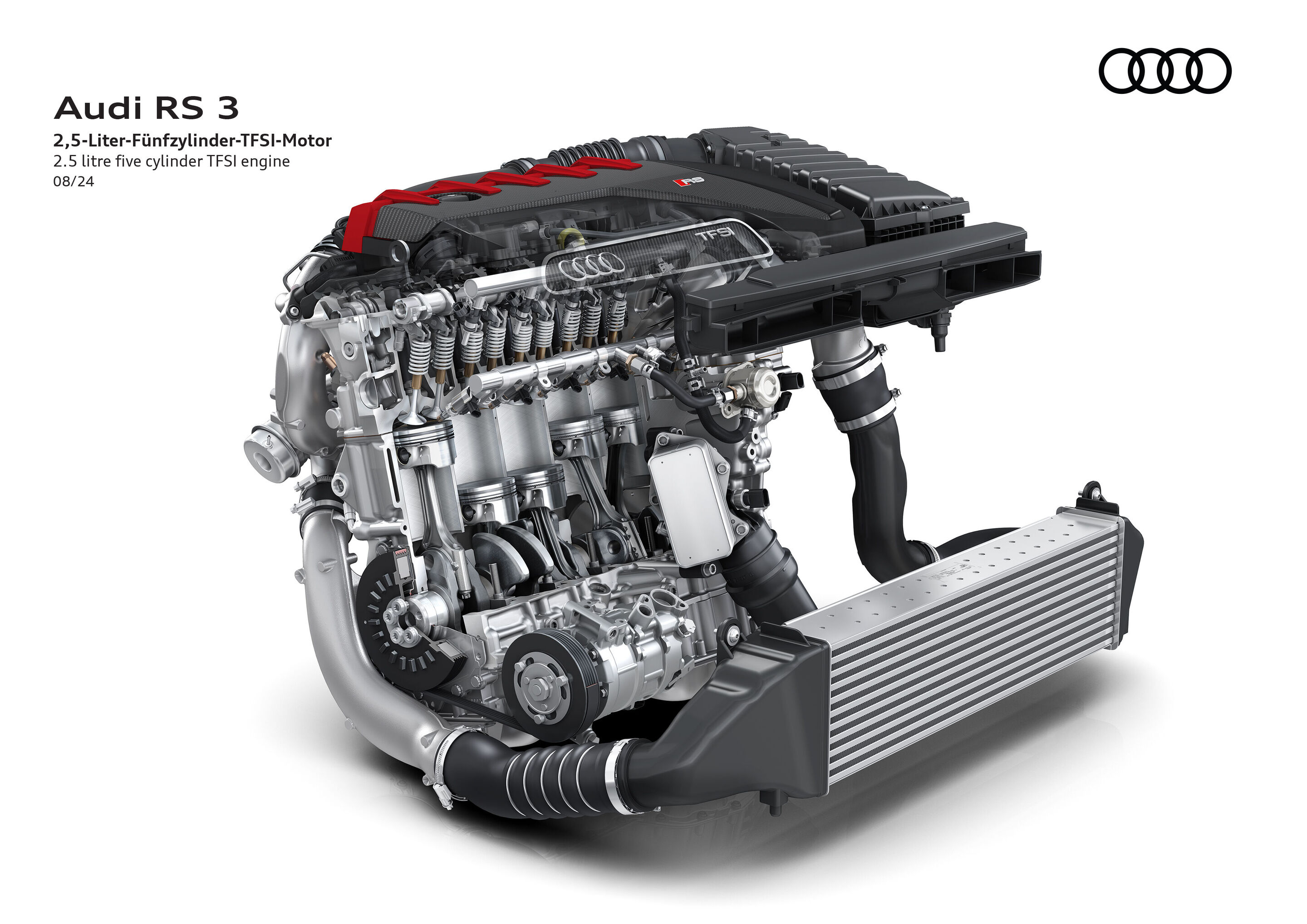
50 years of the Audi five-cylinder
The five-cylinder engine debuted in 1976 in the Audi 100 with 136 PS Successful engine concept for production models and rally sport Signature sound from its unique 1-2-4-5-3 firing order Audi RS 3 2.5 TFSI with 400 PS and 500 Nm torque Hand-assembled at the Bock plant in Győr, Hungary
Audi will celebrate a very special anniversary in 2026: 50 years of the five-cylinder engine. The brand with the four rings first introduced this engine in 1976 in the second-generation Audi 100. This was followed by upgrades and new developments with turbocharging, exhaust gas purification, and four-valve technology, rally engines, and five-cylinder diesel engines. Currently, the 2.5 TFSI in the Audi RS 3 continues the great tradition of five-cylinder engines
Audi’s five-cylinder engines have cult status and are deeply rooted in the Audi DNA. They have played a decisive role in shaping “Vorsprung durch Technik” – on the one hand with numerous successes in motorsport, and on the other, by virtue of their outstanding performance in series production. To this day, the 2.5 TFSI provides a highly evocative driving experience, not least because of its characteristic sound. The HISTORY: 50 years of success in series production and motorsport The first five-cylinder engine powered the Audi 100 (C2) in 1976. Known internally as Type 43, the model was intended to be positioned higher in the market than its predecessor. The four-cylinder engines of the time were not sufficient for the developers’ plans. Audi engineers therefore discussed using inline five-cylinder and six-cylinder engines in the early 1970s. The latter were ruled out due to space constraints and the unfavorable weight distribution. As a result, those responsible opted for the inline five-cylinder engine, which was based on the EA 827 engine concept, still in its infancy at the time. This inline four-cylinder engine was used throughout the Volkswagen Group in the 1970s, including in the Audi 80 and Audi 100.